 Art
Art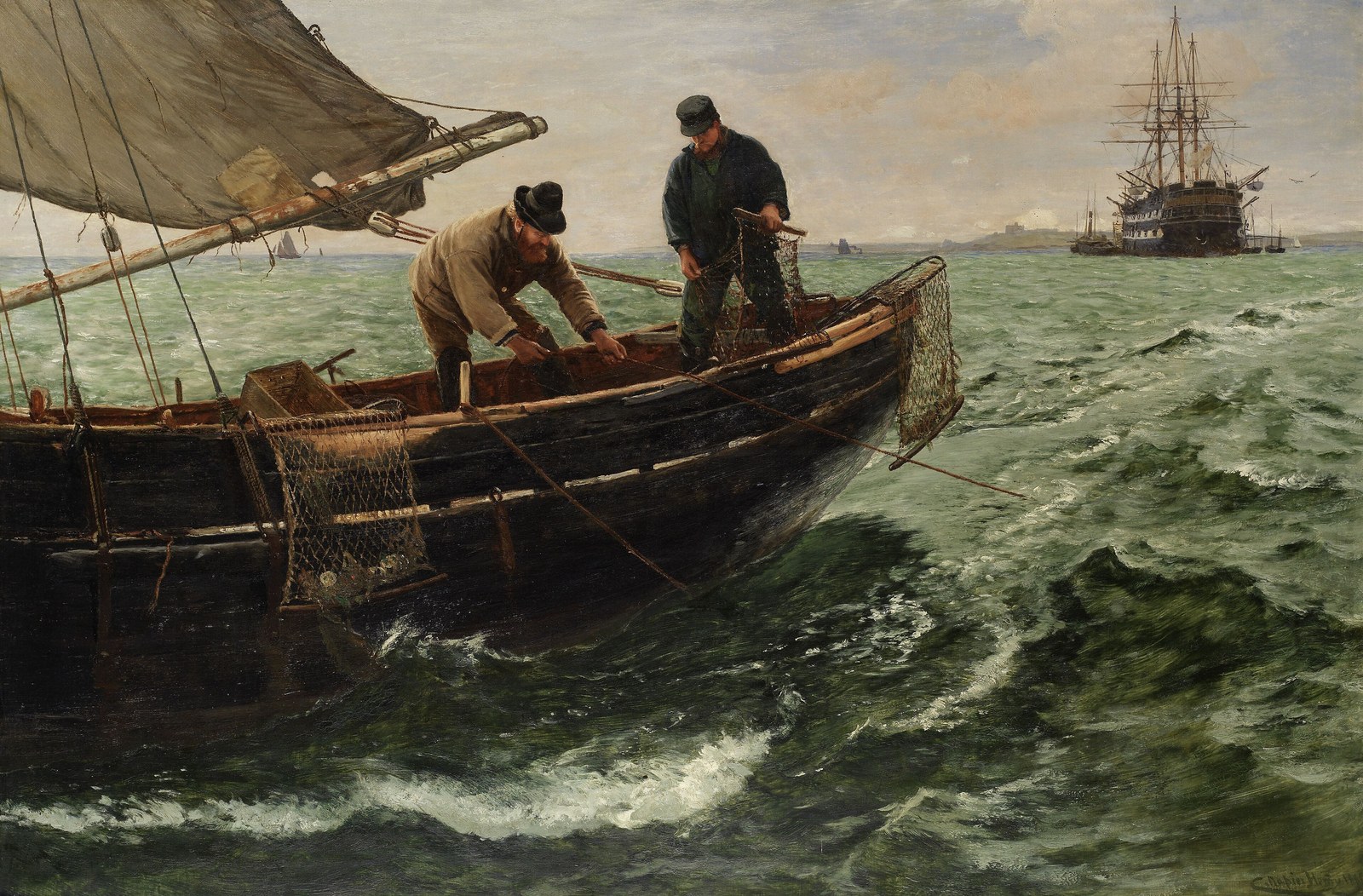
Cornwall art refers to the two waves of painters drawn to this rocky southwestern tip of England by its clear maritime light, cheap rents, and working fishing harbors rather than by any single style. From the 1880s the Newlyn School gathered around the fishing village of Newlyn, painting fishermen, nets, and cottage interiors in the plein-air realist manner learned in French academies, using the low, silvery Atlantic light to model weathered faces and wet oilskins with an honesty that academic London painting avoided. Sixty years later St Ives, a few miles up the coast, became the center of a different Cornwall: a colony of abstract painters and potters who reduced the same cliffs, harbors, and horizons to flattened planes, curved forms, and elemental color, partly under the influence of European modernists who took refuge there before the Second World War. Both movements shared a conviction that this particular light and this particular coastline could not be painted from memory in a city studio.
What marks the region
Silvery Atlantic light
Low, even, reflective coastal light prized for its color accuracy, drawing plein-air painters since the 1880s.
Working harbor subjects
Fisherfolk, nets, boats, and cottage interiors painted as dignified labor, not picturesque staffage.
Reduction to elemental form
Cliffs, waves, and harbors flattened into simplified planes and curved shapes in the postwar abstract work.
Studio-in-a-net-loft
Converted fishing lofts and boat sheds used as working studios, shaping a hands-on, materials-first practice.
Stone, rope, and driftwood
Found coastal materials incorporated directly into sculpture and mixed-media work.
Cool blue-gray palette
Sea-washed grays, slate blues, and sand tones dominate both realist and abstract Cornish painting.
Local signatures
How to spot Cornwall art
- Fishing net and cork floats
- → Shorthand for working-harbor realism and the dignity of manual labor.
- Oilskin coat and sou'wester
- → Marks a fisherman subject in realist genre scenes of coastal life.
- Curved standing stone form
- → References sculptors' abstraction of ancient granite monuments found across the peninsula.
- Pierced or holed form
- → A signature sculptural motif suggesting wind, sea and horizon passing through solid mass.
- Whitewashed cottage wall
- → Townscape shorthand for the close-built Cornish fishing village.
- Horizon line bisecting canvas
- → A recurring compositional device separating sea from sky in near-abstract bands.
The story
Cornwall's art history began with cheap rent and a rare quality of light. From the early 1880s, painters trained in French academies settled in the fishing village of Newlyn, drawn by its working harbor, empty net lofts convertible into studios, and a clear Atlantic light well suited to plein-air realism. The Newlyn School painted fishermen, cottage interiors, and coastal labor with unsentimental honesty, exhibiting in London to real acclaim. A second, very different colony formed decades later in St Ives, a few miles along the coast, gathering momentum through the 1920s-40s as painters and sculptors, some fleeing continental Europe before the Second World War, settled among its steep lanes and converted studios. Rather than realist genre scenes, this generation pushed toward abstraction, reducing the same cliffs, harbors, and horizon lines to flattened planes and pierced sculptural forms. By the mid-20th century St Ives rivaled London as a center of British modern art, while Newlyn's harbor remained a working fishing port throughout.
Masterpieces of the place
| Work | Artist | Date | Why it matters |
|---|---|---|---|
| A Hopeless Dawn | Frank Bramley | 1888 | The Newlyn School's best-known genre scene, a fisherman's widow at dawn. |
| The Rain It Raineth Every Day | Norman Garstin | 1889 | Newlyn realism applied to a wet Penzance street scene. |
| Pelagos | Barbara Hepworth | 1946 | Carved wood sculpture distilling harbor and horizon into pierced abstract form. |
| Porthmeor Beach studio views | Ben Nicholson | 1930s-40s | Flattened, near-abstract paintings of the St Ives studio window and bay. |
| Sea Form (Porthmeor) | Barbara Hepworth | 1958 | A bronze abstraction of wave and swell distilled to pure curved form. |
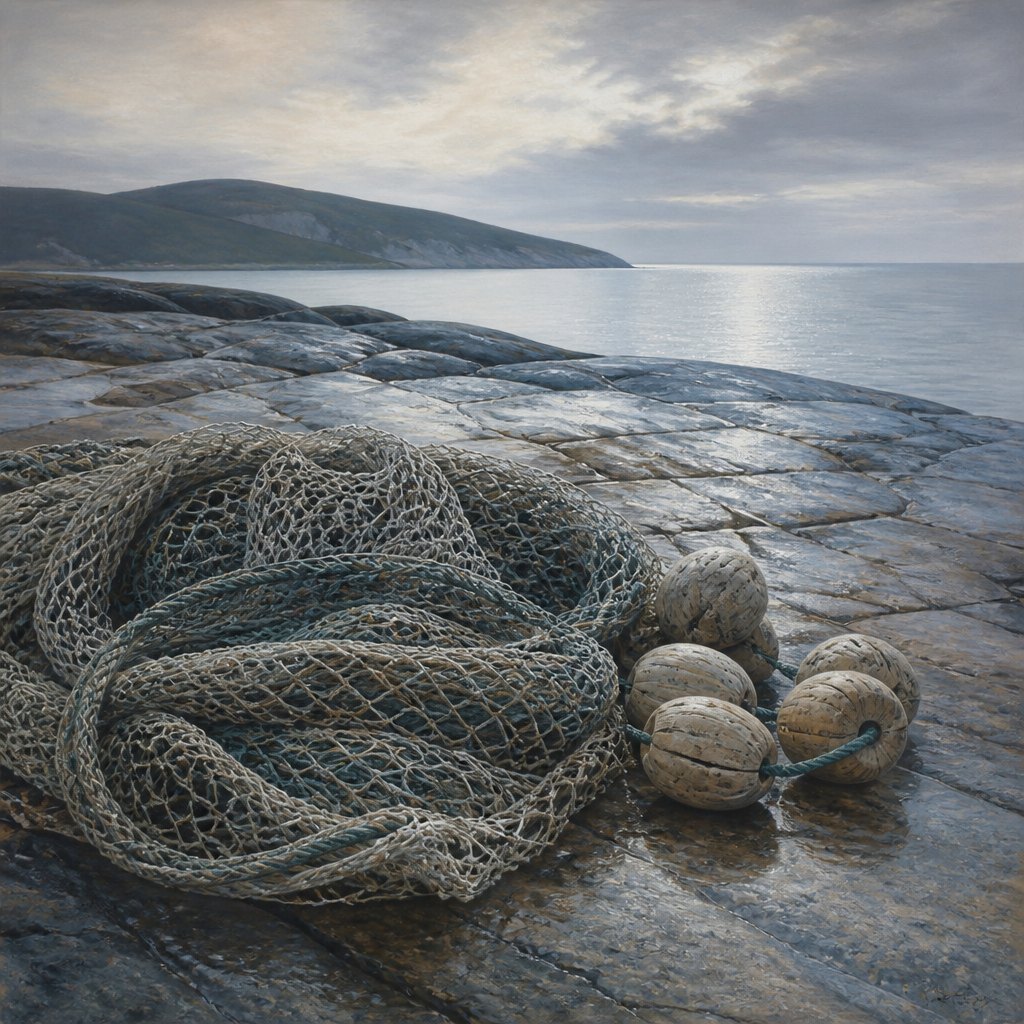 AI-generated
Work en plein air
Paint in the light of Cornwall
This example was generated from a prompt like: “A weathered fishing net coiled beside cork floats on wet granite harbor stones, rendered in cool silvery Atlantic light, slate-blue and sand tones, with a simplified curved headland and horizon line in the soft distance beyond.”
Open the Cornwall Plein Air Art Style generator →The place today
Cornwall still trades on both eras. Newlyn's harbor remains a working fishing port with a small gallery scene, while St Ives draws far larger crowds to Tate St Ives, the Barbara Hepworth Museum and Sculpture Garden, and dozens of independent studios along steep cobbled lanes. Summer floods the town with visitors chasing the same light that drew the original colonists, and local artists' societies in both towns still exhibit annually, keeping a direct, unbroken line to the 1880s and 1940s originals.
Compose your own
Work from a low, even coastal light rather than dramatic shadow — Cornwall's reputation rests on gray-blue clarity, not sunset drama. For the realist route, choose an honest working subject (a boat, a net, weathered hands) and paint it without sentimentality, letting wet oilskin and salt-worn wood carry the emotion. For the abstract route, take that same subject and strip it to essentials: reduce a headland to two or three curved planes, pierce a solid shape to let light and implied horizon pass through it, and favor carved or built texture over smooth illusion. Keep the palette narrow — slate blue, sea gray, sand, driftwood brown — so the coastal light reads as the true subject.
Frequently asked questions
What's the difference between the Newlyn School and St Ives?
Newlyn came first, in the 1880s, and painted realist scenes of fishing life. St Ives followed decades later, from the 1920s-40s onward, and pushed the same coastline toward abstraction, led by sculptors and painters.
Why did painters settle in Cornwall specifically?
Cheap rents, empty net lofts convertible into studios, a working harbor full of ready subjects, and a clear, even Atlantic light many painters felt was unmatched anywhere else in Britain for rendering true color and tone.
Is St Ives still an active art colony?
Yes. Tate St Ives, the Hepworth museum, and dozens of independent studios and galleries keep the town an active destination for practicing artists, though tourism now shapes the local scene as much as the original colony did.
What connects Newlyn realism to St Ives abstraction?
Both treat the Cornish coast as a subject too specific to paint from memory, insisting artists work on site. St Ives simply pushed that direct observation toward simplified, elemental form rather than realist detail.