 Art
Art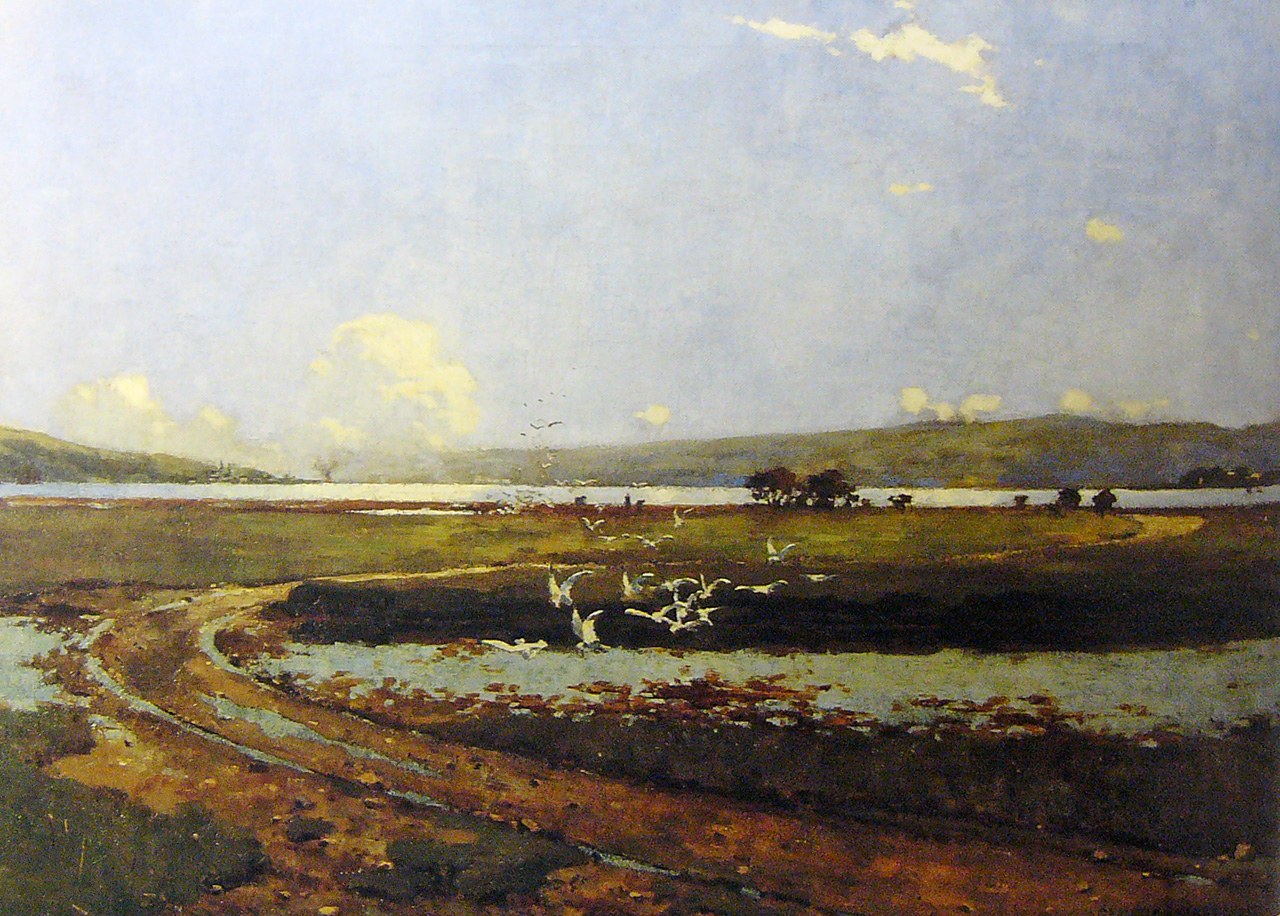
Glasgow art refers to the two overlapping movements that made this Clyde shipbuilding city Scotland's unlikely art capital in the late 19th century: the Glasgow Boys, a loose group of realist painters who rejected Edinburgh's academic history painting for open-air scenes of farm labor and coastal light, and the Glasgow Style, the local strain of Art Nouveau built around Charles Rennie Mackintosh's severe verticals and Margaret Macdonald's spectral, elongated female figures. Both grew from the same soil: a city rich on tobacco, steel and shipping money, with a progressive art school willing to let students experiment and a merchant class eager to furnish new villas with modern taste. The Glasgow Boys painted in Kirkcudbright and the surrounding countryside before scattering into portraiture; the Mackintosh circle, nicknamed the Spook School for its eerie linear figures, designed tearooms, furniture and typography as much as paintings. Together they gave Glasgow a design identity distinct from London and Edinburgh alike.
What marks the region
Plein-air realism
Painting outdoors direct from rural life, in muted grays and greens, favoring unsentimental farm-labor scenes over academic history painting.
Severe vertical line
Furniture, stained glass and architecture reduce ornament to elongated verticals and grid squares, the core of the local Art Nouveau style.
Rose and grid motif
A stylized geometric rose emblem paired with strict grid lattices recurs across textiles, metalwork and stained glass.
Tearoom as total design
Chairs, cutlery, murals and typography unified within a single commercial interior, treating a whole room as one artwork.
Elongated spectral figures
Pale, attenuated female forms in a deliberately ethereal, otherworldly manner, nicknamed the Spook School style by contemporaries.
Silvery Scottish light
Cool, overcast northern daylight and West Highland coastal grays inform both realist and decorative Glasgow palettes.
Local signatures
How to spot Glasgow art
- Stylized rose
- → The 'Glasgow Rose' emblem, a geometric abstraction rather than a botanical study, marks the local Art Nouveau design language.
- Grid lattice
- → Repeated square lattice patterning signals modern, machine-age order within decorative work.
- Elongated female figure
- → Pale, willowy figures with spectral coloring mark the Spook School's decorative symbolism.
- High-backed ladder chair
- → Shorthand silhouette for the Glasgow Style domestic and tearoom interior.
- Fisherfolk and plowman figures
- → Unposed rural laborers signal the Glasgow Boys' commitment to truth over academic staging.
- Silver-gray daylight
- → Cool, overcast tonality marking Scottish plein-air realism against warmer academic palettes.
The story
Glasgow's art rose on the back of its Victorian wealth. By the 1880s the city was Britain's 'Second City of the Empire,' its fortunes built on tobacco, shipbuilding on the Clyde, and colonial trade, and its merchants wanted art and interiors that felt modern rather than borrowed from London or Rome. The Glasgow Boys, students loosely tied to the Glasgow School of Art, pushed back against Edinburgh's academic history painting, working outdoors in villages like Kirkcudbright and Cockburnspath and absorbing lessons from French naturalism and Japanese prints. A decade later Charles Rennie Mackintosh, his wife Margaret Macdonald, her sister Frances, and Frances's husband Herbert MacNair formed 'The Four,' translating that same appetite for the new into interiors, furniture, and the Glasgow School of Art building itself. Their linear, symbol-laden style traveled to Vienna and Turin, where it was received as Scotland's answer to continental Art Nouveau, before fading at home as taste turned toward austerity after the First World War.
Masterpieces of the place
| Work | Artist | Date | Why it matters |
|---|---|---|---|
| Glasgow School of Art (Mackintosh Building) | Charles Rennie Mackintosh | 1897-1909 | His masterwork, fusing Scots baronial masonry with Art Nouveau ironwork and glass. |
| A Hind's Daughter | James Guthrie | 1883 | A defining Glasgow Boys canvas of plain-spoken rural portraiture. |
| The Druids: Bringing in the Mistletoe | George Henry and E. A. Hornel | 1890 | A decorative, gold-leafed departure from realism toward symbolism. |
| Willow Tea Rooms interiors | Charles Rennie Mackintosh and Margaret Macdonald | 1903 | A total-design environment of chairs, murals and gesso panels. |
| Summer | Margaret Macdonald | 1897 | A spectral gesso panel exemplifying the Spook School's ethereal figures. |
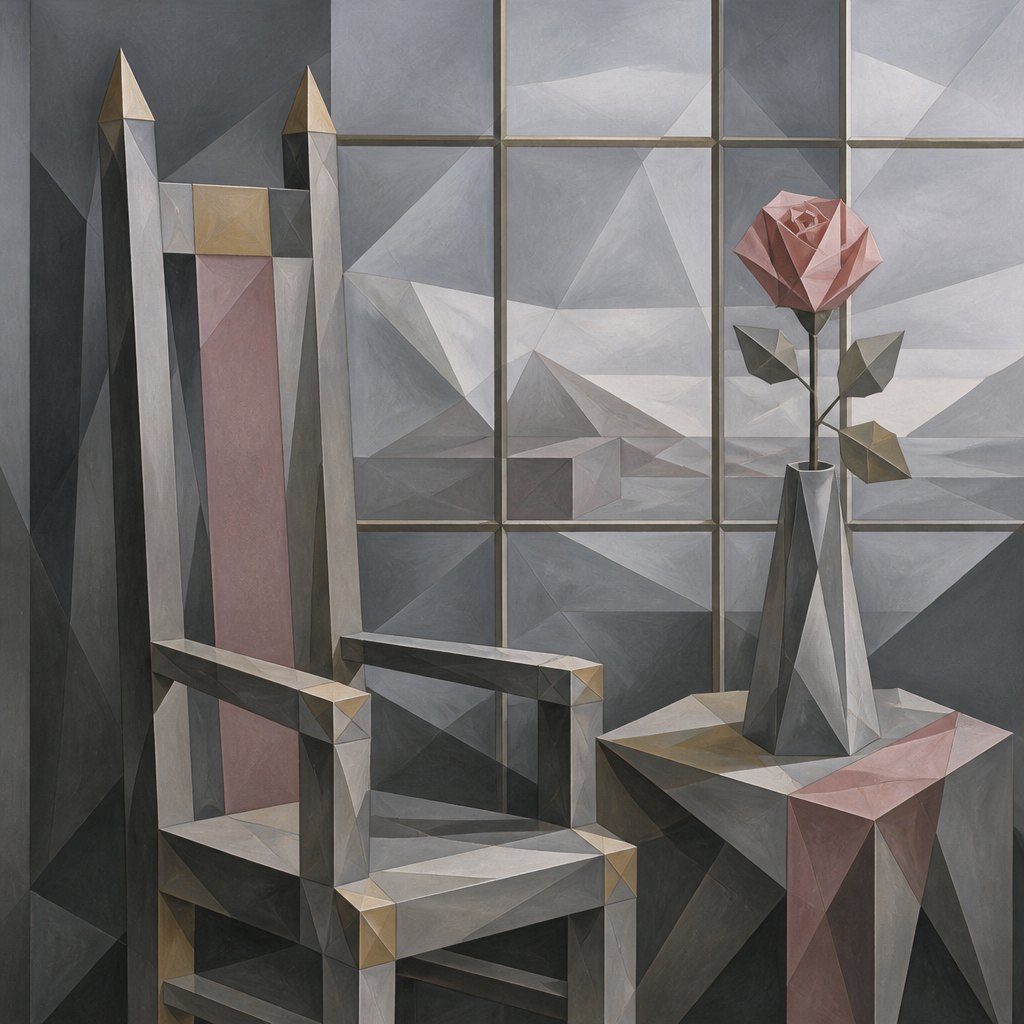 AI-generated
Work en plein air
Paint in the light of Glasgow
This example was generated from a prompt like: “A high-backed wooden chair and a single stemmed rose motif rendered in severe straight lines and pale silvery tones, set against a grid-latticed window, cool overcast daylight, restrained palette of gray, rose pink and soft gold.”
Open the Glasgow Style Art Nouveau generator →The place today
Glasgow today trades on both legacies. The Glasgow School of Art (rebuilding after two fires) anchors a design-school reputation that still pulls students worldwide, while the Kelvingrove and Hunterian museums hold deep Glasgow Boys and Mackintosh collections. The Willow Tea Rooms and the Mackintosh House recreate his interiors for visitors. A gritty post-industrial identity now feeds a separate contemporary scene, with prize-winning artists and artist-run galleries in the East End, but the tourist trail still runs through rose motifs, high-backed chairs, and silver-toned rural canvases.
Compose your own
Start with line, not color. Sketch a subject reduced to its structural verticals and horizontals first — a chair back, a window, a plant stem — before adding detail, the way this city's designers stripped ornament down to grid and stem. For the rural realist side, work from life outdoors in flat, overcast light rather than a studio lamp, and resist prettifying your subject: paint the mud, the wet wool, the tired stance. Combine a stylized rose or elongated oval motif with a strict grid background to echo the local decorative language. Keep palettes cool and restrained — silvery grays, muted greens, occasional rose pink or gold leaf — rather than saturated color.
Frequently asked questions
What is the Glasgow Style?
It's the local strain of Art Nouveau, developed mainly by Charles Rennie Mackintosh and his circle in the 1890s-1900s, marked by severe verticals, stylized roses, and pale elongated figures applied across architecture, furniture, and textiles.
Who were the Glasgow Boys?
A loose group of painters active from the 1880s who rejected academic history painting for realist, often outdoor scenes of rural labor and coastal life, drawing on French naturalism and Japanese prints.
Why did a shipbuilding city produce so much design innovation?
Victorian Glasgow's shipping, steel, and tobacco wealth created a merchant class hungry for modern interiors, plus a progressive art school willing to let students experiment, turning commercial ambition into a design movement.
Is the Glasgow School of Art building still standing?
It's being rebuilt after two major fires (2014 and 2018) gutted Mackintosh's original structure; restoration is ongoing, and much of his other work survives intact in Glasgow's museums and tea rooms.