 Art
Art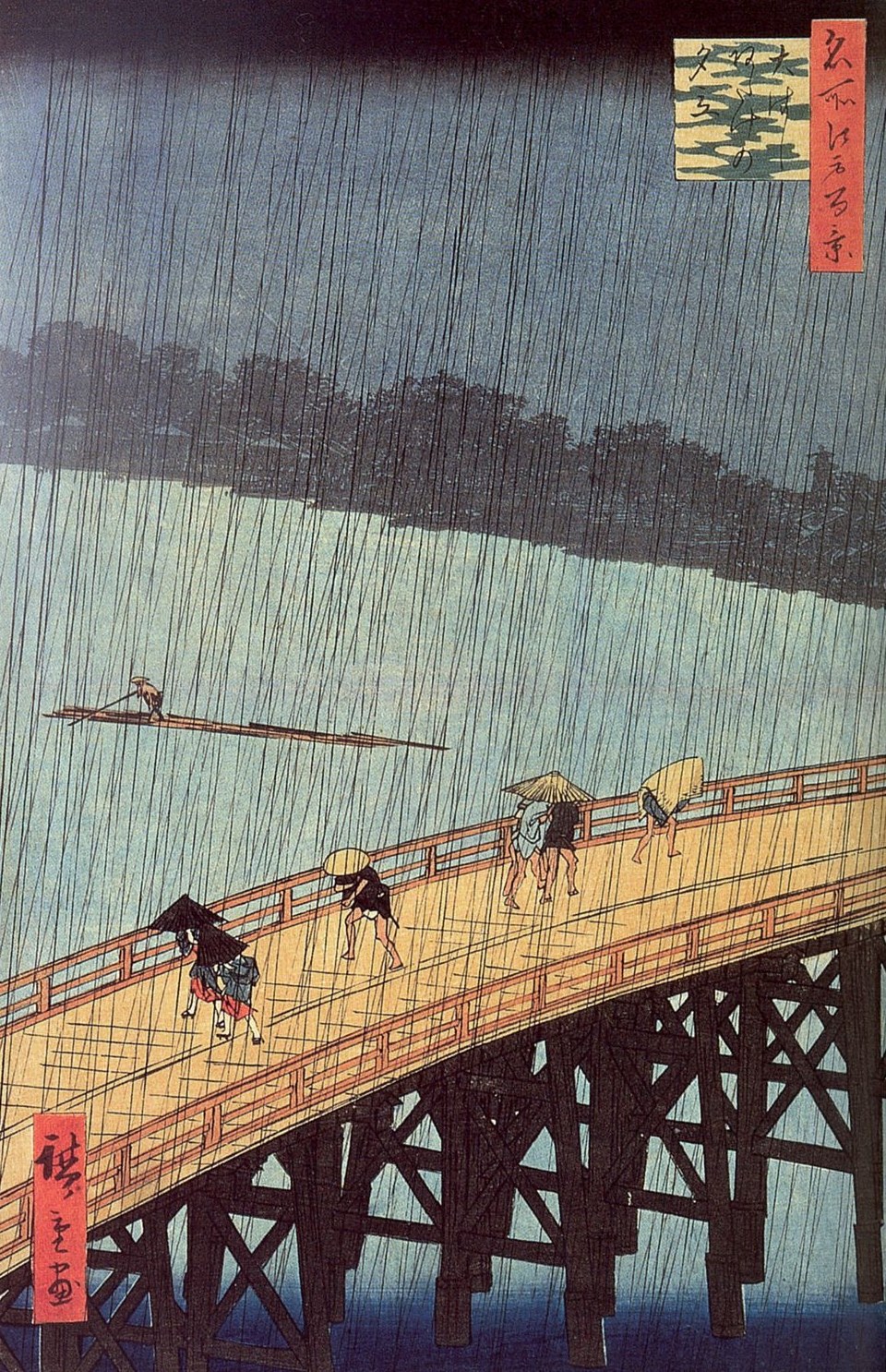
Edo art refers to the visual culture of the shogunal capital that grew from a fishing village into the world's largest city by the 18th century, and to ukiyo-e, the woodblock print tradition it produced. Under strict Tokugawa shogunate rule from 1603, Edo (renamed Tokyo in 1868) became a merchant boomtown whose growing, literate urban class had money to spend but limited political voice, and channeled its appetite for entertainment into kabuki theater, sumo, and licensed pleasure districts like the Yoshiwara. Ukiyo-e, meaning 'pictures of the floating world,' emerged to advertise and commemorate that entertainment world, mass-producing affordable woodblock prints of actors, courtesans, and later dramatic travel landscapes as commercial art for a broad public rather than court or temple patrons. Publishers coordinated teams of designer, carver, and printer to issue prints cheaply and in volume, making Edo art the most commercially organized and widely distributed art tradition in premodern Japan, and one that would later reshape European painting when prints reached Paris in the 1860s.
What marks the region
Woodblock print production
Multi-block color printing produced by teams of publisher, designer, carver, and printer, not single-hand painting.
Flat color and bold outline
Flat planes of color bounded by strong outline, favored over Western-style shading and modeling.
Dramatic cropping and diagonal
Unconventional framing, close viewpoints, and diagonal composition, later prized by European painters.
Kabuki actor portraiture
Stylized headshot prints capturing star performers in signature dramatic poses.
Floating-world entertainment subjects
Courtesans, teahouses, and pleasure-district life depicted as glamorous, aspirational urban subject matter.
Travel landscape series
Later prints organized into serial views of famous routes and landmarks, sold as sets.
Local signatures
How to spot Edo (Tokyo) art
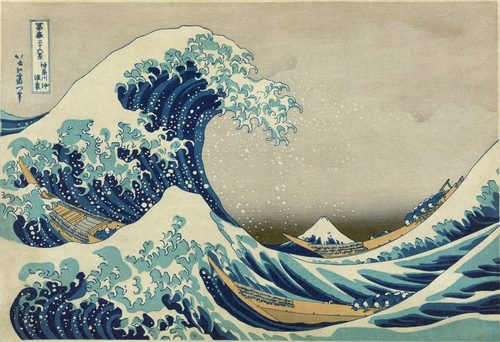
- Great cresting wave form
- → A dramatic curling wave shape, shorthand for the era's landscape print drama.
- Fan-shaped print format
- → Fan-print format signaling everyday commercial print production.
- Exaggerated actor glare
- → A bold, cross-eyed theatrical expression marking kabuki actor portrait prints.
- Cherry blossom over townscape
- → A seasonal marker layered onto urban scenes.
- Distant conical peak
- → A recurring background landmark anchoring travel-series landscape prints.
- Elaborate hairpin array
- → Ornate hair ornamentation signaling high-ranking pleasure-district status in portrait prints.
- Rain streak pattern
- → Fine diagonal line clusters denoting sudden downpour in landscape prints.
The story
Edo was a modest fishing settlement until 1603, when Tokugawa Ieyasu made it his shogunate's administrative capital, triggering explosive growth; by the early 1700s it may have been the largest city on Earth, with over a million residents. The shogunate confined much of the city's commercial entertainment, kabuki theater and licensed pleasure districts like the Yoshiwara, to specific zones, and it was this world that ukiyo-e was built to sell: single-sheet woodblock prints advertising star actors and celebrated courtesans, produced cheaply enough for ordinary townspeople to buy. Publishers ran the trade like a modern media business, discovering and promoting star designers. In the 19th century the genre expanded from portraiture into landscape, with travel-series prints capturing famous views along Japan's roads. When Japan opened to trade in the 1850s-60s, these prints flooded into Europe as packing material and curiosities, directly shaping Impressionist and Post-Impressionist composition before Edo itself was renamed Tokyo in 1868.
Masterpieces of the place
| Work | Artist | Date | Why it matters |
|---|---|---|---|
| The Great Wave off Kanagawa | Katsushika Hokusai | c. 1831 | The most famous ukiyo-e print, part of the Thirty-Six Views of Mount Fuji series. |
| Sudden Shower over Shin-Ōhashi Bridge | Utagawa Hiroshige | 1857 | A landmark rain landscape from One Hundred Famous Views of Edo. |
| Ōkubi-e actor portraits | Tōshūsai Sharaku | 1794 | Striking large-head kabuki actor prints made over a brief, mysterious ten-month career. |
| Beauties of the Yoshiwara prints | Kitagawa Utamaro | 1790s | Refined courtesan portraiture defining the bijin-ga genre. |
| Nihonbashi | Utagawa Hiroshige | 1830s-1850s | The starting point of the Tōkaidō road series, capturing Edo's commercial heart. |
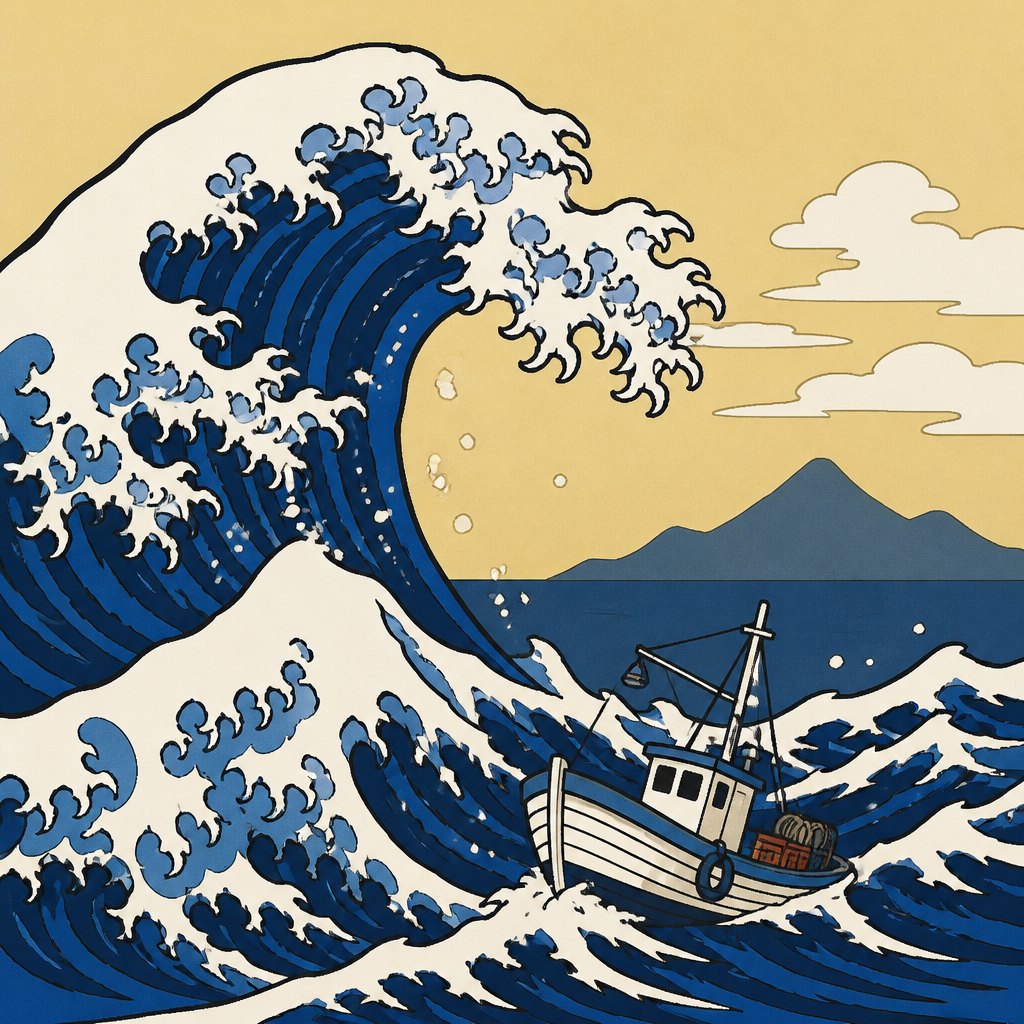 AI-generated
Work en plein air
Paint in the light of Edo (Tokyo)
This example was generated from a prompt like: “A single cresting wave rendered in flat bold blue and white shapes with a strong dark outline, a small fishing boat tossed in the foreground, soft distant mountain silhouette on the horizon, printed-poster color palette, no gradients.”
Open the Ukiyo-e Art Style generator →The place today
Tokyo's ukiyo-e legacy survives mainly in museums rather than the streets that made it: specialist museums and the Tokyo National Museum hold major print collections, and galleries in areas like Ueno still sell antique and modern reproduction prints. Contemporary Japanese illustration and manga are frequently traced back to ukiyo-e's flat color, bold outline, and dramatic framing. Original Edo-period entertainment districts like the old Yoshiwara no longer exist in their historic form, but their visual legacy is one of Japan's most globally recognized art exports.
Compose your own
Flatten everything: use bold, even color fields bounded by confident dark outline instead of gradual shading or modeled light. Choose a dramatic, off-center viewpoint — a close foreground element cutting across a distant landmark, or a steep diagonal instead of a level horizon. If the subject is a figure, favor decorative pattern in clothing and an expressive, stylized pose over anatomical realism. If it's a landscape, organize the image the way a print series would, built around one recognizable natural or scenic feature with weather, such as rain or snow, treated as its own bold graphic element. Keep the palette to a handful of flat printed colors rather than a full painterly range.
Frequently asked questions
What does ukiyo-e mean?
It translates roughly to 'pictures of the floating world,' referring to Edo's licensed pleasure and theater districts, and describes the woodblock prints and paintings that depicted that transient, entertainment-focused urban world for a mass audience.
How were ukiyo-e prints actually made?
Through a team production system: a publisher commissioned a designer's drawing, a carver cut it into wood blocks, one per color, and a printer hand-pressed each block in sequence onto paper, allowing large, affordable print runs.
Why did European painters care about Japanese prints?
When Japan opened to trade in the 1850s-60s, ukiyo-e prints reached Paris and startled painters with their flat color, cropped framing, and unconventional viewpoints, directly influencing Impressionist and Post-Impressionist artists in the following decades.
Is Edo the same place as modern Tokyo?
Yes. Edo was renamed Tokyo in 1868 when it became the seat of the restored imperial government, ending over two and a half centuries of Tokugawa shogunate rule centered in the city.