 Art
Art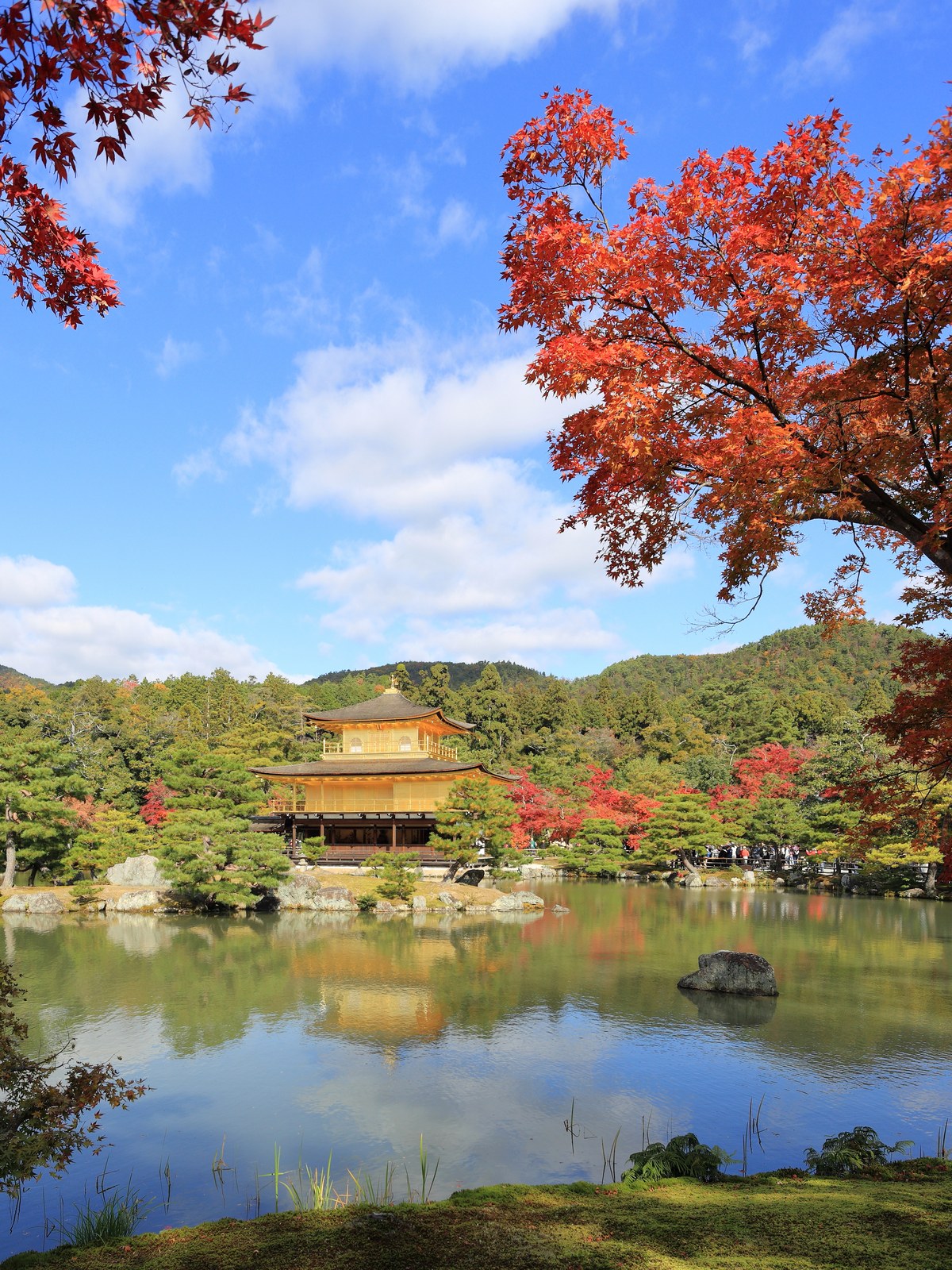
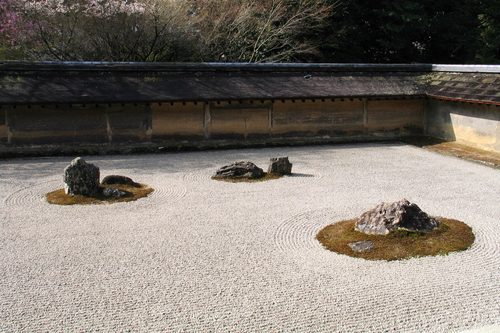
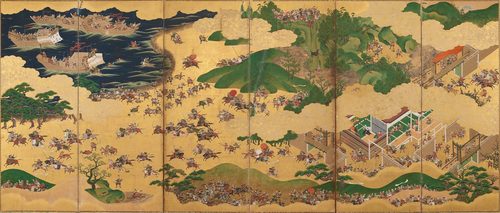
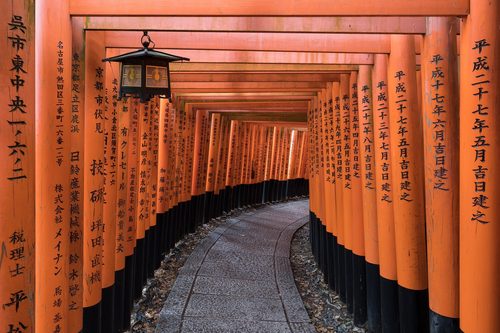
Kyoto art refers to the refined court, religious, and craft traditions that developed over more than a thousand years in Japan's imperial capital, from its founding in 794 until the seat of power moved to Tokyo in 1868. As home to the emperor's court and to major schools of Zen Buddhism, Kyoto produced an aesthetic built on restraint, seasonal awareness, and asymmetry: painting schools decorated sliding doors and folding screens with gold leaf and simplified natural motifs; Zen temples cultivated dry rock gardens and ink monochrome painting as meditative practice; and craft workshops perfected textiles, lacquer, and ceramics for court and tea-ceremony use. Unlike the merchant-driven, theater-adjacent art of Edo, Kyoto's output stayed tied to aristocratic and monastic patronage, prizing subtlety, implication, and the passage of seasons over spectacle. Many of the same family workshops, temples, and painting lineages that shaped this art centuries ago still operate in the city today, making Kyoto one of the few art centers with a genuinely continuous, living tradition.
What marks the region
Gold-ground screen painting
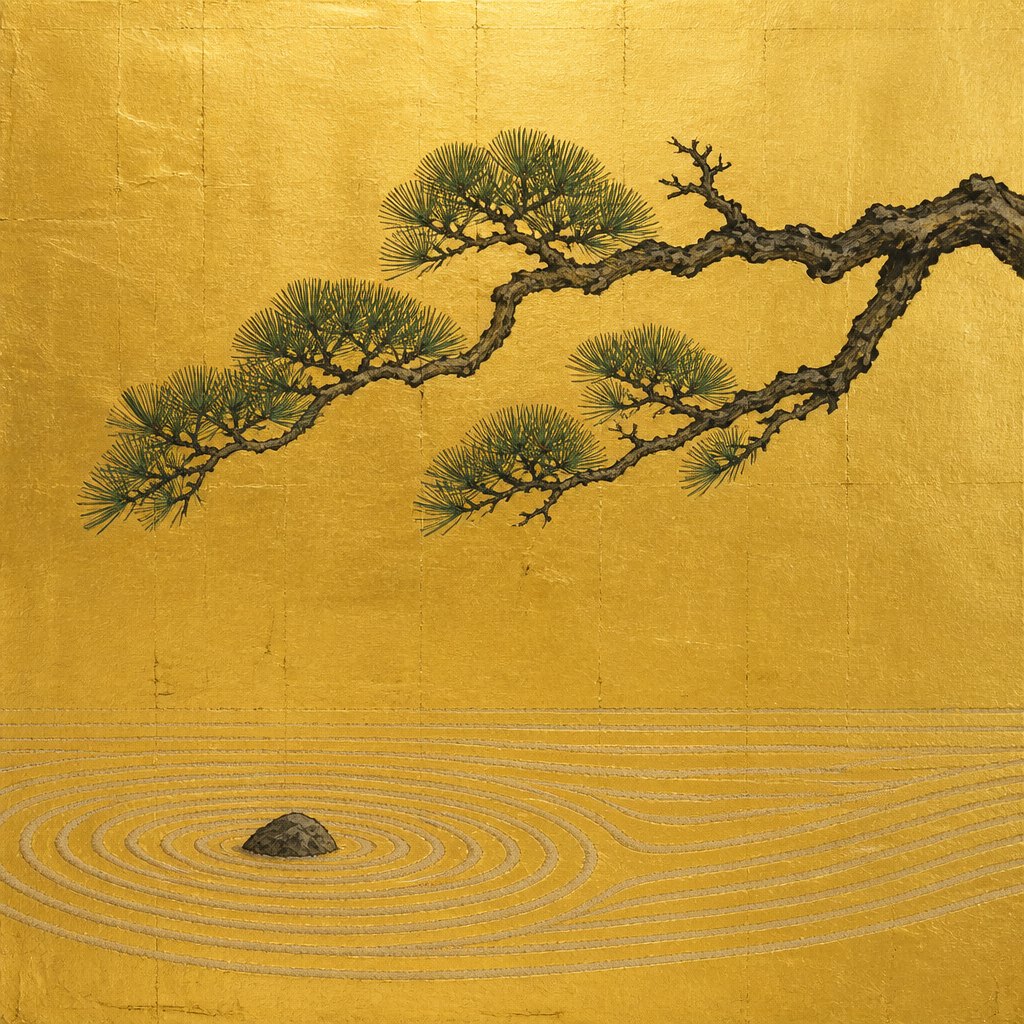
Sliding doors and folding screens decorated with gold leaf backgrounds and simplified nature motifs such as pine and cranes.
Ink monochrome landscape
Zen-associated ink painting using graduated black washes to suggest mist, mountains, and empty space.
Dry rock garden
Raked gravel and arranged stone standing in for water and landscape, used for temple meditation.
Seasonal motif awareness
Cherry blossom, maple leaf, and moon motifs marking a specific time of year as a core compositional principle.
Asymmetry and empty space
Deliberate off-center composition and unpainted space treated as active content, not absence.
Tea-ceremony craft integration
Ceramics, lacquer, and textiles designed specifically for the choreography of the tea ceremony.
Local signatures
How to spot Kyoto art
- Gold cloud band
- → A stylized gilded cloud shape used to compress time and space across screen paintings.
- Raked gravel ripple
- → Concentric lines in dry garden gravel symbolizing water without depicting it.
- Crane pair
- → A longevity and fidelity symbol common in decorative screen painting.
- Maple leaf motif
- → An autumn seasonal marker recurring across painting, textile, and ceramic design.
- Empty circle
- → A Zen ink brushwork symbol of enlightenment, the void, and a single complete gesture.
- Moss-covered stone
- → Temple garden shorthand for age, quiet, and cultivated naturalness.
- Vermilion shrine red
- → Bright lacquer red contrasting with the otherwise muted Kyoto palette.
The story
Kyoto became Japan's capital in 794, modeled on the Chinese Tang capital of Chang'an, and remained the seat of the emperor for over a thousand years even after real political power shifted elsewhere. Heian-era court culture (794-1185) produced refined narrative hand scrolls and a taste for subtlety that shaped everything after it. Zen Buddhism, imported from China and firmly established in Kyoto by the 13th-14th centuries, brought ink monochrome painting and dry rock gardens as tools for meditation, patronized heavily by the shoguns who built retreats like the Golden and Silver Pavilions. From the 16th century, powerful warlords and later peaceful Edo-period stability funded lavish gold-ground screen painting, and, later, a more decorative school founded in Kyoto by independent artisans. Even after the emperor relocated to Tokyo in 1868, Kyoto's temples, tea houses, and craft workshops kept training artisans in the same lineages, preserving a continuity almost no other art center can claim.
Masterpieces of the place
| Work | Artist | Date | Why it matters |
|---|---|---|---|
| Pine Trees | Hasegawa Tōhaku | c. 1595 | An ink monochrome screen pair distilling misty pine groves to near abstraction. |
| Ryōan-ji rock garden | Attributed to Zen temple monks | c. 1450-1500 | The most famous dry garden, fifteen stones arranged on raked gravel. |
| Red and White Plum Blossoms | Ogata Kōrin | c. 1710s | A gold-ground screen defining the decorative Kyoto painting style. |
| Kinkaku-ji (Golden Pavilion) | Built for Ashikaga Yoshimitsu | 1397 | A gilded retirement villa turned Zen temple, an icon of the local aesthetic. |
| Katsura Imperial Villa gardens | Patronized by Prince Toshihito | 1615-1663 | A refined stroll garden blending architecture and seasonal landscape design. |
 AI-generated
Work en plein air
Paint in the light of Kyoto
This example was generated from a prompt like: “A single gnarled pine branch against a flat gold-leaf background, rendered in simplified outline with minimal shading, paired with a raked gravel pattern below suggesting still water, restrained composition with large areas of empty space.”
Open the Kyoto Zen Art Style generator →The place today
Kyoto's temples, gardens, and craft workshops remain working sites, not just museums: Zen monks still rake the gravel at Ryōan-ji, and family-run studios still produce textiles, ceramics, and gold-leaf work using centuries-old methods. The Kyoto National Museum and numerous temple treasuries preserve painted screens and scrolls, while contemporary artists trained in these same crafts increasingly bridge traditional technique with modern design. World Heritage status for seventeen historic sites keeps the city's core art infrastructure protected and internationally visited.
Compose your own
Build the composition around empty space rather than filling the frame: leave large unpainted or ungravelled areas that carry as much weight as the marks themselves. Choose one seasonal marker — cherry blossom, maple leaf, or bare winter branch — and let it anchor the whole piece so the moment in time is unmistakable. For a screen-painting feel, apply gold leaf or gold wash as a flattening background rather than a spatial one, then place simplified natural motifs across it with clean, confident outline. For an ink-garden feel, reduce a landscape to a few essential rock and raked-line shapes, working in restrained gray-black tones and resisting any urge to add unnecessary detail.
Frequently asked questions
What is karesansui?
A Japanese dry rock garden style developed in Kyoto's Zen temples, using raked white gravel and carefully placed stones to suggest water, mountains, and islands without depicting them literally, designed as an aid to meditation.
What's the difference between Kyoto's early and later screen-painting schools?
The earlier school was an official, hereditary style serving shoguns and temples with bold ink and gold-ground work; a later school, founded by independent Kyoto artisans, developed a more decorative, pattern-based style using gold leaf.
Why does Kyoto's art feel more restrained than Edo's?
Kyoto's patrons were the imperial court and Zen monasteries, favoring subtlety and seasonal implication, while Edo's art served a wealthy urban merchant class hungry for theater, celebrity, and spectacle, producing a louder visual culture.
Can visitors still see these traditions being practiced?
Yes, many temples remain active religious sites with daily-maintained gardens, and family workshops throughout the city still produce textiles, ceramics, and gold-leaf work using techniques passed down for generations, some open to visitors.