 Art
Art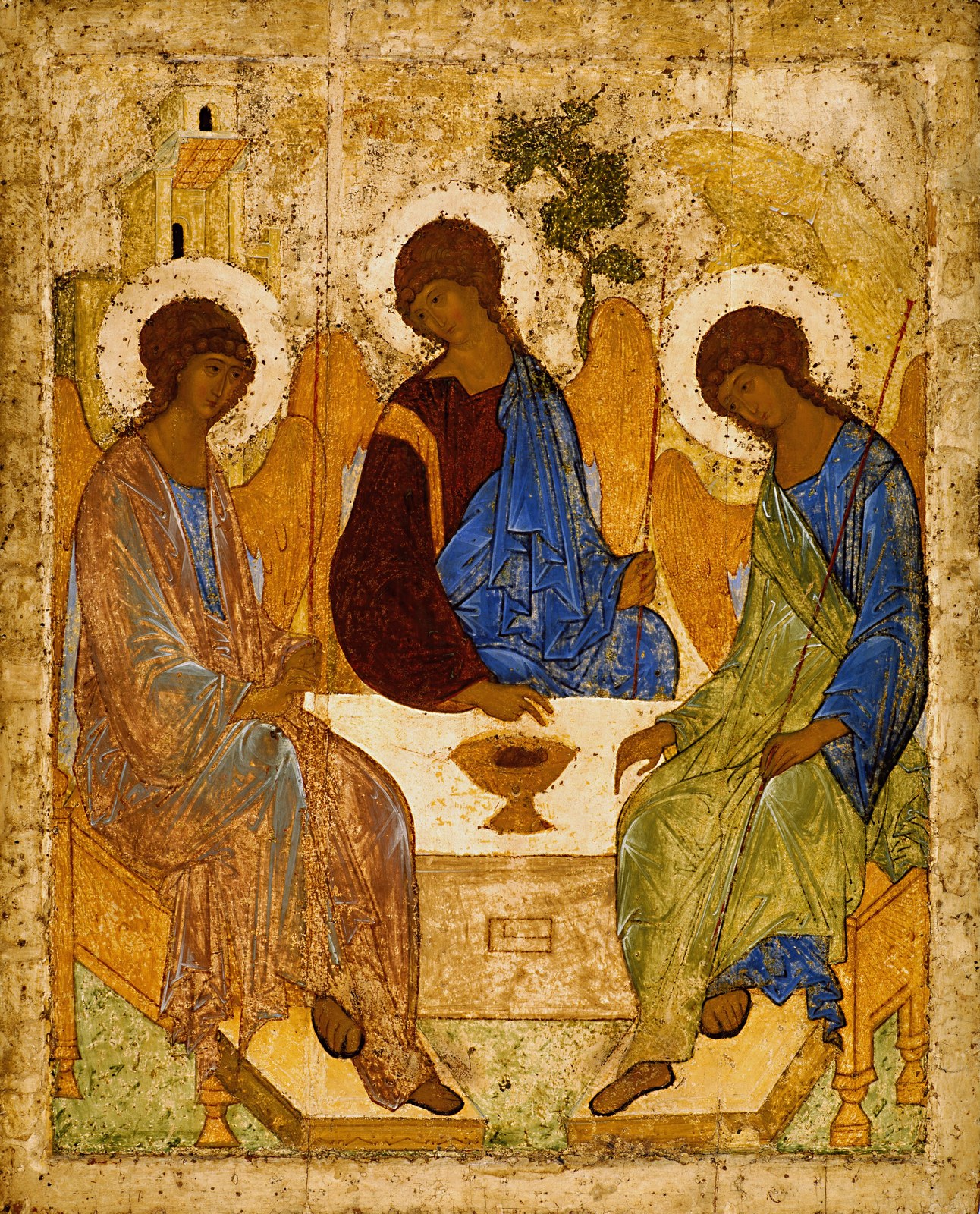
Moscow art spans two distant poles of Russian creativity: half a millennium of Orthodox icon painting and a few explosive decades of revolutionary avant-garde. As the seat of the Russian Orthodox Church and its icon-painting workshops, medieval Moscow produced masters like Andrei Rublev, whose gold-ground, flattened, deeply spiritual images of saints and the Trinity defined Russian devotional art for centuries and still hang in the city's cathedrals and the Tretyakov Gallery. Then, in the early 20th century and especially after the 1917 Revolution, Moscow became the center of an entirely opposite impulse: artists like Kazimir Malevich and Wassily Kandinsky rejected representation altogether, and figures associated with Constructivism pushed art toward industrial materials, geometric abstraction, and utility in service of the new Soviet state, designing everything from propaganda posters to workers' furniture. The gap between a gold-ground icon and Malevich's Black Square, painted only a few miles and a few centuries apart, is the whole story of Moscow art in one comparison.
What marks the region
Gold-ground icon painting
Flattened, symbolic devotional images on gilded panels, following strict pictorial rules rather than naturalism.
Reverse perspective
Icon space that opens toward the viewer rather than receding, keeping focus on spiritual rather than physical realism.
Suprematist pure geometry
Abstraction reduced to basic forms such as the square and circle, freed from any representational subject.
Constructivist industrial material
Art built from metal, glass, and factory materials, blurring the line between fine art and engineering.
Art as propaganda tool
Work designed explicitly for posters, textiles, and public persuasion rather than gallery contemplation.
Onion-dome silhouette
The city's distinctive multi-domed church architecture recurs as a compositional motif across eras.
Local signatures
How to spot Moscow art
- Gold leaf background
- → Marks devotional icon painting, signaling divine, timeless space rather than a real setting.
- Black square on white ground
- → Shorthand for the total rejection of representational art.
- Onion dome
- → A layered, colorful church cupola, a recurring skyline and compositional motif.
- Red star and industrial emblem
- → Soviet-era iconography marking propaganda and revolutionary design work.
- Halo (nimbus)
- → A gold circular outline denoting sainthood in icon painting.
- Diagonal dynamic line
- → A compositional device suggesting industrial motion and revolutionary energy.
- Tempera-on-wood panel format
- → The traditional icon support, distinct from later canvas-and-oil easel painting.
The story
Moscow's art history begins centuries before Russia's imperial turn to the West. As the medieval seat of the Russian Orthodox Church, the city trained icon painters in strict Byzantine-derived conventions, reaching a peak around 1400-1425 with Andrei Rublev, whose Trinity became the standard against which all later icons were judged. That devotional tradition continued largely unbroken for five hundred years, protected by the Church and, later, by merchant collectors like Pavel Tretyakov, who founded the gallery that bears his name specifically to preserve Russian art, icons and realist painting alike, for public view. Everything changed after 1917: the Bolshevik Revolution turned Moscow into the Soviet capital and a magnet for artists eager to build a visual language for the new state. Kazimir Malevich's Suprematism and the Constructivist circle rejected centuries of representational tradition outright, chasing pure geometric abstraction and industrial design instead, before Stalin-era policy suppressed the avant-garde in the 1930s.
Masterpieces of the place
| Work | Artist | Date | Why it matters |
|---|---|---|---|
| Trinity | Andrei Rublev | c. 1425 | The summit of Russian icon painting, three angels in luminous, harmonious gold-ground composition. |
| Black Square | Kazimir Malevich | 1915 | The founding Suprematist statement, reducing painting to pure geometric form. |
| Monument to the Third International (model) | Vladimir Tatlin | 1919-1920 | An unbuilt Constructivist tower proposal fusing sculpture, architecture and propaganda. |
| Shukhov Radio Tower | Vladimir Shukhov | 1922 | A hyperboloid steel tower embodying Constructivist faith in engineering as art. |
| Beat the Whites with the Red Wedge | El Lissitzky | 1920 | A Constructivist propaganda poster reducing political conflict to geometric abstraction. |
 AI-generated
Work en plein air
Paint in the light of Moscow
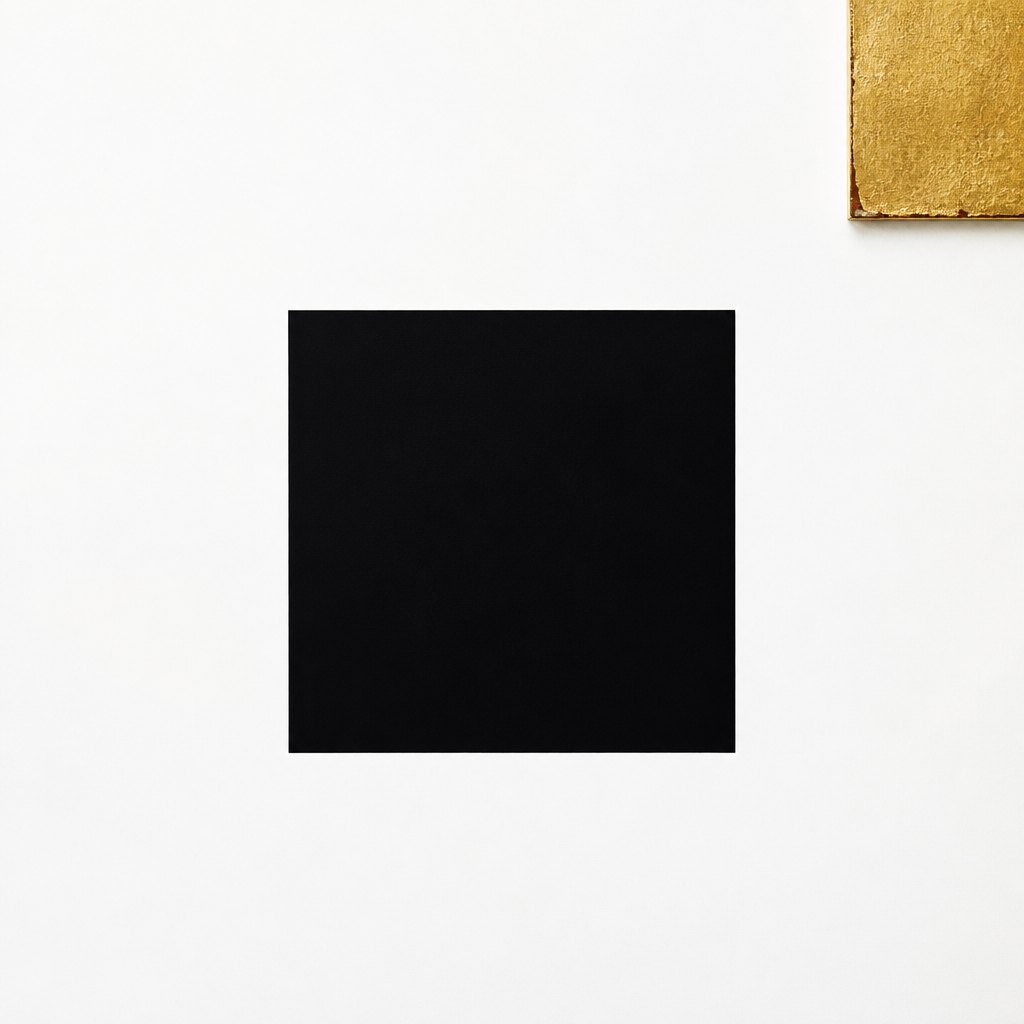
This example was generated from a prompt like: “A single black square centered on a plain white ground, painted with flat unmodulated pigment and no visible brushwork, evoking pure geometric abstraction, paired in mind with a small gold-leafed panel corner suggesting older gilding technique nearby.”
Open the Moscow Avant-Garde Art Style generator →The place today
The Tretyakov Gallery remains Moscow's essential stop, holding both Rublev's icons and the Suprematist and Constructivist avant-garde side by side. Many of the city's working churches still display icons in active devotional use, not just as museum objects. The avant-garde legacy, suppressed for decades under Soviet-era policy, has been reclaimed since the 1990s through exhibitions, restored Constructivist buildings, and a market that now prizes Malevich and his circle among the most valuable Russian art ever produced.
Compose your own
Pick one of two opposite disciplines. For the icon route, work on a wood panel with a gold leaf background, flatten all forms and drop cast shadow entirely, use reverse perspective so the space seems to open toward the viewer, and follow fixed poses and proportions rather than personal invention — icon painting is a rule-bound craft, not free expression. For the avant-garde route, strip a subject to its most basic geometric shapes, favor flat unmodulated color over blended tone, and think in terms of dynamic diagonal composition and industrial material rather than illusionistic space. Either way, this history rewards commitment to one extreme or the other, not a middle ground.
Frequently asked questions
What makes an icon Russian Orthodox rather than generic religious art?
Strict conventions: gold-ground backgrounds, reverse perspective, fixed saintly poses and proportions, and tempera on wood panel, all governed by Church tradition, with Andrei Rublev's early 15th-century work setting the enduring standard.
What is Suprematism?
An abstract art movement founded by Kazimir Malevich around 1915, built on pure geometric forms like squares and circles freed from any representational subject, aiming for what he called the 'supremacy of pure feeling' in art.
How is Constructivism different from Suprematism?
Suprematism stayed largely painterly and philosophical; Constructivism pushed art toward industrial materials, architecture, graphic design and propaganda, treating art as a tool for building the new Soviet society rather than pure contemplation.
Can I still see Rublev's icons in Moscow?
Yes, works attributed to Rublev and his circle are held at the Tretyakov Gallery, and paintings in his tradition remain in active use in several Moscow churches and monasteries linked to his training.