 Art
Art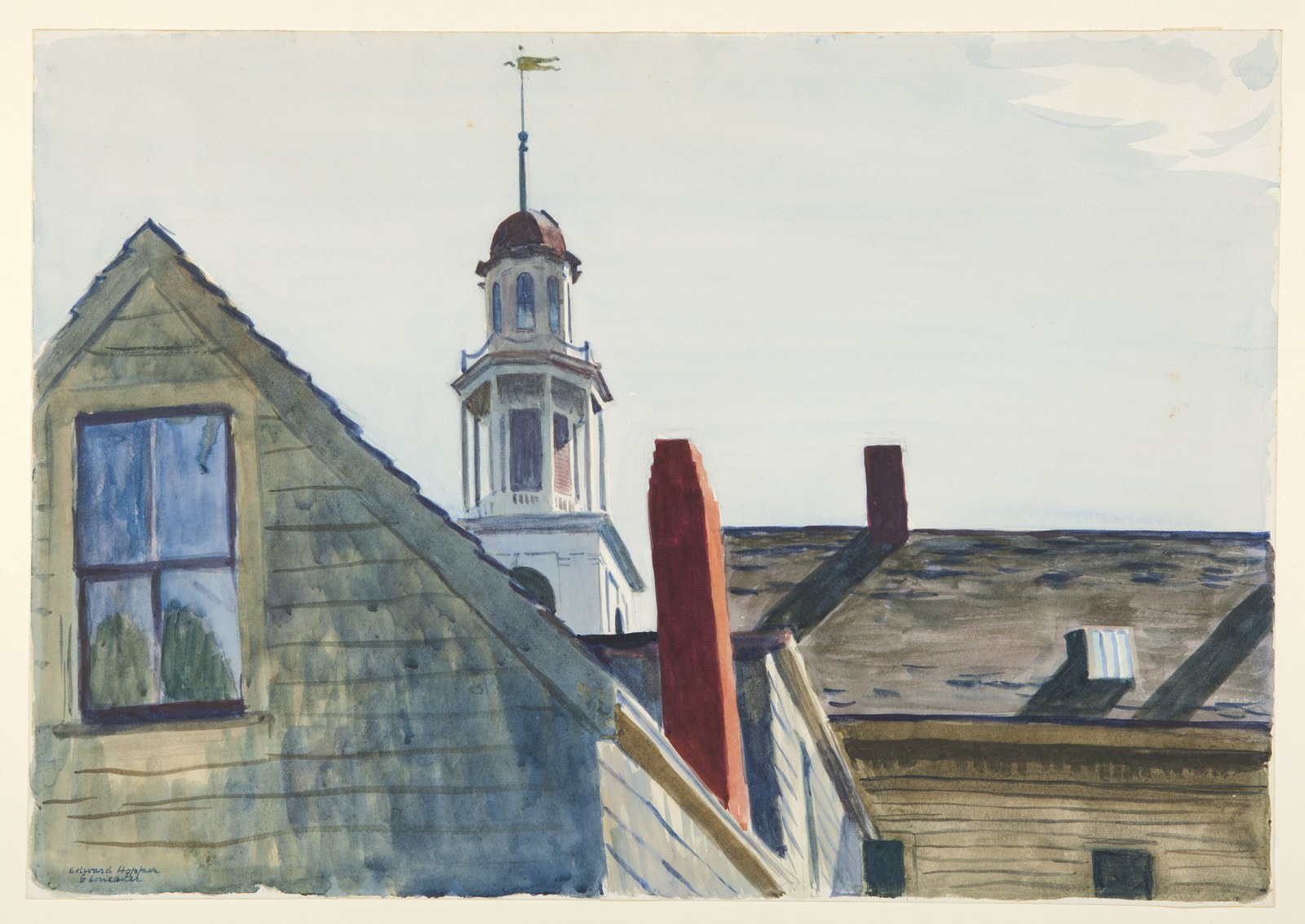
New England art is the painting tradition of the northeastern American coast and its inland hill towns, built on three overlapping habits: portraiture for a mercantile elite, marine painting for a seafaring economy, and a near-scientific attention to Atlantic light. Boston and its shipping fortunes supported limners and later academically trained portraitists from the colonial period onward, producing a long run of stiff, honest likenesses in starched linen and black broadcloth. By the mid-19th century, a group later labeled luminists — working around Narragansett Bay, the Massachusetts coast, and the White Mountains — pushed portraiture's patrons toward landscape, painting glassy harbors and haystack fields in a light so still it reads as silence. Winslow Homer relocated the region's subject from parlor to open water, spending his late career on the rocky Maine coast painting fishermen, surf, and weather with almost no sentiment. Cape Ann, Ogunquit, and Monhegan Island later drew art colonies chasing the same low, cold, water-reflected light.
What marks the region
Marine subject matter
Ships, harbors, dories, and working fishermen recur across three centuries, reflecting a regional economy built on shipping, whaling, and cod.
Luminist stillness
A mid-1800s strain of landscape painting flattens brushwork and sharpens tonal gradation to render windless harbors and salt marshes as glassy, near-silent light.
Plain-style portraiture
Colonial and Federal-era portraits favor frontal poses, black broadcloth, starched linen, and flat backgrounds — likeness and status over painterly flourish.
Granite, clapboard, and steeple
Coastal towns supply a recurring built vocabulary: white clapboard churches, granite ledges, and shingled fish houses anchor otherwise open compositions.
Cold, high-key palette
Grays, silvers, and cool blues dominate even summer scenes, keeping the temperature of Atlantic light rather than warming it for effect.
Weather as subject
Fog, breaking surf, and early snow are treated as the actual subject of a picture, not backdrop to a figure or event.
Local signatures
How to spot New England art
- Glassy, windless water
- → The luminist signature: a dead-calm harbor signals order, prosperity, and a Puritan-inflected idea of grace in nature.
- Black broadcloth coat
- → Standard male portrait dress signaling mercantile respectability rather than European aristocratic rank.
- Dory or lobster boat
- → A small open working boat marks the coast as a place of labor, not leisure yachting.
- White clapboard church spire
- → Shorthand for the Puritan town center and its civic order, often placed to anchor a harbor view.
- Breaking wave on rock
- → A recurring device for nature indifferent to human presence, common in coastal work painted after 1883 at Prout's Neck, Maine.
- Fog bank
- → Stands for the unpredictability of the fishing economy and the danger just past the harbor mouth.
The story
New England's art history begins with itinerant limners painting merchants and ministers in Boston and Newport, working from imported English mezzotints with little formal training. The region's wealth — shipping, whaling, and later textile mills — created patrons before it created academies, so portraiture matured decades ahead of landscape. Landscape arrived with a regional offshoot of the Hudson River School: painters drawn to the White Mountains and the Maine coast who, by the 1850s-60s, refined a distinct low-drama, high-light style historians would later name luminism. Winslow Homer, trained as a magazine illustrator, spent his first career covering the Civil War before retreating in 1883 to Prout's Neck, Maine, where he spent three decades painting the coast almost alone. By 1900, art colonies at Cape Ann, Ogunquit, and Monhegan Island had formalized the region as a summer painting destination, drawing American Impressionists to the same cold light the luminists had painted a generation earlier.
Masterpieces of the place
| Work | Artist | Date | Why it matters |
|---|---|---|---|
| Paul Revere | John Singleton Copley | 1768 | The silversmith at his workbench — plain-style Boston portraiture at its sharpest, status shown through tools, not costume. |
| Lumber Schooners at Evening on Penobscot Bay | Fitz Henry Lane | 1860 | A textbook luminist harbor: motionless water, raking light, and near-total silence. |
| Approaching Storm: Beach near Newport | Martin Johnson Heade | 1861-62 | Luminism's darker register — the same still light held just before weather breaks it. |
| The Fog Warning | Winslow Homer | 1885 | A lone dory fisherman races fog and current back to his schooner — labor, not leisure, on the water. |
| The South Ledges, Appledore | Childe Hassam | 1913 | Isles of Shoals rock and sea in broken Impressionist color, the luminists' light updated a generation later. |
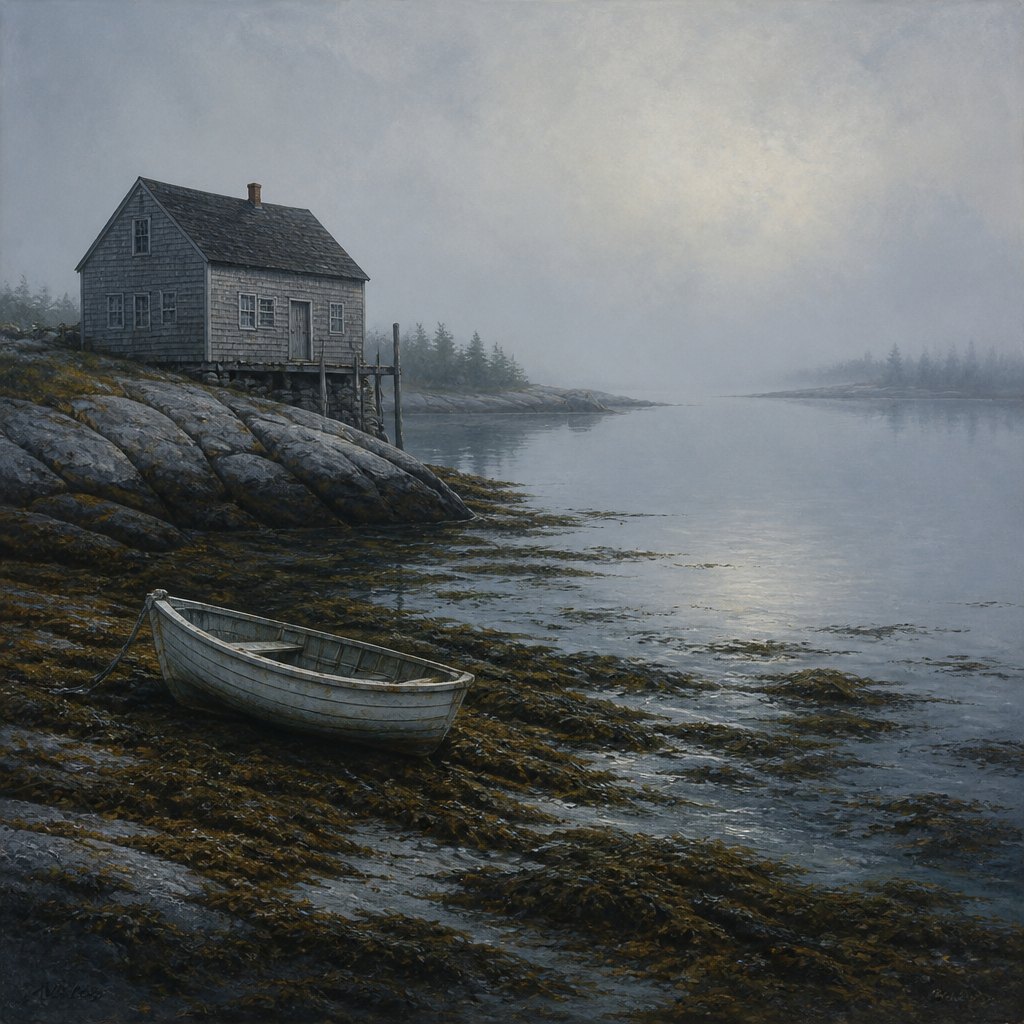 AI-generated
Work en plein air
Paint in the light of New England
This example was generated from a prompt like: “A weathered gray clapboard fish house on a granite ledge at low tide, one empty dory pulled onto rockweed, cold silver light on dead-calm harbor water, thin fog dissolving at the horizon, muted blue-gray palette, painterly stillness.”
Open the New England Maritime Art Style generator →The place today
Maine's coast still supports the region's densest concentration of working artists, from Rockport and Ogunquit's long-running summer colonies to Portland's gallery district. The Farnsworth Art Museum in Rockland anchors Wyeth-family scholarship and regional landscape painting, while Cape Ann's Rockport Art Association keeps the plein-air tradition active. Boston and Providence supply the academic side — the School of the Museum of Fine Arts and RISD — training painters who mostly leave for New York, even as galleries in Portland, Provincetown, and Burlington keep a smaller, coast-facing market alive.
Compose your own
Paint or shoot at the edges of the day, when Atlantic light lies low and flat instead of overhead and harsh — luminist stillness depends on that raking angle. Choose a subject with almost no movement: a moored boat, a windless cove, a single church spire against sky, and let tonal gradation do the work instead of visible brushwork. Keep the palette cool — grays, silvered blues, muted ochre — even in July, since New England light stays cold-toned regardless of season. For the coastal-realist alternative, go the opposite way: pick a subject mid-action, a wave breaking on ledge or a boat working a swell, and paint it with weight and almost no sentiment. Either mode rewards patience over speed.
Frequently asked questions
What is luminism?
A mid-19th-century American landscape style, strongest in New England, that renders still water and open sky in smooth, almost invisible brushwork and sharply calibrated light. It favors calm harbors over dramatic weather, aiming for meditative stillness.
Why did Winslow Homer move to Maine?
After decades as an illustrator and Civil War artist, Homer sought isolation and settled at Prout's Neck in 1883, where the Atlantic supplied a lifelong subject: fishermen, surf, and weather observed with near-documentary detachment.
Why so much portraiture in colonial New England?
Puritan culture discouraged religious imagery, so patronage flowed almost entirely into portraits of merchants, ministers, and their families — a way to display status without violating suspicion of visual excess.
Where do the art colonies survive today?
Ogunquit and Monhegan Island in Maine, and Rockport on Massachusetts's Cape Ann, still run active summer colonies and associations founded a century ago, drawing plein-air painters back to the same coastal light every season.