 Art
Art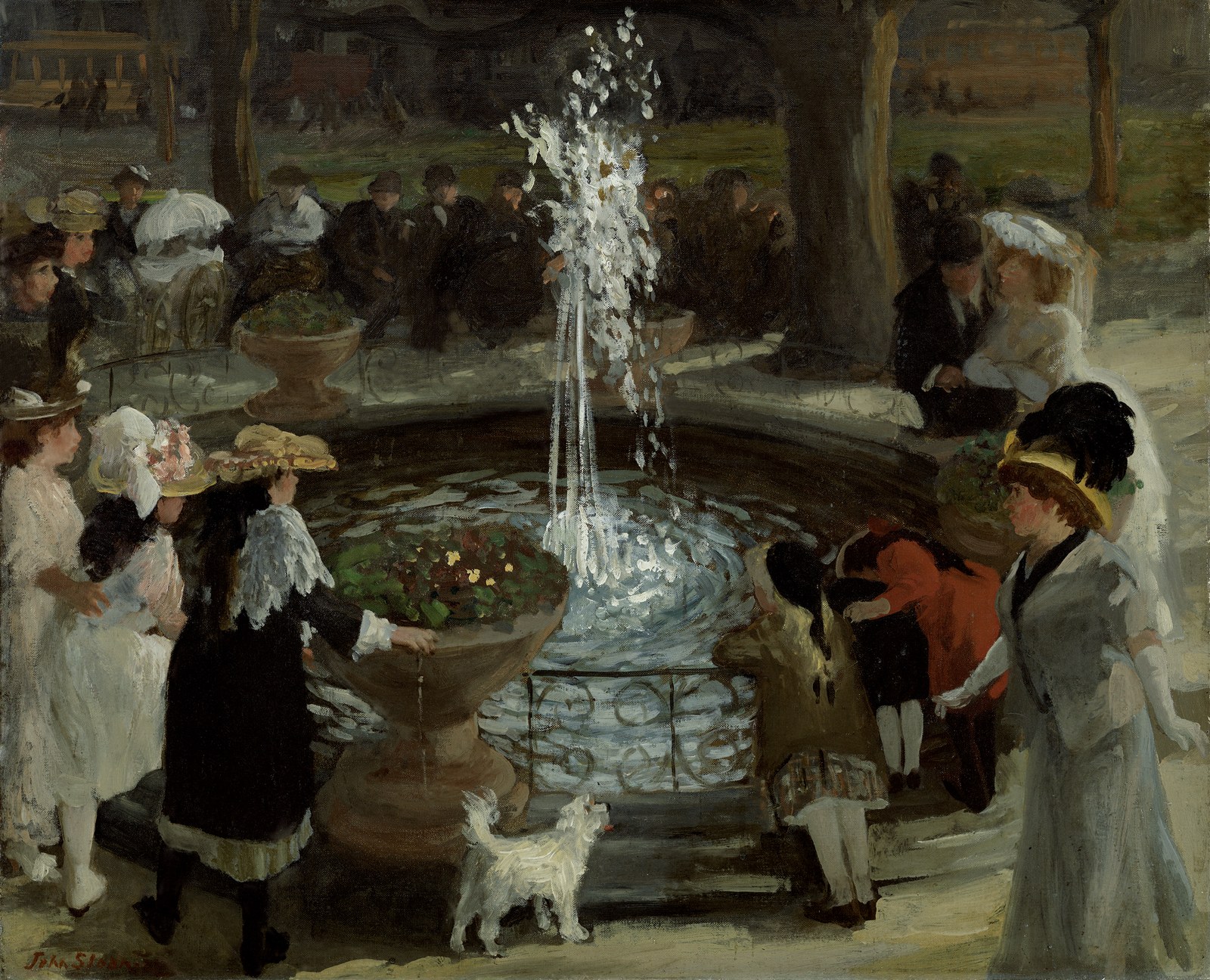
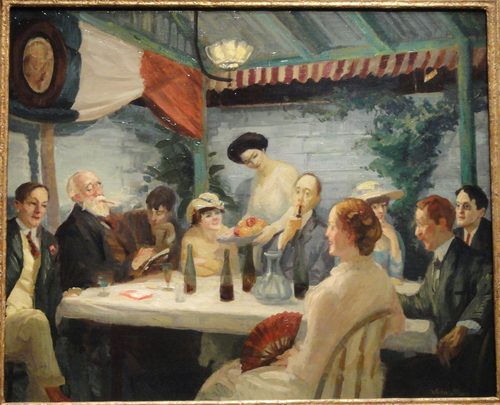
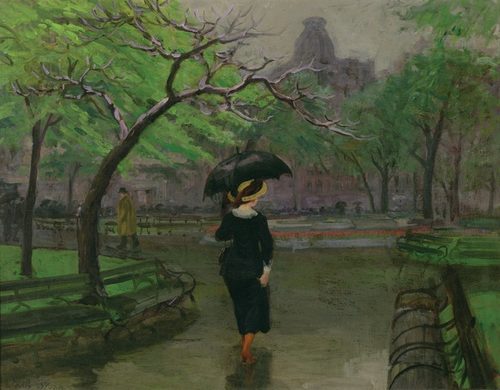
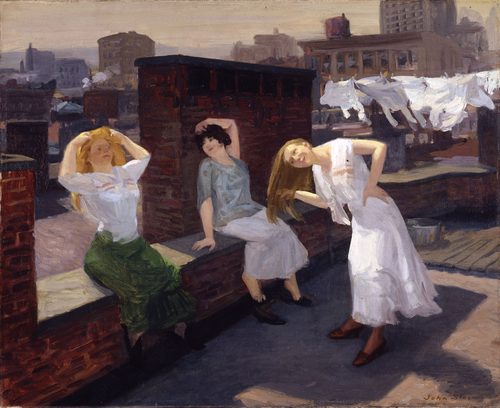
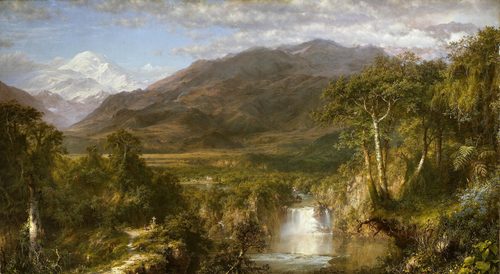
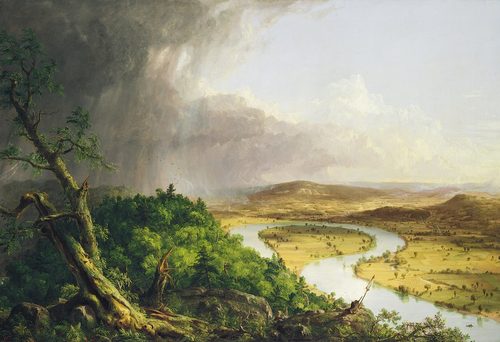
New York's art history is really three overlapping movements tied to the same expanding metropolis. The Hudson River School, launched by Thomas Cole's 1825 arrival, painted the sublime wilderness of the nearby Catskills and Hudson Valley for wealthy New York patrons who wanted evidence of a young nation's grandeur; by mid-century Frederic Church and Albert Bierstadt pushed the same luminist light toward Niagara and the Rockies. As the city itself grew crowded with immigration and industry, a reaction set in: around 1900 Robert Henri and his circle, later called the Ashcan School, turned instead toward tenements, saloons, boxing clubs, and elevated trains, painting working-class city life in loose, dark-toned brushwork the Academy considered vulgar. The 1913 Armory Show, held in Manhattan, then introduced European modernism and effectively ended Ashcan dominance. Two decades later, the Works Progress Administration funded public murals for New York's post offices, schools, and hospitals from 1935 to 1943, employing artists to paint social-realist and regionalist scenes of labor and civic life on government walls.
What marks the region
Luminist light
Hudson River School painters built canvases around a single glowing light source, often low sun or mist over water, to give American wilderness a sense of divine grandeur.
Field sketch, studio finish
Painters made rapid pencil and oil sketches outdoors in the Catskills or further west, then composed and finished the large exhibition canvas back in a New York studio.
Tonal urban realism
Ashcan painters worked fast in a dark, limited palette close to Dutch and Spanish old masters, prioritizing mood and gesture over fine finish in scenes of city streets.
Everyday subject matter
Saloons, laundry lines, boxing matches, and immigrant tenements replaced allegory and landscape as worthy subjects, a direct challenge to National Academy taste.
Government-commissioned murals
WPA muralists worked to strict federal guidelines for public buildings, painting readable, didactic scenes of labor, industry, and civic history meant for non-expert audiences.
Regionalist figure types
WPA murals favored simplified, monumental figures of workers and citizens, echoing Mexican mural painting's influence on American public art of the 1930s.
Local signatures
How to spot New York art
- Mist over the Hudson
- → A luminous haze standing for the sublime, untouched grandeur of American wilderness before industrial settlement.
- Distant sunlit peak
- → A far, glowing mountain or waterfall representing the promise of westward expansion in Hudson River School panoramas.
- Elevated train or fire escape
- → Shorthand for the crowded, mechanized immigrant city that Ashcan painters chose over pastoral subjects.
- Saloon interior
- → A working-class social space Ashcan painters used to picture ordinary city leisure without moralizing.
- Muscular laborer figure
- → The idealized worker at the center of WPA murals, standing for Depression-era dignity of labor and government-sponsored recovery.
- Skyline silhouette
- → Manhattan's growing towers appear as backdrop across all three movements, marking the city's relentless vertical growth.
The story
Thomas Cole's arrival in New York in 1825 and his Catskill wilderness views launched the Hudson River School, America's first native landscape movement, supported by the newly founded National Academy of Design. Frederic Church and Albert Bierstadt extended its luminist light to Niagara Falls and the Rocky Mountains through the 1860s, selling monumental canvases to industrial-era patrons. By the 1890s, taste had shifted toward European styles, and the wilderness sublime felt dated. Around 1900, painter and teacher Robert Henri gathered a circle, including John Sloan, George Luks, William Glackens, and Everett Shinn, who rejected genteel Academy subjects for New York's tenements and streets; their 1908 group show as The Eight became known as the Ashcan School. The 1913 Armory Show introduced Cubism and Fauvism to American audiences, undercutting Ashcan influence almost overnight. During the Depression, the Federal Art Project, active 1935 to 1943, commissioned social-realist murals for New York post offices, schools, and hospitals, employing artists including Reginald Marsh before the program wound down during wartime budget cuts.
Masterpieces of the place
| Work | Artist | Date | Why it matters |
|---|---|---|---|
| The Oxbow (View from Mount Holyoke) | Thomas Cole | 1836 | A panoramic Hudson Valley view contrasting wilderness and settlement, a founding Hudson River School image. |
| Niagara Falls, from the American Side | Frederic Edwin Church | 1867 | A luminist showpiece painted for exhibition, spreading Hudson River School fame internationally. |
| McSorley's Bar | John Sloan | 1912 | A dim, tonal saloon interior typical of the Ashcan School's working-class New York subject matter. |
| Cliff Dwellers | George Bellows | 1913 | A crowded tenement street scene rendered in the loose, dark-toned brushwork of the Ashcan generation. |
| Custom House mural | Reginald Marsh | 1937 | A Federal Art Project mural for a New York government building, part of the WPA's public art program. |
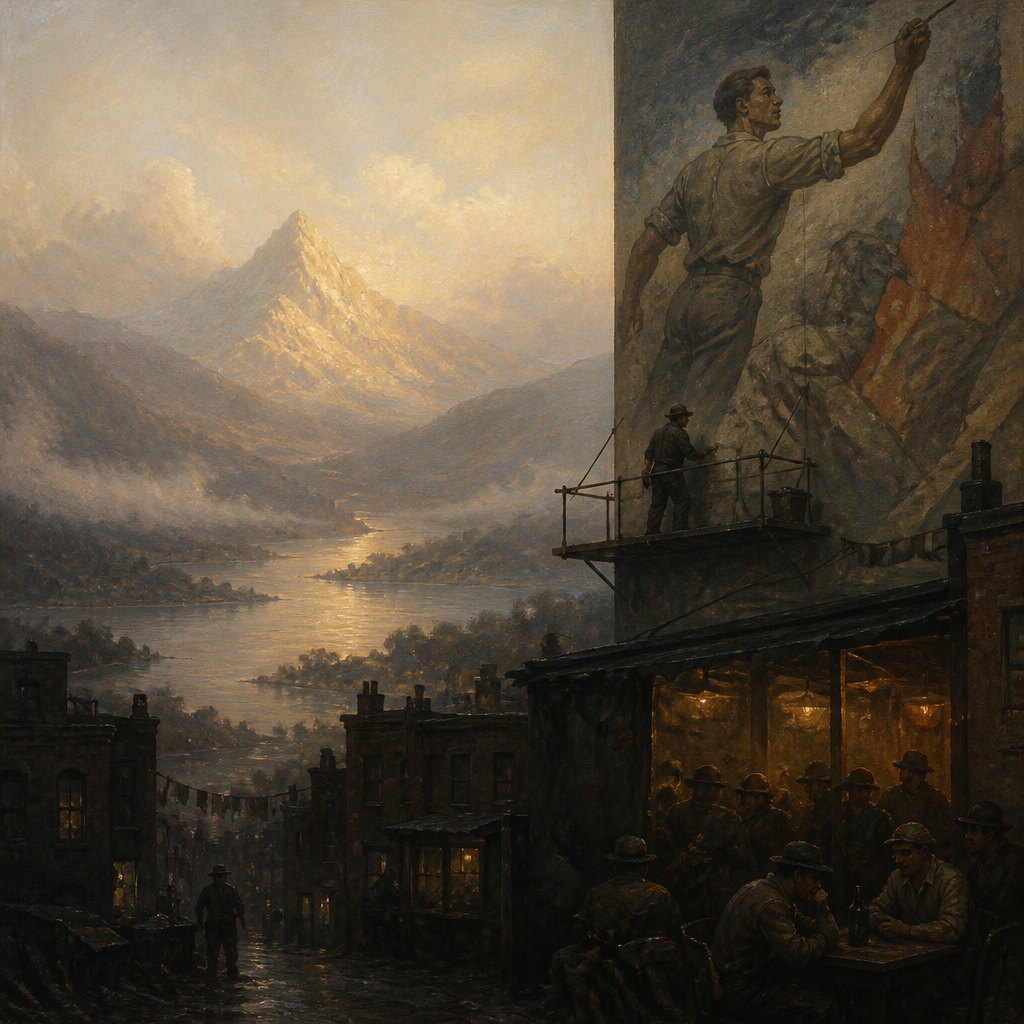 AI-generated
Work en plein air
Paint in the light of New York
This example was generated from a prompt like: “A misty river valley with one glowing distant peak, painted in smooth luminist light, beside a dim tenement saloon rendered in loose dark brushwork, and a monumental mural laborer on a nearby public wall.”
Open the New York Art Style generator →The place today
The Metropolitan Museum of Art and the New-York Historical Society hold major Hudson River School canvases, while the Whitney traces the Ashcan School's break from academic taste. Original WPA murals survive in working post offices and public schools across the five boroughs, some restored, some still in daily use. The National Academy Museum preserves the institution both movements reacted to or emerged from. None of these movements drives New York's current art market, but their public murals and museum holdings remain freely visible parts of the city's everyday civic fabric.
Compose your own
For Hudson River School mood, build a landscape around one glowing light source, mist rising off water or a distant sunlit peak, and keep brushwork smooth and finely blended so the wilderness feels timeless rather than sketched. For Ashcan grit, switch to a dark, limited palette and loose, visible brushwork, and set the same city in a saloon, tenement stairwell, or crowded street corner, painted quickly as if caught in passing. For a WPA mural feel, flatten and monumentalize the figures, a laborer, a nurse, a dockworker, giving them simplified, sculptural weight against a shallow background of industry or civic architecture, and keep the palette muted, earthy, and legible from a distance.
Frequently asked questions
Why did the Hudson River School fall out of favor?
By the 1870s-80s, American taste shifted toward European Barbizon and Impressionist styles, and the earlier movement's grand wilderness panoramas came to feel outdated against smaller, looser European-influenced painting.
What linked the Ashcan School painters together?
Most trained under or alongside Robert Henri, rejected National Academy subject matter, and exhibited together in New York, most notably the 1908 group show known as The Eight, which gave the movement its identity.
What was the Armory Show and why did it matter to New York?
A 1913 Manhattan exhibition that introduced Cubism, Fauvism, and other European modernist styles to American audiences, quickly overshadowing the Ashcan School's realist approach among younger painters and collectors.
Can WPA murals still be seen in New York today?
Yes. Many federally commissioned murals from the 1935-1943 Federal Art Project remain in their original New York post offices, schools, and hospitals, some restored and still viewable during public hours.