 Art
Art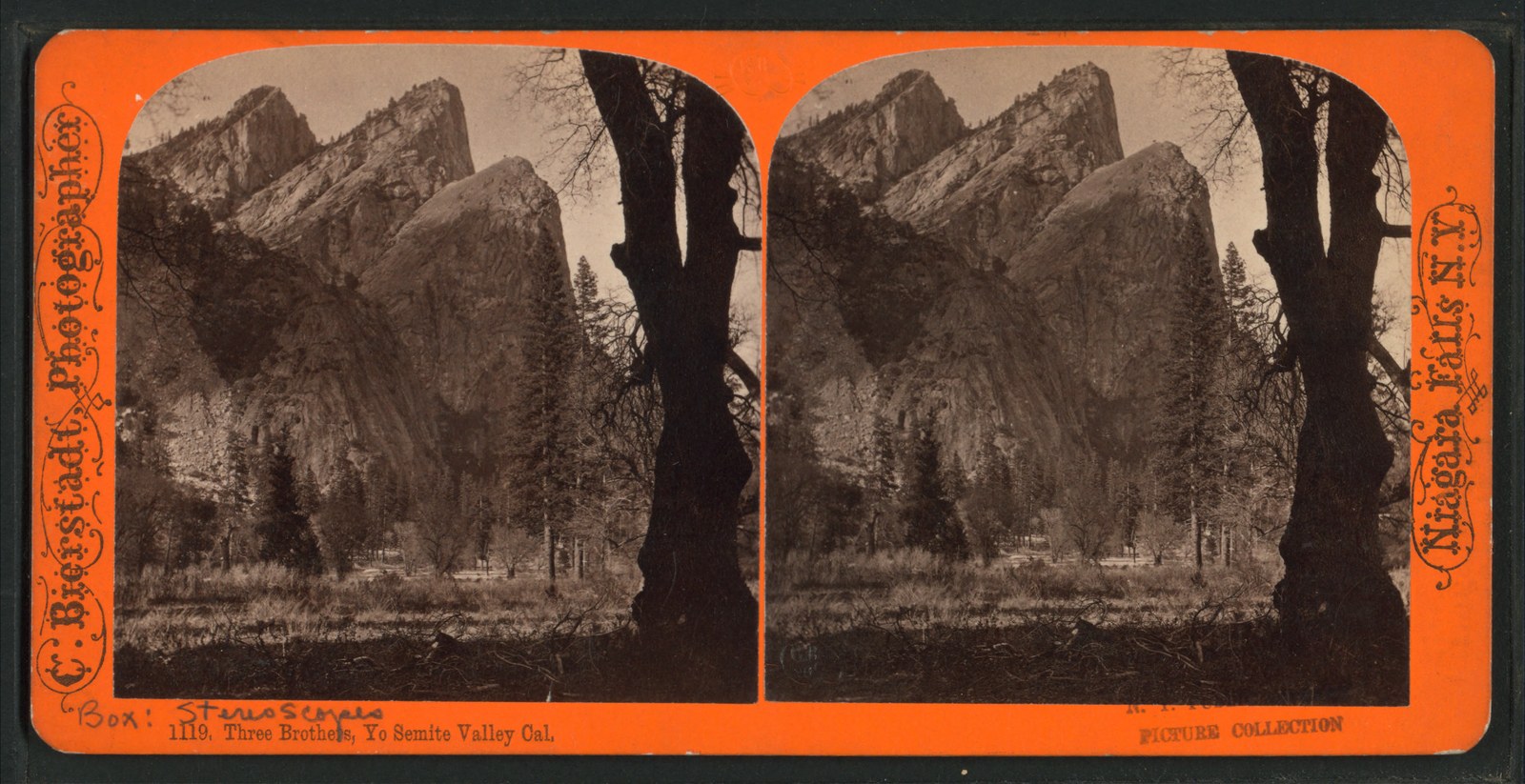
California art, in its classic sense, refers to the plein-air Impressionist painting produced up and down the state's coast between roughly 1890 and 1930, when painters trained in Paris and Giverny brought broken-color technique home to a light unlike anything in France — drier, warmer, and gold rather than silver. Eucalyptus trees, imported from Australia in the 1850s for lumber and windbreaks, became an unlikely signature subject, their peeling bark and long shadows offering exactly the kind of dappled effect Impressionist technique was built to capture. Colonies formed around Laguna Beach, Carmel, and the Monterey Peninsula, each built around a specific coastal light rather than a shared philosophy, while Los Angeles and San Francisco supplied the market and the art schools. The movement ran alongside, and eventually gave way to, a modernist wing centered on photography: Group f/64's sharp-focus landscape work in the 1930s pushed California art from painted gold light toward high-contrast black-and-white precision, a shift as consequential to the state's art identity as the plein-air colonies themselves.
What marks the region
Broken color, visible brushwork
California Impressionists applied French plein-air technique directly, building form from short, distinct strokes of unmixed color rather than smooth blending.
Eucalyptus as signature motif
The imported tree's peeling bark, long shadows, and silvery leaf color became a favorite vehicle for demonstrating dappled light effects.
Gold-hour coastal light
Paintings favor the warm, low-angle light of late afternoon over midday, giving the region's signature golden rather than silver tonality.
Poppy fields and coastal chaparral
Wild California poppies and dry native scrub supplied a saturated orange-and-gold subject unavailable to painters working in Europe.
Small-format outdoor studies
Many works were painted quickly, on-site, at modest scale, prioritizing immediate light effect over studio finish.
Sharp-focus modernist photography
The later Group f/64 reaction favored large-format cameras, small apertures, and unmanipulated prints, rejecting the painterly softness of the plein-air era.
Local signatures
How to spot California art
- Peeling eucalyptus bark
- → A near-universal shorthand for California light, since the tree's mottled surface displays dappled sun better than almost any native species.
- Orange poppy field
- → California's state flower reads as regional pride and a ready-made saturated-color subject unique to the West Coast.
- Weathered coastal cypress
- → Twisted cypress trees signal the specific Carmel-Big Sur stretch of coast rather than California generally.
- Mission-tile roofline
- → A low red-tile roof edge marks Spanish-colonial California history within an otherwise landscape-focused composition.
- Sharp-focus dune or rock form
- → In Group f/64 photography, an isolated natural form shot at extreme depth of field stands for objective, unmediated observation.
- Long gold-hour shadow
- → A stretched, warm-toned shadow signals the specific late-afternoon light colonies like Laguna Beach were founded to chase.
The story
California's art market took shape after the 1849 Gold Rush, but its defining style arrived later, as American painters returned from Parisian academies and the artist colony at Giverny in the 1890s carrying French Impressionist technique. They found a coastal light that behaved differently from Europe's — drier air, longer summer, and a warmer color temperature — and adapted broken color and visible brushwork to eucalyptus groves, poppy fields, and ocean bluffs. Laguna Beach's colony formalized in 1918 with an eponymous art association; Carmel-by-the-Sea drew a parallel group around the same decade, mixing painters with writers. The style peaked through the 1920s before the Depression and changing taste eroded its market. A distinct modernist reaction followed in the 1930s: Group f/64, a Bay Area photography circle, rejected painterly softness for sharp-focus, high-contrast black-and-white images of the same coastal and desert subjects, arguing photography should look like photography rather than imitate painting. Both movements remain the two poles of the state's classic art identity.
Masterpieces of the place
| Work | Artist | Date | Why it matters |
|---|---|---|---|
| Eucalyptus Trees | William Wendt | c. 1917 | A near-vertical grove study that made the imported tree the defining subject of Southern California plein-air painting. |
| Poppy Field | Granville Redmond | c. 1926 | A saturated orange hillside that turned the state flower into a signature Impressionist subject. |
| The Cypress at Point Lobos | William Ritschel | c. 1920s | A weathered coastal tree rendered with thick, wind-shaped brushwork, tying Carmel's colony to a specific rock-and-sea site. |
| Magnolia Blossom | Imogen Cunningham | 1925 | A sharp-focus close study central to the Group f/64 sensibility, even predating the group's formal 1932 founding. |
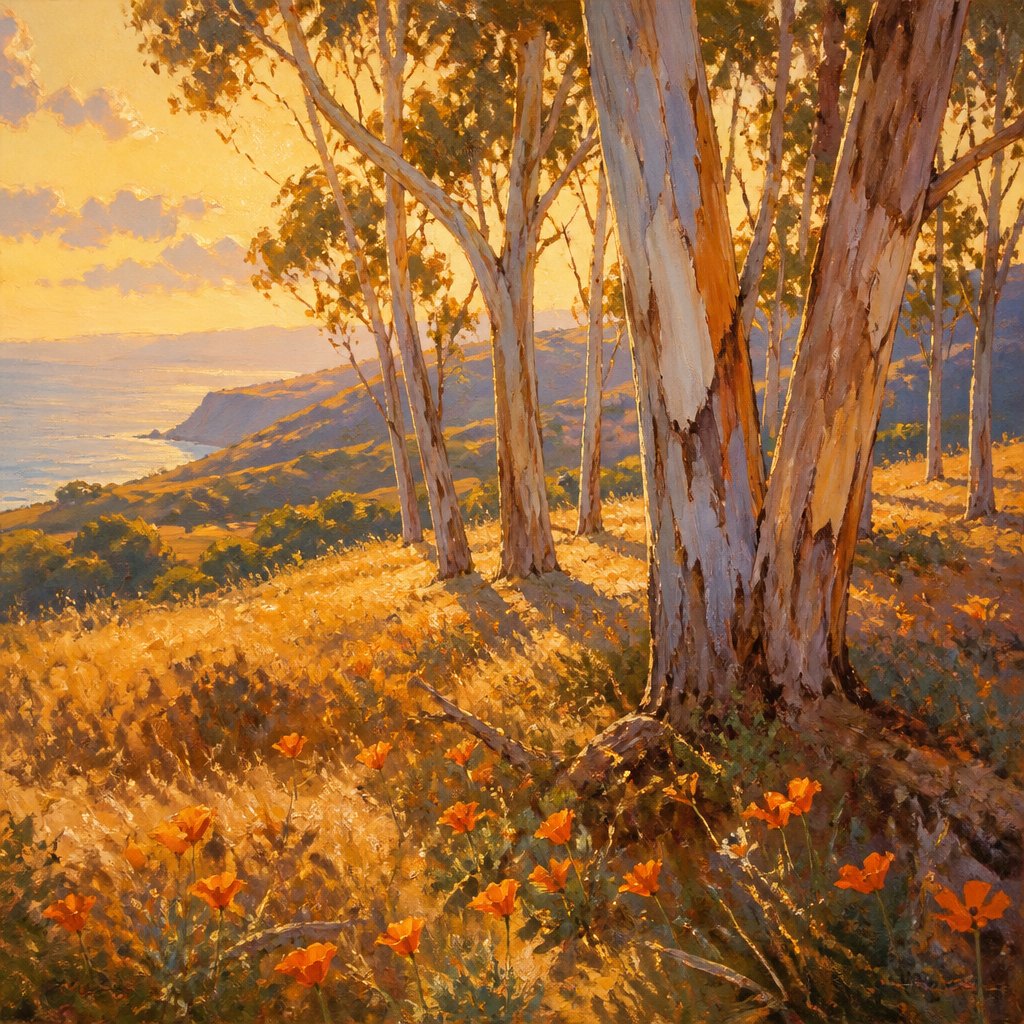 AI-generated
Work en plein air
Paint in the light of California
This example was generated from a prompt like: “A grove of peeling-bark eucalyptus trees on a dry golden hillside, long warm-toned shadows from late-afternoon sun, wild orange poppies scattered in foreground grass, distant hazy coastal bluff, loose visible brushwork, saturated gold Impressionist light.”
Open the California Plein Air Art Style generator →The place today
Laguna Beach still runs a working plein-air festival and art association tracing directly to its 1918 founders, and Carmel's gallery district keeps a similar market alive for landscape painting. San Francisco and Los Angeles now carry the state's contemporary weight instead, anchored by SFMOMA, LACMA, and a large working photography and studio-craft scene descended from Group f/64's legacy. The Laguna Art Museum and Irvine Museum both hold major California Impressionist collections, keeping the plein-air period visible alongside the state's much larger contemporary market.
Compose your own
Work outdoors, on-site, and fast, chasing a single light effect rather than a fully resolved scene — the style depends on capturing a specific hour, not idealizing it. Favor late afternoon, when California's dry air throws long, warm-toned shadows across hillsides, tree bark, or dry grass. Build form with short, visible strokes of distinct, unmixed color set side by side rather than blended smooth, letting the eye mix them from a distance. Choose a subject with natural texture — peeling bark, dry scrub, weathered rock — since broken color reads best against irregular surfaces. Keep the overall temperature warm and golden rather than cool, and resist over-finishing; an unfinished, sketch-like edge is part of the style, not a flaw.
Frequently asked questions
What is California Impressionism?
A plein-air painting style active roughly 1890-1930, applying French Impressionist technique to California's coastal and hillside light. Painters favored broken color, visible brushwork, and outdoor, on-site working methods over studio finish.
Why do eucalyptus trees appear so often?
The tree was imported from Australia in the 1850s for lumber and windbreaks, but its peeling bark and dappled shadow turned out to be an ideal subject for demonstrating Impressionist light technique.
What is Group f/64?
A 1930s San Francisco Bay Area photography group that rejected painterly, soft-focus photography for sharp-focus, large-format, unmanipulated prints — a modernist reaction against the plein-air era's aesthetic.
Where are the major colonies today?
Laguna Beach and Carmel-by-the-Sea still support working art associations and galleries founded in the plein-air era, while San Francisco and Los Angeles anchor the state's larger contemporary market.