 Art
Art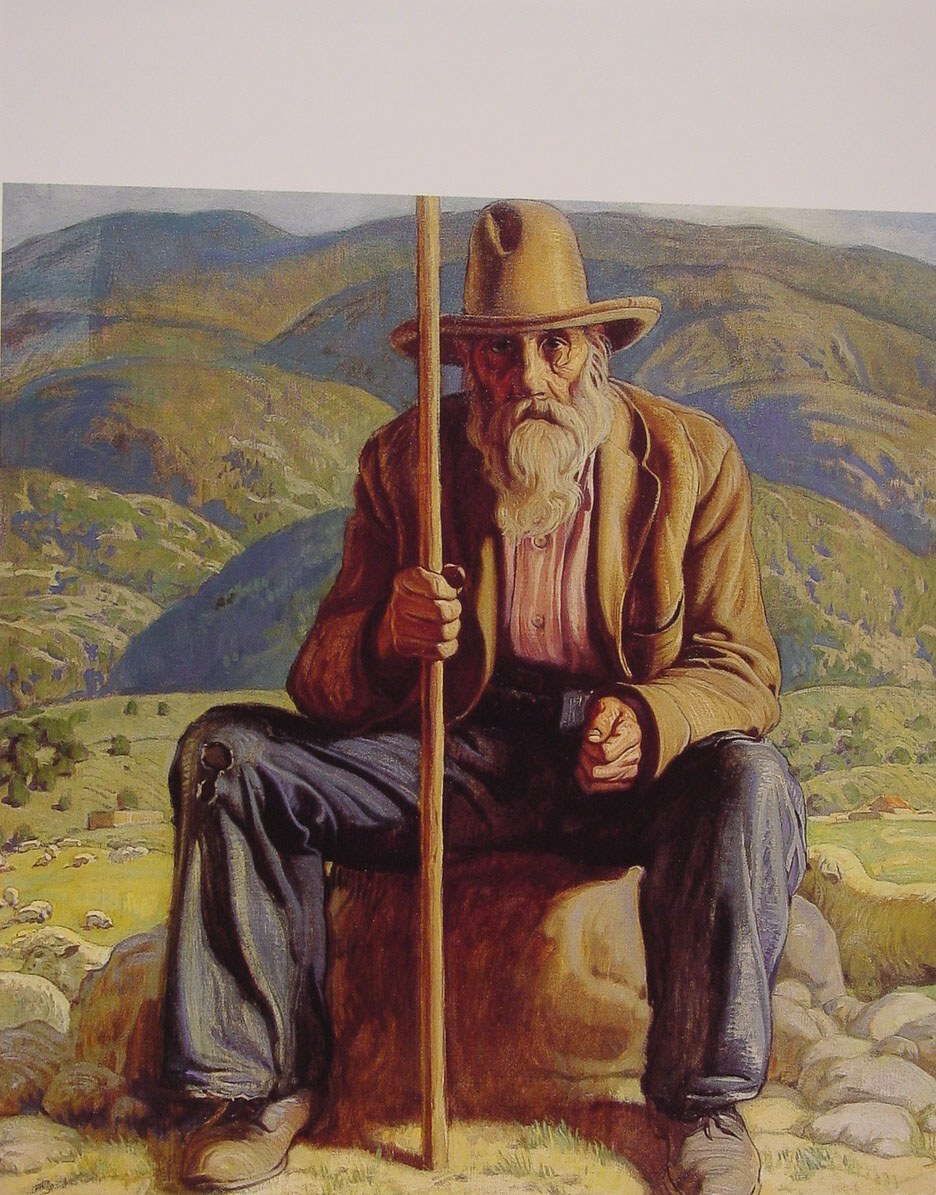
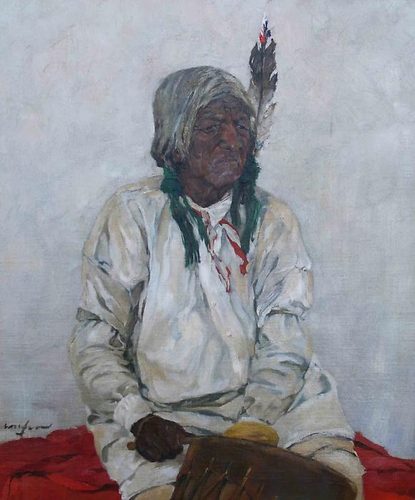
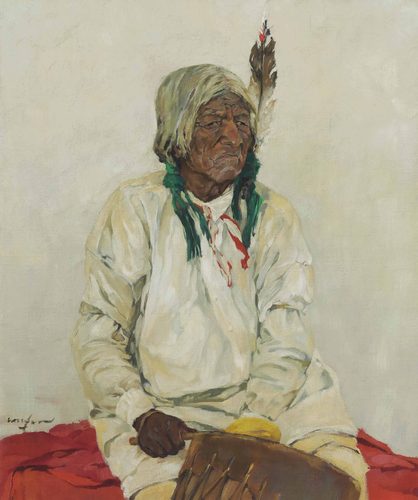
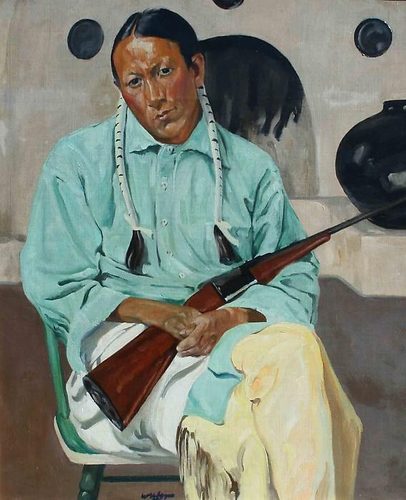
Taos art names the painting colony that formed around the northern New Mexico town of Taos after 1898, when illustrators Ernest Blumenschein and Bert Geer Phillips, stranded by a broken wagon wheel on a supply run from Denver, decided to stay. At 7,000 feet, Taos offered an unusually clear, thin-air light and a palette found nowhere else in American painting: ochre adobe, turquoise sky, sage green, set against the thousand-year-old Taos Pueblo. There was no court or church patron; painters sold instead through railroad tourism promotion and Eastern collectors drawn to Southwestern subject matter. In 1915 six founding painters formed the Taos Society of Artists to organize national traveling shows, formalizing an academic realist style applied to Pueblo life, Hispano villages, and adobe form. Patron Mabel Dodge Luhan, settled in Taos from 1917, extended the colony's reach into literature and design, hosting writers alongside painters.
What marks the region
Academic realism, Native subject
Painters trained in Paris or Beaux-Arts academies applied that finish to Pueblo dancers, adobe walls, and Hispano villagers, a combination unique to the Taos school's early decades.
High-desert plein air light
The thin, unfiltered light of a 7,000-foot desert plateau produced hard-edged shadows and saturated color that painters treated as a defining local phenomenon worth studying directly.
Adobe as subject and geometry
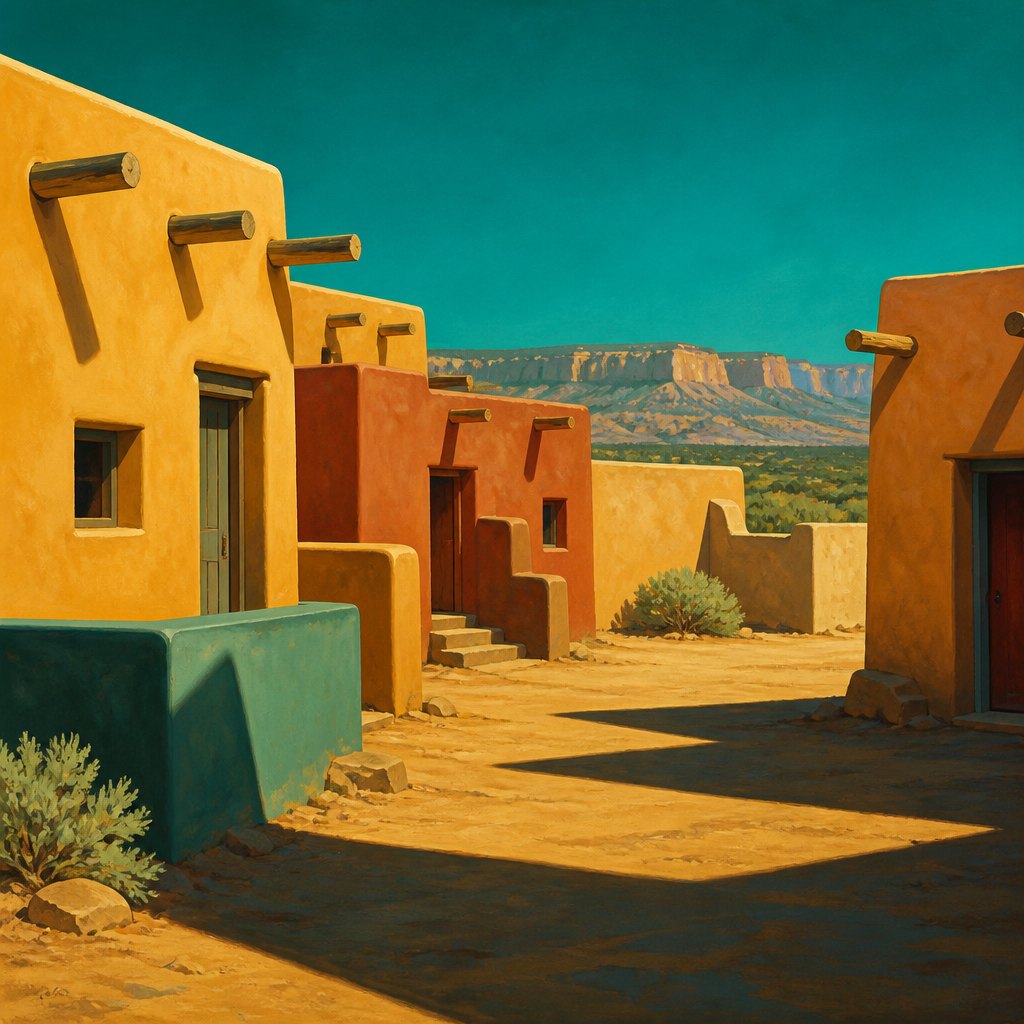
Flat-roofed adobe walls, vigas, and ladders supplied simplified geometric masses that painters used as compositional anchors against open sky and mesa.
Ceremony as spectacle
Pueblo dances and feast days were painted as major set-pieces, reflecting both genuine fascination and the era's tendency to present Native life for outside audiences.
Studio-finished sketches
Outdoor color studies were routinely reworked into larger, exhibition-ready canvases back in home studios, keeping the finished product closer to salon painting than to raw Impressionism.
National traveling circuit
The Taos Society of Artists organized shows sent to Eastern cities on a fixed schedule, a deliberate marketing structure absent from most smaller American colonies.
Local signatures
How to spot Taos art
- Adobe walls and vigas
- → Local architecture used as both literal subject and simplified geometric backdrop for figures.
- Pueblo ceremonial dress
- → Feast-day regalia signaling documented Native ritual life, a recurring centerpiece subject.
- Blanket-wrapped figures
- → Woven Pueblo or Navajo blankets worn as everyday cloaks, a shorthand for regional identity.
- Turquoise sky, long shadow
- → The high-desert light effect painters treated as the region's signature optical condition.
- Cottonwoods along the river
- → Rare green corridor marking the Rio Grande against surrounding dry mesa and sage.
- Horse and rider against mesa
- → Working ranch life set against flat-topped desert landforms, a Western genre staple.
The story
Painters Bert Geer Phillips and Ernest Blumenschein settled in Taos in 1898 after their supply wagon broke down nearby. Joseph Henry Sharp, E. Irving Couse, W. Herbert Dunton, and Oscar Berninghaus joined over the following years, and in 1915 the six formed the Taos Society of Artists to circulate exhibitions to Eastern cities. Membership grew to include Victor Higgins and Walter Ufer by the 1920s. Patron Mabel Dodge Luhan arrived in 1917, married a Taos Pueblo man, and drew writers including D. H. Lawrence, who visited in 1922. Internal disagreement over exhibition policy led the Society to dissolve in 1927. Georgia O'Keeffe painted in the region beginning in 1929, working independently of the Society. The Harwood Foundation, established 1923, later became a public museum preserving the colony's output alongside Taos Pueblo's continuous Native community.
Masterpieces of the place
| Work | Artist | Date | Why it matters |
|---|---|---|---|
| Taos Pueblo | Joseph Henry Sharp | c. 1920s | One of many Sharp canvases documenting Pueblo architecture and daily life in careful academic detail. |
| The Captive | E. Irving Couse | 1891 | An early Couse work exhibited at the Paris Salon before he settled permanently in Taos. |
| Roundup in the Sage | W. Herbert Dunton | c. 1920 | A Western genre scene reflecting Dunton's parallel career as an illustrator of cowboy life. |
| Winter, Taos Mountain | Victor Higgins | c. 1925 | A later Society member's landscape showing the shift toward simplified, near-modernist form. |
| Indian Camp near Taos | Oscar Berninghaus | c. 1918 | Typical Society subject matter pairing Pueblo life with the surrounding high-desert terrain. |
 AI-generated
Work en plein air
Paint in the light of Taos
This example was generated from a prompt like: “A cluster of flat-roofed adobe buildings with exposed roof beams under a deep turquoise sky, long hard-edged shadows crossing a dirt plaza, distant sagebrush mesa, painted in saturated ochre, terracotta, and sage-green desert light.”
Open the Taos Art Style generator →The place today
The Harwood Museum of Art and the Taos Art Museum, housed in painter Nicolai Fechin's former home, hold the colony's core collection. Taos Pueblo remains an inhabited community and UNESCO World Heritage site, with public feast days open to visitors on a fixed calendar. The Millicent Rogers Museum preserves regional Native and Hispano craft, and Pueblo pottery and weaving continue as living, publicly taught traditions distinct from the painting colony itself.
Compose your own
Work with hard-edged, high-contrast light rather than soft atmospheric haze: shadows should read as flat, saturated shapes, not gradual tone. Build compositions around adobe geometry, flat roofs, vigas, ladders, set against open sky or a mesa horizon. Keep the palette centered on ochre, terracotta, sage green, and turquoise, applied with more saturation than a Northern European landscape would allow. If including figures, dress and setting should read as high-desert ranch or village life rather than generic pastoral scenery. Finish with the polish of academic studio painting, not loose plein air sketchiness, since the school prized resolved, exhibition-ready surfaces even when the initial study was made outdoors.
Frequently asked questions
Why did painters settle specifically in Taos and not elsewhere in the Southwest?
A broken wagon wheel stranded Ernest Blumenschein and Bert Phillips near Taos in 1898, and the high-desert light, adobe architecture, and nearby Taos Pueblo convinced them to stay, drawing further painters over the next two decades.
What was the Taos Society of Artists?
A group founded in 1915 by six painters to organize traveling exhibitions of their work in Eastern cities, giving the isolated colony national exposure. It grew to a dozen members before dissolving in 1927 over exhibition policy disputes.
Was Georgia O'Keeffe part of the Taos art colony?
She painted in the wider Taos and Abiquiu region beginning in 1929, after the Taos Society of Artists had dissolved, and worked independently rather than as a Society member.
Is Taos Pueblo still an active community today?
Yes. Taos Pueblo remains inhabited, holds public feast days on a set annual calendar, and is recognized as a UNESCO World Heritage Site, separate from and older than the painting colony that formed nearby.