 Art
Art
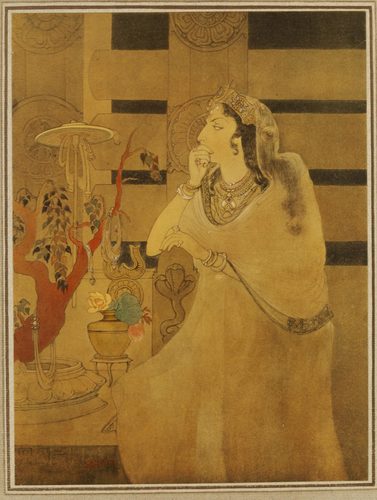
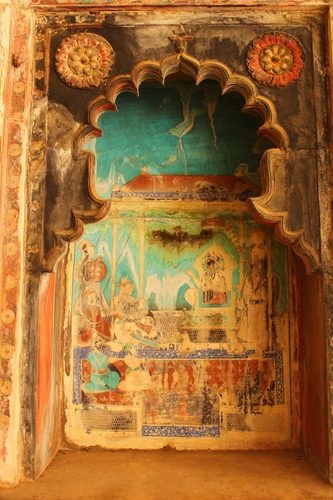
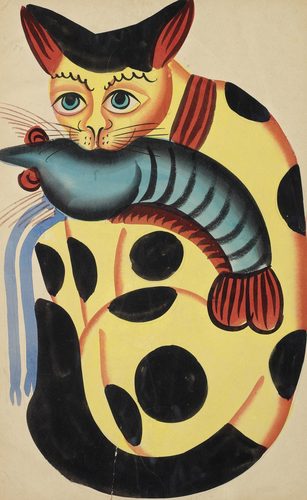
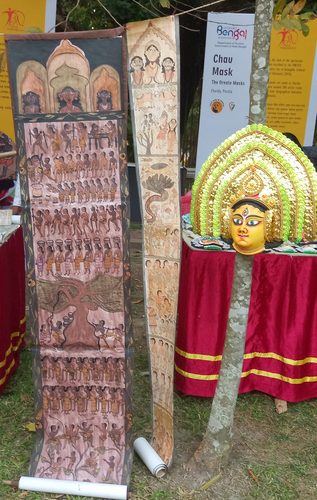
Bengal became a layered art center across several centuries rather than through a single royal workshop. From the 1600s, Malla kings at Bishnupur built brick temples covered in molded terracotta plaques depicting epics and courtly life, a distinctly Bengali substitute for stone carving in a region without easy access to quarried rock. Rural artists produced patachitra scrolls, painted narratives performed with sung accompaniment. Calcutta, capital of British India until 1911, became a colonial commercial hub, and near the Kalighat Kali temple, artists developed a fast, bazaar-scale painting style for pilgrim souvenirs from the mid-1800s. In the early 1900s, painter Abanindranath Tagore led the Bengal School, a deliberate rejection of European academic oil painting in favor of a soft wash technique drawing on Mughal miniature and Ajanta fresco sources, timed with the Swadeshi movement against the 1905 partition of Bengal. The Indian Society of Oriental Art, founded in Calcutta in 1907, and later Rabindranath Tagore's Santiniketan art school extended this nationalist visual project.
What marks the region
Wash technique
Bengal School painters applied thin layers of watercolor, wetting and lifting the surface repeatedly, to build soft, hazy tonal effects instead of hard academic modeling.
Kalighat's economical brush
Kalighat pat artists used a handful of confident, calligraphic brushstrokes to render a figure quickly, suited to producing cheap paintings at bazaar speed for pilgrims.
Scroll-and-song format
Patachitra scrolls are painted in sequential horizontal or vertical registers and unrolled while the artist sings the narrative aloud to an audience.
Terracotta narrative plaques
Bishnupur temple facades are covered in molded brick panels arranged like a running frieze, depicting epic battles, courtly hunts, and daily life.
Natural pigment palette
Folk traditions used lampblack, turmeric, lac, chalk, and other mineral or plant pigments on paper or cloth rather than imported oil paint.
Anti-academic nationalism
The Bengal School deliberately avoided oil paint and single-point perspective, treating the choice of medium itself as a political statement against colonial art education.
Local signatures
How to spot Bengal art
- Kalighat goddess figure
- → Kali or Durga rendered with large eyes and bold black outline in a few rapid brush strokes, the signature Kalighat form.
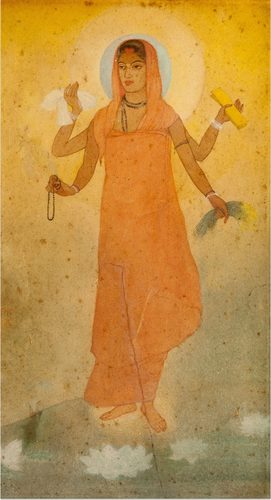
- Bharat Mata allegory
- → A robed female figure personifying the nation, introduced by the Bengal School as a nationalist visual symbol.
- Manasa serpent goddess
- → A recurring patachitra scroll subject, the snake goddess whose story is sung as the scroll unrolls.
- Terracotta epic frieze
- → Continuous brick relief bands on Bishnupur temples narrating the Ramayana or Mahabharata across a facade.
- Fish and lotus motifs
- → Riverine and domestic symbols common across Bengali folk painting and decorative art, tied to the delta landscape.
- Alpana floor pattern
- → Rice-paste threshold designs drawn for ritual occasions, a living folk-art convention referenced in painted compositions.
The story
Bishnupur's Malla kings built terracotta-clad brick temples from the 1600s into the 1800s, including structures such as the mid-17th-century Shyam Rai and Madan Mohan temples, using molded brick relief in place of scarce building stone. In Calcutta, capital of British India until 1911, painters working near the Kalighat Kali temple developed a fast bazaar painting style from around the 1830s to 1840s onward, selling inexpensive images to pilgrims and later adding social satire aimed at colonial-era manners. The Government College of Art and Craft was established in Calcutta in 1854. In 1905, the partition of Bengal triggered the Swadeshi movement, and painter Abanindranath Tagore, nephew of Rabindranath Tagore, produced the allegorical work Bharat Mata that same year, launching what became known as the Bengal School. The Indian Society of Oriental Art was founded in Calcutta in 1907 to support this indigenous-idiom movement, and the associated art school at Rabindranath Tagore's Santiniketan, founded in 1921, extended it into the following decades.
Masterpieces of the place
| Work | Artist | Date | Why it matters |
|---|---|---|---|
| Bharat Mata | Abanindranath Tagore | 1905 | Allegorical female figure that launched the Bengal School as a nationalist art movement. |
| Journey's End | Abanindranath Tagore | 1913 | A wash-technique painting exemplifying the Bengal School's soft, tonal alternative to academic oil painting. |
| Kalighat pat of Goddess Kali | Unknown | c. 1870 | A rapid brush-and-watercolor bazaar painting typical of the Kalighat temple souvenir trade. |
| Shyam Rai Temple | Unknown, Malla court patronage | 1643 | A Bishnupur terracotta temple with brick relief panels narrating epic and courtly scenes. |
| Manasa Mangal patachitra scroll | Unknown | 19th century | A sung narrative scroll painting from rural Bengal depicting the serpent goddess Manasa. |
 AI-generated
Work en plein air
Paint in the light of Bengal
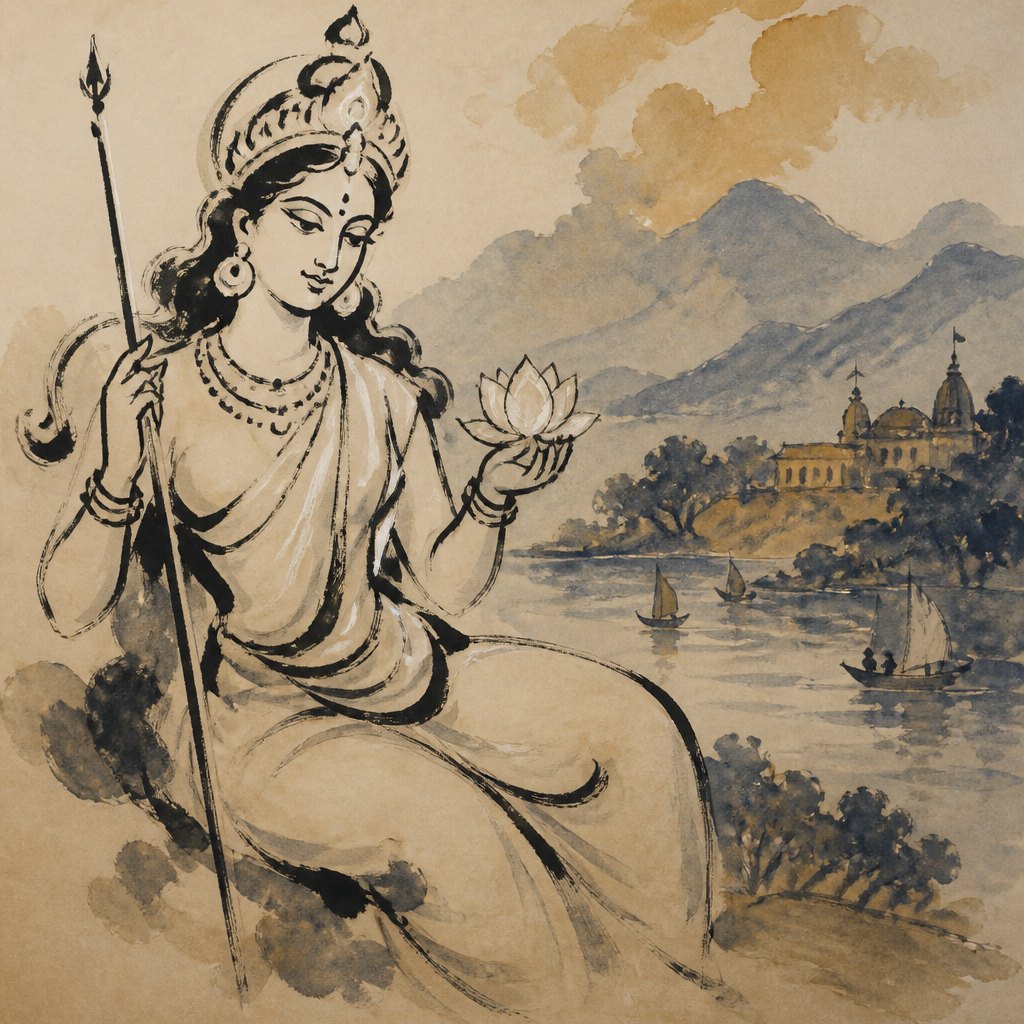
This example was generated from a prompt like: “A goddess figure drawn in a few bold black brush strokes with shell-white highlights on plain paper, beside a soft watercolor wash landscape in muted ochre and indigo, evoking bazaar painting and early nationalist wash technique together.”
Open the Bengal Art Style generator →The place today
Kolkata's Indian Museum, Victoria Memorial, and Academy of Fine Arts hold major Bengal School and Kalighat collections, while the Government College of Art and Craft and Santiniketan's Kala Bhavana continue as active art schools with roots in this history. Bishnupur's terracotta temples remain standing and open to visitors, and patachitra scroll painting continues as a practiced craft in artisan villages of West Bengal, sustained through craft fairs and cooperative workshops rather than individual celebrity artists.
Compose your own
For a Kalighat effect, use a few sweeping, confident brush strokes to define a figure on plain paper, adding shell-white highlights and keeping detail minimal but expressive. For a Bengal School effect, build a composition in thin, repeatedly washed watercolor layers, letting edges stay soft and tonal rather than sharply outlined, in the manner of an Ajanta fresco rather than an oil painting. For a patachitra feel, divide the composition into horizontal painted registers like a scroll, using flat earth pigments, indigo, and lampblack, with a continuous narrative running left to right.
Frequently asked questions
What is Kalighat painting?
A bazaar painting style that developed near the Kalighat Kali temple in Calcutta from the mid-1800s, using bold watercolor brushwork on paper to produce inexpensive images for pilgrims, later expanding into social satire of colonial manners.
What is the Bengal School?
An early 20th-century art movement led by Abanindranath Tagore that rejected European academic oil painting in favor of a soft wash technique drawing on Mughal miniature and Ajanta fresco sources, closely tied to the Swadeshi nationalist movement after 1905.
What is patachitra?
A tradition of painted narrative scrolls on paper or cloth, made with natural pigments and unrolled while the artist sings the accompanying story, practiced across rural Bengal and neighboring Odisha.
Why is Bishnupur significant to Bengal art?
Bishnupur's Malla-dynasty terracotta temples, built from the 1600s into the 1800s, cover their facades with molded brick relief panels narrating epics and courtly scenes, a regional substitute for stone carving unique to Bengal.