 Art
Art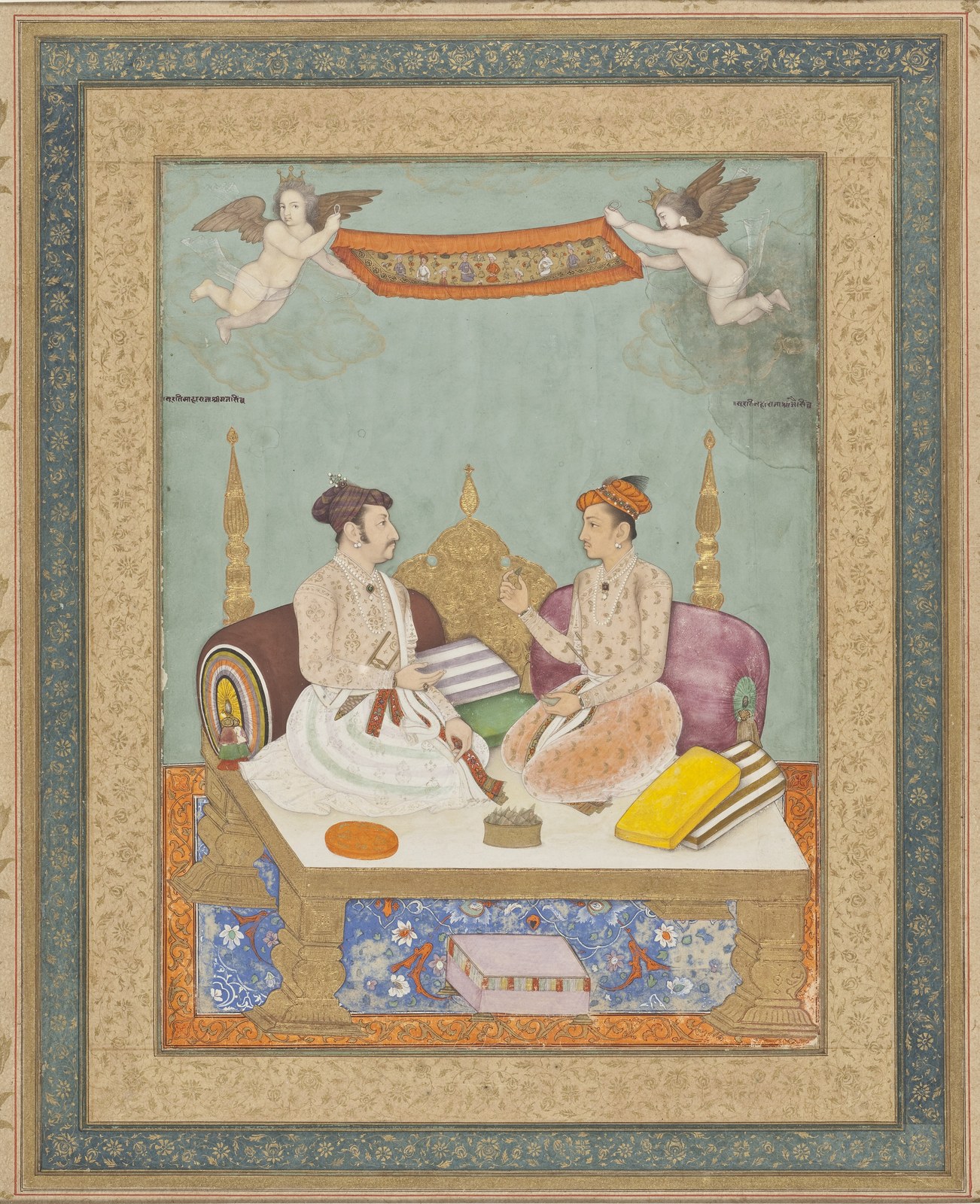
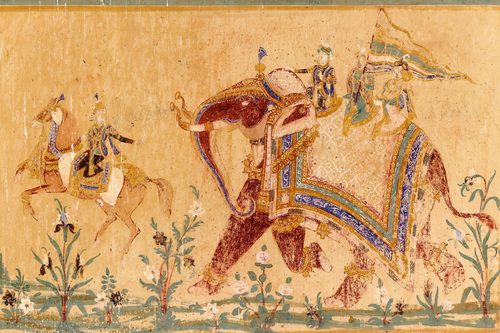
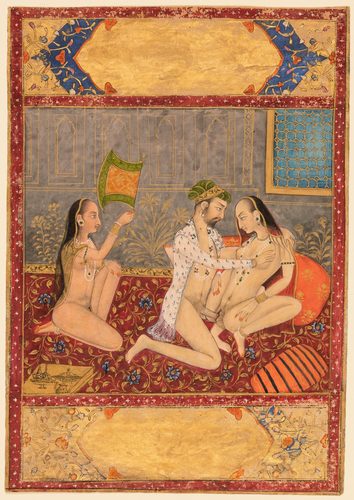
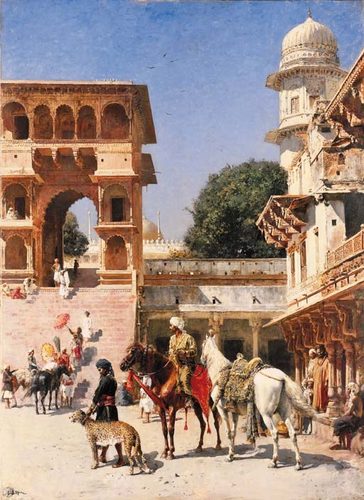
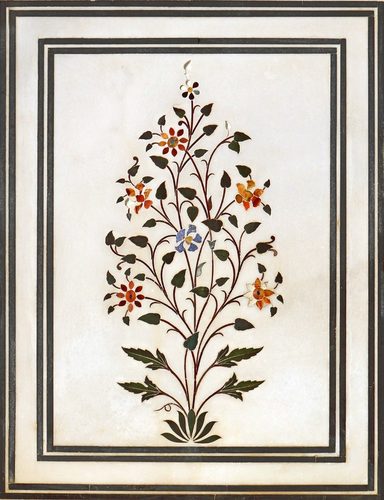
Jaipur art is the court tradition of the Kachhwaha Rajput rulers who founded the city in 1727 as a planned capital laid out on a grid by architect Vidyadhar Bhattacharya, following Shilpa Shastra planning texts. Sawai Jai Singh II, an astronomer as well as a ruler, built the Jantar Mantar observatory here, and his court also supported a painting workshop staffed by artists trained in Mughal ateliers who migrated south as Delhi's power weakened, fusing Mughal naturalism with Rajasthani flat color and bold outline. Royal patronage extended past painting into decorative crafts: gold enameling (meenakari), gem cutting, kundan jewelry setting, and later blue pottery, all concentrated in the walled city's bazaars. The desert setting and courtly taste for reflective surfaces, mirror inlay, gold leaf, polished gemstones, gave Jaipur's art its dense, jewel-like character, and the city's 1876 repainting in pink for a royal visit later fused that hue to its whole visual identity.
What marks the region
Flat jewel-toned grounds
Backgrounds are painted as solid mustard, coral, or deep pink fields rather than naturalistic space, pushing figures forward as bold, decorative shapes.
Court durbar portraiture
Large-format group scenes show rulers receiving courtiers or leading processions, with figures graded in size according to rank rather than perspective.
Fine gold linework
Jewelry, weapons, and architectural detail are picked out in hairline gold, a technique shared with the city's enamel and metalwork ateliers.
Karkhana workshop division
Court paintings passed through specialist hands: one artist for outline, another for color fields, another for faces and gilding, under a master's supervision.
Jharokha framing
Scenes are often set behind an arched, screened balcony opening, echoing the city's actual architecture and framing royal figures as if glimpsed in private.
Cross-craft design
Painters, enamelers, and jewelers worked from shared pattern books, so a peacock or floral motif could appear identically in a miniature and a brooch.
Local signatures
How to spot Jaipur art
- Jharokha screen
- → Latticed balcony opening marking a private royal view, drawn directly from Jaipur's palace architecture.
- Peacock
- → Royal and monsoon symbol appearing across painting, enamel, and carved stone throughout the city's court arts.
- Elephant procession
- → Ceremonial royal power, shown in durbar scenes and temple festival imagery alike.
- Kundan-meena red and green
- → The specific enamel color pairing fired onto gold jewelry that marks a piece as Jaipur-made.
- Pink-terracotta plaster
- → The mineral wash color of the old walled city, adopted in 1876 and maintained as a civic identity.
- Ragamala lovers
- → A musical mode personified as a pair of figures, a Rajput painting convention Jaipur rendered in unusually saturated color.
The story
Sawai Jai Singh II relocated his capital from the hill fort of Amber to a new planned city in 1727, laying it out on a grid drawn up with architect Vidyadhar Bhattacharya. Jai Singh, also a serious astronomer, built the Jantar Mantar observatory between 1728 and 1734, its stone instruments still functioning. His court's painting workshop absorbed artists from declining Mughal ateliers, producing large court portraits and Ragamala sets in flat, saturated color; the painter Sahib Ram was a leading figure of this tradition around 1800. Hawa Mahal, a five-story screened facade of 953 small windows, was built in 1799 under Sawai Pratap Singh, designed by Lal Chand Ustad, so royal women could watch street life unseen. Jaipur's meenakari enamel tradition is traditionally traced to artisans brought from Lahore under earlier Kachhwaha rule and flourished at the Jaipur court alongside gem cutting and kundan jewelry work. In 1876, Sawai Ram Singh II had the city's buildings painted pink to welcome the Prince of Wales, a color scheme preserved in the old walled city ever since.
Masterpieces of the place
| Work | Artist | Date | Why it matters |
|---|---|---|---|
| Jantar Mantar Observatory | Sawai Jai Singh II | 1734 | Monumental stone astronomical instruments, science rendered as sculptural architecture. |
| Hawa Mahal | Lal Chand Ustad | 1799 | A pink sandstone screen of 953 jharokha windows built for royal women's street views. |
| Sheesh Mahal, Amber Fort | Unknown | c. 1640s | A mirror-mosaic hall from the earlier Kachhwaha capital that fed directly into Jaipur's court aesthetic. |
| Ragamala series, Jaipur court | Sahib Ram | c. 1800 | Musical-mode paintings in the school's characteristic saturated color and fine gold outline. |
| Chandra Mahal apartments, City Palace | Unknown | 18th-19th century | Painted and mirror-inlaid royal rooms combining mural work with decorative craft. |
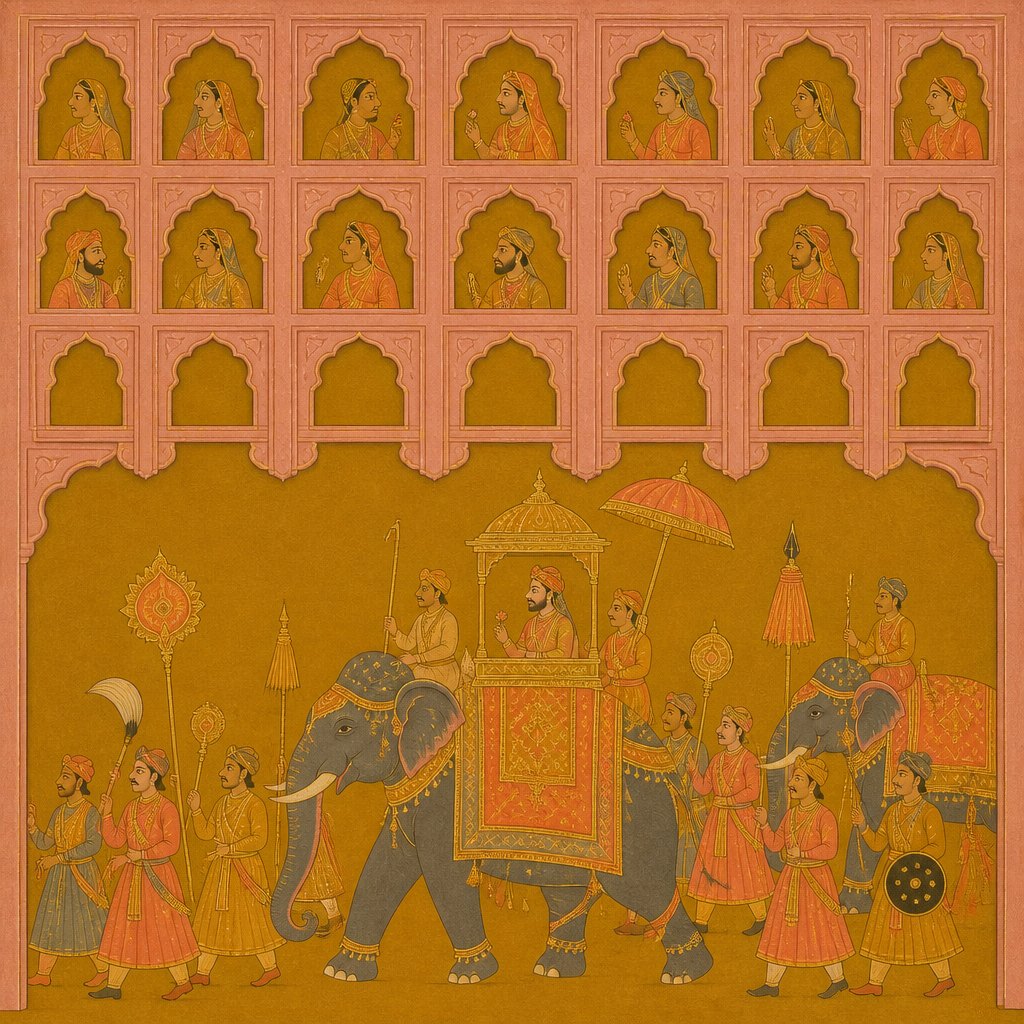 AI-generated
Work en plein air
Paint in the light of Jaipur
This example was generated from a prompt like: “A pink sandstone screen of small arched windows, with a court procession of elephants and courtiers painted in flat saturated mustard and coral, outlined in fine gold linework against a solid ochre ground.”
Open the Jaipur Art Style generator →The place today
Jaipur's City Palace Museum and the Albert Hall Museum, opened in 1887, hold the court's paintings and decorative arts, while Hawa Mahal, Amber Fort, and the Jantar Mantar, a UNESCO World Heritage Site since 2010, remain open to visitors. The walled city's Johari Bazaar and surrounding lanes still function as working centers for gem cutting, kundan jewelry setting, and meenakari enamel work, and blue pottery workshops continue producing the region's quartz-based ceramic ware, sustaining Jaipur's craft economy today.
Compose your own
Start with a flat saturated ground in mustard yellow, coral, or deep pink rather than a modeled sky or landscape. Draw figures in profile or three-quarter view with a fine, confident outline, then fill in with flat color blocks graded by court rank rather than distance. Add an arched jharokha screen or pillared niche to frame the scene, referencing Jaipur's own architecture. Finish jewelry, weapons, and architectural trim in hairline gold, the same fine linework used on the city's actual enamel and metalwork, so the painting reads as dense and decorative rather than atmospheric.
Frequently asked questions
How is Jaipur painting different from Mughal painting?
Jaipur artists inherited Mughal-trained hands but pushed toward flatter, more saturated color fields, bolder outline, and less atmospheric depth, producing a more decorative, less naturalistic surface than the Mughal court style it descended from.
Why is Jaipur called the Pink City?
Its old walled buildings were painted terracotta pink in 1876 under Sawai Ram Singh II to welcome the Prince of Wales, and the color has been maintained by local regulation in that part of the city ever since.
What is meenakari?
Meenakari is vitreous enamel fused onto gold or silver in colored layers fired in stages. Jaipur became a major center for it, known especially for a signature red-and-green enamel palette on jewelry and small objects.
Was Hawa Mahal ever lived in?
Hawa Mahal is a screened facade built as an extension of the City Palace with no rooms of depth behind most windows. It let royal women observe street festivals unseen rather than serving as full living quarters, and is now a museum.