 Art
Art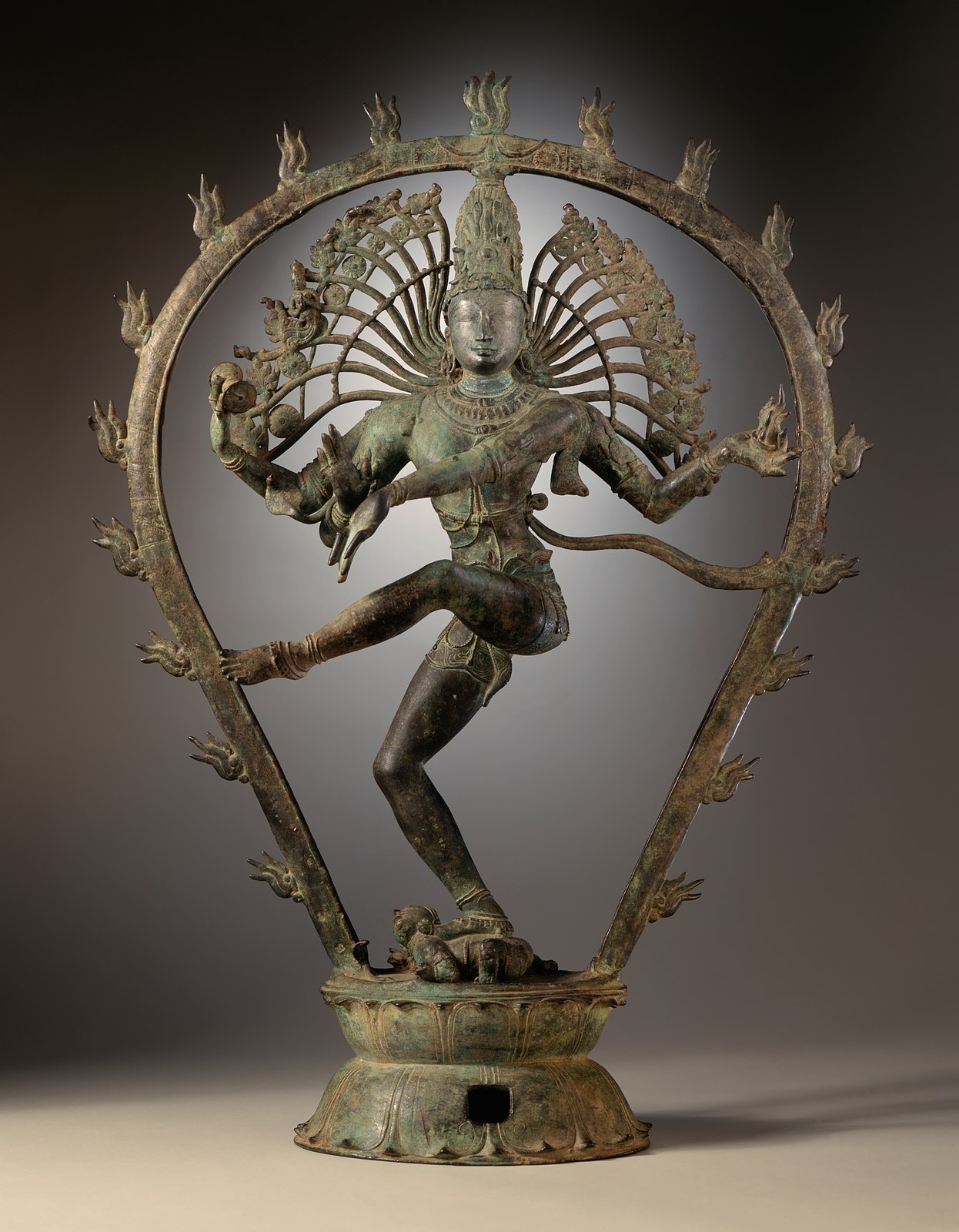
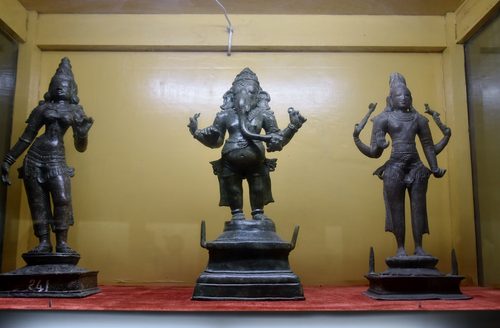
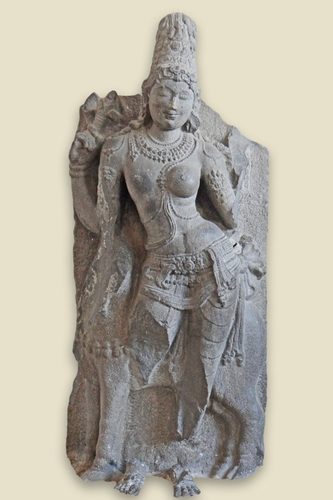
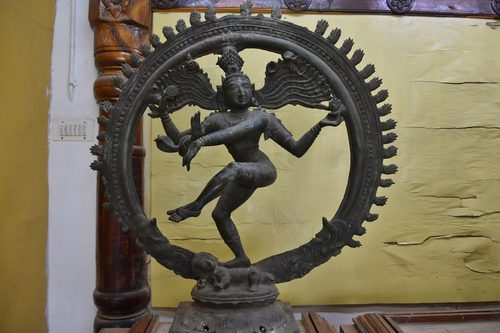
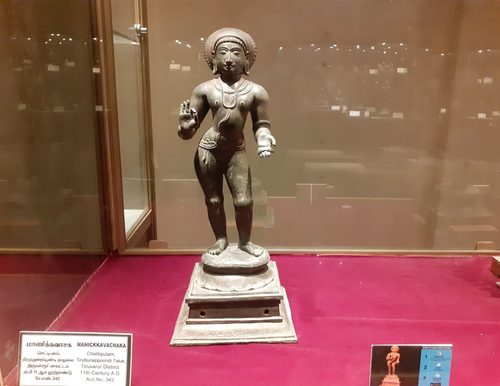
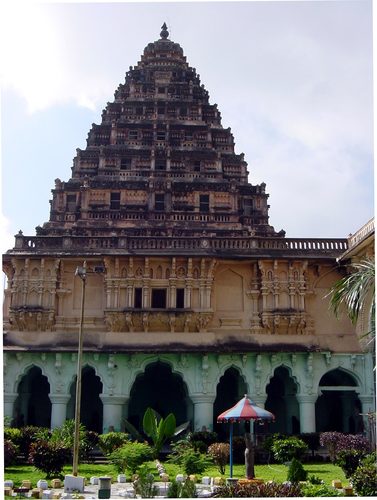
Thanjavur became a major art center as the capital of the Chola dynasty, which built the Brihadeeswarar Temple under Rajaraja Chola I, completed around 1010 CE, and endowed workshops that cast solid bronze temple images by the lost-wax process. That metalworking tradition, refined for portable festival icons rather than fixed stone sculpture, produced the region's famous Nataraja and other processional bronzes over the following centuries. After Chola rule ended, Thanjavur passed to Vijayanagara-linked Nayak governors and then, from 1674, to a Maratha dynasty founded by Venkoji, whose court, especially under the scholar-king Serfoji II, sponsored a distinct style of devotional painting: gold leaf and raised gesso relief over wood panel, set with glass gems, built up in the temple town's workshops for household shrines and palace use. Both crafts, bronze casting and gold-leaf painting, drew on the same temple-centered patronage and survive in Thanjavur's artisan quarters today.
What marks the region
Lost-wax bronze casting
Chola metal images were cast solid in bronze using the cire perdue method, a wax model built over a core, coated in clay, and melted out, unchanged in principle for centuries.
Gesso relief and gold leaf
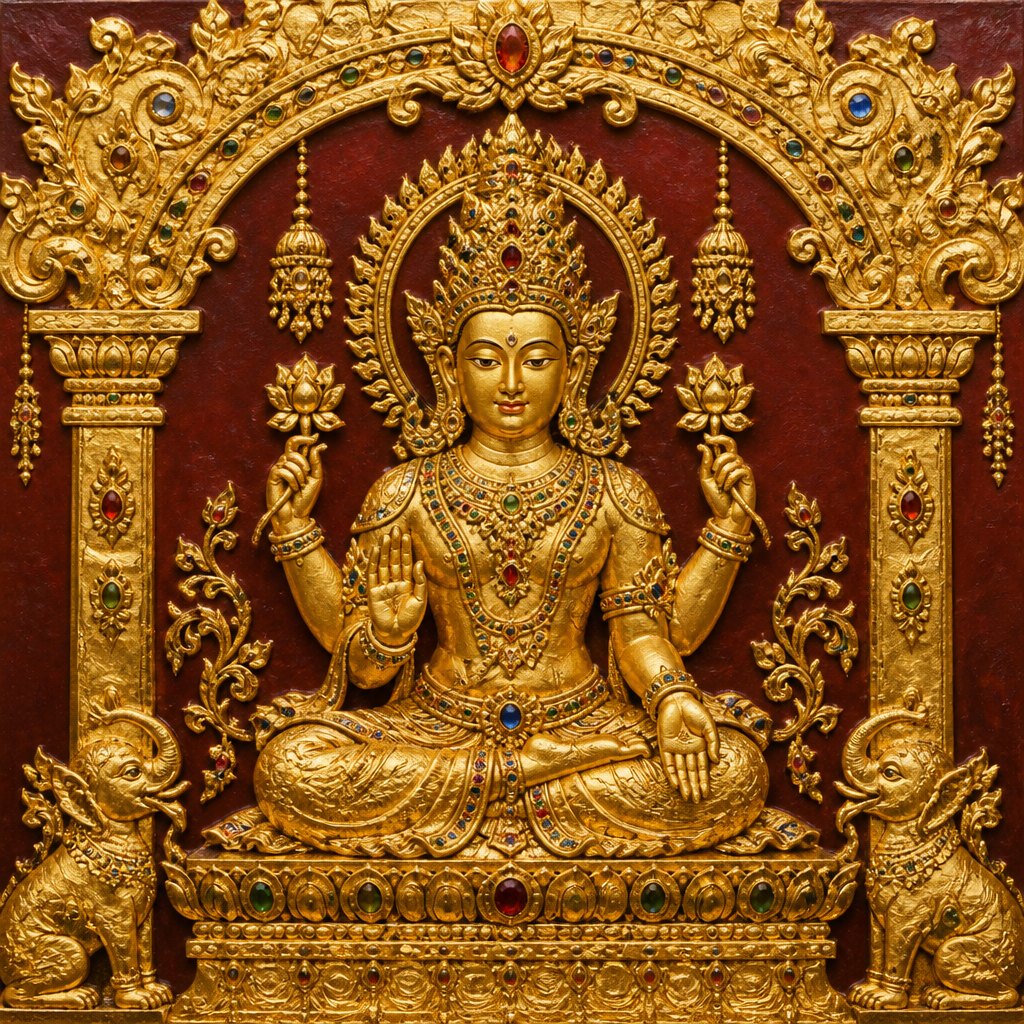
Tanjore paintings build raised stucco relief for crowns, jewelry, and pillars, then gild it with gold foil so light catches the ornament while flat areas stay matte.
Iconometric proportion
Deity figures follow canonical measurement systems from shilpa shastra texts, giving rounded faces, almond eyes, and fixed proportions across both bronze and painting.
Wood-and-cloth panel support
Paintings are worked on a teak plank faced with cloth and a chalk-glue gesso ground, not paper or bare wall, giving a rigid, durable surface for the relief work.
Glass gem inlay
Faceted colored glass stones are set directly into the gesso relief to stand in for real gems on crowns, borders, and jewelry.
Temple corridor murals
Large narrative wall paintings line temple passageways, depicting deity legends and royal donors in registers meant to be read while walking.
Local signatures
How to spot Thanjavur art
- Gold-leaf arch canopy
- → A gilded architectural frame set behind the central deity, marking the panel as a Thanjavur-style devotional painting.
- Nataraja bronze
- → Shiva as cosmic dancer within a ring of fire, the signature form of Chola lost-wax metal casting.
- Rounded, doll-like deity face
- → Plump cheeks and large almond eyes following the region's canonical figure proportions in both bronze and paint.
- Faceted glass jewel inlay
- → Colored glass set into gold relief standing in for gemstones on crowns and ornaments.
- Vimana temple tower
- → The stepped granite tower of Brihadeeswarar Temple, referenced as a backdrop motif in local mural and painting traditions.
- Curtain-and-pillar frame
- → Painted drapery and columns flanking a central deity, borrowed from temple sanctum architecture.
The story
Rajaraja Chola I built the Brihadeeswarar Temple at Thanjavur, completed around 1010 CE, endowing it with land, dancers, and metalworkers whose lost-wax bronze casting became the region's defining craft, producing processional icons such as Nataraja images used in temple festivals from the 11th century onward. After Chola power declined in the 13th century, Thanjavur passed through Pandya and Vijayanagara-linked Nayak rule from the 16th century, and then to a Maratha dynasty established in 1674 by Venkoji, half-brother of Shivaji. Maratha rulers, notably Serfoji II, who reigned 1798 to 1832 and founded the Saraswati Mahal Library's expanded collection, sponsored the gold-leaf, gem-inlaid painting style now known as Tanjore painting, produced for palace and household shrines. The temple itself was inscribed as part of the Great Living Chola Temples UNESCO World Heritage Site in 1987. Bronze casting and gold-leaf painting both continued as living workshop crafts in the town through the 19th and 20th centuries.
Masterpieces of the place
| Work | Artist | Date | Why it matters |
|---|---|---|---|
| Brihadeeswarar Temple | Rajaraja Chola I | 1010 CE | Granite temple with a towering vimana, the summit of Chola temple architecture and patronage. |
| Nataraja bronze icon | Unknown | c. 11th century | Lost-wax cast processional image defining the Chola bronze tradition centered on Thanjavur. |
| Brihadeeswarar Temple mural cycle | Unknown | c. 1010 CE, with later overpainting | Early wall paintings depicting Shiva legends, partly overlaid by later Nayak-period murals. |
| Tanjore painting of Krishna | Unknown | 18th-19th century | Gold-leaf, gesso-relief devotional panel typical of the Maratha-period Thanjavur workshop style. |
| Saraswati Mahal Library commissions | Serfoji II (patron) | early 19th century | Palace-sponsored manuscripts and artworks reflecting the Maratha court's scholarly and artistic patronage. |
 AI-generated
Work en plein air
Paint in the light of Thanjavur
This example was generated from a prompt like: “A frontal enthroned deity figure under a gilded arched canopy, crown and jewelry built up in raised gold-leaf relief with small faceted glass gems, set against a deep maroon background in the manner of a temple gold-leaf panel.”
Open the Thanjavur Art Style generator →The place today
Brihadeeswarar Temple remains an active place of worship and a UNESCO World Heritage Site, while the Thanjavur Maratha Palace complex and Saraswati Mahal Library preserve manuscripts and courtly artifacts from Serfoji II's era. Tanjore painting continues as a GI-tagged craft, with town workshops producing gold-leaf, gem-inlaid devotional panels, and bronze casting by the lost-wax method still supplies temple processional icons, keeping both traditions in active production rather than as museum-only crafts.
Compose your own
Center a frontal, symmetrical deity under an arched or pillared canopy, following fixed proportions with a rounded face and almond eyes. Build up raised gesso relief for the crown, jewelry, and architectural border, then gild that relief with gold leaf so it catches light while the flat background stays matte. Paint skin and drapery in muted pastel tones rather than bright color. Set small faceted glass beads into the gesso as jewels, and close the composition with a deep red or green ground so the whole panel reads as dense and jewel-like.
Frequently asked questions
What is a Tanjore painting made of?
A wood panel faced with cloth and chalk-glue gesso, built up in raised relief for jewelry and architectural detail, gilded with gold leaf, set with small faceted glass stones, and finished with flat pastel color for skin and drapery.
How were Chola bronzes made?
By the lost-wax, or cire perdue, method: a detailed wax model was built over a clay core, encased in more clay, then heated so the wax melted out, leaving a mold filled with molten bronze to form a solid cast image.
Who built the Brihadeeswarar Temple?
Rajaraja Chola I, ruler of the Chola dynasty, commissioned the temple, completed around 1010 CE, and endowed it with land, artisans, and dancers, making it central to Thanjavur's role as an art and religious capital.
Are Tanjore paintings only religious subjects?
The majority depict Hindu deities such as Krishna and Lakshmi for household and temple shrines, though Maratha-period court commissions also included royal and courtly subjects in the same gold-leaf technique.