 Art
Art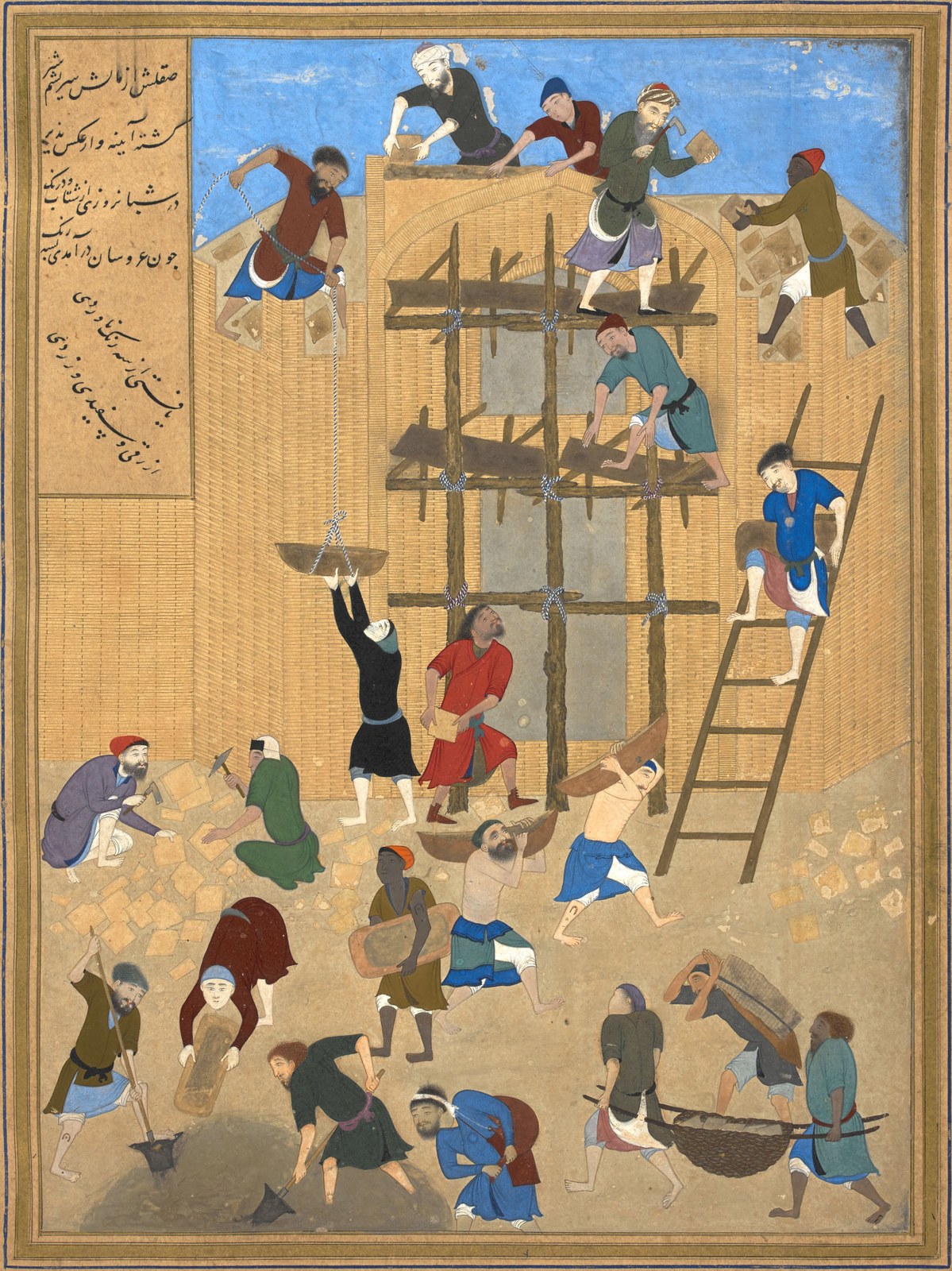
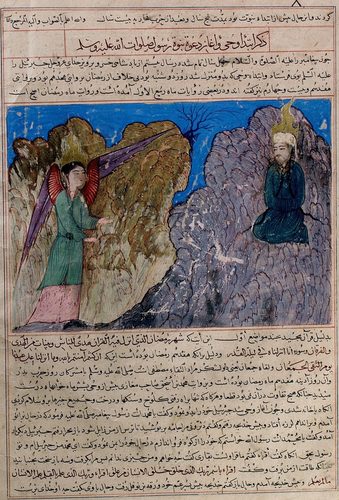
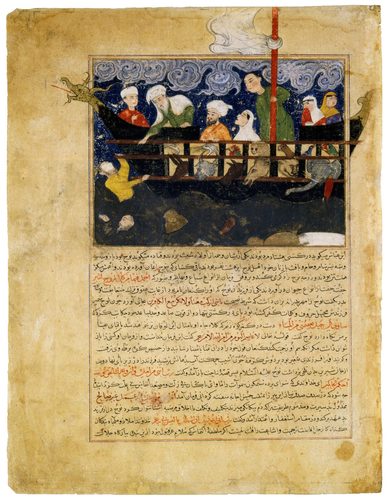
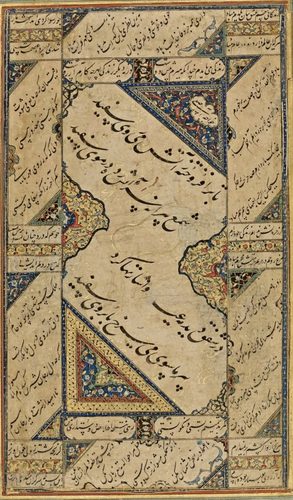
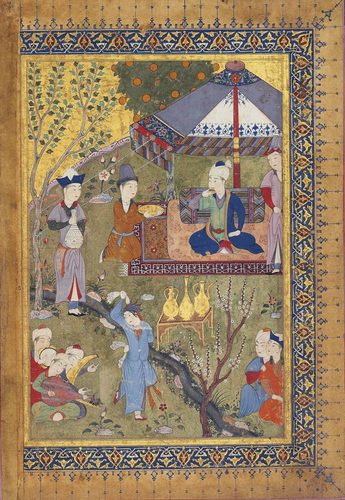
Herat became the leading center of Persian manuscript painting after Timur's son Shah Rukh made it his capital in 1405. Royal patronage funded a kitabkhana, a combined scriptorium and painting workshop, where calligraphers, illuminators, and painters worked as an organized team producing luxury copies of the Shahnameh and Persian poetry. Shah Rukh's son Baysunghur ran his own atelier from the 1420s until his death in 1433, overseeing an especially fine Shahnameh completed in 1430. After a period of political disruption, the workshop revived under Sultan Husayn Bayqara, who ruled from 1469, supported by his vizier and poet Mir Ali Sher Nava'i. Painter Kamal ud-Din Behzad worked in this later Herat court, refining individualized figures and layered spatial composition within the school's established flattened, high-angle conventions. Materials included handmade paper, opaque mineral pigments such as lapis lazuli blue, and gold leaf applied in flat fields.
What marks the region
Kitabkhana workshop system
Manuscripts moved through a royal scriptorium where calligraphers, illuminators, painters, and binders each handled a distinct stage of production under one patron's direction.
High, tilted perspective
Scenes are shown from a raised, bird's-eye angle with no single vanishing point, stacking figures and architecture upward rather than receding into depth.
Architecture as pattern
Palace interiors and tents appear as flattened tiled or textile surfaces, decorative backdrop as much as believable structural space.
Calligraphy paired with image
Fine cursive script and painted illustration share the same page, with text blocks arranged to frame and balance the illustrated scene.
Mineral pigment and gold leaf
Opaque gouache built from ground mineral pigment, especially lapis lazuli blue, was applied in flat fields alongside burnished gold leaf backgrounds.
Reused compositional types
Workshop painters relied on established figure poses and scene layouts, adapted rather than invented fresh for each new manuscript commission.
Local signatures
How to spot Herat art
- Flowering tree in a garden setting
- → A cypress or blossoming tree marking a scene of courtly leisure or paradise-like enclosure.
- Blue and gold tiled palace wall
- → Architecture rendered as flat glazed pattern, indicating a royal or courtly interior.
- Profile courtier figure
- → A stock seated or standing figure type reused across manuscripts for narrative and court scenes.
- Flat gold sky
- → An unmodulated gold ground removing the scene from ordinary time, common in key narrative moments.
- Patterned tent enclosure
- → A textile-covered camp tent framing military or nomadic episodes drawn from epic poetry.
- Stylized cloud band
- → Ribbon-like clouds derived from Chinese pictorial convention, framing figures and marking Central Asian exchange.
The story
Herat became the Timurid capital after Shah Rukh, son of Timur, established his rule there following his father's death in 1405. His son Baysunghur maintained an active painting atelier from the 1420s until his death in 1433, producing an illustrated Shahnameh completed in 1430. Shah Rukh's wife Gawhar Shad commissioned the Musalla religious complex, built between 1417 and 1438. Political fragmentation followed Shah Rukh's death in 1447, but the painting workshop revived under Sultan Husayn Bayqara, who ruled Herat from 1469, supported by his vizier Mir Ali Sher Nava'i. Painter Kamal ud-Din Behzad rose to prominence in this court, active through the 1480s and 1490s. Herat fell to the Uzbek Shaybanid ruler in 1507, after which painters, including Behzad, dispersed to Safavid Tabriz and other courts, carrying Herat's compositional conventions into later Persian and Central Asian manuscript painting.
Masterpieces of the place
| Work | Artist | Date | Why it matters |
|---|---|---|---|
| Baysunghur Shahnameh | Herat royal workshop | completed 1430 | A richly illustrated copy of the Persian epic produced under Prince Baysunghur's personal atelier. |
| Bustan of Sa'di illustrations | Kamal ud-Din Behzad | 1488 | Manuscript paintings noted for individualized figures within the school's established flattened space. |
| Musalla Complex minarets | commissioned by Gawhar Shad | 1417-1438 | A mosque, madrasa, and mausoleum complex built by Shah Rukh's wife, later largely demolished. |
| Zafarnama manuscript illustrations | Herat workshop | late 15th century | Illustrated copies of Timur's chronicled campaigns produced within the Herat court tradition. |
| Khamsa of Nizami, illustrated copies | Herat school painters | late 15th century | Illustrated poetry manuscripts showing the school's mature compositional and coloring conventions. |
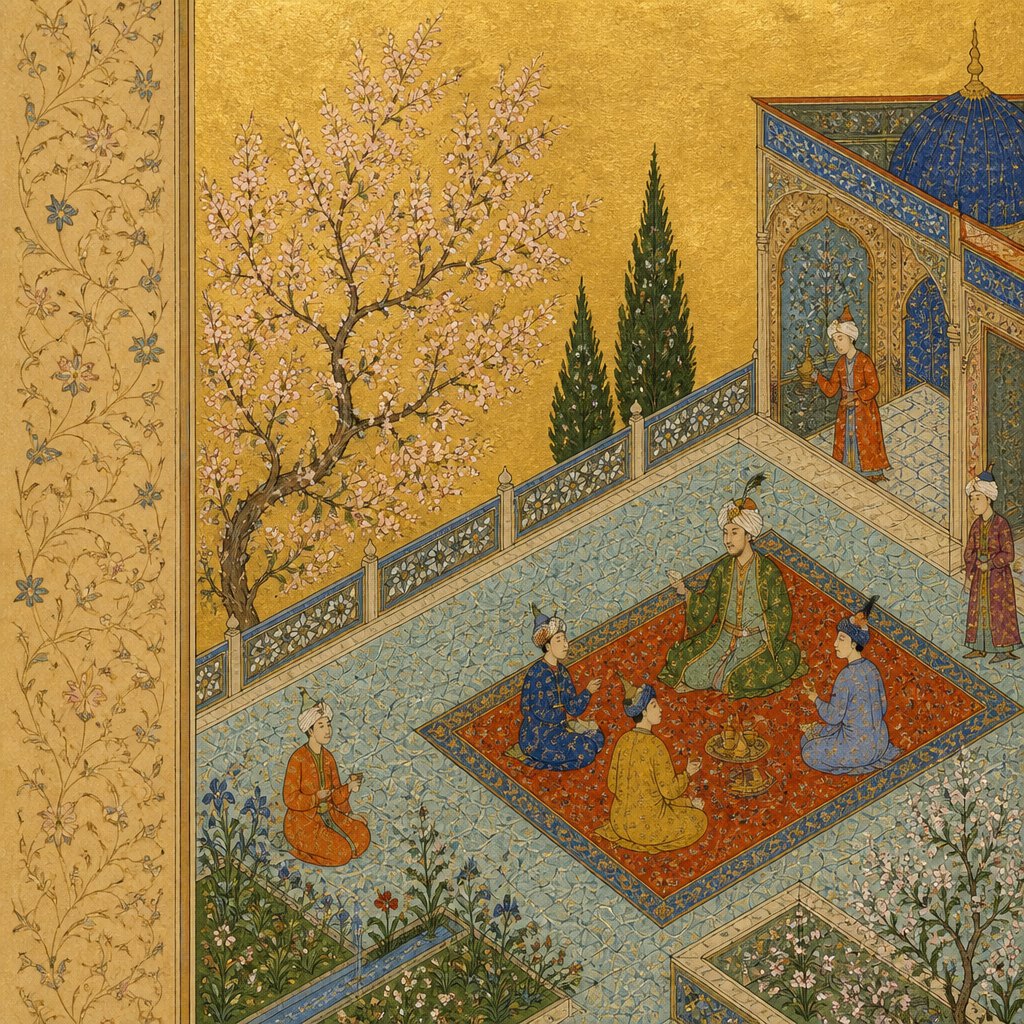 AI-generated
Work en plein air
Paint in the light of Herat
This example was generated from a prompt like: “A tiled palace garden viewed from a high, tilted angle: a flowering tree, courtiers in patterned robes seated on a carpet, a flat gold sky, and a panel of fine cursive script bordering the painted scene.”
Open the Herat Art Style generator →The place today
Herat's Musalla complex survives only as a small group of leaning minarets, most of the site demolished in 1885, though Gawhar Shad's mausoleum remains partially standing. The restored Herat citadel, Qala Ikhtiyaruddin, now houses a museum with regional artifacts. Original Herat-school manuscript paintings are held mainly in museum and library collections outside Afghanistan, including in Istanbul, Tehran, Paris, London, and Washington. Calligraphy and manuscript-illumination training continues in workshops in Herat today, sustaining the region's craft heritage.
Compose your own
Set the scene from a raised, tilted viewpoint rather than a single fixed perspective, stacking figures and architecture upward across the page. Render palace walls, tents, or gardens as flattened tiled or floral pattern rather than modeled three-dimensional space. Paint figures in profile with individualized faces, dressed in patterned court robes, using opaque gouache built from lapis lazuli blue, ochre, and vermillion against a flat gold or patterned ground. Reserve a portion of the page for a panel of fine cursive calligraphy, balanced compositionally against the painted scene rather than separated from it, and add stylized ribbon clouds or a flowering tree to mark the setting.
Frequently asked questions
What was a kitabkhana?
A kitabkhana was a royal workshop combining calligraphers, illuminators, painters, and bookbinders under one patron, producing luxury illustrated manuscripts as a coordinated team rather than individual artists working alone.
Who was Kamal ud-Din Behzad?
Behzad was a painter active in Herat's royal workshop under Sultan Husayn Bayqara in the late 15th century, known for refining individualized figures and spatial layering within the school's flattened conventions.
Why did Herat's painting tradition move elsewhere?
Herat fell to the Uzbek Shaybanid ruler in 1507, and painters trained in its workshop, including Behzad, relocated to Safavid Tabriz and other courts, carrying Herat's style into later Persian and Central Asian manuscript painting.
How does Herat painting differ from other Persian schools?
Herat's court workshops under Baysunghur and later Sultan Husayn Bayqara emphasized fine detail, individualized figures, and refined color layering, distinguishing it from contemporary schools centered in Shiraz and Tabriz.