 Art
Art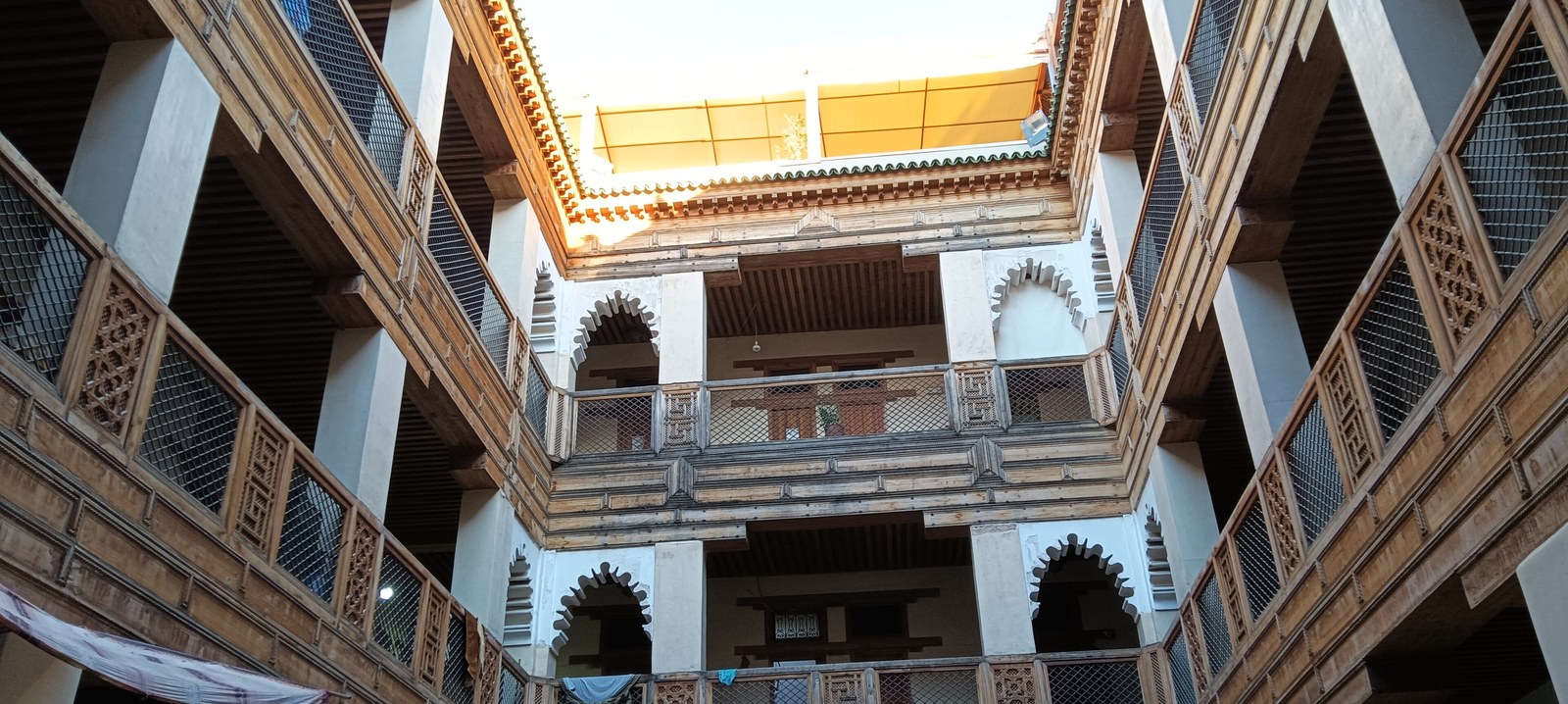
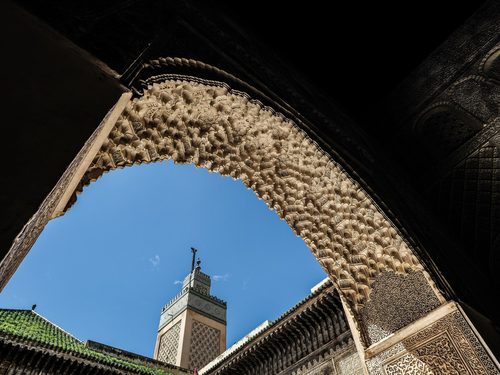
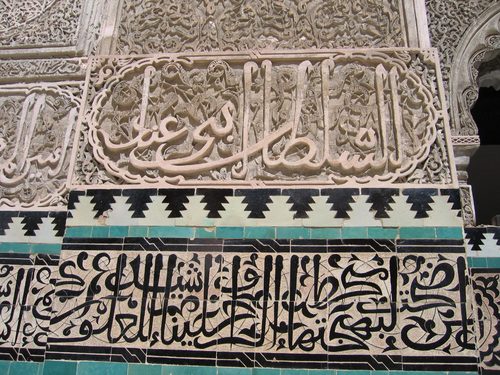
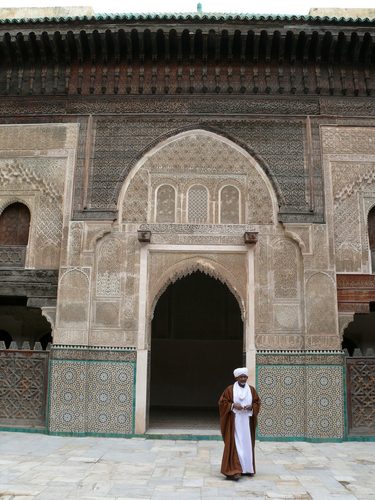
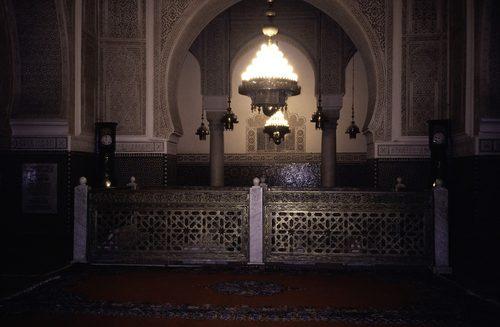
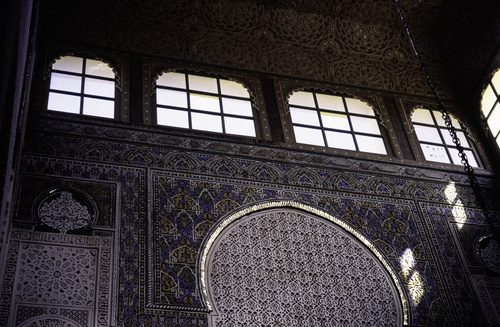
Fez is the Moroccan city where zellige tile mosaic, carved stucco, and cedarwood joinery matured into a single decorative system under the Marinid dynasty, which ruled from the city between 1244 and 1465. Founded in the late 8th century by Idrisid rulers, Fez grew around the Qarawiyyin mosque and university, founded in 859, drawing scholars and craftsmen from Kairouan and, later, refugees from Muslim Spain who brought Andalusian technique with them. The Marinids used royal patronage to build madrasas that doubled as showcases for local guilds: cut-tile mosaic below, carved plaster arabesque and Quranic script above, carved cedar muqarnas and ceilings on top. No figural imagery appears anywhere; pattern and calligraphy carry the meaning instead. Brass engraving, leather tanning, and blue-glazed ceramics developed alongside architecture as parts of the same craft economy, supplied by Middle Atlas cedar forests and regional copper and clay.
What marks the region
Cut zellige mosaic
Craftsmen cut single-color glazed tiles into small geometric pieces by hand, then assembled them face-down into star-and-polygon patterns before setting the finished panel.
Geometric over figural
Following regional practice, wall decoration avoids figures entirely, relying on endless interlocking stars, polygons, and calligraphy to carry religious meaning.
Three-register wall
A standard interior stacks zellige tile at floor level, carved stucco arabesque above it, and carved cedar wood at cornice and ceiling, each material handled by a separate guild.
Muqarnas vaulting
Honeycomb-like stalactite forms carved in plaster or wood fill domes, squinches, and portal niches, dissolving hard architectural corners into cascading small facets.
Guild apprenticeship
Skills passed through master-apprentice chains inside medina workshops, with tile cutters, plasterers, and woodcarvers trained as distinct hereditary trades rather than individual artists.
Unified commissions
A single madrasa or fondouk was built as one integrated craft project, with tile, plaster, wood, and metalwork designed together rather than added piecemeal.
Local signatures
How to spot Fez art
- Eight-pointed star
- → The core zellige unit, endlessly repeated to suggest divine order without any figural image.
- Cedar muqarnas ceiling
- → Honeycomb-carved wood vaulting marking a building's most sacred or ceremonial space.
- Carved stucco calligraphy band
- → A cursive Quranic inscription running along a cornice, linking scripture directly to the architecture.
- Horseshoe arch
- → A keyhole-shaped arch framing doorways and mihrabs, a marker of Moroccan and Andalusian building tradition.
- Pierced brass lamp
- → Engraved and cut brasswork used for mosque and courtyard lighting, prosperity rendered in metal.
- Green glazed pyramidal roof tile
- → Green-glazed tile roofing reserved for mosques, madrasas, and shrines, signaling sacred or royal status.
The story
Fez was founded on the Jawhar river's right bank in 789 by Idris I and expanded on the left bank in 808 by Idris II; the two settlements later merged into one city. The Qarawiyyin mosque and university, founded in 859, made Fez a center of learning that drew craftsmen alongside scholars. Andalusian refugees arrived through the 13th to 15th centuries as Christian forces advanced in Spain, bringing tile and plaster techniques that fused with local practice. The Marinid dynasty, ruling from Fez between 1244 and 1465, built its capital's signature monuments, including the Attarine Madrasa (1323-1325) and the Bou Inania Madrasa (1350-1357), turning the city into the era's premier showcase of zellige, stucco, and cedar craft. Political power later shifted toward Marrakesh and Meknes, but Fez's guilds kept working, and the walled medina, listed as a UNESCO World Heritage Site in 1981, still houses functioning tile, leather, and metal workshops.
Masterpieces of the place
| Work | Artist | Date | Why it matters |
|---|---|---|---|
| Al-Qarawiyyin Mosque and University | Unknown | founded 859 | Founded by Fatima al-Fihri, later expanded, it anchored Fez as a center of scholarship and craft for centuries. |
| Al-Attarine Madrasa | Unknown | 1323-1325 | A Marinid madrasa combining zellige, carved stucco, and cedar in one of the school's most complete small-scale interiors. |
| Bou Inania Madrasa | Unknown | 1350-1357 | The Marinid dynasty's grandest madrasa, uniquely combining teaching functions with a full congregational mosque. |
| Chouara Tannery | Unknown | medieval period, still operating | One of the city's oldest leather tanneries, using stone vats and natural dyes largely unchanged for generations. |
| Fez blue ceramic ware | Unknown | Marinid period onward | Cobalt-on-white glazed pottery produced in Fez workshops, exported across Morocco and beyond. |
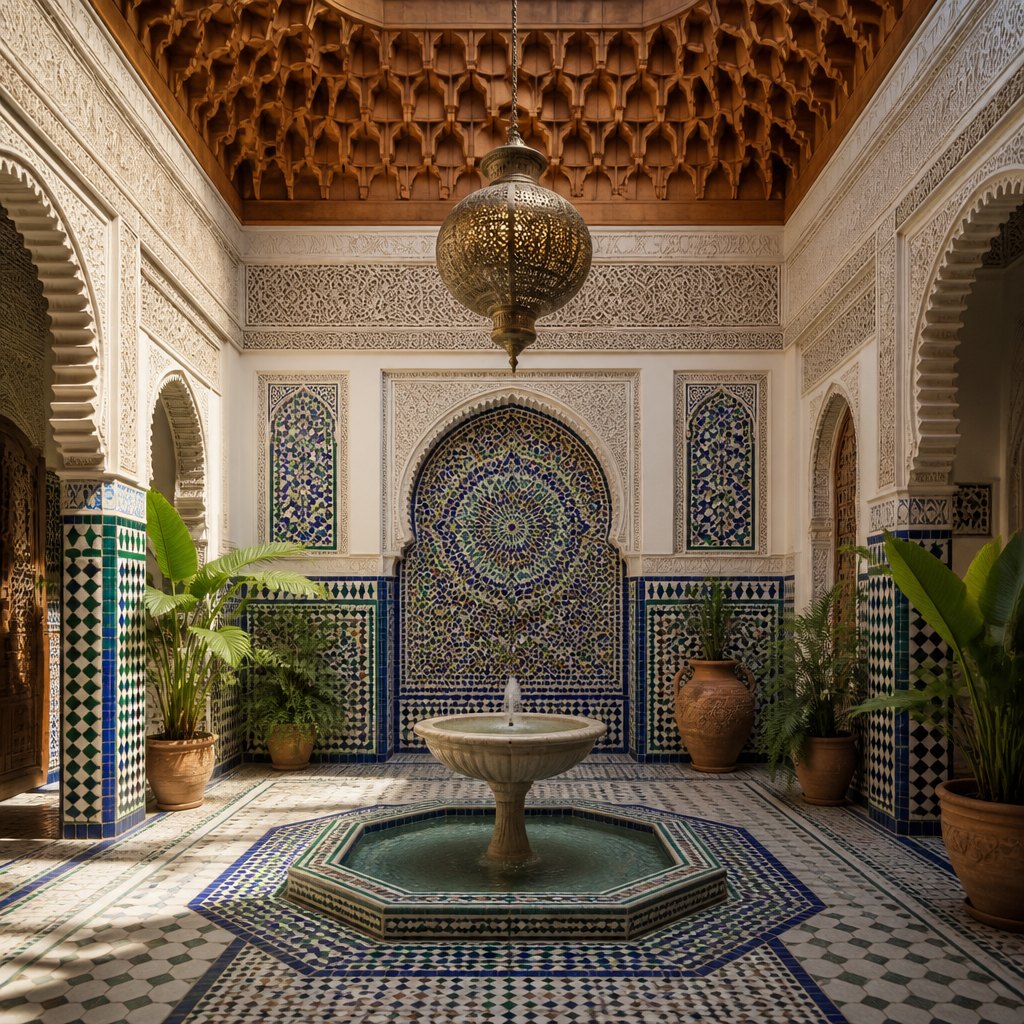 AI-generated
Work en plein air
Paint in the light of Fez
This example was generated from a prompt like: “A tiled courtyard fountain framed by geometric zellige mosaic in cobalt and green, a carved stucco arabesque band above, a honeycomb cedar muqarnas ceiling, and a pierced brass lamp hanging in soft daylight.”
Open the Fez Art Style generator →The place today
The Fez medina remains a UNESCO World Heritage Site, its Marinid madrasas open to visitors alongside the still-functioning Qarawiyyin mosque and library, restored and reopened in 2016. The Nejjarine Museum of Wooden Arts and Crafts displays historic carved cedar and tools, while the Chouara Tannery continues producing leather using traditional stone-vat methods. Zellige workshops in the medina still cut tile by hand for restoration projects and export, keeping the craft economy that built the city's monuments actively running today.
Compose your own
Begin with a grid of interlocking stars and polygons rather than a picture; this geometry, not any figure, is the composition. Cut or render tesserae in a few saturated glaze colors, cobalt blue, green, black, white, ochre, and fit them as negative-space mosaic along a lower wall band. Above it, place a carved arabesque field with a cursive calligraphic border, then cap the space with a honeycomb muqarnas cornice or ceiling in warm cedar tone. Keep every surface patterned and every material distinct, tile, plaster, wood, metal, working together rather than blending, and never introduce a human or animal figure into the design.
Frequently asked questions
What is zellige?
Zellige is a Moroccan mosaic technique using individually hand-cut, glazed terracotta tiles assembled face-down into geometric star-and-polygon patterns, then set as a single panel, a hallmark of Fez craft since the Marinid era.
Why does Fez decoration avoid figures?
Following regional Islamic architectural practice, Fez's madrasas and mosques rely on geometric pattern, arabesque, and calligraphy rather than figural imagery to convey religious and decorative meaning.
How does Fez tilework differ from Andalusian tile?
Fez zellige is built from individually cut single-color tesserae assembled into mosaic, while some Andalusian and later Moroccan work also used cuerda seca, a technique painting multiple glaze colors onto one tile before firing.
Is zellige still made in Fez today?
Yes. Workshops in the Fez medina still cut and set zellige by hand using methods close to those recorded in Marinid buildings, supplying restoration projects and craft markets across Morocco and abroad.