 Art
Art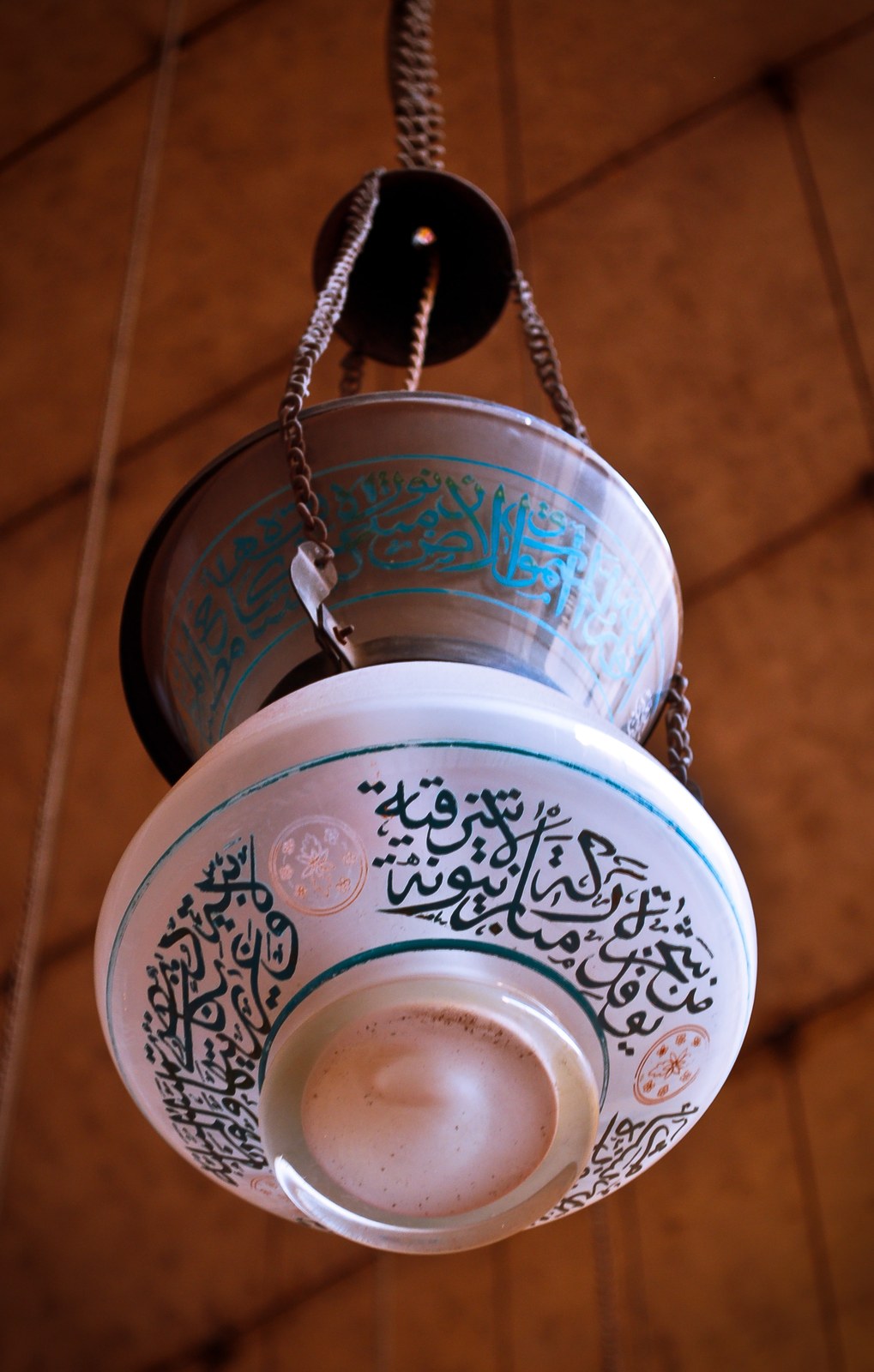
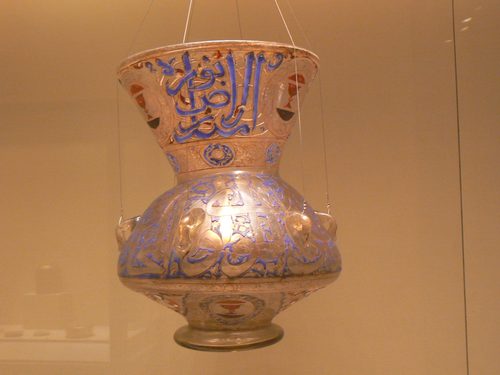
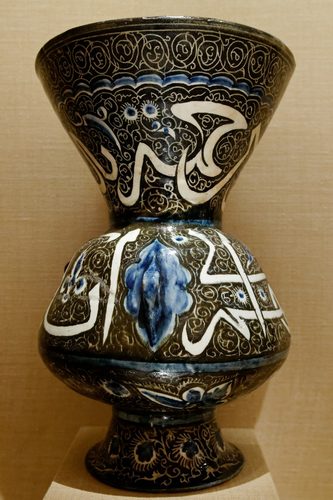
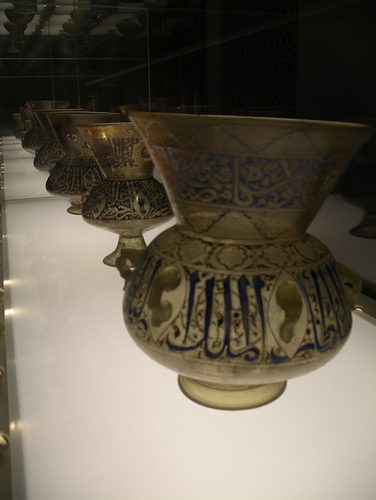
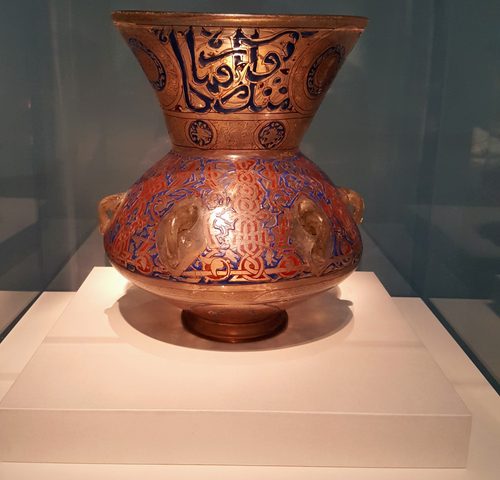
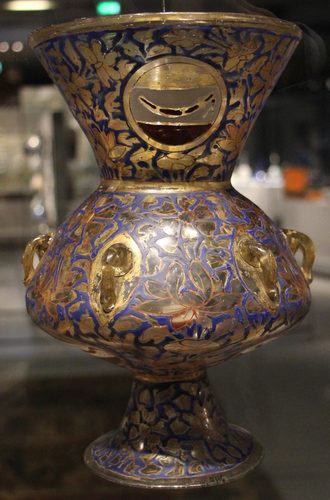
Cairo's status as an Islamic art center spans two dynasties. The Fatimid Caliphate, founded in 969, built Al-Azhar and a court culture that produced rock crystal ewers, luster-painted ceramics, and carved ivory and wood objects traded across the Mediterranean. After the Ayyubid transition of 1171, the Mamluk Sultanate, 1250 to 1517, redirected trade-route wealth and Mongol-displaced craftsmen from Mosul into an even larger building program: monumental mosque-madrasa-mausoleum complexes faced in striped ablaq masonry and crowned with stone domes carved in geometric relief. Cairo had no local painting school to rival Persia's, so its signature crafts were architectural and object-based: enameled and gilded mosque lamps, brass vessels inlaid with silver and gold, and Quran manuscripts with geometric illumination. Sultans and their emirs competed through pious foundations, waqf, that combined mosque, school, and tomb in one structure, each carrying an inscribed record of its patron, making Cairo's surviving monuments an unusually direct index of Mamluk political history.
What marks the region
Ablaq masonry
Alternating bands of light and dark stone, usually cream limestone and black or red, gave Cairo's mosque facades and portals a striped, load-bearing decorative pattern found across Mamluk building.
Muqarnas portals
Deep, honeycombed stalactite vaulting over monumental doorways announced a building's entrance and status before a visitor read a single inscription.
Inlaid brass metalwork
Cast brass vessels were engraved and inlaid with silver and gold wire, a technique carried to Cairo by metalworkers displaced from Mosul after the 1258 Mongol destruction of Baghdad.
Enameled mosque lamps
Blown glass lamps painted with enamel and gilding, then fired, hung by chains in mosque interiors, their inscriptions naming the sultan or emir who endowed them.
Waqf inscriptions
Foundation deeds and dedicatory bands carved or painted on a building recorded its patron and pious purpose, turning Cairo's monuments into a legible political archive.
Geometric strapwork carving
Wood and stone were cut into interlocking star-and-polygon patterns, girih, used on minbars, doors, and window screens in place of figural decoration.
Local signatures
How to spot Cairo art
- Eight-pointed star pattern
- → Interlocking star-and-polygon geometry standing for infinite, non-figural divine order, repeated across metalwork, woodwork, and stone.
- Amir's blazon (rank emblem)
- → A roundel bearing a cup, napkin, or polo stick marking an object as made for a specific Mamluk military officer's household.
- Ablaq stone banding
- → Alternating light and dark masonry courses signaling Mamluk architectural patronage at a glance, distinct from plainer Fatimid facades.
- Muqarnas honeycomb vault
- → Tiered stalactite carving over a portal or dome transition, marking a threshold between public street and sacred or royal space.
- Kufic and thuluth inscription band
- → Monumental calligraphy naming a patron or quoting scripture, wrapped around portals, minarets, and lamps as decoration and record.
- Rock crystal carving
- → Clear quartz cut into ewers and vessels, an early Fatimid luxury craft traded as far as European church treasuries.
The story
The Fatimid Caliphate founded Cairo in 969 and built Al-Azhar mosque in 970-972 as both congregational mosque and teaching institution. Fatimid workshops produced rock crystal ewers and luster ceramics prized as far as Sicily and Byzantium. Saladin ended Fatimid rule in 1171, and after a brief Ayyubid period the Mamluk Sultanate, a military elite drawn from enslaved soldiers, took power in 1250 and ruled until the Ottoman conquest of 1517. Mongol destruction of Baghdad in 1258 pushed skilled metalworkers toward Cairo, feeding a boom in inlaid brass production. Sultan Qalawun built his mosque-madrasa-hospital complex in 1284-85, and Sultan Hasan followed with an even larger complex in 1356-63, its portal among the tallest in the medieval Islamic world. Ottoman rule after 1517 shifted political patronage to Istanbul, but Cairo's metalworkers, woodcarvers, and mosque builders continued producing for local and pilgrimage trade for centuries after.
Masterpieces of the place
| Work | Artist | Date | Why it matters |
|---|---|---|---|
| Al-Azhar Mosque | Unknown | founded 970-972 | Founded under the Fatimid Caliphate as mosque and teaching institution, still an active center of religious study today. |
| Baptistère de Saint Louis | Muhammad ibn al-Zayn | c. 1290-1320 | An inlaid brass basin signed by its maker, among the finest surviving examples of Mamluk metalwork. |
| Complex of Sultan Hasan | Unknown | 1356-1363 | A monumental mosque-madrasa-mausoleum with one of the tallest portals in medieval Cairo, faced in striped ablaq stone. |
| Mosque lamp for Sultan Hasan | Unknown | mid-14th century | An enameled and gilded glass lamp inscribed with the sultan's titles, hung by chain inside his mosque complex. |
| Fatimid rock crystal ewer | Unknown | 10th-11th century | A vessel carved from clear quartz, a Fatimid court luxury later dispersed into European treasuries. |
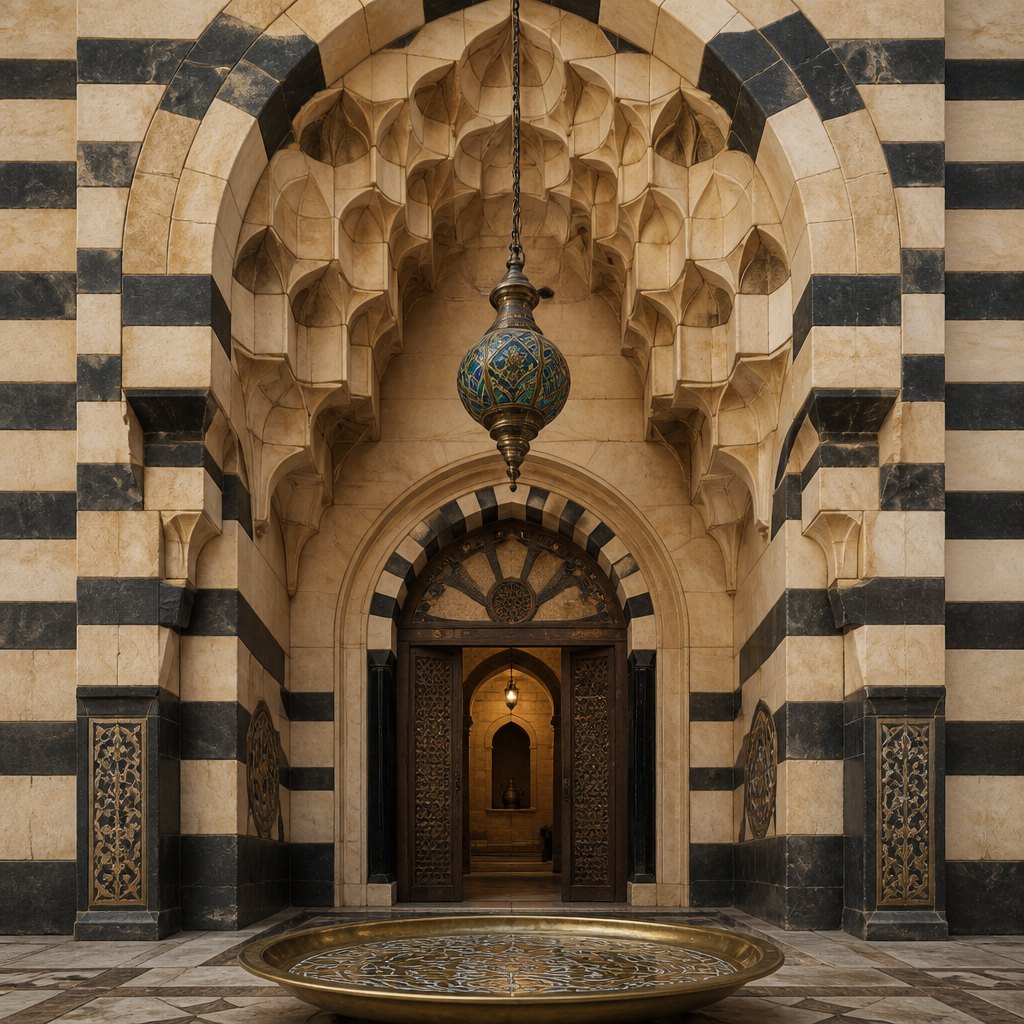 AI-generated
Work en plein air
Paint in the light of Cairo
This example was generated from a prompt like: “A mosque portal faced in striped cream-and-black stone, framed by tiered honeycombed vaulting, with a hanging enameled glass lamp and a brass tray inlaid with silver geometric strapwork below.”
Open the Cairo Art Style generator →The place today
The Museum of Islamic Art in Cairo holds one of the world's largest collections of Fatimid and Mamluk objects, and historic Cairo's mosques, madrasas, and gates form a UNESCO World Heritage site still used for worship and study. Khan el-Khalili's workshops continue hand-inlaid metalwork and woodturning descended from Mamluk craft traditions, sold alongside the historic mosques that first displayed them.
Compose your own
Stripe any wall surface in alternating light and dark stone, ablaq, rather than a flat single tone. Cut portal niches into tiered, honeycombed muqarnas rather than a plain arch. Render metal objects in dark brass or bronze inlaid with fine silver or gold linework, concentrated around inscription bands and roundel emblems. Avoid figural imagery; fill any open field with interlocking star-and-polygon geometry or scrolling arabesque instead. Wrap a monumental inscription band, in angular Kufic or flowing thuluth, around any dome, portal, or lamp to anchor the composition.
Frequently asked questions
What is ablaq masonry?
Construction using alternating courses of light and dark stone, typically cream limestone with black or red, used on Cairo mosque facades and portals especially under Mamluk patronage from the 1200s onward.
How did Mongol invasions affect Cairo's art?
The Mongol destruction of Baghdad in 1258 pushed skilled metalworkers from Mosul toward Cairo, feeding the city's boom in inlaid brass vessels under early Mamluk rule.
What distinguishes Fatimid from Mamluk art in Cairo?
Fatimid work, before 1171, favored rock crystal, luster ceramics, and carved ivory for a court elite. Mamluk work, 1250-1517, centered on monumental mosque architecture and inlaid metal objects tied to military patrons.
Where can Cairo's Islamic art be seen today?
The Museum of Islamic Art in Cairo holds major Fatimid and Mamluk collections, while historic Cairo's mosques and madrasas, a UNESCO World Heritage site, remain standing in their original settings.