 Art
Art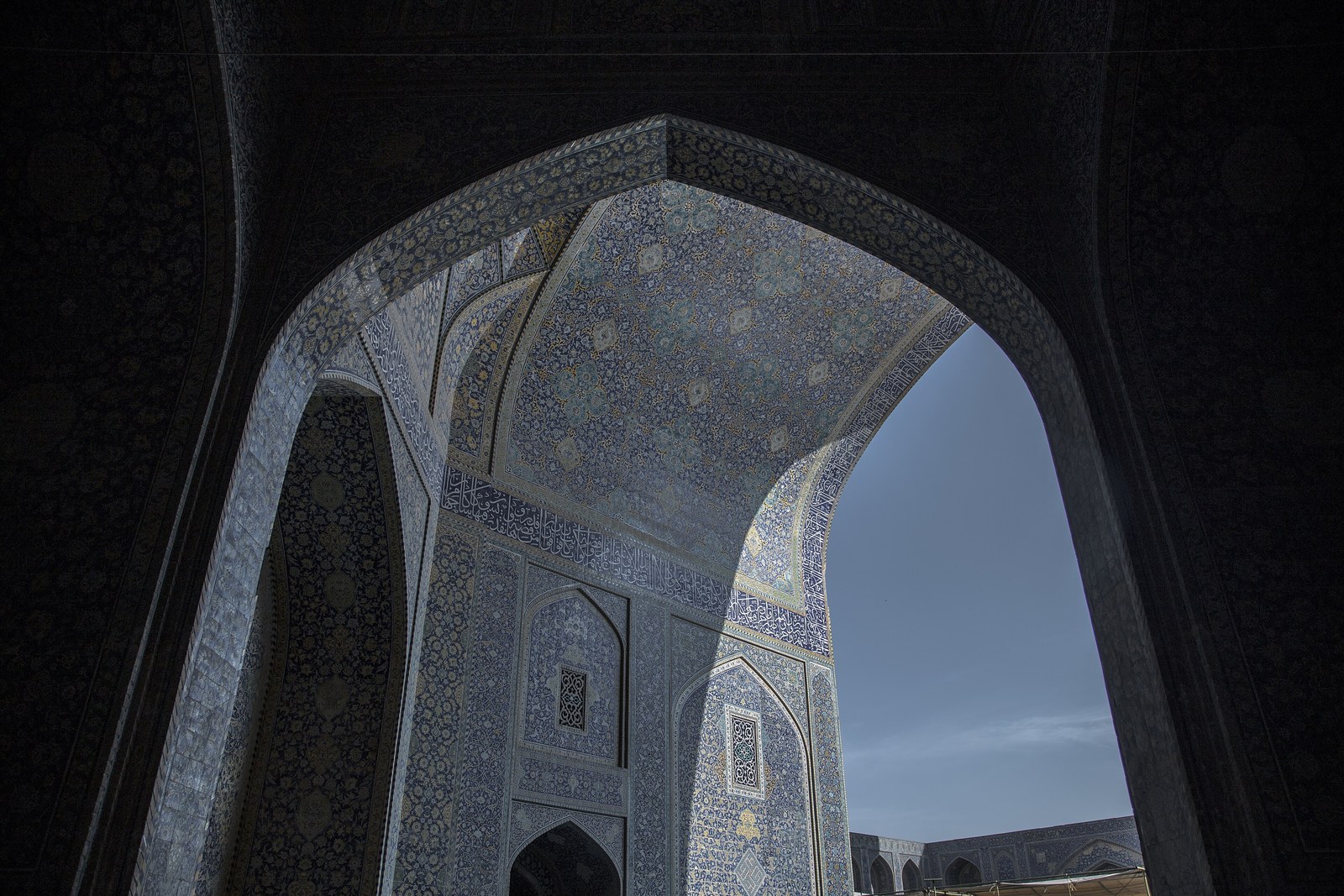
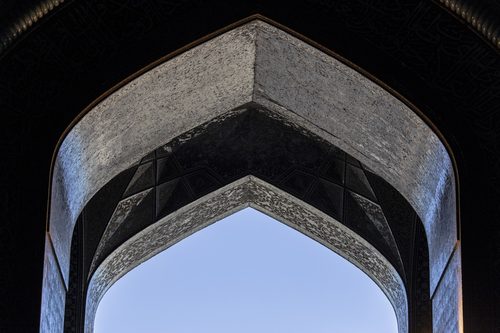
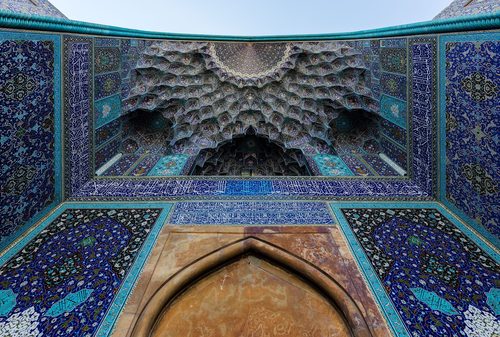
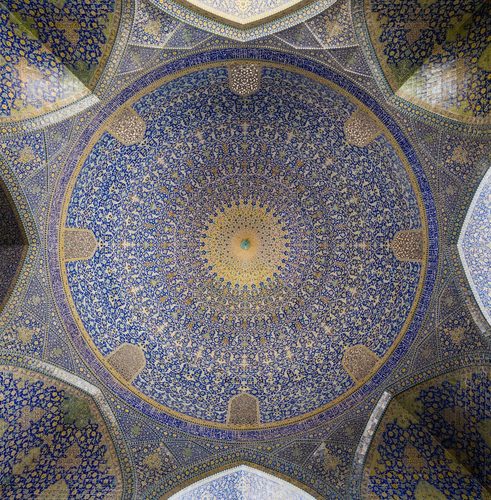
Isfahan art covers the architecture, tilework, and album painting produced after Shah Abbas I made the city his Safavid capital in 1598. Around the vast Naqsh-e Jahan Square he built mosques, a palace, and a bazaar sheathed in polychrome tile, replacing slower mosaic faience with the faster haft-rang, or seven-color, technique so whole domes could be finished within one reign. Patronage centered on architecture and court albums rather than illustrated epics, the specialty of earlier Tabriz and Herat workshops. Armenian merchants resettled in the New Julfa quarter after 1606 brought European prints into contact with Persian line, and court painters such as Reza Abbasi turned the miniature away from crowded manuscript scenes toward single, fluidly drawn figures. Silk trade wealth Abbas rerouted through Isfahan funded turquoise-and-cobalt tilework, calligraphic dome bands, and cypress-filled garden murals that became the visual shorthand for Safavid Persia.
What marks the region
Haft-rang tilework
Seven-color glazed tiles painted directly onto a single panel before firing, replacing labor-intensive cut-tile mosaic and letting large domes and portals be finished within one royal reign.
Muqarnas vaulting
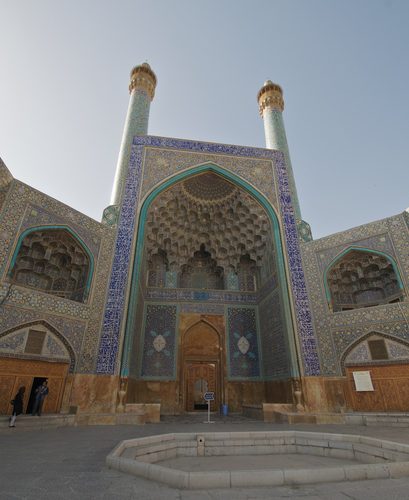
Honeycombed stalactite niches over portals and squinches dissolved the hard geometry of a dome's transition into a rippling, light-catching surface common across Persian building.
Calligraphic dome bands
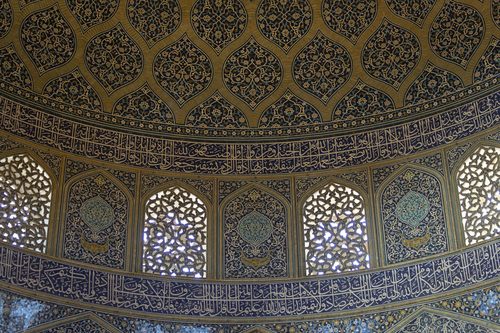
Bands of Quranic and poetic inscription in thuluth or nastaliq script wrap domes and portals, turning architecture itself into a legible surface rather than a purely decorative one.
Single-figure album painting
Court painters increasingly worked on single sheets bound into albums, muraqqa, rather than full manuscript cycles, favoring one fluid figure over crowded narrative scenes.
Garden and banquet murals
Palace interiors like Chehel Sotoun carried large mural cycles of court banquets, hunts, and garden pavilions painted directly on plaster rather than confined to portable panels.
Turquoise-cobalt palette
A dominant range of turquoise, cobalt, and white, sometimes set against warm brick, distinguishes Isfahan's later tilework from the more mosaic-heavy blues of earlier Timurid buildings.
Local signatures
How to spot Isfahan art
- Turquoise dome
- → The glazed tile dome, Isfahan's most recognized silhouette, marking a building as royal or religious from across the city.
- Cypress tree
- → A slender evergreen standing for the eternal soul and the ordered Persian garden, repeated in tile panels and album backgrounds.
- Nightingale and rose
- → A pairing drawn from Persian poetry, standing for longing and beauty, appearing on tile panels and miniature borders.
- Arabesque vine (islimi)
- → Continuous scrolling foliage with no clear beginning or end, filling spandrels and borders as a sign of infinite divine pattern.
- Star-polygon strapwork (girih)
- → Interlocking geometric star and polygon tiling covering portals and floors, a mathematical pattern read as a sign of cosmic order.
- Shifting dome interior pattern
- → The interior tile pattern of the Sheikh Lotfollah Mosque changes tone through the day, an effect popularly compared to a peacock's tail.
The story
Shah Abbas I transferred the Safavid capital from Qazvin to Isfahan in 1598 and laid out Naqsh-e Jahan Square as its civic and religious heart. The Sheikh Lotfollah Mosque, built 1603-1619 as a private royal chapel, and the Shah Mosque, built 1611-1629 for public congregation, framed the square in glazed tile. Abbas resettled Armenian merchants from Julfa into a new suburb, New Julfa, in 1606, giving the city direct commercial and artistic links to Europe. The court painter Reza Abbasi, active into the 1630s, shifted Persian painting from dense manuscript illustration toward single expressive figures on album pages. Shah Abbas II later commissioned the Chehel Sotoun palace, completed 1647 and expanded after a 1706 fire, with mural cycles of court life. Isfahan's golden age ended abruptly in 1722, when an Afghan siege sacked the city and the Safavid court collapsed, though its mosques and squares survived largely intact.
Masterpieces of the place
| Work | Artist | Date | Why it matters |
|---|---|---|---|
| Shah Mosque (Masjid-e Shah) | Unknown | 1611-1629 | The Safavid dynasty's largest mosque, its haft-rang tilework and calligraphic portal anchoring Naqsh-e Jahan Square. |
| Sheikh Lotfollah Mosque | Unknown | 1603-1619 | A domeless-looking private royal chapel whose interior tile pattern shifts with the light, built without a public courtyard. |
| Chehel Sotoun mural cycle | Unknown | 1647, expanded 1706 | Palace murals of royal receptions and battles painted directly on plaster inside a forty-columned reception hall. |
| Album painting of a seated youth | Reza Abbasi | c. 1625 | A single fluid ink-and-color figure typical of the Isfahan school's turn away from crowded manuscript scenes. |
| Ali Qapu Palace music room | Unknown | early 17th century | Plaster niches cut into vase and vessel shapes, designed to absorb sound and once hold court ceramics. |
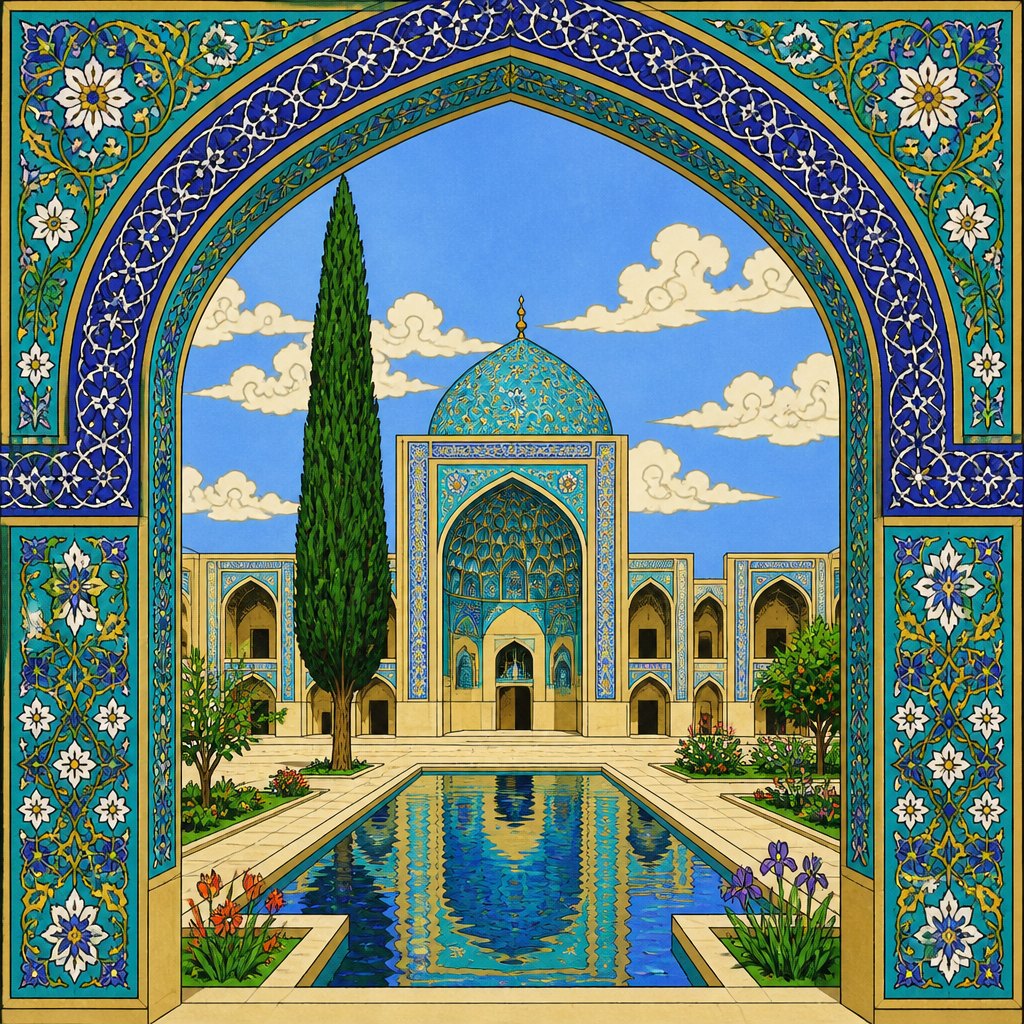 AI-generated
Work en plein air
Paint in the light of Isfahan
This example was generated from a prompt like: “A Safavid courtyard framed by a turquoise-and-cobalt tiled portal, a slender cypress beside a reflecting pool, calligraphic bands wrapping the archway, rendered in flat saturated color with a fluid, unshaded outline.”
Open the Isfahan Art Style generator →The place today
Naqsh-e Jahan Square is a UNESCO World Heritage site, and the Shah Mosque, Sheikh Lotfollah Mosque, and Ali Qapu palace remain open around it much as Safavid visitors would have seen them. Chehel Sotoun functions as a museum for its own murals. Isfahan keeps active workshops producing hand-painted tile, minakari enamelwork, and inlaid woodwork, sold in the bazaar bordering the square, sustaining crafts descended from Safavid court production.
Compose your own
Work in flat, saturated turquoise, cobalt, and white against warm brick or cream ground, the core Isfahan tile palette. Frame any architectural element with a calligraphic band or a border of scrolling arabesque rather than leaving edges plain. For figures, favor a single fluid outline over modeling or shading, the hallmark of Isfahan album painting. Set garden scenes with a tall cypress, a flowering tree, and a high horizon line rather than deep linear perspective. Add muqarnas-style honeycomb texture to any niche or transition rather than a plain curve, and let a dome's interior pattern radiate outward like an unfolding star.
Frequently asked questions
What is haft-rang tilework?
A seven-color glazed tile technique developed under the Safavids in which the full design is painted on a single tile before firing, faster than cutting individual colored pieces into mosaic.
Why was Isfahan called half the world?
A Persian saying, Esfahan nesf-e jahan, reflected the city's scale and wealth as Safavid capital after 1598, when its square, bazaar, and mosques rivaled any city then known to Persian travelers.
How does Isfahan miniature painting differ from Tabriz's?
Isfahan painters under Reza Abbasi favored single expressive figures on album pages, while earlier Tabriz workshops produced dense, multi-figure scenes for full illustrated manuscripts.
What role did New Julfa play in Isfahan's art?
Armenian merchants resettled there from 1606 brought European prints and trade contacts, exposing Isfahan's painters to Western pictorial ideas that later fed into Safavid painting.