 Art
Art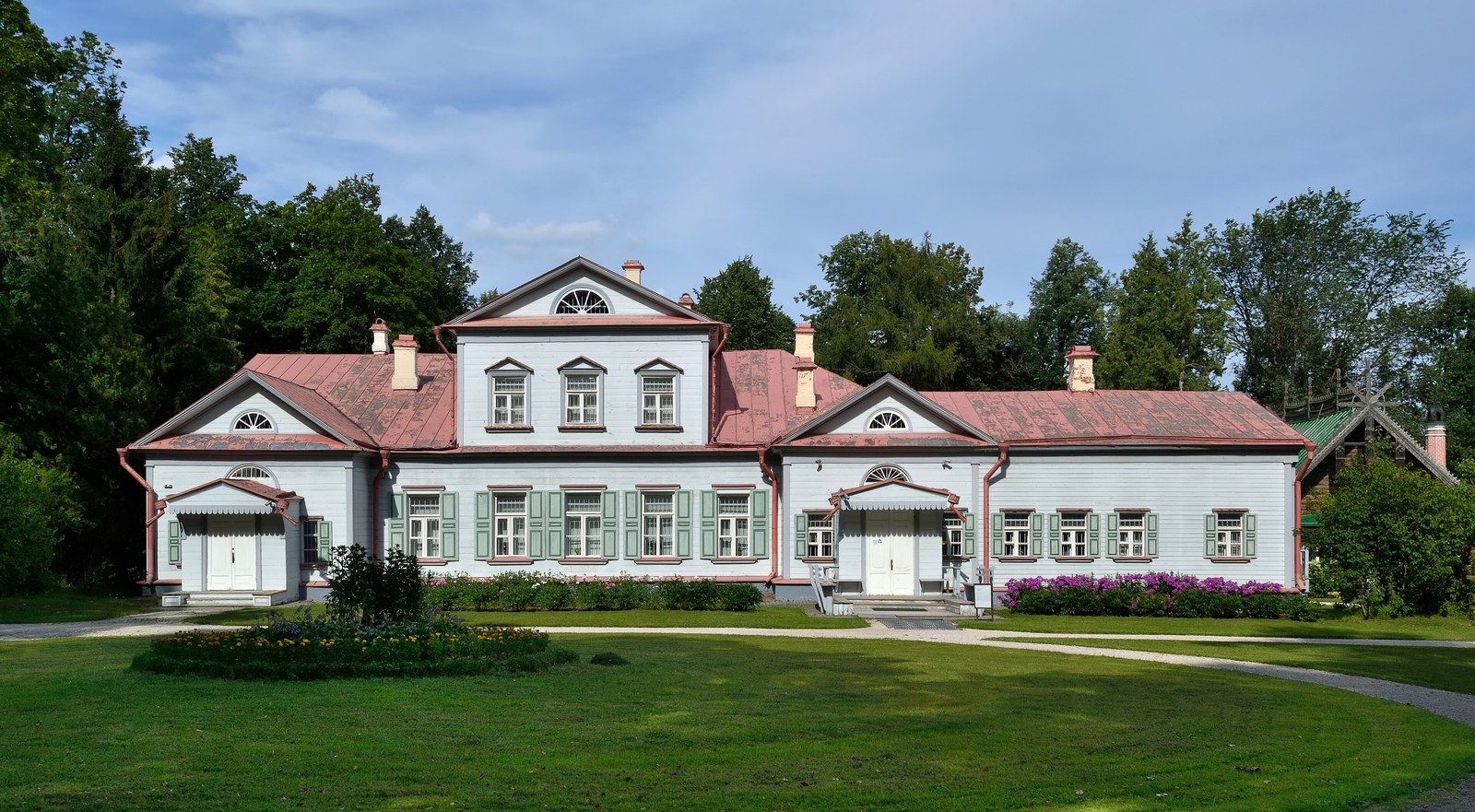
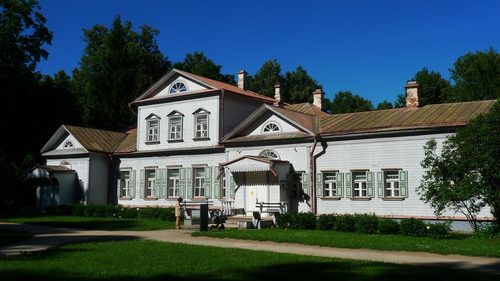
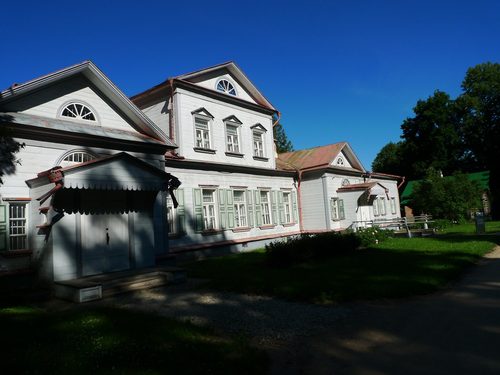
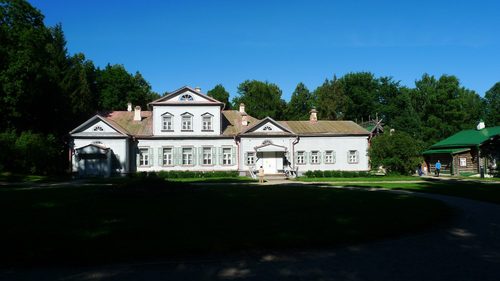
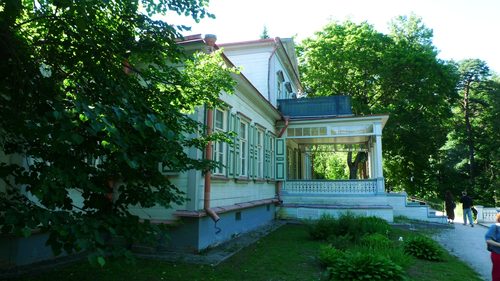
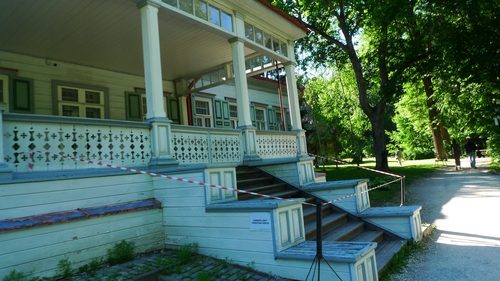
Abramtsevo, an estate roughly 60 kilometers northeast of Moscow, became Russia's most influential artist colony in the 1870s-1890s under railway magnate and patron Savva Mamontov, who bought the property in 1870. Painters including Ilya Repin, Viktor Vasnetsov, Vasily Polenov, Mikhail Vrubel, and Valentin Serov spent summers there, working alongside estate workshops rather than in isolated studios. Mamontov's wife Elizaveta founded a woodcarving workshop in 1885 to teach and preserve local peasant carving, and a ceramics workshop followed in 1889, producing glazed majolica designed by resident artists. The colony's guiding idea was that medieval Russian and folk vernacular forms could feed a modern national art rather than being treated as museum curiosities. Its clearest built statement is the estate church, designed jointly by Vasnetsov and Polenov in Novgorod-Pskov medieval style, completed in 1882. Abramtsevo's model directly shaped the later Talashkino colony and Russia's wider Style Moderne.
What marks the region
Estate as working colony
Painters lived and worked together at Abramtsevo each summer, designing furniture, ceramics, and stage sets alongside easel paintings rather than treating craft as secondary.
Peasant craft revival workshops
Dedicated woodcarving and ceramics workshops taught and paid local villagers to produce work designed in collaboration with resident artists, not simply purchased folk goods.
Medieval Novgorod-Pskov church forms
Vasnetsov and Polenov studied surviving medieval Russian churches directly and adapted their compact stone forms and kokoshnik gables for a small modern chapel.
Majolica sculpture and architectural ceramics
Vrubel's ceramics workshop produced glazed relief panels, fireplaces, and figures in deep blue-green tones, extending painting's ambitions into fired clay.
Folklore as legitimate subject
Fairy tales, epic bogatyr heroes, and Baba Yaga were treated as serious source material for major paintings and estate structures, not childish decoration.
Collaborative multidisciplinary output
The same circle designed opera sets for Mamontov's Private Opera, illustrated books, and estate buildings, blurring lines between fine art and craft.
Local signatures
How to spot Abramtsevo art
- Hut on chicken legs
- → A garden structure built on carved log legs, referencing the folklore witch Baba Yaga's hut and marking Abramtsevo's embrace of fairy tale as art subject.
- Kokoshnik gable
- → A rounded, tent-like gable form borrowed from medieval Russian church architecture, used on the estate church and later Russian Revival buildings.
- Deep blue-green majolica glaze
- → The signature palette of Vrubel's Abramtsevo ceramics, identifying architectural fireplaces and panels made in the estate workshop.
- Bogatyr warrior figure
- → The epic Slavic knight-hero, a recurring folklore subject in Vasnetsov's work developed during his Abramtsevo years.
- Carved distaff and household object
- → Traditional peasant tools reproduced and adapted by the woodcarving workshop, marking Abramtsevo's direct study of vernacular craft.
- Clustered dome roof
- → Small clustered domed roof forms on the estate church, echoing medieval prototypes rather than the larger domes of later revival cathedrals.
The story
Writer Sergei Aksakov owned Abramtsevo from 1843 to 1859, hosting Gogol and other literary figures. Railway industrialist Savva Mamontov bought the estate in 1870 and began inviting painters for extended summer stays through the 1870s and 1880s. Elizaveta Mamontova established a woodcarving workshop in 1885 to document and continue local peasant carving traditions. Vasnetsov and Polenov designed the estate's Church of the Savior Not Made by Hands, built in 1881-82 in a compact medieval Novgorod-Pskov style. A ceramics workshop opened in 1889, and Mikhail Vrubel joined in the mid-1890s, producing majolica fireplaces and sculpture including the Mikula Selyaninovich fireplace of 1899-1900. Mamontov's financial collapse and brief arrest in 1899 ended the colony's most active period, though family members maintained the estate afterward. Abramtsevo was nationalized after 1917 and opened as a state museum, preserving the church, workshops, and artists' living quarters.
Masterpieces of the place
| Work | Artist | Date | Why it matters |
|---|---|---|---|
| Church of the Savior Not Made by Hands | Viktor Vasnetsov and Vasily Polenov | 1881-82 | A small chapel modeled on medieval Novgorod-Pskov churches, the colony's clearest architectural statement. |
| Hut on Chicken Legs | Viktor Vasnetsov | 1883 | A whimsical garden structure translating Baba Yaga folklore into built form for the estate grounds. |
| Mikula Selyaninovich Fireplace | Mikhail Vrubel | 1899-1900 | A glazed majolica fireplace in deep blue-green tones, made in the estate's ceramics workshop. |
| Girl with Peaches | Valentin Serov | 1887 | Painted in the Abramtsevo house's dining room, a landmark of Russian Impressionist portraiture. |
| Abramtsevo-Kudrino carved cabinet | Unknown (workshop craftsmen) | 1885-1900s | Peasant-style relief-carved furniture produced by the estate's woodcarving workshop for sale and use. |
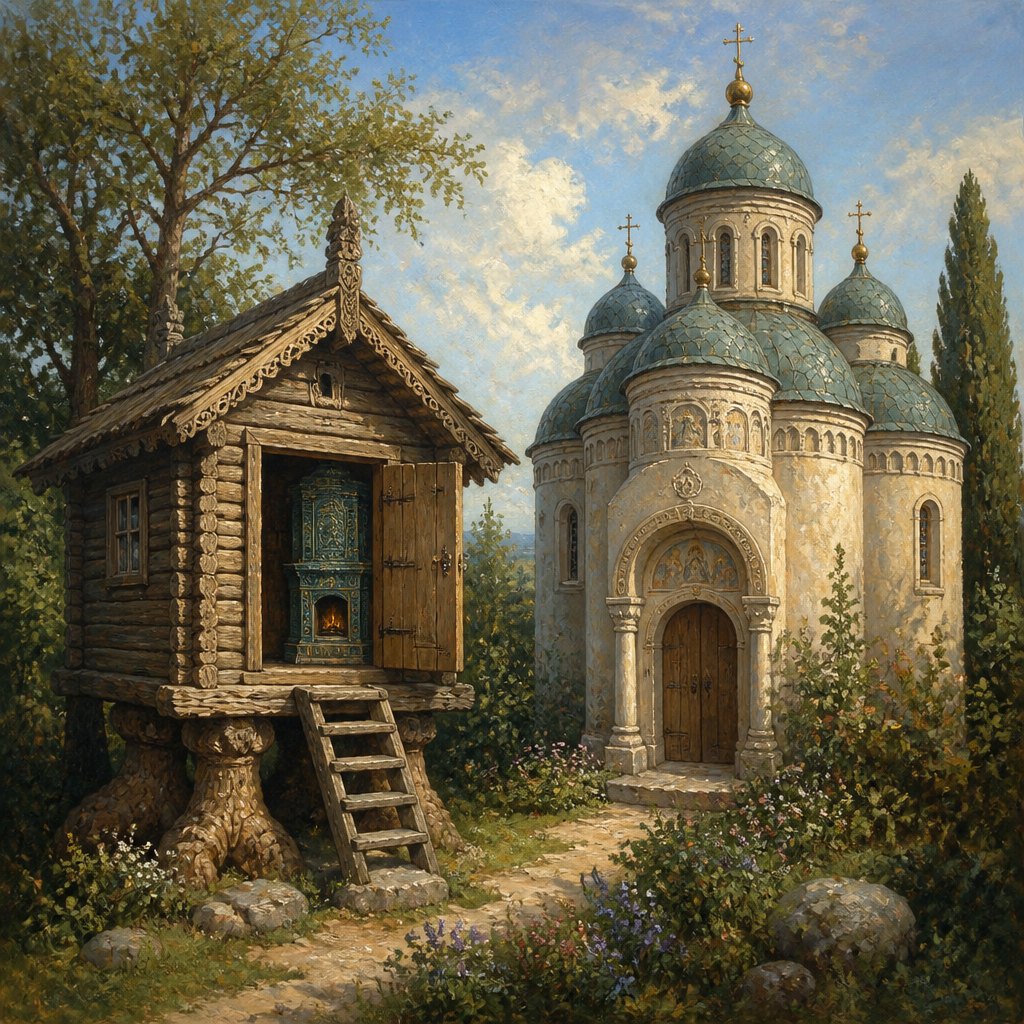 AI-generated
Work en plein air
Paint in the light of Abramtsevo
This example was generated from a prompt like: “A small wooden garden hut raised on carved log legs beside a compact medieval-style chapel with clustered domes, a glazed blue-green majolica fireplace panel visible through an open door.”
Open the Abramtsevo Art Style generator →The place today
Abramtsevo operates as a state historical and artistic museum-reserve, with the estate house, church, and both workshop buildings open to visitors near Moscow. Vrubel's majolica and Vasnetsov's Hut on Chicken Legs survive on the grounds. The Kudrino woodcarving style the estate helped codify continues as a living craft in workshops in nearby villages, sold as carved boxes, bowls, and furniture. The estate church remains an active place of worship.
Compose your own
Combine a compact, medieval Russian church silhouette, small clustered domes, kokoshnik gables, with a folklore subject rather than a purely liturgical one. Render ceramics in deep, glossy blue-green majolica glaze with stylized relief figures instead of flat painted tile. Carve wooden objects with rounded peasant-style floral relief rather than sharp classical ornament. Treat fairy-tale characters, a hut on animal legs, an epic warrior, as subjects worthy of serious composition, letting architecture, furniture, and painting share one decorative vocabulary.
Frequently asked questions
What was the Abramtsevo colony?
An artist community that gathered each summer from the 1870s to 1890s at industrialist Savva Mamontov's estate near Moscow, where painters worked alongside dedicated woodcarving and ceramics workshops reviving Russian folk craft.
What is the Russian Revival style?
A 19th-century movement drawing on medieval Russian church architecture and peasant vernacular ornament rather than Western European historicism, with Abramtsevo's 1881-82 estate church as a key early example.
What did Vrubel make at Abramtsevo?
Working in the estate's ceramics workshop from the mid-1890s, Mikhail Vrubel produced glazed majolica fireplaces, sculpture, and architectural panels in a distinctive deep blue-green palette.
Can Abramtsevo be visited today?
Yes, it operates as a state museum-reserve near Moscow, with the main house, the 1881-82 church, and the estate's original woodcarving and ceramics workshop buildings open to the public.