 Art
Art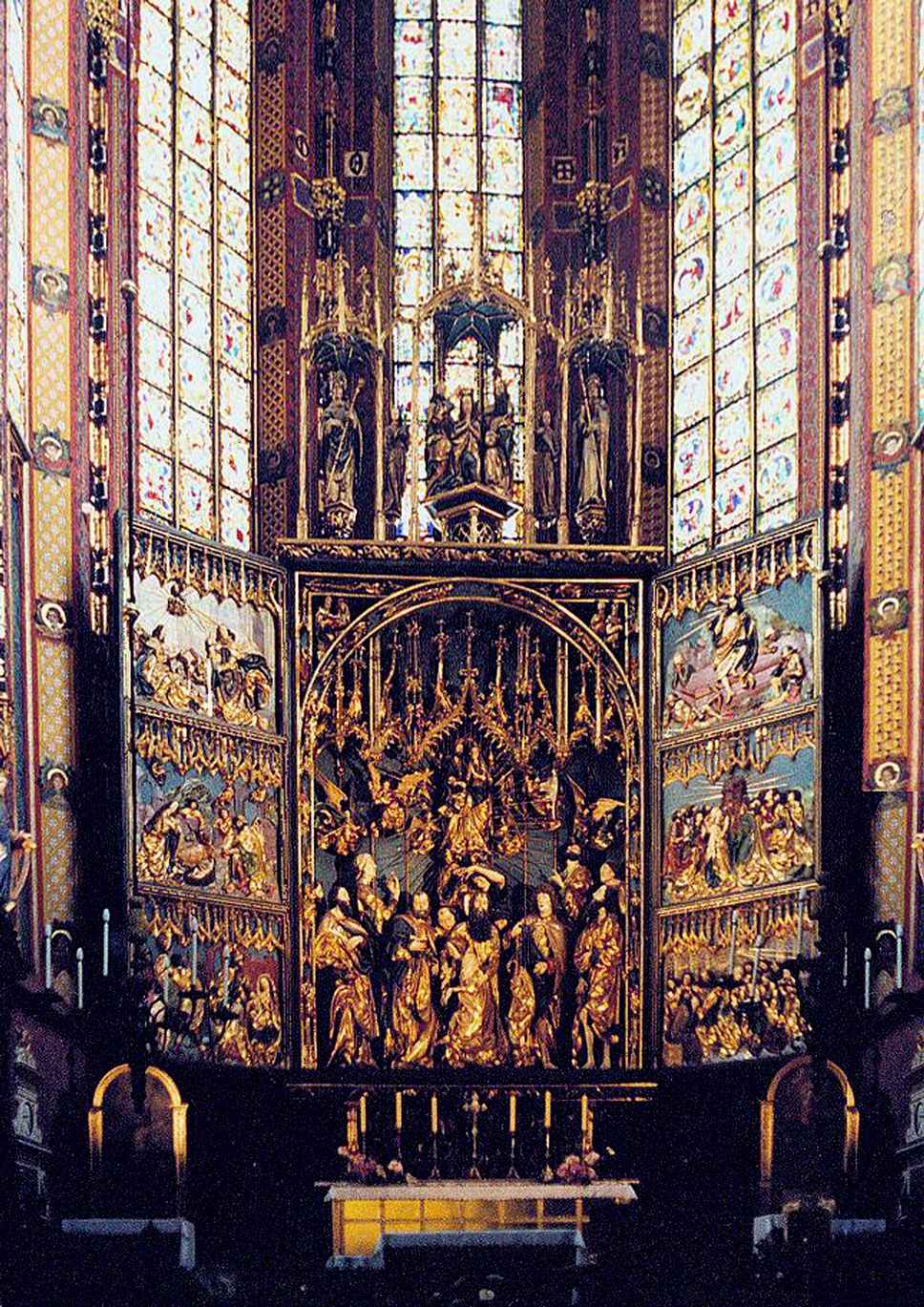
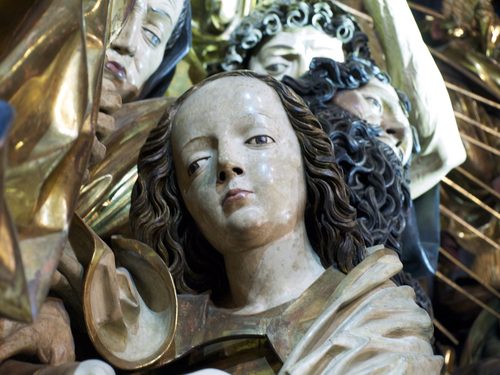
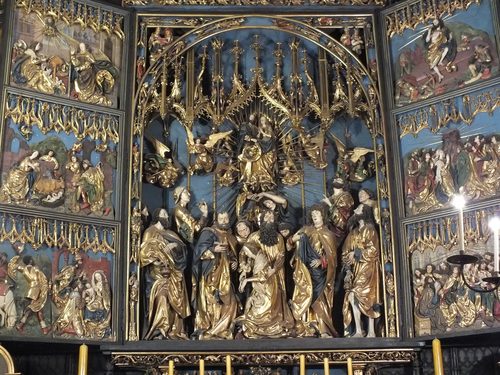
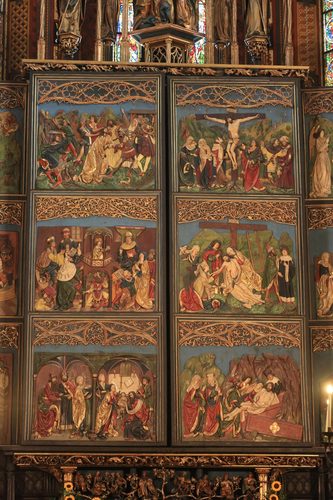
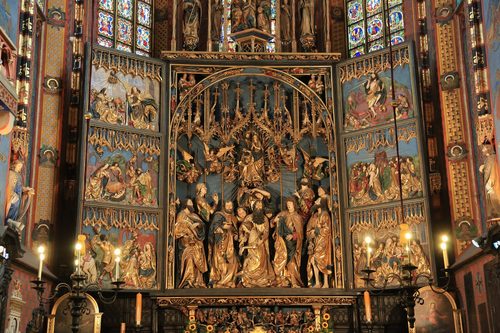
Kraków art reflects five centuries as capital of the Kingdom of Poland and seat of the Jagiellonian dynasty. Its Gothic phase peaked with Veit Stoss, a German-born sculptor who worked in the city from 1477 to 1496 and carved the towering limewood high altar of St Mary's Basilica, completed in 1489 and still the largest Gothic altarpiece in Europe. From 1502, King Sigismund I brought Italian architects, chiefly Francesco Fiorentino and Bartolommeo Berrecci, to rebuild Wawel Castle in Renaissance style, giving Kraków one of the earliest and finest Renaissance courtyards north of the Alps. His son Sigismund II Augustus commissioned over 350 Flemish tapestries from Brussels workshops in the mid-1500s to furnish Wawel's state rooms. The Sukiennice, or Cloth Hall, at the market square's center, gained its ornamental Renaissance attic parapet in the 1550s, funded by the cloth trade that made the city wealthy. When the capital moved to Warsaw in 1596, Kraków's role as leading art patron declined, but its Gothic and Renaissance fabric survived largely intact.
What marks the region
Limewood altarpiece carving
Gothic sculptors carved and polychromed large limewood figures, then gilded and painted them, producing multi-scene winged altarpieces for parish churches.
Imported Italian masters
Polish kings recruited Italian architects and sculptors directly to Wawel, grafting Renaissance forms onto an existing Gothic royal complex.
Flemish tapestry collecting
The royal court commissioned vast series of woven wall hangings from Brussels workshops rather than relying on local weaving.
Attyka parapet
Kraków builders topped Renaissance facades with a distinctive decorative stone parapet, later recognized as a native Polish Renaissance form.
Guild-based market square production
Painters, goldsmiths, and cloth merchants clustered around Rynek Główny, the main market square, linking art production directly to trade wealth.
University-linked scholarship
Jagiellonian University, founded 1364, supported manuscript illumination and later humanist patronage alongside court commissions.
Local signatures
How to spot Kraków art
- Coronation of the Virgin
- → The central scene of Stoss's St Mary's altarpiece, a recurring subject in Kraków's Gothic church commissions.
- Polish crowned eagle
- → The kingdom's heraldic emblem, appearing across royal tapestries, tombs, and civic architecture.
- Attyka parapet silhouette
- → The decorative stone crest atop Renaissance facades signals Kraków's specific version of the style.
- Flemish millefleur tapestry pattern
- → Dense floral and animal weaving imported for Wawel's state rooms, distinct from local textile traditions.
- Sigismund Bell imagery
- → The great bell cast in 1520 for Wawel Cathedral appears as a civic symbol of royal Kraków.
- Quatrefoil Gothic tracery
- → Four-lobed stone window patterns mark the city's late medieval church architecture.
The story
Kraków became the seat of Polish kings at Wawel Castle by the 11th century and gained a university in 1364, founded by Casimir III. Under the Jagiellonian dynasty, ruling from 1386 to 1572, the city became Central Europe's trade and court hub. Veit Stoss, a sculptor originally from southern Germany, worked in Kraków from 1477, carving the nearly 13-meter high altar of St Mary's Basilica, completed in 1489. From 1502, King Sigismund I brought Italian architects to rebuild Wawel Castle, including the Sigismund Chapel, built 1517-1533 by Bartolommeo Berrecci as a Renaissance royal mausoleum. His son Sigismund II Augustus commissioned more than 350 Flemish tapestries from Brussels workshops in the 1550s-60s for Wawel's audience chambers. The Sukiennice cloth hall received its ornamental attic in 1556-1560 under Giovanni Maria Padovano and Santi Gucci. When King Sigismund III moved the capital to Warsaw in 1596, Kraków's role as chief royal art patron ended, though its buildings and collections remained in place.
Masterpieces of the place
| Work | Artist | Date | Why it matters |
|---|---|---|---|
| High Altar of St Mary's Basilica | Veit Stoss | 1477-1489 | Limewood altarpiece nearly 13 meters tall, the largest surviving Gothic altarpiece in Europe. |
| Sigismund Chapel | Bartolommeo Berrecci | 1517-1533 | Renaissance royal mausoleum at Wawel Cathedral, among the first of its style north of the Alps. |
| Wawel tapestry collection (arrasy) | Brussels workshops | mid-1500s | Over 350 Flemish tapestries commissioned by Sigismund II Augustus for the royal court. |
| Sukiennice attic parapet | Giovanni Maria Padovano and Santi Gucci | 1556-1560 | Ornamental Renaissance crest atop the medieval Cloth Hall on the main market square. |
| Sigismund Bell | Unknown | 1520 | Great bell cast for Wawel Cathedral, rung on major state and religious occasions. |
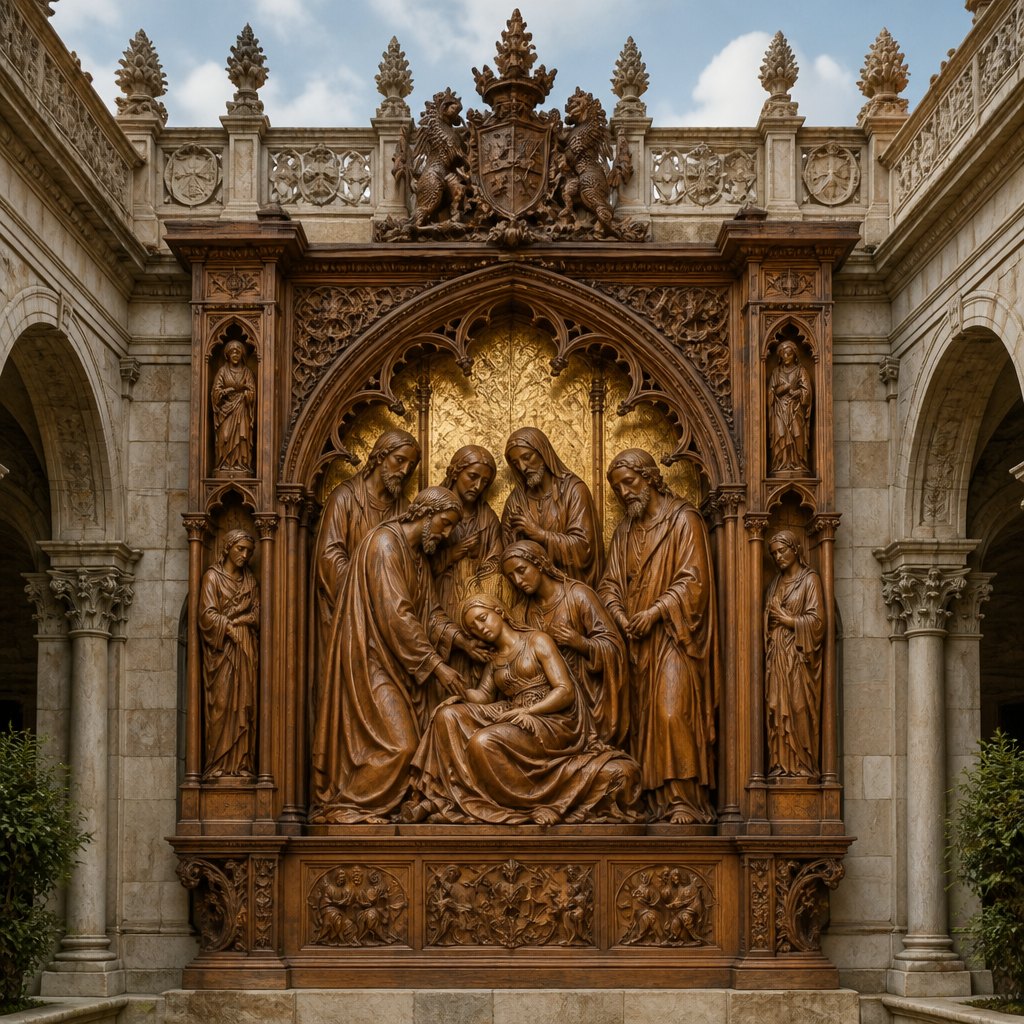 AI-generated
Work en plein air
Paint in the light of Kraków
This example was generated from a prompt like: “A tall carved wooden altarpiece scene with gilded background and deeply folded drapery on solemn robed figures, framed by a stone Renaissance courtyard arcade with a decorative crested parapet above.”
Open the Krakow Art Style generator →The place today
St Mary's Basilica displays the Stoss altarpiece daily on Kraków's main market square. Wawel Royal Castle operates as a museum showing the Flemish tapestry collection and royal state rooms. The Sukiennice houses a branch of the National Museum devoted to 19th-century Polish painting, above the same ground-floor trading stalls used for centuries. Kraków's Old Town and Wawel Hill form a UNESCO World Heritage site, and regional woodcarving and textile crafts are still shown in the city's ethnographic museum.
Compose your own
For the Gothic layer, carve or paint deep, angular drapery folds around elongated saintly figures, gild the background, and give faces solemn, slightly asymmetrical expressions rather than idealized symmetry. Arrange multiple scenes within a winged, architectural frame, as an altarpiece would. For the Renaissance layer, add a stone courtyard arcade with round arches and a decorative crested parapet along the roofline. Where tapestry is suggested, fill the background with dense, flattened floral and animal patterning rather than open space. Keep the palette rich: deep red, gold, and forest green throughout, echoing both church interiors and royal state rooms.
Frequently asked questions
Who carved the St Mary's Basilica altarpiece?
Veit Stoss (Wit Stwosz), a German-born sculptor who worked in Kraków from 1477 to 1496, completing the limewood high altar in 1489.
Why does Wawel Castle look Italian?
King Sigismund I brought Italian architects, including Francesco Fiorentino and Bartolommeo Berrecci, from 1502 onward to rebuild the medieval castle in Renaissance style.
What are the Wawel arrasy?
A collection of over 350 Flemish tapestries commissioned by King Sigismund II Augustus from Brussels workshops in the mid-1500s to furnish the royal state rooms.
Why did Kraków's importance as an art center decline?
King Sigismund III moved the Polish capital to Warsaw in 1596, shifting royal patronage away from Kraków even though its buildings and collections remained.