 Art
Art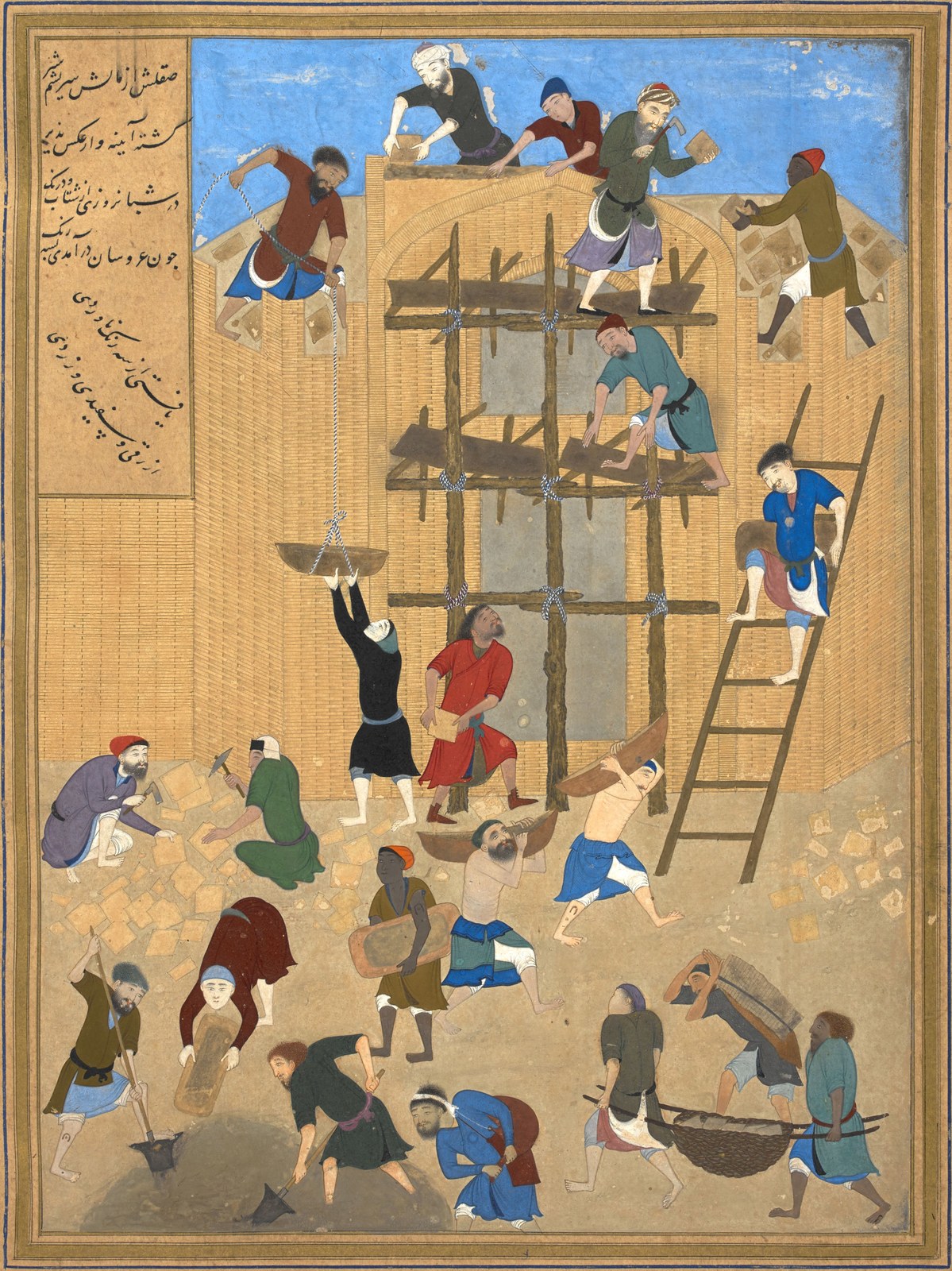
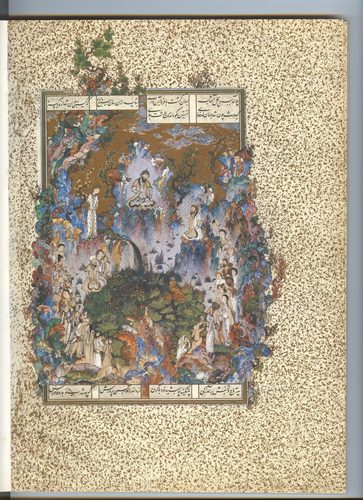
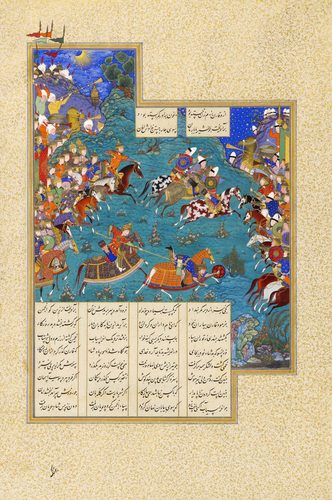
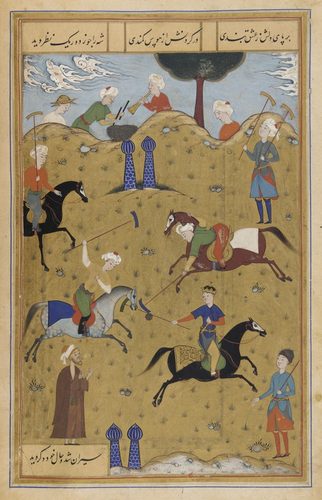
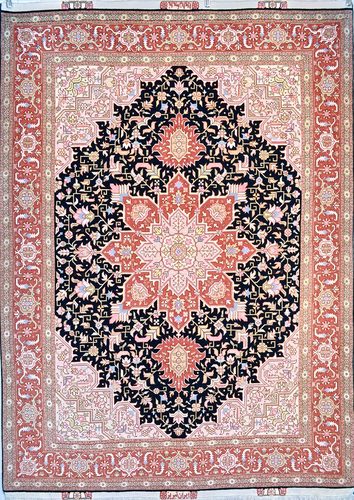
Tabriz was a capital of successive dynasties, Ilkhanid Mongol, Kara Koyunlu and Aq Qoyunlu Turkoman, and early Safavid, and each brought royal workshops that made it Persia's leading center of manuscript painting for over two centuries. Under the Mongol vizier Rashid al-Din, the Rab'-e Rashidi scriptorium of the early 1300s absorbed Chinese pictorial motifs, cloud bands, dragons, rocky landscapes, arriving through Mongol trade routes, fusing them with Persian line. Tabriz lacked Isfahan's later architectural wealth but had access to skilled scribes, paper, and pigment supply chains linking Central Asia to the Mediterranean. When Shah Ismail I made it his Safavid capital in 1501, his son Shah Tahmasp assembled painters from Tabriz and Herat into a single royal workshop that produced the Shahnameh of Shah Tahmasp, among the most lavish illustrated manuscripts ever made. The city also anchored Safavid carpet weaving, its medallion-and-arabesque designs exported west long after the capital itself moved on.
What marks the region
Multi-hand manuscript workshops
Royal ateliers assigned different painters to figures, landscape, and illumination within a single folio, so one page could carry several distinct hands under one director.
Chinese-derived cloud bands
Ribboned cloud shapes and dragon-and-phoenix motifs entered Tabriz painting through Mongol-era contact with China, becoming a lasting decorative device in Persian landscape backgrounds.
Dense multi-figure composition
Tabriz manuscript pages favored crowded battle and court scenes with high horizons and stacked spatial planes, unlike the sparser single-figure albums later made at Isfahan.
Mineral and gold pigment
Lapis lazuli blue, gold leaf, and other imported mineral pigments gave Tabriz manuscripts a jewel-like intensity meant for royal libraries, not everyday copies.
Gold-flecked margins (afshan)
Manuscript margins were often sprinkled with fine gold leaf, afshan, framing the painted scene with a shimmering border rather than plain paper.
Medallion carpet design
Tabriz workshops standardized a central medallion surrounded by arabesque and vase motifs, a layout that became a template for Persian carpet design more broadly.
Local signatures
How to spot Tabriz art
- Dragon and phoenix combat
- → A motif borrowed from Chinese art via Mongol contact, standing for cosmic conflict within Persian landscape backgrounds.
- Cloud bands (tchi)
- → Ribbon-like stylized clouds filling the sky of manuscript scenes, a direct inheritance from Chinese painting introduced under Ilkhanid rule.
- Rocky, striated landscape
- → Jagged, banded rock formations frame manuscript scenes, a Tabriz convention for setting action outside any real topography.
- Central medallion
- → A large radiating medallion anchoring a carpet's field, a Tabriz design export that became standard across Persian weaving.
- Cypress and blossoming tree
- → Paired evergreen and flowering tree standing for endurance and renewal, common in both manuscript gardens and carpet borders.
- Gold-flecked margin
- → Scattered gold leaf bordering a painted page, marking a manuscript as a royal rather than workshop-standard copy.
The story
Tabriz became an Ilkhanid Mongol capital in the late 1200s, and the vizier Rashid al-Din founded the Rab'-e Rashidi scriptorium around 1300, producing his illustrated universal history, the Jami al-Tawarikh. The Kara Koyunlu Turkoman dynasty built the Blue Mosque there in 1465, its interior sheathed in dark cobalt tile. Shah Ismail I made Tabriz his Safavid capital in 1501, and his son Shah Tahmasp gathered painters, including Sultan Muhammad and artists trained in Herat, into a single royal workshop through the 1520s and 1530s, producing the Shahnameh of Shah Tahmasp. Repeated Ottoman occupations, following the 1514 Battle of Chaldiran, made the frontier city unstable, and in 1548 Tahmasp moved the Safavid capital to Qazvin. Tabriz's painting workshops declined with the court's departure, but its carpet and textile production continued as a commercial center into the Qajar period and beyond.
Masterpieces of the place
| Work | Artist | Date | Why it matters |
|---|---|---|---|
| Jami al-Tawarikh manuscript | Rab'-e Rashidi scriptorium | c. 1314 | An illustrated universal history blending Persian, Chinese, and Byzantine pictorial styles under Mongol patronage. |
| Blue Mosque (Masjed-e Kabud) tilework | Unknown | 1465 | Kara Koyunlu tilework in dark cobalt and gold, among the finest surviving Turkoman-period decoration in Iran. |
| Shahnameh of Shah Tahmasp | Sultan Muhammad and workshop | c. 1522-1535 | A royal copy of Persia's national epic with over 250 illustrated folios, the summit of Safavid Tabriz painting. |
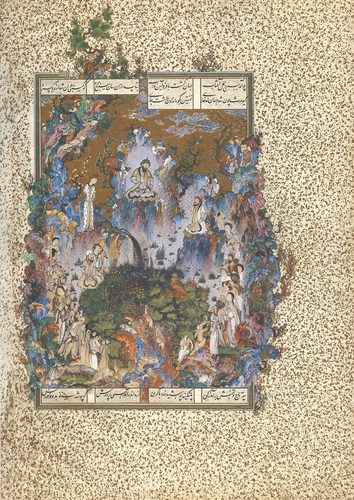
| The Court of Gayumars | Sultan Muhammad | c. 1525 | A densely populated opening folio of the Tahmasp Shahnameh, praised for its intricate landscape and figures. |
| Safavid medallion carpet | Unknown | 16th century | A Tabriz-woven carpet with a radiating central medallion, a design later exported across Persian weaving centers. |
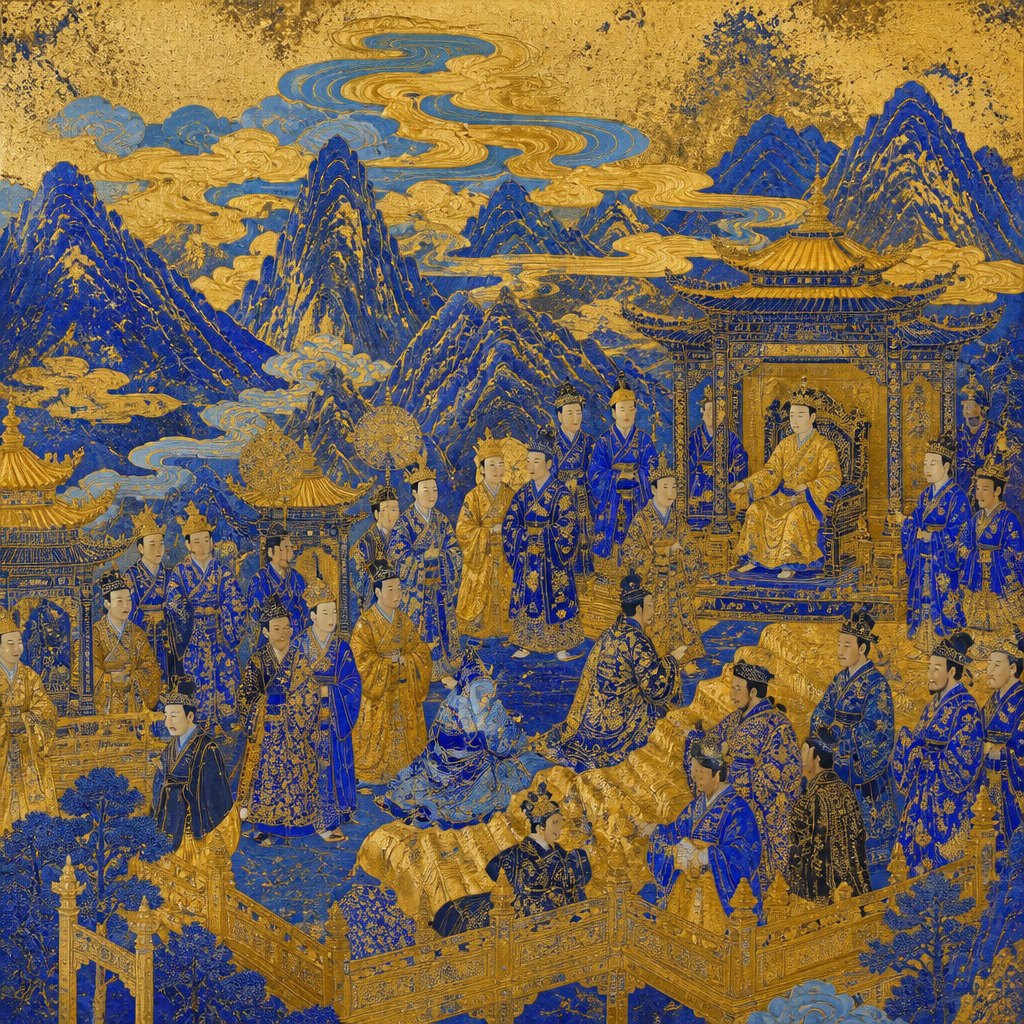 AI-generated
Work en plein air
Paint in the light of Tabriz
This example was generated from a prompt like: “A densely packed royal court scene with stacked mountain ridges, ribboned cloud bands overhead, courtiers in patterned robes, rendered in saturated lapis blue and gold leaf against a gold-flecked manuscript margin.”
Open the Tabriz Art Style generator →The place today
Tabriz's historic bazaar, a UNESCO World Heritage site, still houses carpet and textile trade descended from its Safavid workshops. The restored Blue Mosque and the Azerbaijan Museum display surviving tilework and manuscript fragments. Carpet weaving remains an active regional craft, with Tabriz-knotted rugs still identified by their medallion layout and fine wool pile, sold through the same bazaar networks that carried them west centuries ago.
Compose your own
Fill the page edge to edge with figures and landscape rather than leaving open ground, the Tabriz manuscript habit. Add ribboned cloud shapes and a jagged, striated rock formation to any sky or hillside as a Chinese-derived signature. Use saturated lapis blue and gold leaf sparingly but decisively, reserved for royal or divine elements. For a carpet-inspired composition, anchor the design with one large central medallion surrounded by scrolling arabesque and corner quadrants. Keep the horizon high and stack spatial planes rather than using single-point perspective.
Frequently asked questions
What is the Shahnameh of Shah Tahmasp?
A lavishly illustrated royal copy of Ferdowsi's Persian epic produced in Tabriz through the 1520s-30s, with over 250 paintings by multiple court artists, regarded as a peak of Safavid manuscript art.
Why does Tabriz painting include dragons and cloud bands?
Mongol Ilkhanid rule in the early 1300s brought Chinese pictorial motifs into Tabriz workshops, and painters absorbed them into a distinctly Persian visual language over the following centuries.
Why did the Safavids leave Tabriz as capital?
Repeated Ottoman incursions after the 1514 Battle of Chaldiran left the frontier city exposed, prompting Shah Tahmasp to relocate the capital to Qazvin in 1548.
Are Tabriz carpets still made today?
Yes. Tabriz remains an active center of hand-knotted carpet weaving, producing rugs known for a central medallion layout inherited from Safavid-era workshop design.