 Art
Art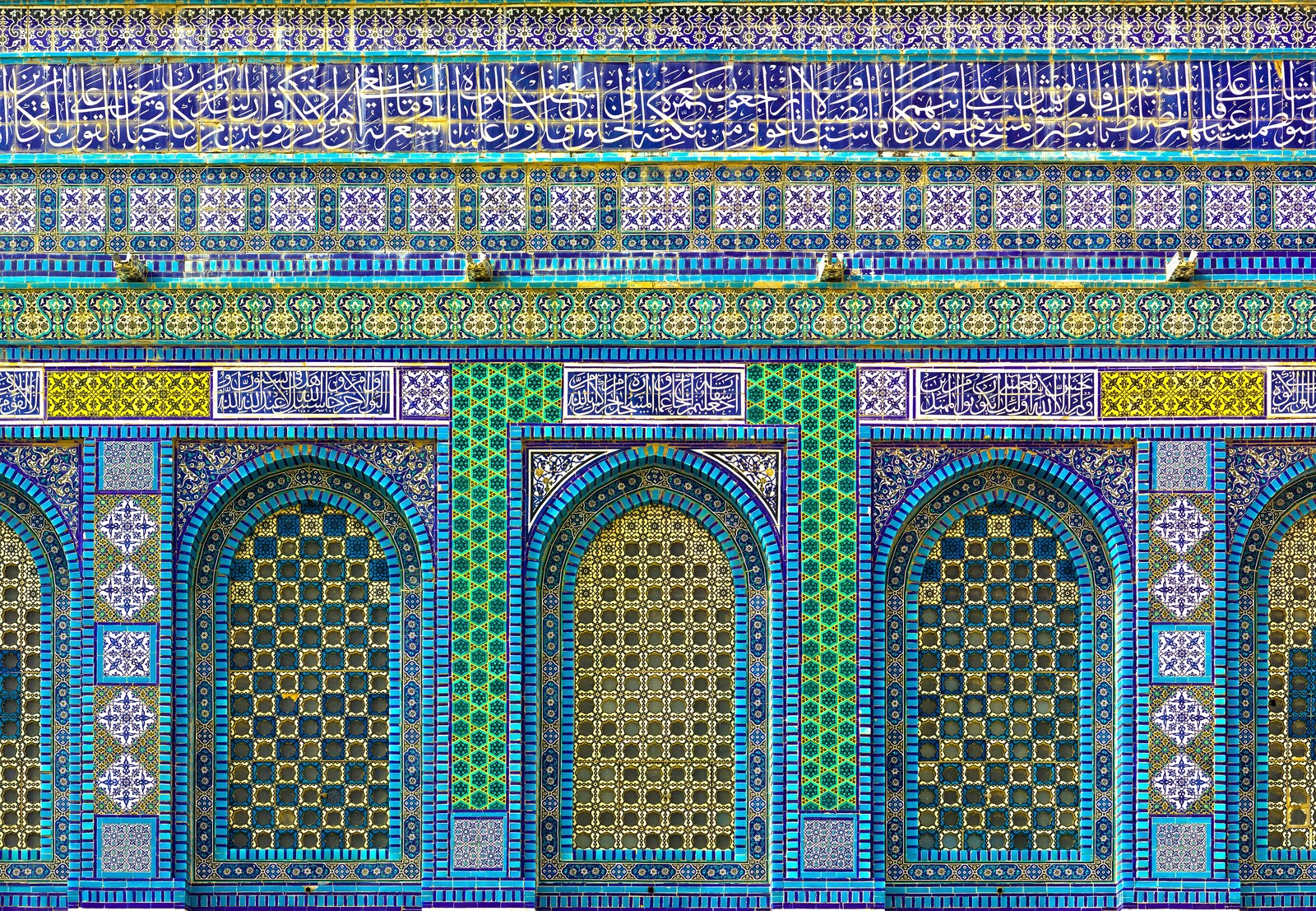
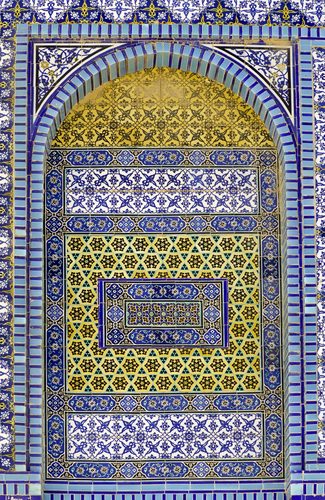
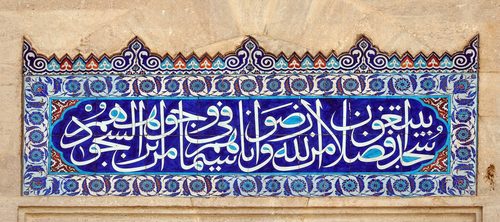
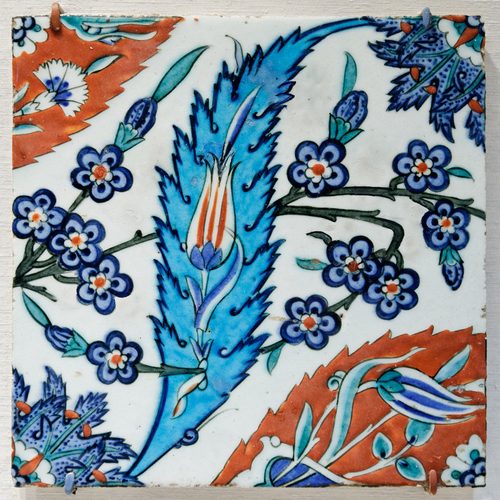
Istanbul art describes the imperial visual culture that grew from the Ottoman conquest of Byzantine Constantinople in 1453, when Mehmed II converted the city's great church, Hagia Sophia, into a mosque and made it the model for a new architectural language. Sultans built an empire-wide artistic program from the capital: court workshops produced illuminated manuscripts, imperial architects raised domed mosques across the skyline, and the town of Iznik supplied the palace with ceramic tile in quantities no other center could match. Because figural imagery was avoided in religious settings, Ottoman artists channeled their skill into calligraphy, geometric interlace, and stylized plant forms, developing an ornamental vocabulary distinct from Byzantine mosaic and Persian miniature alike. Patronage flowed almost entirely from the sultan and the court, concentrating talent in palace workshops rather than independent guilds, which gave Istanbul's imperial style unusual consistency across two centuries.
What marks the region
Aniconic ornament
Mosques and religious objects avoid human and animal figures, channeling artistic ambition into calligraphy, geometric strapwork, and stylized tulips, carnations, and saz leaves instead.
Nakkashane workshop production
Imperial manuscripts were produced collectively in the palace's nakkashane workshop, where court painters, illuminators, and pattern-makers worked under a chief designer rather than as solitary artists.
Underglaze tile painting
Iznik potters painted cobalt, turquoise, and a signature bole-red pigment onto a white fritware body before a single clear glaze firing, fixing color beneath a glassy, durable surface.
Monumental domed mosques
Imperial mosques adapted Hagia Sophia's central dome and pendentive system into a repeatable formula of cascading half-domes, refined by court architects into the empire's dominant civic form.
Calligraphy as image
Quranic inscription bands, tughras, and framed calligraphic panels functioned as the primary devotional image, replacing painted narrative scenes found in other religious traditions.
Serial pattern over composition
Tile panels and textiles favor repeating modular motifs rather than single pictorial scenes, letting a design tile seamlessly across walls, domes, and vast interior surfaces.
Local signatures
How to spot Istanbul art
- Tulip motif
- → The sultan's favored flower, a court emblem so prized it gave its name to an entire cultural period in the early 1700s.
- Saz leaf
- → A long, feathered, serrated leaf form developed in the court workshop, used to frame other motifs across tile and manuscript borders.
- Iznik coral red
- → A raised, bole-based red pigment unique to Iznik ceramics after the 1560s, a technical signature no rival workshop fully reproduced.
- Tughra
- → The sultan's calligraphic monogram, stamped on documents and coins as the empire's official imperial seal.
- Cintamani pattern
- → Three dots above paired wavy lines, an old Central Asian motif absorbed into Ottoman textile and tile design as a mark of rank.
- Mihrab niche panel
- → A tiled arch indicating the direction of prayer, often the most elaborately decorated surface in an Ottoman mosque.
The story
Constantinople fell to the Ottoman sultan Mehmed II in 1453, ending Byzantine rule and giving the empire a capital built on a millennium of Christian architecture. Hagia Sophia, completed in 537 under Justinian, was converted into a mosque within days, and its dome-and-pendentive engineering became the template court architects studied for the next two centuries. Under Suleiman the Magnificent, who ruled 1520-1566, chief architect Mimar Sinan built the Süleymaniye Mosque complex between 1550 and 1557 and later the Selimiye Mosque in Edirne, refining the imperial mosque into its most balanced form. The same court financed Iznik, a town southeast of the capital, to mass-produce ceramic tile for palace and mosque interiors, reaching its technical peak in the mid-to-late 1500s with a bright coral red. Palace manuscript workshops meanwhile produced illustrated histories and festival books for the court library. Quality across these crafts declined through the 1600s and 1700s as court patronage thinned, though the architectural and ceramic vocabulary established remained the visible identity of the city.
Masterpieces of the place
| Work | Artist | Date | Why it matters |
|---|---|---|---|
| Süleymaniye Mosque | Mimar Sinan | 1550-1557 | The chief imperial mosque complex, combining dome engineering, tile decoration, and calligraphy into one design. |
| Hagia Sophia mosaics | Unknown | 6th-13th century | Byzantine mosaic work retained and partly covered after the building's 1453 conversion into an imperial mosque. |
| Iznik mihrab tile panel | Unknown | c. 1575 | A large tiled prayer niche demonstrating Iznik's coral-red glaze at its technical peak. |
| Surname-i Hümayun miniatures | Nakkaş Osman | 1582 | An illustrated festival book documenting a royal circumcision celebration through court miniature painting. |
| Topkapi Palace Harem tiles | Unknown | 16th century | Wall-to-wall Iznik tilework covering the sultan's private residential quarters. |
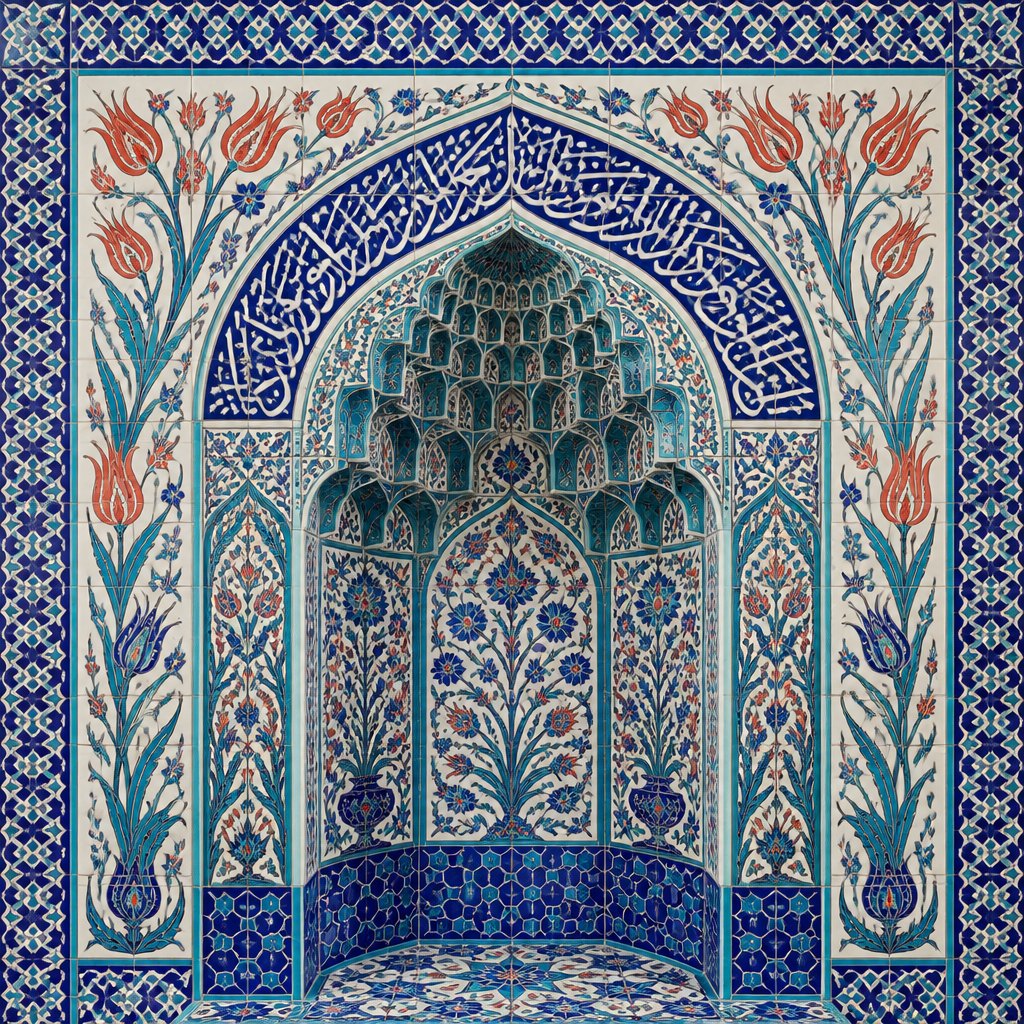 AI-generated
Work en plein air
Paint in the light of Istanbul
This example was generated from a prompt like: “An Ottoman-style tiled mihrab niche in cobalt blue, turquoise, and coral red, framed with stylized tulips and saz leaves, geometric interlace borders, and a calligraphic band across the top of the arch.”
Open the Istanbul Art Style generator →The place today
Istanbul's Ottoman-era sites remain active or museum spaces: Hagia Sophia functions as a mosque again since 2020 while retaining its visible mosaics, Topkapi Palace operates as a museum of court treasures and manuscripts, and the Süleymaniye Mosque still holds daily prayer beneath Sinan's dome. The Istanbul Museum of Turkish and Islamic Arts and the Pera Museum hold ceramic and manuscript collections, while Iznik and nearby Kütahya continue small-scale tile workshops reviving historic underglaze techniques for restoration and collectors.
Compose your own
Work from a white ceramic-like ground and build pattern in cobalt blue, turquoise, sage green, and a raised coral red rather than realistic shading. Fill the surface with stylized tulips, carnations, and long serrated saz leaves arranged in repeating, tileable rhythm rather than a single focal scene. Frame any calligraphic text in a clean cartouche, and keep figures out of religious contexts entirely, reserving them for narrative miniatures painted flat, without cast shadow or single-point perspective. Border everything in tight geometric interlace, and let a dome-shaped arch or mihrab niche organize the whole composition.
Frequently asked questions
Why do Ottoman mosques avoid human figures?
Islamic religious tradition generally discourages figural imagery in devotional spaces, so Ottoman artists directed their skill into calligraphy, geometric pattern, and stylized plant motifs instead of painted or sculpted figures.
What makes Iznik ceramics distinct from other Islamic tilework?
Iznik potters developed a bright coral-red pigment after the 1560s, applied under a single clear glaze on a white fritware body, a technical combination no other regional workshop matched at the same quality.
Is Hagia Sophia a Byzantine or Ottoman building?
Both. It was built as a Byzantine church in 537 and converted into a mosque after 1453, so its structure and mosaics are Byzantine while its minarets and religious function are Ottoman additions.
How does Ottoman miniature painting differ from Persian miniature?
Ottoman court miniatures favored documentary subjects, such as festivals and military campaigns, painted in flatter color and looser line, where Persian miniature leaned toward poetic and legendary narrative.