 Art
Art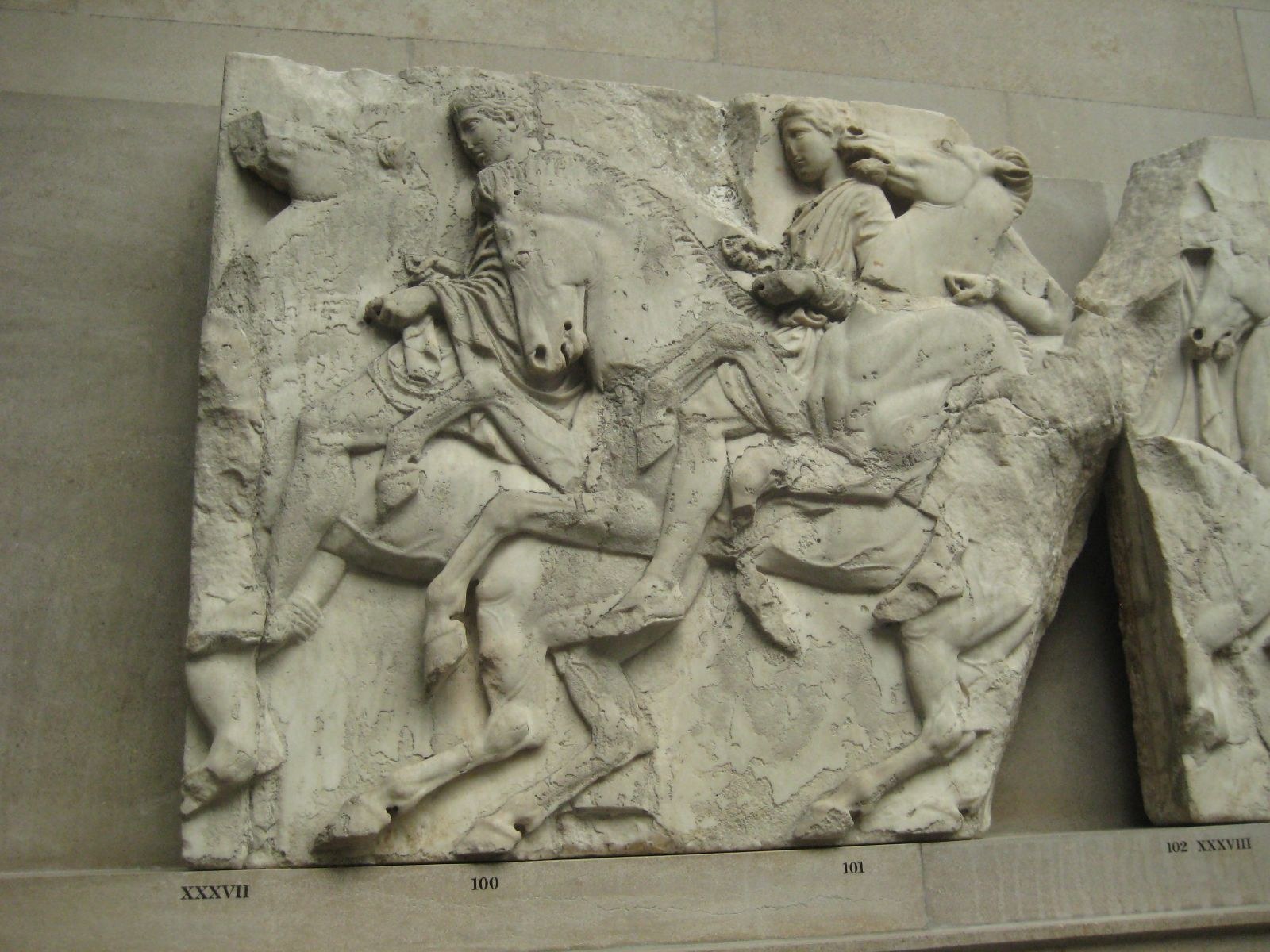
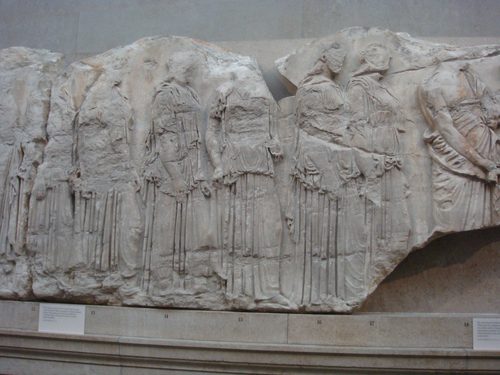
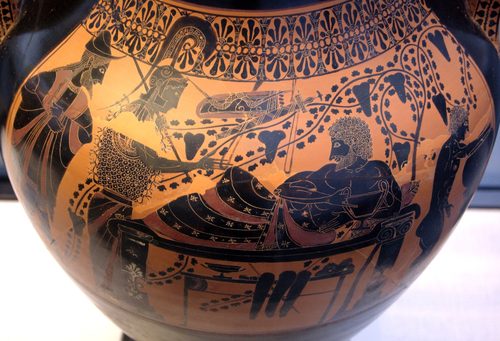
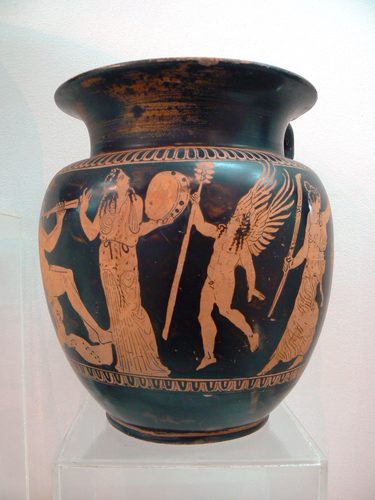
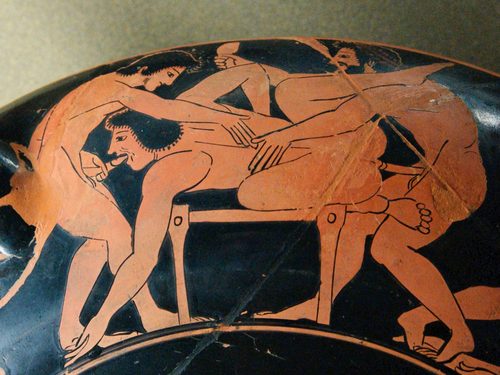
Athens became the ancient world's foremost art center in the fifth century BCE, when victory over Persia and control of a naval empire funded an unprecedented building and sculpture program. Marble quarried at nearby Mount Pentelicon supplied both architecture and statuary, and the Doric temples of the Acropolis, rebuilt after Persian destruction in 480 BCE, became the proving ground for a generation of sculptors working under the general direction of Phidias. Athenian artists pursued an idealized human body, understood through close study of anatomy and movement rather than portrait likeness, a standard later Hellenistic and Roman art continually referenced. Alongside monumental sculpture, the potters' quarter of Kerameikos exported red-figure and black-figure vases across the Mediterranean, painted with mythological and daily-life scenes that survive in far greater numbers than the sculpture itself, most of which is known only through Roman copies or fragments. Civic and religious patronage, not a royal court, drove production: temples, votive offerings, and public monuments answered to the city's assembly and priesthoods rather than a single ruler's taste.
What marks the region
Idealized anatomy
Sculptors studied the body in motion to build an idealized, proportionally balanced figure rather than record any individual's actual likeness.
Contrapposto stance
Weight shifted onto one leg, a naturalistic standing pose developed through the fifth century BCE that replaced the rigid, symmetrical Archaic stance.
Marble over lost bronze
Surviving works are mostly marble or later Roman marble copies; most Classical bronzes were melted down for metal in later centuries.
Red-figure and black-figure firing
A single controlled kiln firing produced either black silhouette figures on red clay or red figures on black ground, a technical signature of Attic pottery.
Civic and votive commissioning
Temples, grave monuments, and vases were funded by the city, private citizens, or religious sanctuaries rather than by a royal court.
Lost polychromy
Sculpture and architectural relief were originally painted in bright color, now almost entirely lost, leaving the bare white marble later ages mistook for the original intent.
Local signatures
How to spot Athens art
- Owl
- → Athena's bird, stamped on Athenian coins and vases as the city's own emblem.
- Gorgon head
- → An apotropaic mask placed on shields, temples, and vases to ward off harm.
- Meander pattern
- → A continuous geometric border framing vase scenes and architectural friezes, a signature Greek decorative device.
- Olive branch
- → Athena's gift to the city, appearing on coins, vases, and victory wreaths.
- Archaic smile
- → A stylized upturned mouth on kouros and kore statues before the shift to naturalism around 480 BCE.
- Chariot and horse frieze
- → Recurring processional imagery on temple friezes and vases, tied to civic festivals such as the Panathenaia.
The story
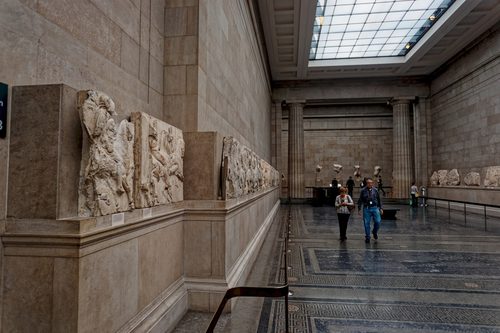
Athenian art before 480 BCE followed the Archaic conventions common across Greece: stiff standing kouros and kore statues and black-figure vase painting exported around the Mediterranean. Persian forces destroyed the Acropolis's earlier temples in 480 BCE during the Greco-Persian Wars. Athens, having led the naval victory at Salamis that year, used its resulting power and the tribute of the Delian League to rebuild on a grander scale. Under Pericles's building program from the 440s BCE, the sculptor Phidias oversaw the Parthenon's construction, completed in 432 BCE, along with its frieze, metopes, and pediment sculptures. Vase painting shifted from black-figure to the more flexible red-figure technique around 530 BCE, letting painters like Exekias and later Euphronios render anatomy with new naturalism. Athenian sculptural style, refined further by Praxiteles in the following century, became the reference point for Hellenistic and Roman art. In 1801-1805 a large portion of the Parthenon's surviving sculptures was removed by Lord Elgin and later sold to the British Museum, where they remain, while other fragments stayed in Athens and are now held in the Acropolis Museum.
Masterpieces of the place
| Work | Artist | Date | Why it matters |
|---|---|---|---|
| Parthenon Frieze and Pediment Sculptures | Phidias (workshop) | 447-432 BCE | Sculptural program for Athens's chief temple, its remaining pieces divided between Athens and London. |
| Peplos Kore | Unknown | c. 530 BCE | An Archaic marble maiden statue that retains faint traces of its original paint. |
| Amphora with Achilles and Ajax Playing a Game | Exekias | c. 540 BCE | A black-figure masterpiece showing the technique's peak of narrative detail. |
| Kritios Boy | Unknown | c. 480 BCE | A marble youth marking the shift from rigid Archaic pose to naturalistic Classical stance. |
| Caryatids of the Erechtheion | Unknown | 421-406 BCE | Six draped female figures serving as temple columns on the Acropolis. |
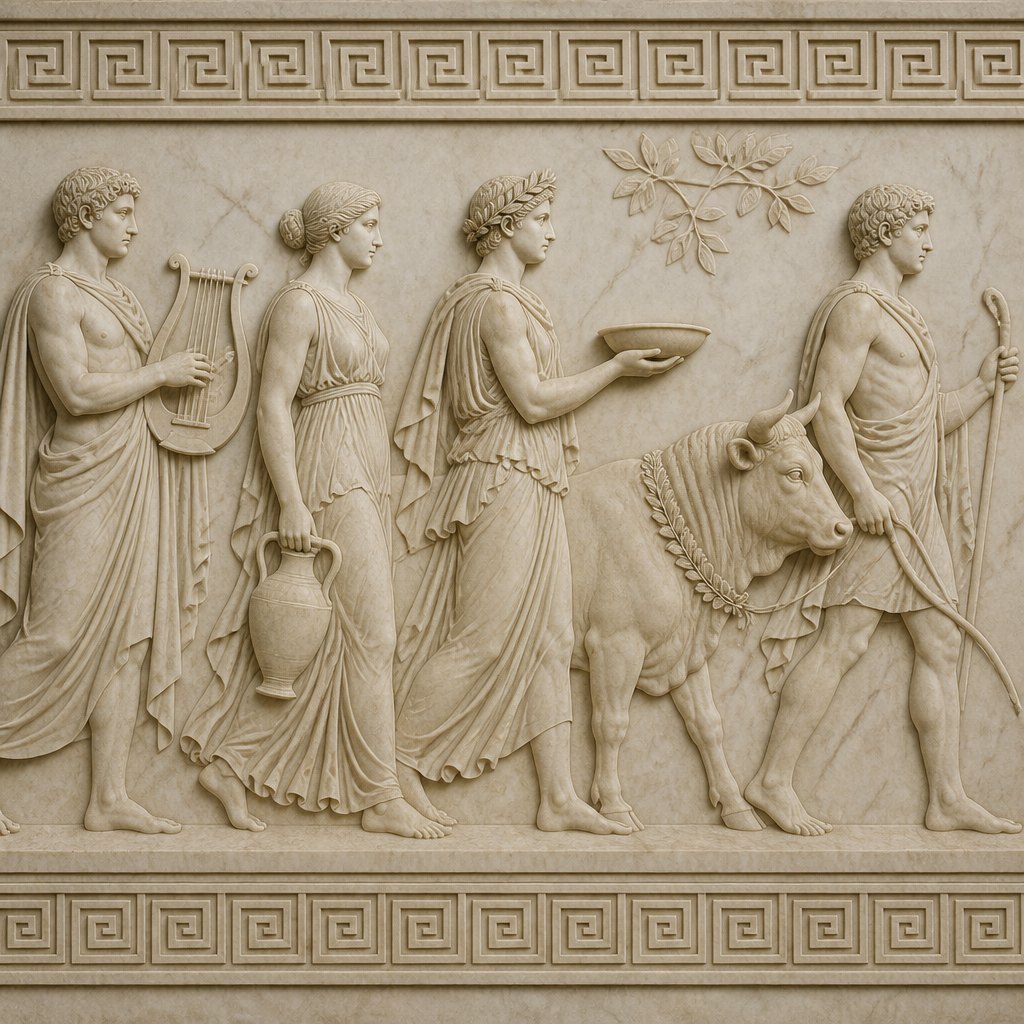 AI-generated
Work en plein air
Paint in the light of Athens
This example was generated from a prompt like: “A marble relief frieze of idealized figures in profile procession, draped in flowing fabric, bordered by a continuous meander pattern, carved in the balanced, naturalistic proportions of Classical Athenian sculpture.”
Open the Athens Art Style generator →The place today
The Acropolis Museum, opened in 2009, displays surviving sculpture from the site, including original Erechtheion caryatids, close enough to view the temples they once decorated. The National Archaeological Museum holds the wider range of Attic vases, bronzes, and grave monuments. Kerameikos, the ancient potters' quarter and cemetery, remains an excavated site open to visitors. Restoration work on the Acropolis monuments has continued since 1975. Traditional ceramic workshops in Greece still produce hand-painted vases using historic red-figure and black-figure techniques.
Compose your own
Center the body: give any figure a naturalistic contrapposto stance, weight on one leg, hip and shoulder counter-tilted, rather than a stiff frontal pose. Render anatomy with idealized proportion and smooth transitions rather than individual likeness. If working in relief or architecture, frame the scene with a continuous meander border and keep figures processional, moving in profile along a single register. For vase-style work, choose one firing logic and hold it throughout: either black silhouette figures with incised interior detail on a red-orange ground, or the reverse, red figures reserved against a glossy black background. Keep surface color restrained to red-orange clay, black gloss, and white or added accents, avoiding the varied palette of later painting traditions. Reference myth or civic ritual, not private life, as the default subject.
Frequently asked questions
Why is so much Athenian sculpture only known from Roman copies?
Most Greek bronze originals were melted down for metal in later centuries, so knowledge of famous works, including many by Praxiteles, survives largely through later marble copies made for Roman patrons.
Were Greek statues originally painted?
Yes. Marble sculpture and architectural relief were painted in bright color, now almost entirely worn away, leaving the bare white marble that later centuries mistakenly took as the intended finish.
What is the difference between black-figure and red-figure vase painting?
Black-figure paints silhouette figures on the natural red clay ground; red-figure, developed around 530 BCE, reverses this, leaving figures in reserved clay color against a painted black background.
Where are the Parthenon sculptures today?
They are divided: a large portion removed in 1801-1805 by Lord Elgin is held in the British Museum, while other surviving fragments remain in Athens's Acropolis Museum.