 Art
Art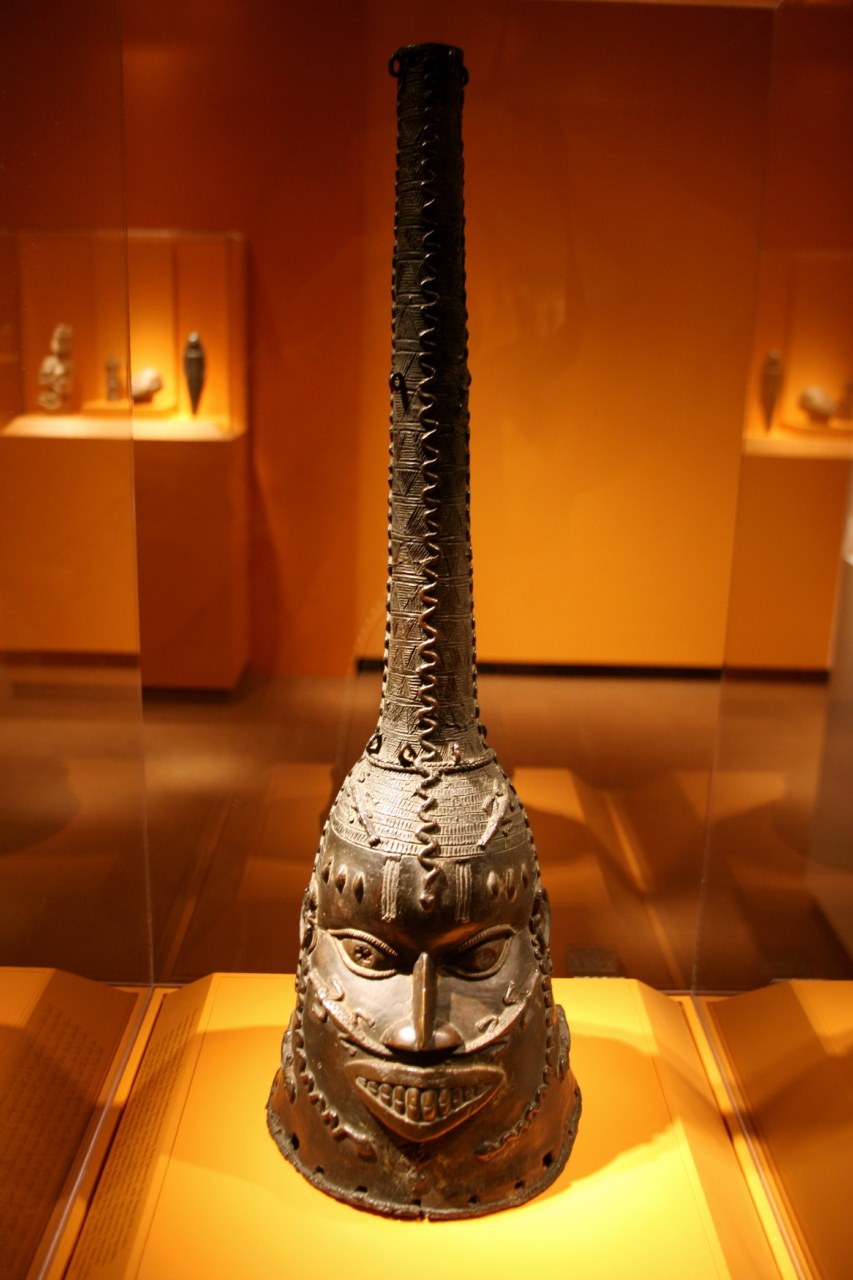
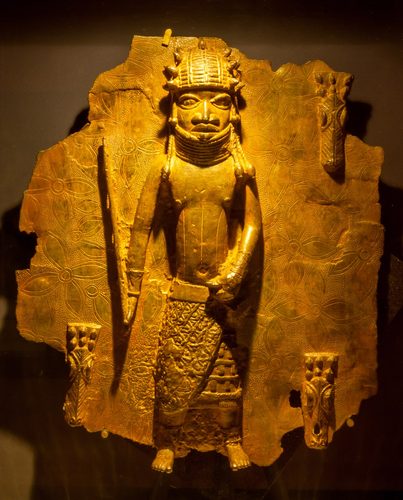
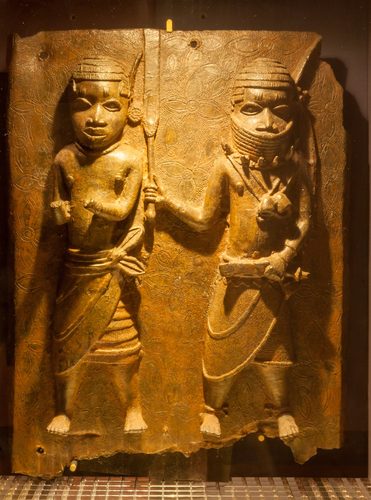
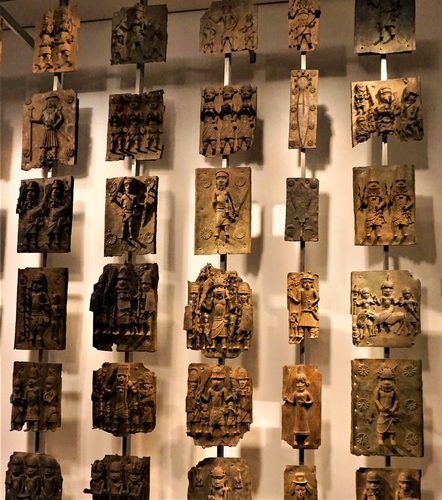
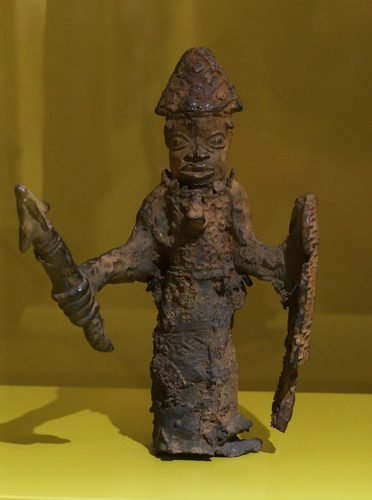
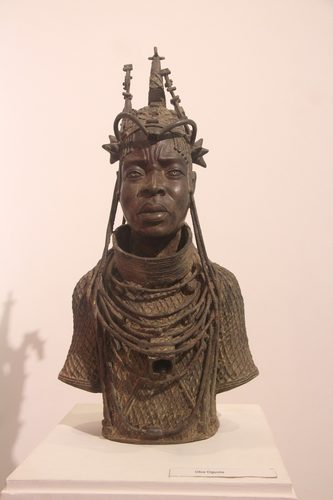
Benin City, capital of the historic Benin Kingdom in Edo State, Nigeria, built one of Africa's most sophisticated court art traditions around royal patronage alone. Oral tradition credits Oba Oguola, in the late 13th century, with inviting a bronze caster named Iguegha from Ife to establish the craft, founding the hereditary guild Igun Eronmwon, whose members still work on Igun Street beside the palace. Casters worked almost exclusively for the Oba, producing rectangular brass plaques that once lined the wooden palace pillars, commemorative heads for ancestral altars, and ivory carvings reserved for royal regalia. Portuguese traders arriving in 1485 supplied brass manillas as raw material and appear themselves in later plaques as recurring figures. No private market for these objects existed within the kingdom; everything belonged to the palace. That closed system ended in 1897, when a British military expedition sacked the city and removed thousands of objects, scattering a strictly court-bound tradition into museums and collections worldwide.
What marks the region
Lost-wax brass casting
Objects were modeled in wax over a clay core, encased in more clay, then cast by melting out the wax and pouring in molten brass or bronze, a technique guarded by a single hereditary guild.
Guild monopoly
Only members of the Igun Eronmwon guild, living beside the palace on Igun Street, were permitted to cast in brass for the Oba, keeping the craft hereditary and tightly controlled.
Hierarchical scale
The Oba is shown larger than attendants, soldiers, or foreign traders regardless of actual size, a visual convention that marks rank rather than physical proportion.
Palace-only patronage
Nearly every known plaque, head, or ivory was commissioned by or for the Oba; there was no independent market and no comparable tradition of private commission within the kingdom.
Reserved materials
Coral beads and ivory were restricted to royalty and high title-holders by law, so their appearance in a work signals rank as clearly as any inscription would.
Altar-based commemoration
Cast heads and carved tusks were paired on ancestral altars built by each new Oba to honor his father, a ritual practice that structured much of the guild's output.
Local signatures
How to spot Benin City art
- Mudfish legs
- → Legs ending in mudfish rather than feet mark a figure as the Oba, linking royal power to Olokun, god of waters and wealth.
- Leopard motif
- → The leopard, hunted only under royal sanction, stands for the Oba's singular power and appears on regalia and altar pieces.
- Coral bead regalia
- → Dense coral netting worn over the chest and crown marks royal or high-ranking status and ties the wearer to Olokun's undersea wealth.
- Portuguese soldier figures
- → Bearded, armed European figures on plaques record 15th-to-17th-century trade contact and mark the kingdom's international reach.
- Crosshatched background
- → A dense field of quatrefoil or river-leaf patterns filling the background of plaques, a stylistic marker of Benin brasswork specifically.
- Ivory hip mask
- → A carved ivory pendant worn at the Oba's hip, commemorating a queen mother and marking her formal political role.
The story
Benin's brass-casting tradition is dated by royal chronology to the late 13th century, when Oba Oguola requested a master caster from Ife, though archaeological finds suggest metalworking in the region predates this account. The kingdom reached its territorial and artistic height under Oba Ewuare in the mid-15th century and Oba Esigie in the early 16th, the period most palace plaques and heads are attributed to. Portuguese contact began in 1485, opening a trade in brass, coral, and ivory that fed the guild directly. Plaques depicting court ceremony, warfare, and foreign visitors lined the palace's wooden pillars through the 16th and 17th centuries, though many were later removed from display and stored within the palace. In February 1897, a British Punitive Expedition, launched after an earlier trade delegation was killed, captured and burned Benin City, exiled Oba Ovonramwen, and removed thousands of brass, ivory, and wood objects, auctioned in London to help cover expedition costs. Dispersed across European and American museums for over a century, some objects have been returned to Nigeria since 2021 as restitution agreements were formalized with several institutions.
Masterpieces of the place
| Work | Artist | Date | Why it matters |
|---|---|---|---|
| Queen Idia Ivory Pendant Mask | Unknown | early 16th century | Carved for Oba Esigie to honor his mother, worn at the hip during royal ceremonies. |
| Palace narrative plaques | Unknown | 16th–17th century | Hundreds of brass plaques once nailed to palace pillars, depicting court ceremony, warriors, and foreign traders. |
| Commemorative head of an Oba | Unknown | 18th century | A cast brass head placed on a royal ancestral altar, its scale and coral collar marking rank. |
| Plaque with Portuguese soldiers | Unknown | 16th century | A brass relief recording early Portuguese trade contact through armed, bearded foreign figures. |
| Benin bronze cockerel (Okpa) | Unknown | 18th century | An altar piece cast for a queen mother's shrine, among the few Benin works representing an animal rather than a person. |
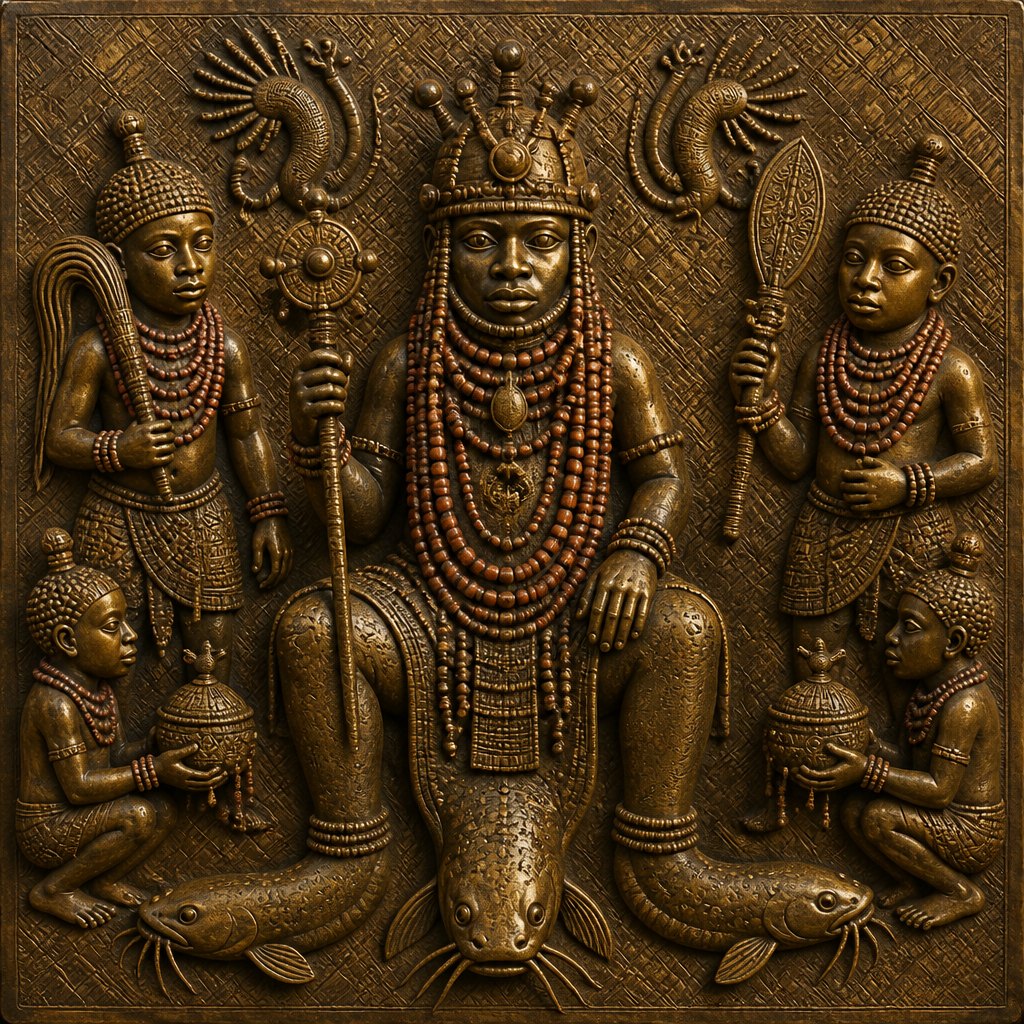 AI-generated
Work en plein air
Paint in the light of Benin City
This example was generated from a prompt like: “A brass relief plaque: a crowned central royal figure in coral bead regalia flanked by smaller attendants and mudfish-legged motifs, set against a dense crosshatched background, cast in warm aged bronze tones.”
Open the Benin City Art Style generator →The place today
Benin City preserves the tradition through the Igun Street brass-casters' guild, recognized by UNESCO for continuing lost-wax casting methods largely unchanged since the medieval court. The Oba's palace and the Benin Royal Museum display surviving and returned works locally, while thousands of pieces remain in museums abroad, including the British Museum. Since 2021, several European institutions have agreed to return objects taken in 1897, and a planned Edo Museum of West African Art in Benin City is intended to house repatriated works alongside the guild's living casting tradition.
Compose your own
Think in flat, frontal relief rather than deep modeling. Place a central royal figure noticeably larger than everyone around him, staring straight ahead, heavily adorned with layered coral beads and a tall beaded crown. Fill every remaining surface with a dense, repeating background pattern, quatrefoils or river-leaf motifs, so no empty ground remains. Render material wealth literally: mudfish for royal legs, leopard spots on regalia, coral netting rendered bead by bead. Keep the palette to the warm browns and golden ochres of aged brass, and let hierarchy, not naturalism, decide every proportion in the scene.
Frequently asked questions
What are the Benin Bronzes?
They are brass, bronze, and ivory objects, plaques, heads, and figures, cast or carved for the royal court of Benin City between roughly the 15th and 19th centuries, most now held in museums outside Nigeria after 1897.
Why are so many Benin objects in European museums?
A British military expedition sacked Benin City in February 1897, removed thousands of court objects, and auctioned many in London to cover costs, dispersing them into collections across Europe and America.
Where did Benin's bronze-casting technique come from?
Royal tradition credits Oba Oguola with inviting a caster named Iguegha from Ife in the late 13th century, linking Benin's lost-wax method to the earlier Ife tradition.
Is Benin brass casting still practiced today?
Yes. The Igun Eronmwon guild on Igun Street in Benin City continues lost-wax brass casting using methods passed down through the same hereditary lineage system as the historical court workshops.