 Art
Art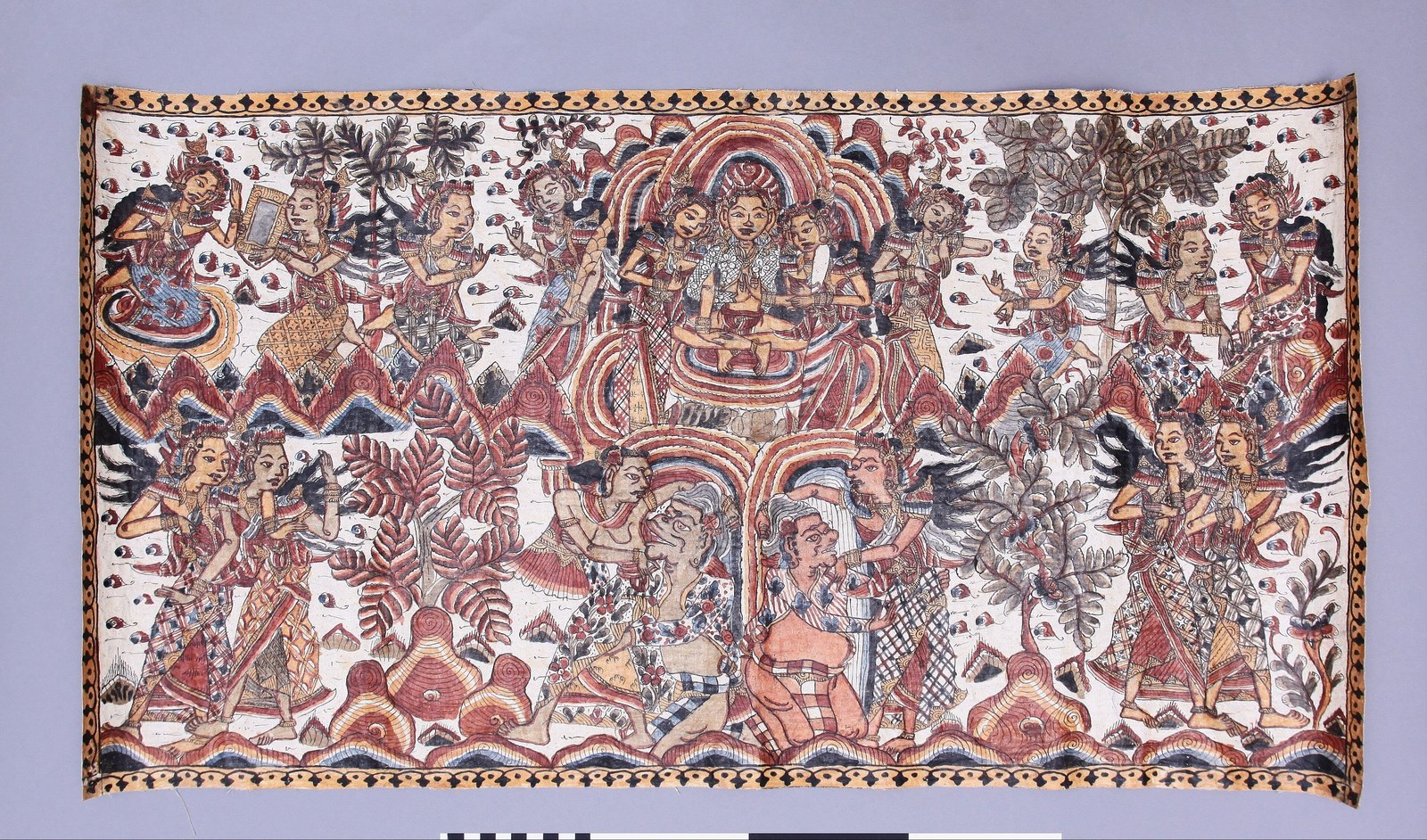
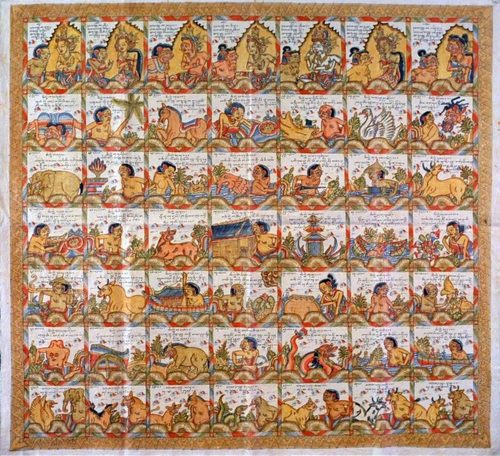
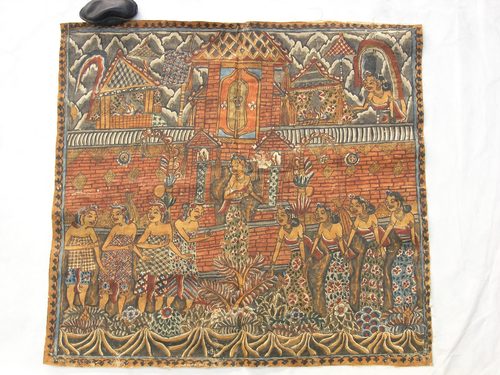
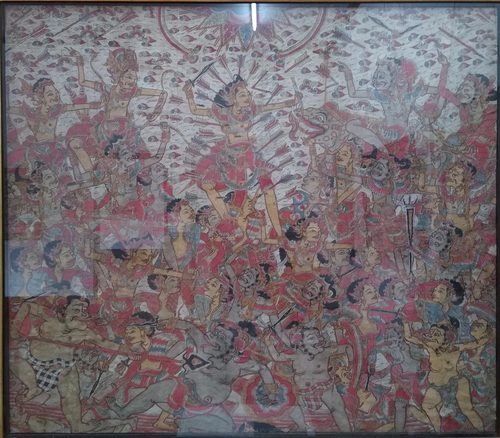
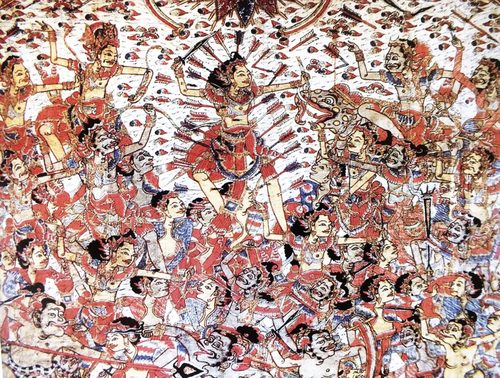
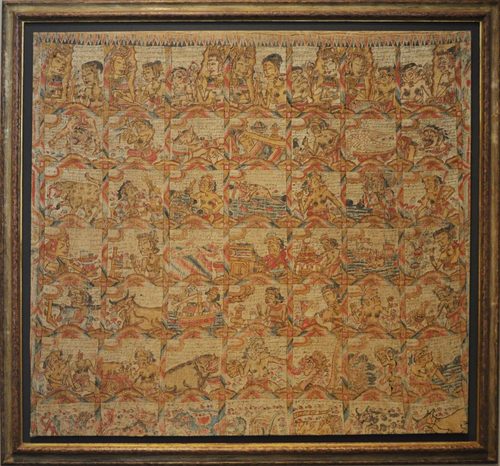
Balinese art centers on two traditions that share Hindu-Javanese roots but diverge in look: the Kamasan school of narrative cloth painting, and the temple carving tradition found across the island. Kamasan village in Klungkung regency was the seat of Bali's senior royal court after the Hindu Majapahit empire in Java sent nobles, priests, and artisans across the strait as Islam spread through Java from the 15th century onward. Painters there worked for temples and the court, illustrating the Ramayana, Mahabharata, and local epics in a flat, profile style borrowed directly from wayang kulit shadow puppetry, using pigments ground from soot, ochre clay, and lime. Temple architecture relied on soft volcanic sandstone, paras, easily carved into deep relief guardians, nagas, and demon faces flanking every gate and shrine, tied to ritual protection rather than individual signature. In the 1930s, foreign residents in Ubud worked with Balinese painters to found the Pita Maha cooperative, encouraging naturalistic scenes of daily life over sacred narrative alone, producing the dense composition now called the Ubud style.
What marks the region
Wayang-derived profiles
Kamasan figures are drawn in strict profile with fixed gestures and costume codes lifted directly from shadow puppet theatre, so a character's identity is read from silhouette and color alone.
Natural pigment palette
Paint is ground from local materials: soot for black outlines, ochre clay for red and yellow, burnt bone or lime for white, and until the 20th century almost nothing was imported.
Continuous narrative panels
A single cloth or ceiling panel often unfolds a full episode of the Ramayana or Mahabharata in sequence, read from one side to the other rather than frozen at one moment.
Guild and family workshops
Painting and carving skills pass down through family lineages rather than academies; a Kamasan household might produce temple cloths for generations under one master's name.
Deep relief in soft stone
Temple carvers work volcanic paras sandstone, soft enough to cut with hand tools into crowded, high-relief guardian figures, though it erodes and needs periodic recarving.
Sacred function over signature
Traditional works were rarely signed; a carved gate guardian or Kamasan cloth existed to protect or narrate for the temple, not to record an individual artist's name.
Local signatures
How to spot Bali art
- Boma face over gateways
- → A fanged guardian face carved above temple entrances to frighten off malevolent spirits before they cross the threshold.
- Barong figure
- → A lion-like protective spirit representing benevolent forces, danced in ceremonies and carved on temple walls as village guardian.
- Rangda, the witch figure
- → A fanged female figure embodying chaotic or destructive forces, paired with Barong in a ritual balance of good and disorder.
- Naga serpents on gates
- → Guardian serpents flanking temple stairways and split gates, associated with water, the underworld, and fertility.
- Wayang-style profile figures
- → Painted characters shown side-on with fixed costume and color codes borrowed from shadow puppetry, identifying hero, demon, or deity at a glance.
- Cloud and lotus borders
- → Decorative framing bands in Kamasan cloths marking the sacred, cosmic space surrounding a narrative scene.
The story
Balinese court art descends from the Hindu-Javanese Majapahit empire, whose nobles, priests, and artisans crossed to Bali as Islam spread through Java from the 15th century onward, carrying courtly literature, temple forms, and shadow puppetry with them. Klungkung became Bali's senior kingdom, and nearby Kamasan supplied its palace and temples with narrative cloth paintings for ceiling panels, calendars, and shrine banners, a style that changed little for centuries. Temple carving in volcanic stone developed alongside this, producing the crowded guardian figures seen at sites like Pura Taman Ayun and the split gates found across the island. In the early 20th century, after Dutch colonial rule stabilized following 1908, foreign residents including German and Dutch painters settled in Ubud, working with local artists to found the Pita Maha cooperative in 1936. This shifted Balinese painting toward naturalism and secular subject matter, launching what is now called the Ubud style and turning the town into Bali's lasting center for painting.
Masterpieces of the place
| Work | Artist | Date | Why it matters |
|---|---|---|---|
| Kertha Gosa ceiling paintings | Unknown | 18th–19th century | Kamasan-style narrative panels covering a Klungkung court pavilion ceiling, illustrating moral and karmic tales. |
| Bharatayuddha cloth painting | Unknown | 19th century | A Kamasan narrative cloth depicting the climactic war of the Mahabharata in continuous sequential scenes. |
| Landscape of Iseh | Walter Spies | 1939 | A German resident painter's dense, terraced-hillside view that helped set the visual template for the Ubud style. |
| Guardian relief, Pura Taman Ayun gate | Unknown | 17th century | Carved volcanic stone demon guardians flanking a royal water temple's entrance. |
| Barong ceremonial mask | Unknown | 19th–20th century | A carved and painted wooden mask embodying the protective lion-spirit central to Balinese temple ritual. |
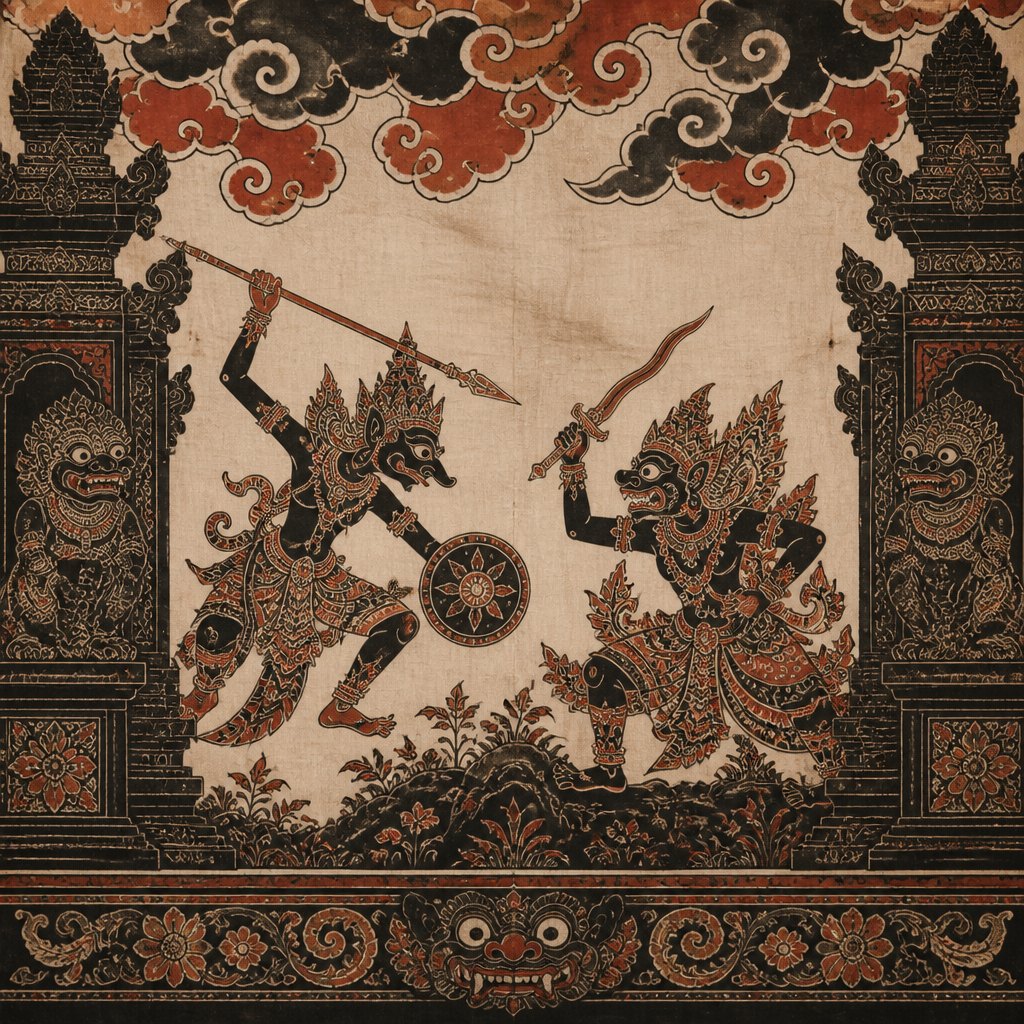 AI-generated
Work en plein air
Paint in the light of Bali
This example was generated from a prompt like: “A Kamasan-style cloth panel: flat profile warriors in shadow-puppet costume battling beneath cloud borders, painted in soot black, ochre red, and chalky white pigment, framed by a carved stone guardian gate.”
Open the Bali Art Style generator →The place today
Ubud remains Bali's living painting center, with the Puri Lukisan Museum, the Neka Art Museum, and the Agung Rai Museum of Art tracing the shift from Kamasan narrative style to Ubud naturalism. Kamasan village still produces traditional cloth paintings using natural pigments, sold through family workshops rather than galleries. Stone-carving villages like Batubulan continue to supply temple guardians and gateway figures across the island, and temple ceremonies still commission new Barong masks and ritual banners rather than treating the tradition as historical.
Compose your own
Start from silhouette, not shading. Draw figures in strict profile with the flat, graphic clarity of shadow puppets, fixing each character's identity through costume and headdress rather than facial expression. Build color from a narrow, earthy palette: soot black outlines, ochre red and yellow, chalky white, with no strong blues or greens crowding the surface. Fill the composition edge to edge with a continuous story rather than a single frozen moment, framed by decorative cloud or lotus borders. For carving, work in soft volcanic stone and favor crowded, high-relief guardian faces with bulging eyes and exposed fangs over smooth, minimal forms; density and protective ferocity matter more than naturalism.
Frequently asked questions
What is Kamasan painting?
Kamasan is a village in Klungkung, Bali, that gave its name to a traditional cloth-painting style using flat, profile figures derived from shadow puppetry, natural pigments, and continuous narrative scenes from Hindu epics.
How is the Ubud style different from Kamasan painting?
Ubud style emerged in the 1930s through the Pita Maha cooperative, adding naturalistic perspective, shading, and everyday subjects like rice fields and markets, moving beyond Kamasan's flat, strictly sacred narrative format.
What stone do Balinese temple carvers use?
Most carving uses paras, a soft volcanic sandstone quarried locally, prized for being easy to cut into deep relief but requiring periodic recarving as it erodes in Bali's tropical climate.
Are Balinese temple carvings signed by their makers?
Traditionally no. Carvings and Kamasan cloths served ritual and protective functions for a temple or court rather than showcasing an individual artist, so most historical works remain unattributed.