 Art
Art
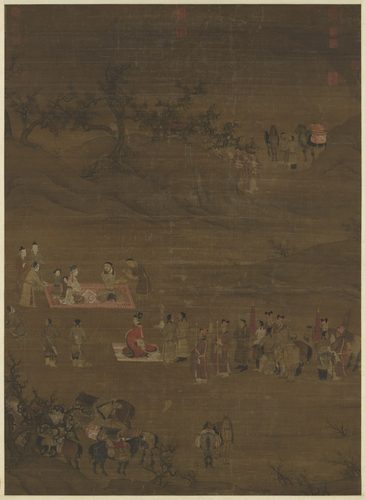
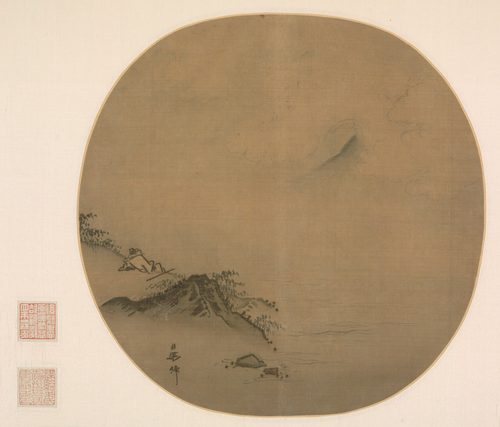
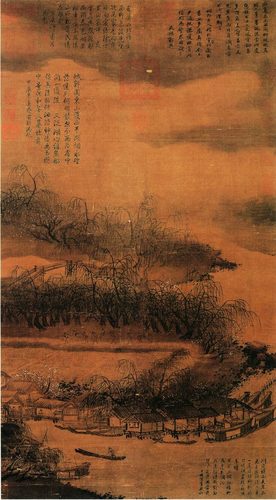
Hangzhou became China's most important art center after 1127, when the Song court fled north China and made the city, then called Lin'an, its capital during the Southern Song dynasty (1127-1279). Around West Lake, wealthy officials and the emperor patronized a formal Painting Academy that refined a distinct court style: intimate album leaves and fan paintings on silk showing misty, asymmetrical landscapes with much of the composition left empty. Painters such as Ma Yuan and Xia Gui, working for the academy in the early 1200s, condensed scenery into one corner of the silk, letting suggestion and blank space carry as much weight as ink itself. Imperial kilns near the city produced Guan ware, a pale celadon prized at court for its crackled glaze. West Lake itself, with its causeways and pagodas, became both subject and setting, generating repeated framed views painters returned to for centuries. When the Mongols ended Southern Song rule in 1279, the academy dispersed, but its economical, atmospheric landscape style remained a reference point in Chinese painting long after.
What marks the region
One-corner composition
Landscape elements crowd one corner or edge of the silk while the rest is left empty, using blank space to suggest mist, distance, or water rather than filling the surface with detail.
Album leaf and fan format
Paintings were made small, mounted as album leaves or folding fans meant for close private viewing in the hand, not large hanging scrolls for a formal hall.
Ink and light color on silk
Painters worked in monochrome ink with restrained washes of color on fine silk, favoring tonal subtlety over the saturated color of earlier court painting.
Academy grading and imperial themes
Court painters held official ranks within the Painting Academy and worked to themes, sometimes set poetic lines, chosen by the emperor, producing work for an educated courtly audience.
Axe-cut brushstroke
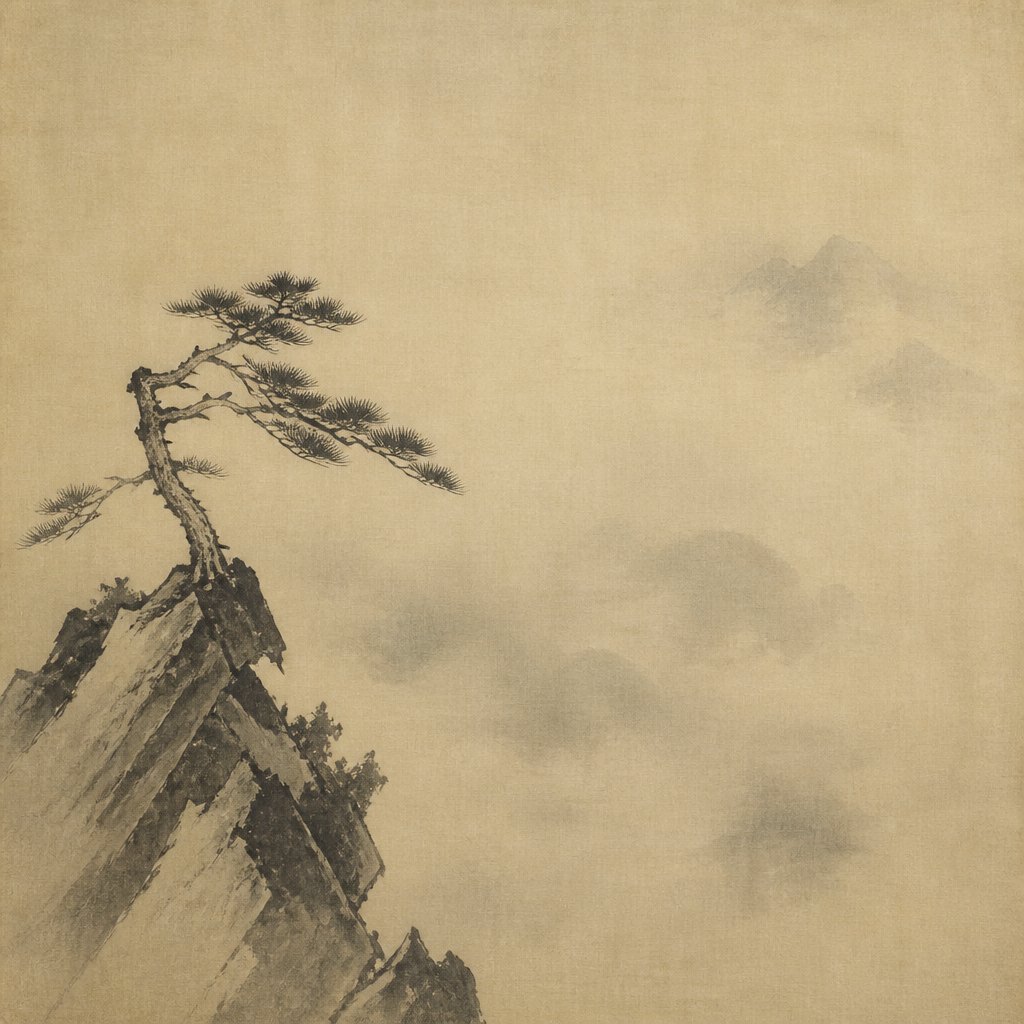
Rock and cliff faces were built from short, angular strokes resembling axe chops, a technique associated with the Ma-Xia school for suggesting hard, weathered stone quickly.
Repeated West Lake views
The lake's causeways, pavilions, and pagodas were painted and catalogued as a fixed set of named scenic views, repeated by generations of local painters and printmakers.
Local signatures
How to spot Hangzhou art
- Misty empty middle ground
- → A blank or lightly washed void between foreground and distant peak signals atmosphere and space rather than an unfinished passage.
- One-corner rock outcrop
- → A single pine-topped rock or cliff pushed to one edge of the silk marks the Ma-Xia academy style at a glance.
- Solitary scholar or fisherman
- → A small figure dwarfed by landscape stands for contemplative withdrawal, common in Southern Song court and literati painting alike.
- Pale celadon crackle glaze
- → The fine crazed surface of Guan ware ceramics, a deliberate effect rather than a flaw, marks a piece as Hangzhou imperial-kiln production.
- Willow-lined causeway
- → A tree-lined path across water refers directly to West Lake's Su and Bai causeways, a recognizable local landmark repeated across painting.
- Distant pagoda silhouette
- → A multi-story pagoda, often Leifeng or Baochu, anchors a landscape as specifically West Lake rather than a generic mountain scene.
The story
Hangzhou, then known as Lin'an, became the Southern Song capital in 1138 after the Jurchen Jin conquest pushed the court out of north China. Emperor Gaozong and his successors rebuilt court institutions around West Lake, including a formal Painting Academy that recruited and ranked artists as the earlier Northern Song academy at Kaifeng had done. Under painters such as Ma Yuan and Xia Gui, active in the early 1200s, the academy developed the asymmetrical, ink-based landscape style now called Ma-Xia, alongside refined bird-and-flower and figure painting. Imperial kilns nearby produced Guan ware celadon for court use. The city's prosperity, described by later visitors including Marco Polo as extraordinary, ended when the Mongol Yuan dynasty captured Lin'an in 1276 and the Southern Song court collapsed by 1279. The academy dispersed, but its painters' handscrolls and album leaves carried the style into private collections, and West Lake scenery continued to attract painters and poets through the Ming and Qing dynasties.
Masterpieces of the place
| Work | Artist | Date | Why it matters |
|---|---|---|---|
| Pure and Remote View of Streams and Mountains | Xia Gui | early 13th century | A long handscroll built from sparse, angular brushwork now held in Taipei's National Palace Museum. |
| On a Mountain Path in Spring | Ma Yuan | early 13th century | A small album leaf epitomizing the one-corner Ma-Xia composition and its use of blank space. |
| Waiting for Guests by Lamplight | Ma Lin | c. 1246 | A hanging scroll showing a Hangzhou court garden at dusk, attributed to Ma Yuan's son. |
| Guan ware brush washer | Unknown | 12th-13th century | A pale crackled celadon vessel from the imperial kilns supplying the Southern Song court. |
| Leifeng Pagoda | Unknown | built 975 CE | A West Lake pagoda tied to local legend, painted repeatedly as a fixed scenic landmark. |
 AI-generated
Work en plein air
Paint in the light of Hangzhou
This example was generated from a prompt like: “A Southern Song-style album leaf: a single wind-bent pine and a rocky outcrop pushed into one corner of pale silk, angular ink brushstrokes for the rock, and a wide empty mist filling the rest of the composition.”
Open the Hangzhou Art Style generator →The place today
West Lake remains a UNESCO World Heritage cultural landscape, its causeways, temples, and a rebuilt Leifeng Pagoda drawing millions of visitors annually. The Zhejiang Provincial Museum and China National Silk Museum hold Song-era paintings, ceramics, and textiles tied to the academy period. Longjing tea, still grown in hills above the lake, and traditional silk weaving remain living crafts of the region. Major Southern Song academy paintings themselves are held mostly outside Hangzhou, chiefly in Taipei's National Palace Museum.
Compose your own
Work in ink and pale color washes on silk or a silk-toned ground, not opaque paint. Push the main landscape motif, a pine, a cliff edge, a fisherman's boat, into one corner or along one edge, and leave the remaining space nearly empty to read as mist or water. Build rock and cliff texture with short, angled, axe-like strokes rather than smooth continuous lines. Keep any figures very small against the landscape, silhouetted rather than detailed, to suggest scale and quiet withdrawal. Add a willow-lined causeway or a single distant pagoda silhouette to anchor the scene as West Lake specifically rather than an imagined mountain range.
Frequently asked questions
What is the Ma-Xia school?
Named for court painters Ma Yuan and Xia Gui, active at the Southern Song Painting Academy in Hangzhou in the early 1200s, the Ma-Xia style pushed landscape elements to one corner of the composition and left the rest empty to suggest mist and distance.
Why did the Song court move to Hangzhou?
The Jurchen Jin dynasty conquered north China in the 1120s, forcing the Song court south. Hangzhou, then called Lin'an, became the Southern Song capital from 1138 until the Mongol conquest ended the dynasty in 1279.
What is Guan ware?
A pale celadon ceramic with a distinctive crackled glaze, produced at imperial kilns near Hangzhou for Southern Song court use, prized for subtle color and the deliberate network of cracks in its surface.
Where can Southern Song academy paintings be seen today?
Most surviving works left mainland China after later political upheavals; major holdings are now in Taipei's National Palace Museum, with additional works in Beijing's Palace Museum and Hangzhou's Zhejiang Provincial Museum.