 Art
Art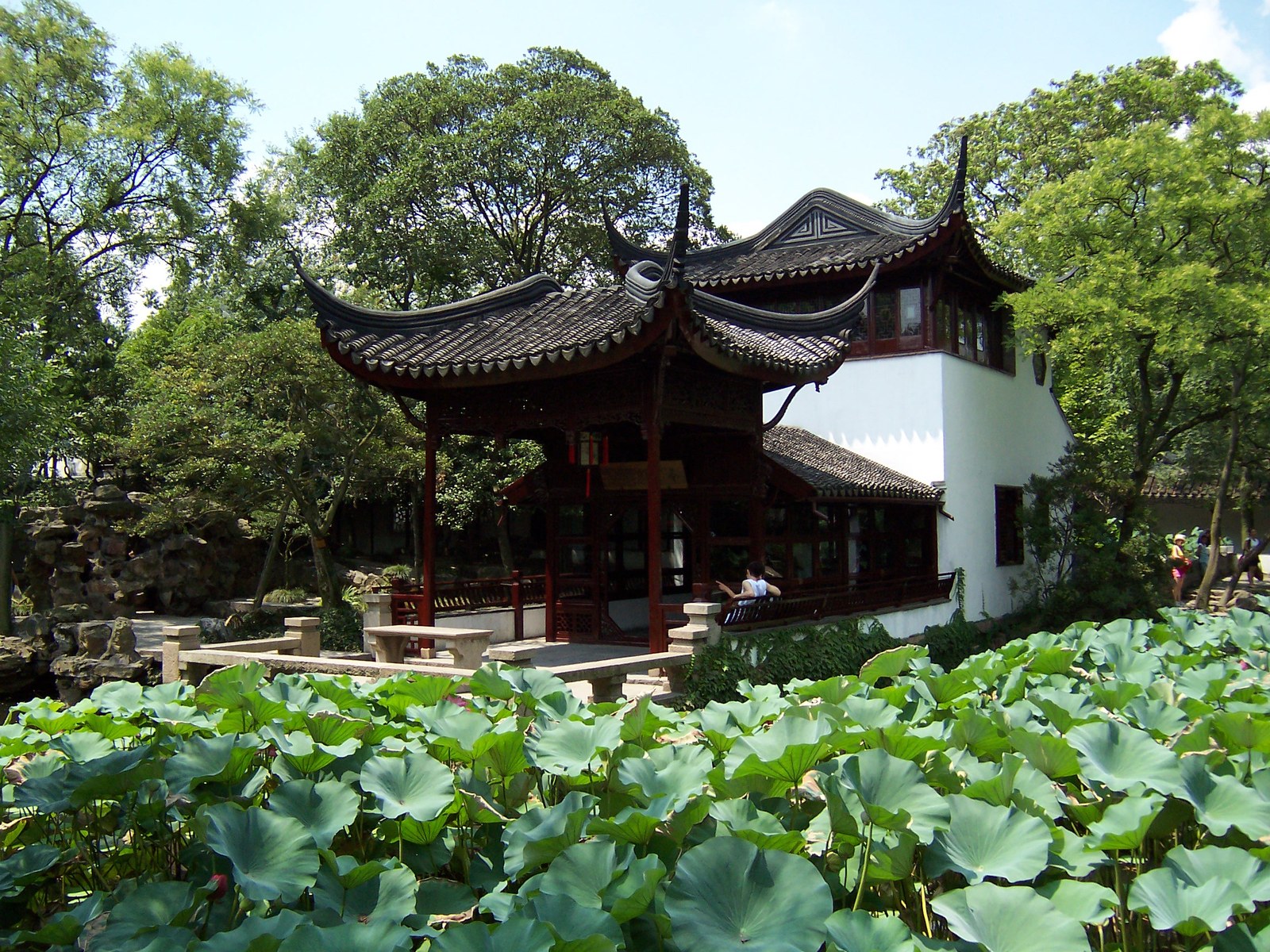
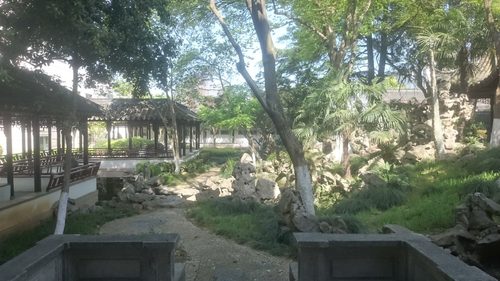
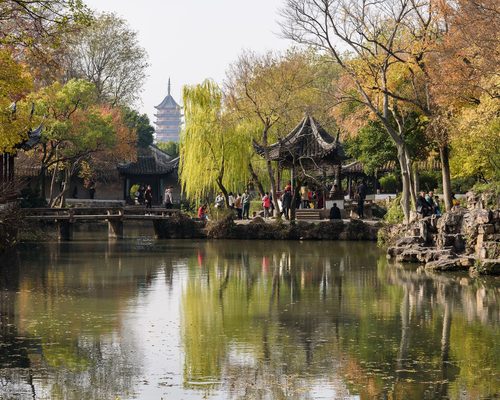
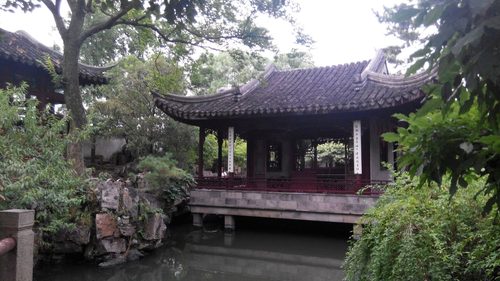
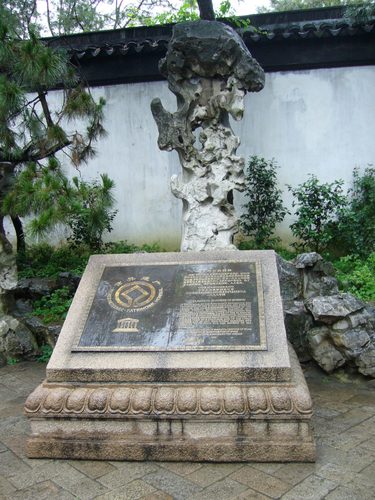
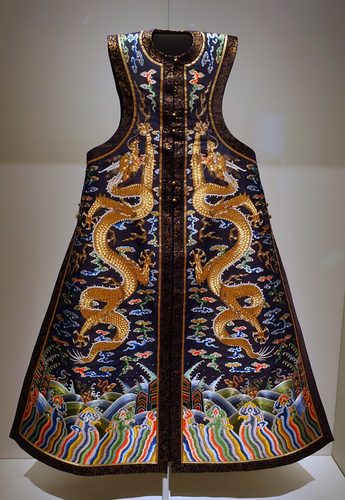
Suzhou, a canal city in the lower Yangtze delta, became China's leading center for literati painting and garden design during the Ming dynasty, especially from the late 1400s through the 1500s. Retired or out-of-favor officials settled here, drawn by silk-trade wealth and a cultural climate that prized private scholarship over court service. Painters Shen Zhou, Wen Zhengming, Tang Yin, and Qiu Ying, later grouped as the Four Masters of Ming, worked in ink on paper and silk, developing the Wu School: landscapes built from restrained brushwork, dry ink texture strokes, and inscriptions of poetry directly on the painting surface. The same patrons built private gardens as three-dimensional versions of the same aesthetic, compressing mountains, water, and pavilions into walled urban plots using porous Taihu limestone and borrowed views through latticed windows. Suzhou's silk workshops also produced Su embroidery, worked fine enough to render paintings in thread. Painting, garden design, and embroidery shared one vocabulary of restraint and literary reference, distinguishing Suzhou from more decorative professional painting centers elsewhere in China.
What marks the region
Ink and light color on paper
Wu School painters favored paper over silk for its absorbency, working in restrained ink washes and pale color rather than the saturated pigment of professional court painting.
Painting as combined art
A finished work typically carries the painter's own poem or colophon in calligraphy alongside a red seal, uniting painting, poetry, and calligraphy as one continuous statement.
Dry brush texture strokes
Landscape favored dry, scumbled texture strokes built up gradually over wet ink, giving rock and tree bark a rough, aged surface rather than a smooth wash.
Garden as composed landscape
Private gardens were designed with the same principles as a handscroll, a sequence of framed views meant to be walked through and revealed one at a time rather than seen all at once.
Borrowed scenery (jiejing)
Windows, doorways, and covered walkways were positioned to frame distant elements, real or built, as if they belonged to the garden itself.
Amateur ideal over professional polish
Literati painters presented their work as an educated pastime rather than a trade, prizing personal expression and calligraphic skill over meticulous workshop finish.
Local signatures
How to spot Suzhou art
- Taihu limestone rock
- → A porous, wind-and-water-eroded limestone set upright as sculpture in gardens, standing for wild mountain scenery condensed into a domestic space.
- Gnarled old pine or plum
- → A twisted, aged tree signals scholarly endurance and moral integrity, a recurring subject on its own.
- Empty pavilion or studio
- → A small unoccupied structure within a landscape represents the retired scholar's withdrawal from official life.
- Painter's colophon and seal
- → Handwritten poetry and a red seal placed directly on the painting mark it as a literati statement rather than an anonymous commercial product.
- Latticed window frame
- → A carved wooden or stone lattice appears in garden architecture and painted interiors, framing a partial view as a deliberate composition.
- Double-sided embroidery
- → Su embroidery worked identically on both faces of a sheer silk panel marks a piece as fine Suzhou needlework rather than ordinary decoration.
The story
Suzhou's art identity formed as Ming dynasty officials, sometimes retired and sometimes deliberately withdrawn from court service, settled in the city through the 1400s and 1500s, supported by regional silk wealth. Shen Zhou (1427-1509), who never held office, established the Wu School's amateur, poetry-integrated painting style, and his student Wen Zhengming (1470-1559) extended it across a long career of painting, calligraphy, and garden design; Wen was closely tied to the Humble Administrator's Garden, founded around 1509 by the official Wang Xianchen and painted by Wen in an album shortly after. Tang Yin (1470-1524) and Qiu Ying (c. 1494-1552) worked in more professional modes alongside the same circle, and the four painters were later canonized together as the Four Masters of Ming. Garden building continued through the Qing dynasty, with existing Ming gardens repeatedly restored. Suzhou's embroidery workshops, supplying both court and private clients, developed alongside this painting culture. Nine Suzhou gardens were inscribed as a UNESCO World Heritage Site beginning in 1997.
Masterpieces of the place
| Work | Artist | Date | Why it matters |
|---|---|---|---|
| Lofty Mount Lu | Shen Zhou | 1467 | A hanging-scroll homage to a teacher, treated as a foundational Wu School landscape. |
| Humble Administrator's Garden | Unknown | founded 1509 | A Suzhou literati garden built by the retired official Wang Xianchen, later painted by Wen Zhengming. |
| The Garden of the Inept Administrator album | Wen Zhengming | 1533 | An eight-leaf album depicting the newly built garden, pairing Wu School painting with garden design. |
| Tao Gu Presenting a Poem | Tang Yin | early 1500s | A hanging-scroll figure painting typical of Suzhou's more professionally trained masters. |
| Lingering Garden | Unknown | Ming origin, rebuilt Qing | A preserved Suzhou classical garden included in the city's UNESCO World Heritage listing. |
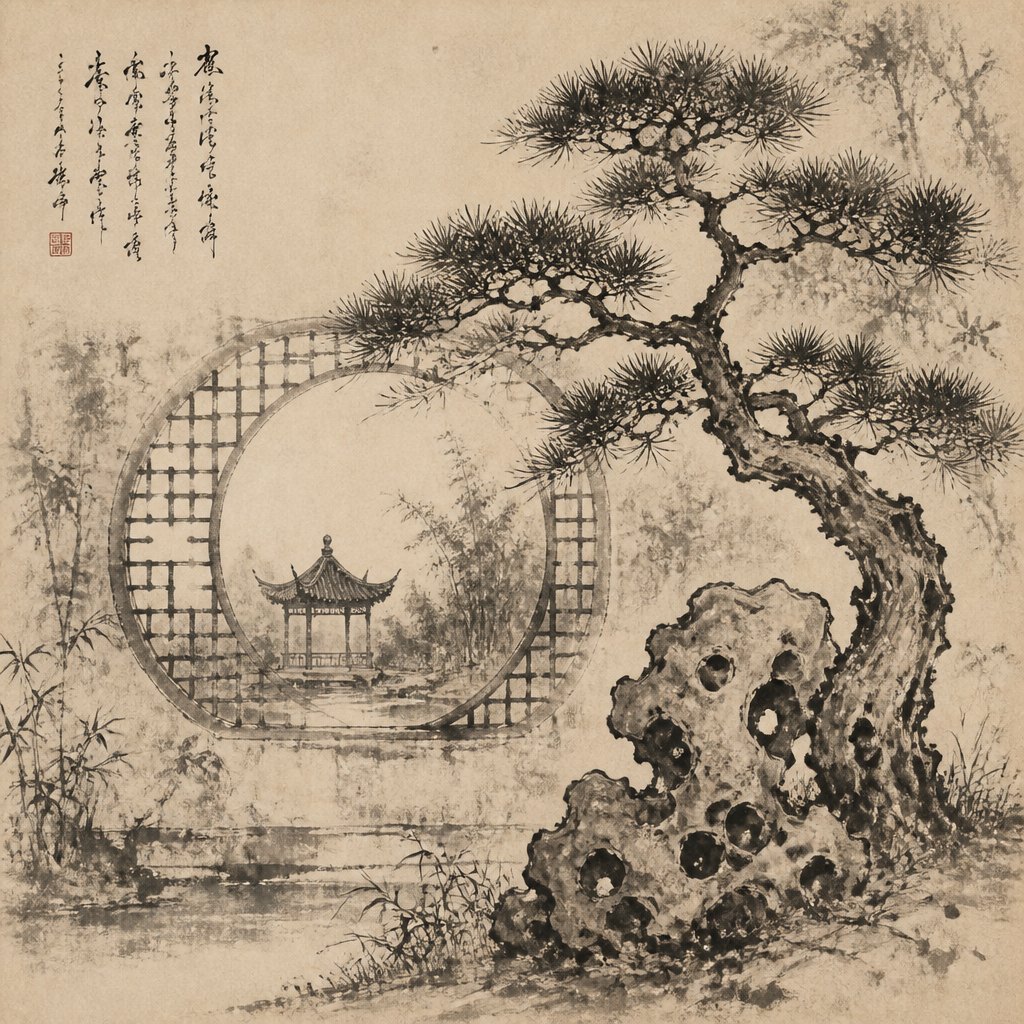 AI-generated
Work en plein air
Paint in the light of Suzhou
This example was generated from a prompt like: “A quiet ink-on-paper landscape: a single gnarled pine beside a porous garden rock, a small empty pavilion glimpsed through a latticed window, dry brush texture strokes throughout, and a hand-written poem in the upper corner.”
Open the Suzhou Art Style generator →The place today
The Humble Administrator's Garden and Lingering Garden remain open to the public within Suzhou's UNESCO-listed classical garden group, alongside smaller sites like the Master of the Nets Garden. The Suzhou Museum, designed by I.M. Pei near the historic core, holds Ming and Qing paintings and decorative art from the region. Su embroidery continues as a recognized craft, with workshops and a dedicated museum nearby producing traditional double-sided silk work. Silk remains a regional industry, and several former literati residences survive as house museums.
Compose your own
Work in ink on paper with restrained, mostly monochrome washes, adding pale color sparingly rather than filling forms with saturated pigment. Build rock and tree surfaces gradually with dry, scumbled texture strokes rather than a single wet wash, so bark and stone read as aged and irregular. Leave generous open space around a central motif, a lone pine, a garden rock, a small empty pavilion, letting it stand for a whole withdrawn, contemplative life rather than crowding the composition. If working in a garden or architectural context, frame a smaller distant view through a window or doorway, as if borrowing it into the space. Finish with brush-written poetry and a red seal placed deliberately within the composition, treating text as part of the image rather than a caption beneath it.
Frequently asked questions
What is the Wu School?
A Ming dynasty literati painting tradition centered in Suzhou (anciently called Wu), led by Shen Zhou and Wen Zhengming from the late 1400s, favoring restrained ink landscapes combined with the painter's own poetry and calligraphy on the same sheet.
Why does Suzhou have so many classical gardens?
Retired or disaffected Ming and Qing officials settled in the wealthy silk-trading city and built private walled gardens as compressed, walkable landscapes, applying the same design principles found in Wu School painting. Nine survive as a UNESCO World Heritage group.
What is Su embroidery?
One of China's four major regional embroidery traditions, produced in and around Suzhou using fine silk thread, known for delicate shading and, in its finest examples, identical imagery worked on both sides of a sheer panel.
Who are the Four Masters of Ming?
Shen Zhou, Wen Zhengming, Tang Yin, and Qiu Ying, four painters active in or connected to Suzhou between the late 1400s and mid-1500s, later grouped together as the defining figures of Ming painting.