 Art
Art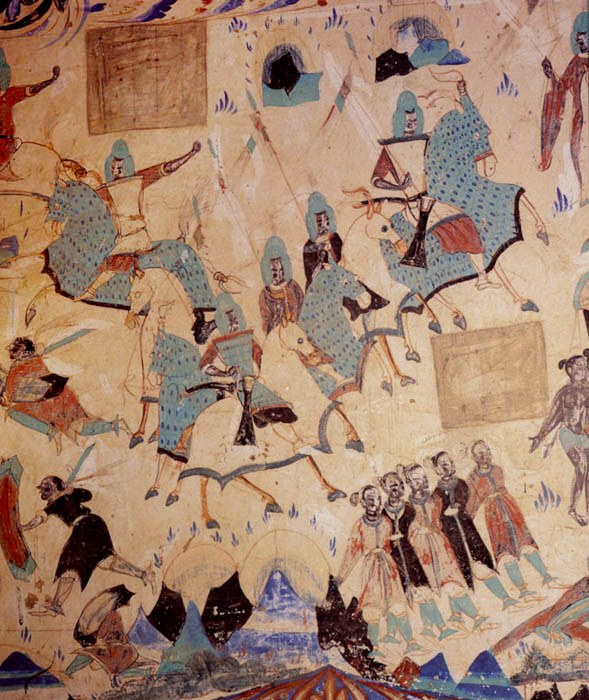
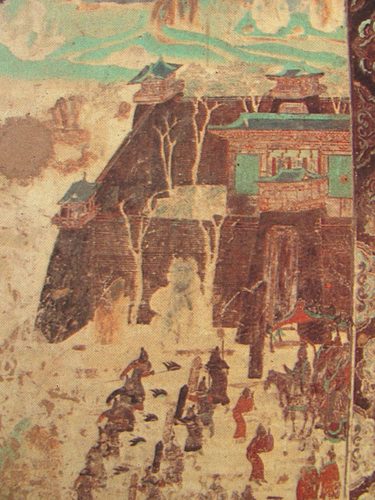
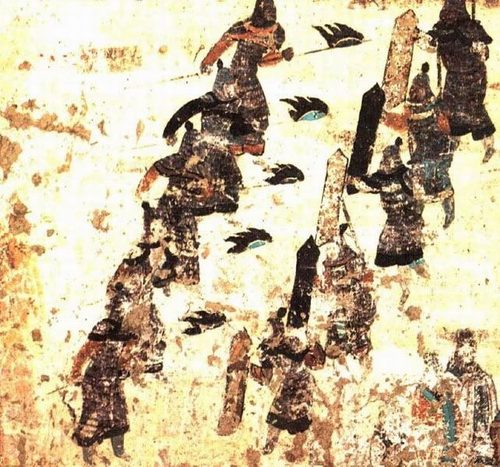
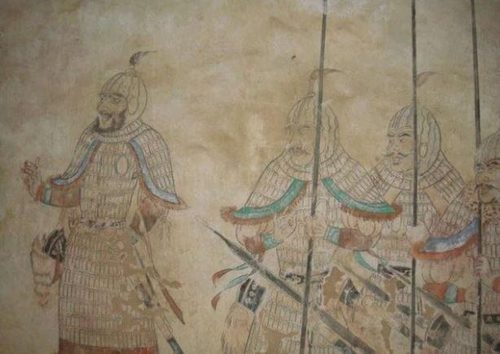
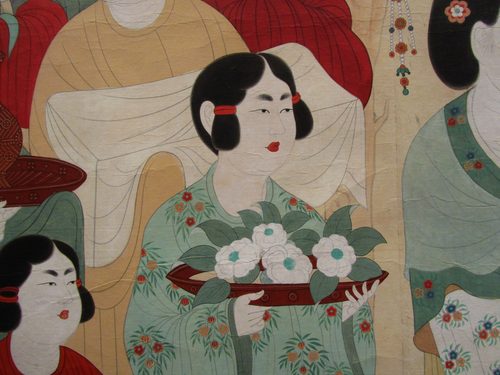
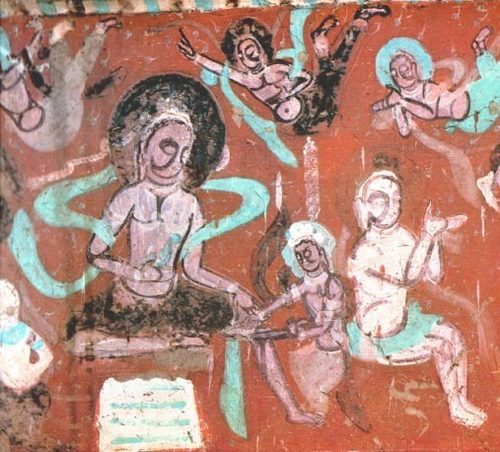
Dunhuang is the desert oasis in Gansu province where the Mogao Caves, nearly 500 Buddhist grottoes cut into a cliff face, hold one of the largest surviving bodies of premodern Chinese art. Sitting where Silk Road routes met before crossing into Central Asia, the town grew rich on caravan trade, and merchants, pilgrims, monks, and local rulers funded cave chapels as acts of religious merit, not one royal patron. Construction ran from the 4th century into the 14th, layering Northern Wei, Sui, Tang, Tibetan-period, and later styles within one stretch of cliff. Because the local rock is a coarse conglomerate unsuited to fine relief carving, artists built figures from clay over wood armatures and painted every surface in mineral pigment: azurite, malachite, cinnabar, gold leaf. A sealed side chamber, later called the Library Cave, held tens of thousands of manuscripts and paintings until it reopened in 1900, making Dunhuang a founding archive for medieval Chinese Buddhism and Silk Road exchange.
What marks the region
Clay over rock
The cliff's conglomerate stone crumbles under a chisel, so sculptors built figures from clay packed over wood-and-straw armatures instead of carving directly into the rock, unlike Yungang or Longmen further east.
Mineral pigment on plaster
Walls were coated in mud-and-straw plaster, then painted in ground minerals, azurite blue, malachite green, cinnabar red, over a base layer, giving colors that have held for well over a thousand years underground.
Horizontal narrative registers
Jataka tales and sutra illustrations run in continuous bands around a cave's walls, meant to be read like a scroll unrolled onto plaster, guiding a visitor's circuit through the chamber.
Donor portraits
Rows of small figures along the lower walls show the merchants, officials, and monks who paid for a cave, each labeled with a cartouche naming the sponsor, turning devotion into visible record.
Blended visual sources
Indian modeling, Central Asian shading, and Chinese linear drawing sit side by side within a single cave, evidence of a trade route where artists absorbed whatever style arrived with the next caravan.
Cave as chapel
Each grotto functioned as a private chapel rather than a public church, small and enclosed, meant for individual meditation, ritual circumambulation, or a sponsor's personal devotion.
Local signatures
How to spot Dunhuang art
- Flying apsaras
- → Airborne celestial musicians trailing long ribbons across ceilings, a Dunhuang signature rarely painted with such density and motion elsewhere in China.
- Thousand-armed Avalokiteshvara
- → Multi-armed bodhisattva of compassion, each hand often holding a different implement, reflecting Tang-era esoteric Buddhist practice.
- Pure Land paradise scenes
- → Symmetrical palace-and-pond compositions showing the Western Paradise, painted large on Tang-period cave walls as aids to visualization.
- Cartouche donor rows
- → Ranked lines of small painted figures with inscribed names, recording exactly who paid for the cave and in what order of status.
- Jataka narrative bands
- → Sequential scenes of the Buddha's past-life sacrifices, painted in continuous horizontal strips as a moral picture-story.
- Flame-edged mandorla
- → A halo bordered in painted flame around a Buddha or bodhisattva figure, marking radiant sanctity in mineral-pigment orange and red.
The story
Tradition credits the monk Le Zun with cutting the first cave in 366 CE after a vision above the cliff. Northern Liang and Northern Wei rulers sponsored early grottoes, and after China reunified under the Sui and Tang dynasties from 581, Silk Road wealth financed the site's largest murals through the 7th and 8th centuries. Tibetan forces controlled Dunhuang from 781 to 848, adding their own iconography before Chinese governance returned. Cave-building slowed after the 11th century as trade routes shifted, and one side chamber, now called the Library Cave, was sealed with tens of thousands of manuscripts and paintings, for reasons still unclear, sometime around 1000. It stayed hidden until the monk Wang Yuanlu reopened it in 1900. Explorers Aurel Stein (1907) and Paul Pelliot (1908) subsequently removed large numbers of manuscripts and paintings to London and Paris, where most remain in the British Library, British Museum, and Bibliothèque nationale de France. Mogao was named a UNESCO World Heritage Site in 1987.
Masterpieces of the place
| Work | Artist | Date | Why it matters |
|---|---|---|---|
| Library Cave manuscripts and paintings | Unknown | sealed c. 1000 | Tens of thousands of Buddhist texts and silk paintings preserved behind a hidden wall for nine centuries. |
| Diamond Sutra scroll | Unknown | 868 CE | A woodblock-printed sutra bearing the world's earliest confirmed print date, found in the Library Cave. |
| Mogao Cave 220 murals | Unknown | dated 642 | Tang-dynasty paradise scenes and donor portraits inscribed with a precise construction date. |
| Mogao Cave 45 sculptural group | Unknown | c. 8th century | A painted clay Buddha and attendants showing Tang sculpture's fluid drapery and calm naturalism. |
| Bodhisattva silk banner paintings | Unknown | 9th-10th century | Painted silk banners hung in caves for ritual use, later removed to the British Museum. |
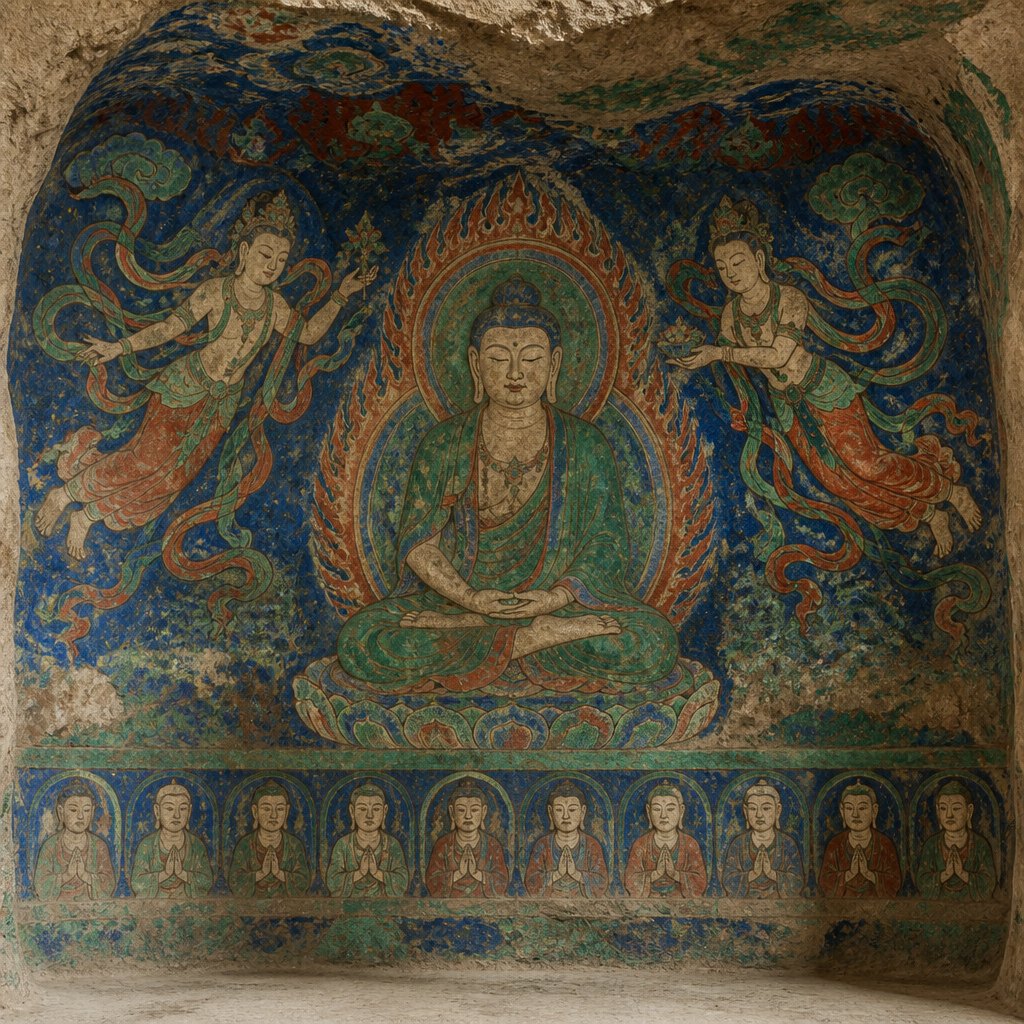 AI-generated
Work en plein air
Paint in the light of Dunhuang
This example was generated from a prompt like: “A rock-cut cave chapel painted in azurite, malachite, and cinnabar: a seated meditating figure flanked by ribboned flying attendants, flame-edged halos, and a row of small donor portraits along the base wall.”
Open the Dunhuang Art Style generator →The place today
The Mogao Caves remain an active conservation site run by the Dunhuang Academy, which limits visitor numbers and rotates open caves to protect fragile pigment. A visitor center outside Dunhuang shows high-resolution digital reproductions before ticketed groups enter a small number of original grottoes. The Gansu Provincial Museum and the Dunhuang Academy's research collections display recovered objects, while the International Dunhuang Project digitizes manuscripts scattered across museums abroad, reuniting the archive online even as the physical objects remain divided.
Compose your own
Work in flat mineral pigment rather than blended oil: block in azurite blue, malachite green, and cinnabar red over a pale ground, keeping edges crisp rather than softly modeled. Arrange figures in horizontal bands, as if illustrating a scroll unrolled around a wall, with a large central figure flanked by smaller attendants and a row of donor portraits along the base. Give flying figures long, wind-blown ribbons instead of wings, and edge any halo in painted flame. Keep the palette warm and mineral rather than cool or metallic, and let some ground or plaster texture show through, evoking centuries spent on cave stone rather than a smooth painted panel.
Frequently asked questions
Why are Dunhuang's figures made of clay instead of carved stone?
The cliff at Mogao is a coarse conglomerate that crumbles under fine chiseling, so artists modeled figures in clay over wood-and-straw armatures and painted them, unlike the carvable sandstone at Yungang or Longmen.
What was found in the Library Cave?
A sealed side chamber held tens of thousands of manuscripts, printed texts, and silk paintings, spanning many languages and centuries, hidden from around 1000 until a monk reopened it in 1900.
Where are the Dunhuang manuscripts now?
Most were removed by early-20th-century expeditions and are now held in the British Library, British Museum, and Bibliothèque nationale de France, with remaining material in Chinese institutions including the Dunhuang Academy.
What period does Dunhuang art cover?
Cave building and painting ran from the 4th century, traditionally 366 CE, through the 14th century, layering Northern Wei, Sui, Tang, Tibetan-period, and later Yuan-dynasty work within the same cliff.