 Art
Art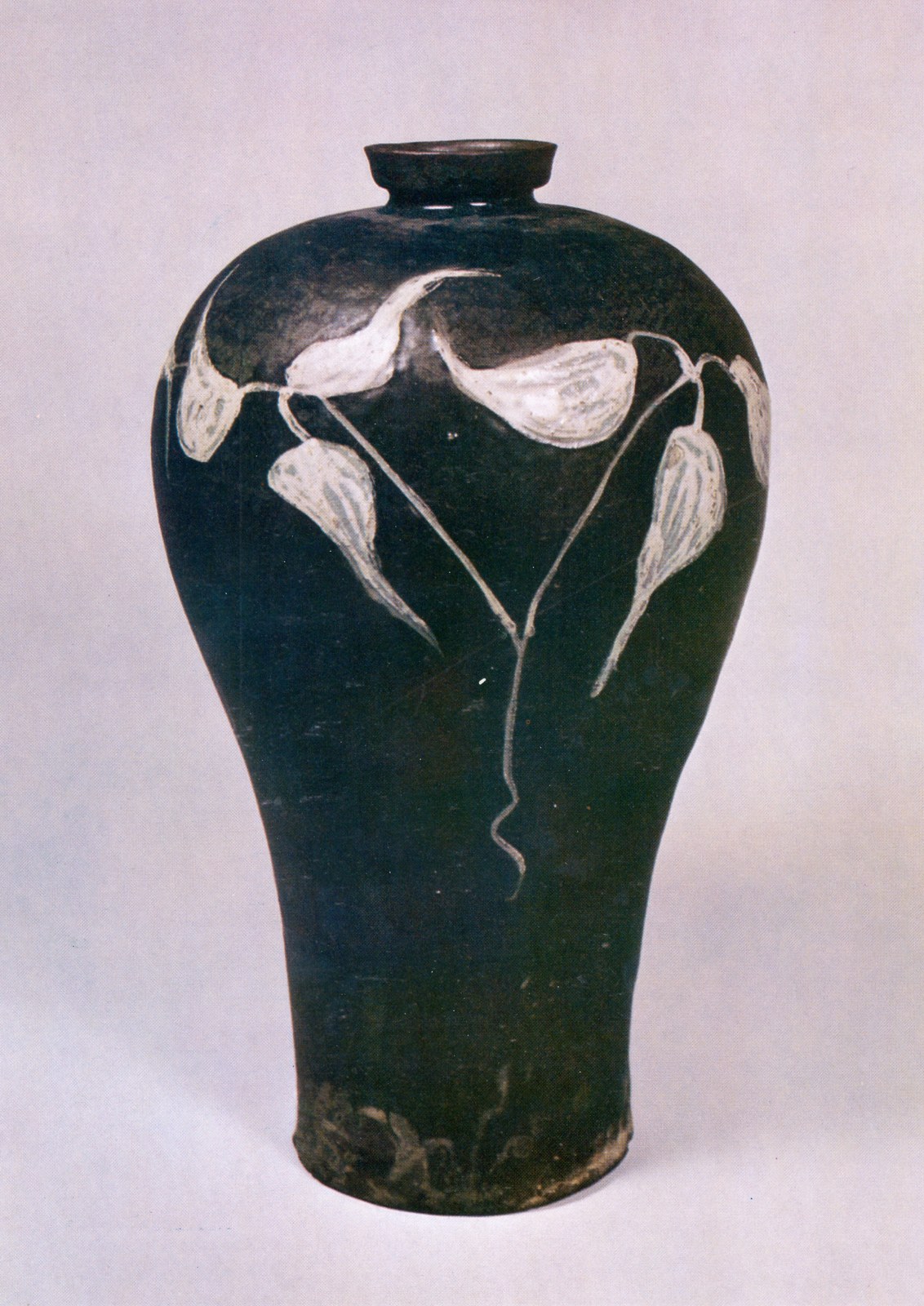
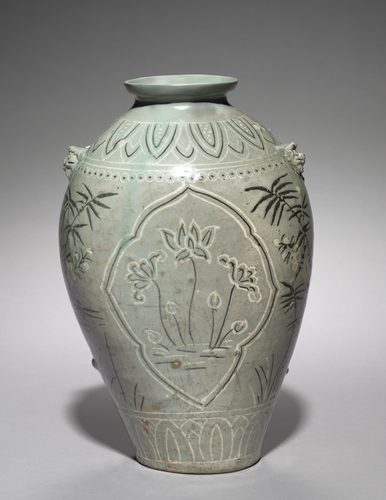
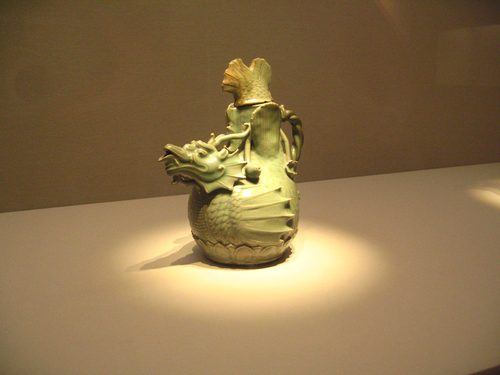
Seoul became Korea's capital in 1394, after the general Yi Seong-gye founded the Joseon dynasty, and it remained the seat of a Confucian court that shaped Korean art for five centuries. The court's own painting bureau, the Dohwaseo, trained artists who produced ceremonial portraits, palace screens, and diplomatic gifts under strict conventions of likeness and hierarchy. Confucian taste favored restraint over the ornate Buddhist art of the preceding Goryeo dynasty, a shift visible in ceramics: Goryeo's inlaid celadon gave way to plain white porcelain fired for the court at kilns near Seoul, valued as an expression of scholarly sobriety. Under kings Yeongjo and Jeongjo in the 18th century, court and private patrons supported new interest in observed Korean life and landscape, producing genre scenes of markets and courtship rather than only Chinese-derived subjects. Alongside this elite output, anonymous folk painters made minhwa, bold symbolic works sold cheaply for ordinary households, a popular counterpart to the capital's formal court art.
What marks the region
Dohwaseo examination system
The royal painting bureau selected court artists through formal examination and ranked them by specialty, portraiture, landscape, or documentary painting, tying artistic status to bureaucratic rank.
Ritual royal portraiture
Portraits of kings, called eojin, followed strict conventions of frontal or three-quarter pose, formal robes, and exact likeness, treated as objects of ritual reverence rather than personal display.
Ink and mineral color on silk
Court paintings combined fine ink outline with mineral pigment fills on silk, reserving the most saturated color for royal regalia and architectural detail.
White porcelain over inlaid celadon
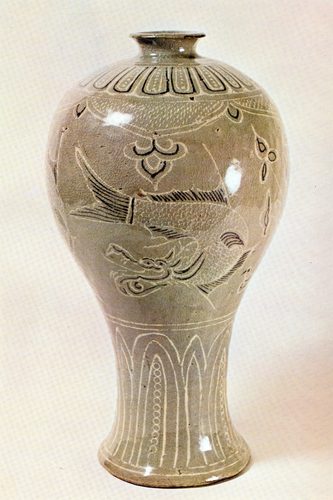
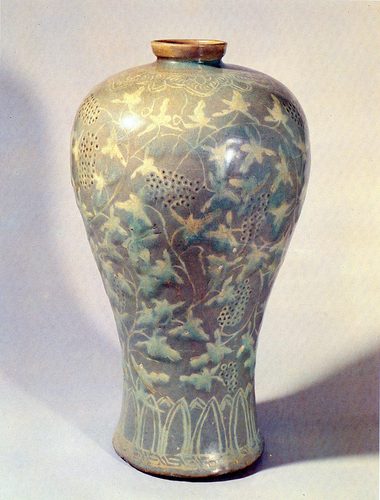
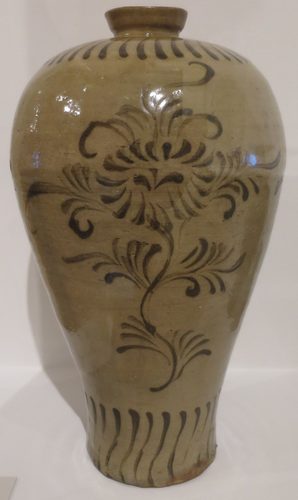
Royal kilns near Seoul shifted ceramic taste from Goryeo's inlaid, jade-green celadon to plain, undecorated white porcelain, matching Confucian preference for visible restraint.
True-view landscape
Eighteenth-century painters depicted actual named Korean mountains and rivers rather than idealized Chinese-style scenery, recording specific local geography with descriptive brushwork.
Anonymous folk production
Minhwa painters worked without signature or court affiliation, producing formulaic, boldly colored images sold in markets for protective and decorative use in ordinary homes.
Local signatures
How to spot Seoul art
- Sun, Moon and Five Peaks
- → A screen placed behind the royal throne showing the sun, moon, and five mountains, positioning the king at the center of the cosmic order.
- Tiger and magpie
- → A folk-painting pairing where the tiger wards off evil and the magpie announces good news, hung at New Year for household protection.
- Four gentlemen plants
- → Plum, orchid, bamboo, and chrysanthemum, painted in ink to represent Confucian scholarly virtues of resilience and integrity.
- Plain white moon jar
- → A large, undecorated round porcelain vessel whose asymmetry and blank surface were prized as an ideal of Confucian modesty.
- Munjado character paintings
- → Decorative renderings of characters for Confucian virtues, illustrated with small pictorial scenes tucked inside each stroke.
- Crane and pine
- → A longevity pairing appearing in both court and folk painting, the crane and evergreen pine standing for long life and constancy.
The story
The general Yi Seong-gye founded the Joseon dynasty in 1392 and moved the capital to Hanseong, modern Seoul, in 1394, building a Confucian bureaucratic state around the new city. The court painting bureau, the Dohwaseo, was formalized early in the dynasty to supply ceremonial portraits and palace decoration under state control. Royal kilns near Seoul, particularly at Gwangju in Gyeonggi province, supplied the court with white porcelain from the 15th century onward, gradually displacing the celadon associated with the earlier Goryeo dynasty. The reigns of Yeongjo (1724-1776) and Jeongjo (1776-1800) brought a documented flowering of genre and true-view landscape painting, with painters such as Kim Hong-do working directly for the court while also depicting ordinary Korean life. Japanese colonial rule from 1910 to 1945 disrupted royal patronage and dismantled much of the court art system, and the Korean War of 1950-1953 destroyed a large share of surviving royal portraits, leaving only a handful, including one of dynastic founder Taejo, intact today.
Masterpieces of the place
| Work | Artist | Date | Why it matters |
|---|---|---|---|
| Irworobongdo (Sun, Moon and Five Peaks) screen | Unknown | Joseon dynasty | A folding screen placed behind the royal throne at Gyeongbokgung Palace, painted whenever a reign required a new set. |
| Portrait of King Taejo | Unknown court painters | 1872 copy of a 14th-century original | One of the few royal portraits to survive war and fire, showing the Joseon dynasty's founder in ceremonial robes. |
| Album of Genre Scenes | Kim Hong-do | c. 1780s | Ink and light color scenes of markets, wrestling, and daily labor, made for and admired by King Jeongjo's court. |
| White porcelain moon jar | Unknown | 18th century | A large round vessel formed from two joined hemispheres, prized for its plainness and slight asymmetry. |
| Tiger and Magpie | Unknown | 19th century | A widely produced minhwa composition hung at New Year in ordinary homes for protection and good news. |
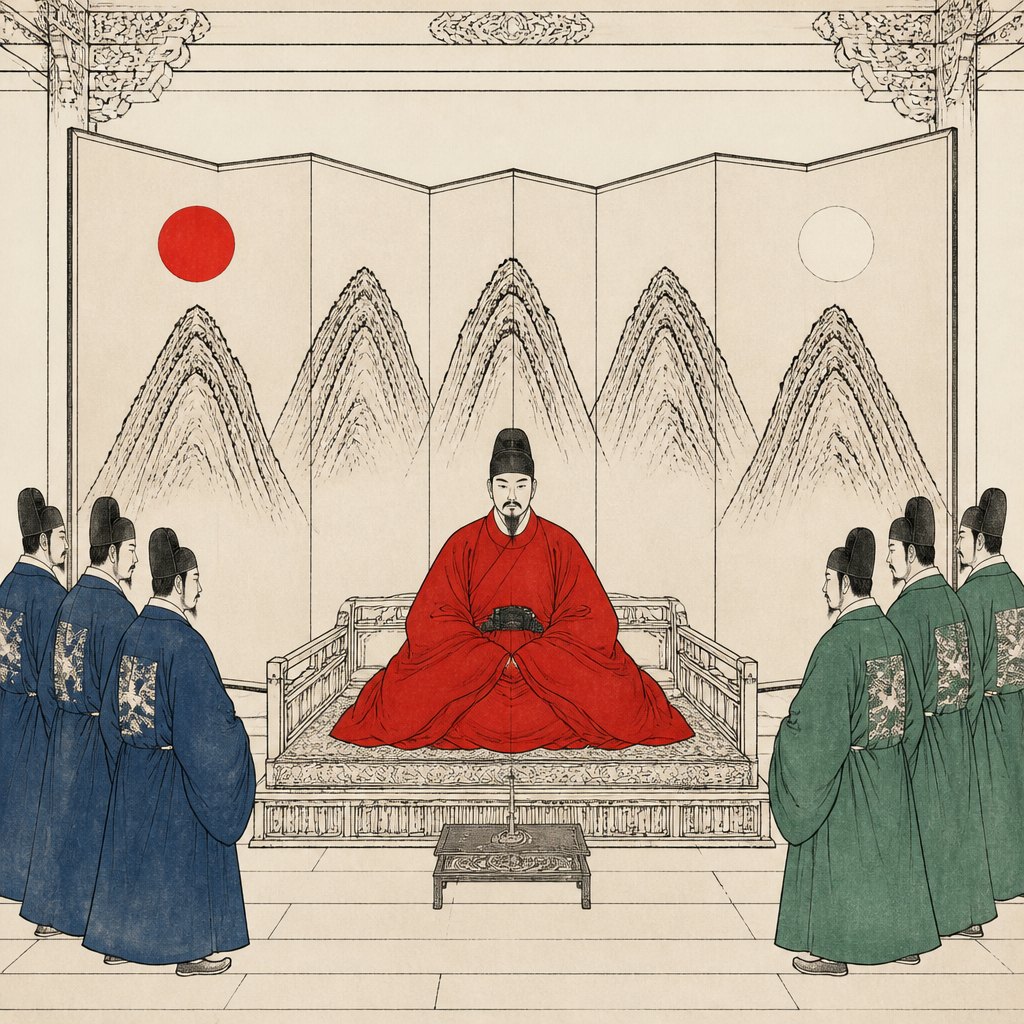 AI-generated
Work en plein air
Paint in the light of Seoul
This example was generated from a prompt like: “A formal court scene: a seated robed figure before a folding screen painted with a sun disc, a moon disc, and five stylized mountain peaks, rendered in fine ink outline with saturated color reserved for the robes.”
Open the Seoul Art Style generator →The place today
The National Museum of Korea and the National Palace Museum of Korea hold the major collections of Joseon court painting, porcelain, and royal regalia, while Gyeongbokgung and Changdeokgung palaces preserve the architectural settings these works were made for. The Amorepacific Museum of Art and private collections around Insa-dong extend the picture with folk and popular material. Traditional white porcelain and celadon-inlay techniques continue as living craft at kilns in Gwangju and Icheon, supplying both museum reproduction and contemporary ceramic practice.
Compose your own
Keep court subjects formal and frontal, with exact, unflattering likeness rather than idealization, and reserve saturated color for robes, regalia, and architectural trim against plain ink outline. For a throne setting, place a symmetrical screen of stylized peaks with a sun disc and moon disc behind the seated figure. For ceramics, favor a plain round white form over ornament, letting a slight asymmetry stand as the visual signature. For a folk register, flatten perspective, brighten color, and render a tiger with exaggerated, almost comic features paired with a small bird, favoring bold graphic clarity over refined modeling.
Frequently asked questions
What was the Dohwaseo?
The Joseon royal painting bureau, which trained and examined court artists and assigned them to portraiture, documentary painting, or decorative work under state supervision.
How does Joseon white porcelain differ from Goryeo celadon?
Goryeo celadon uses a jade-green glaze often decorated with inlaid designs, while Joseon white porcelain is plainer and paler, reflecting a Confucian preference for visible restraint over ornament.
What is minhwa?
Anonymous Korean folk painting made for ordinary households rather than the court, using bold color and flattened composition for auspicious and protective subjects like tigers and cranes.
Why do so few Joseon royal portraits survive?
Fires, Japanese colonial-era disruption, and destruction during the 1950-1953 Korean War destroyed most royal portraits, leaving only a small number, including a portrait of dynastic founder Taejo, in museum collections today.