 Art
Art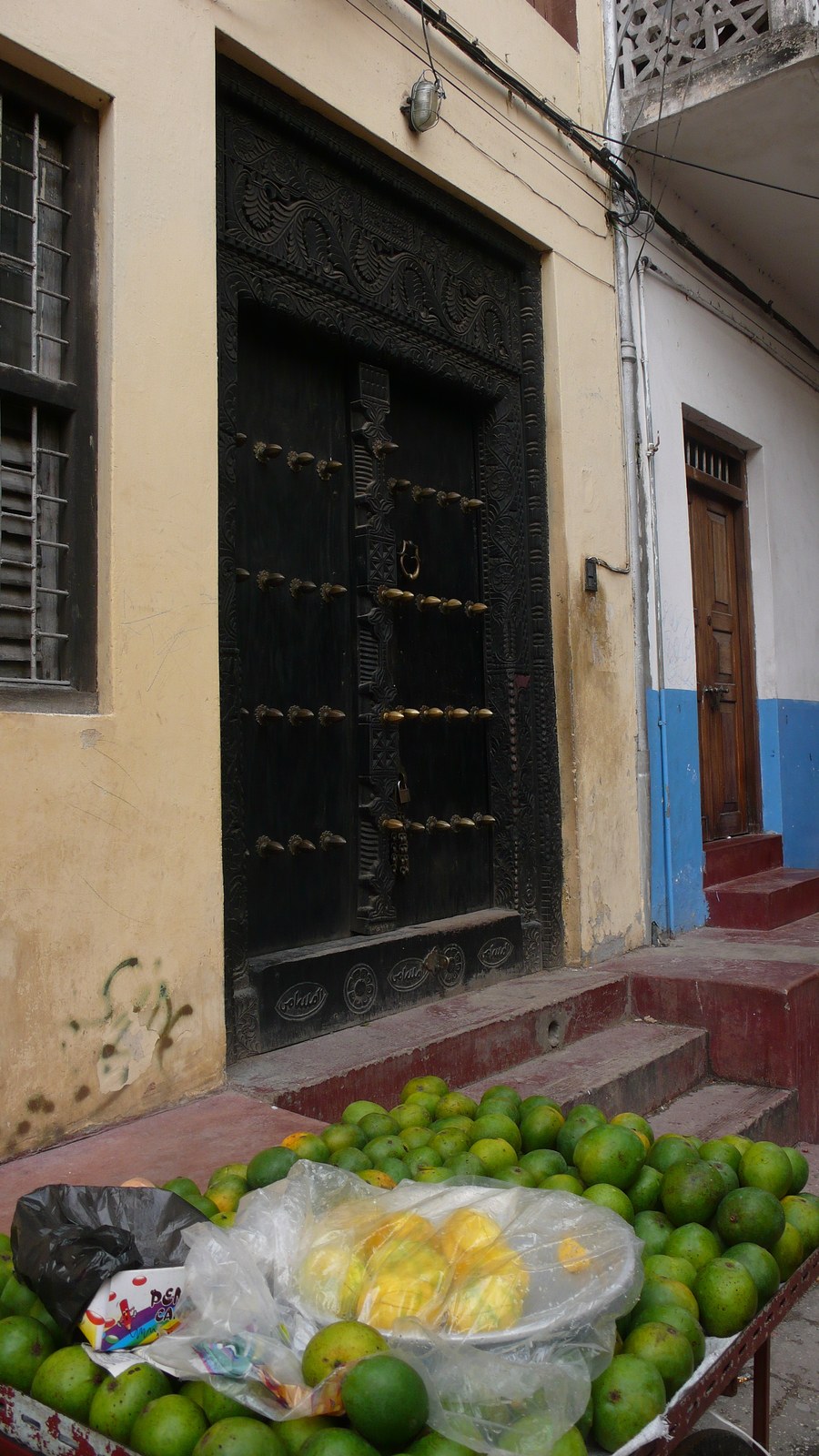
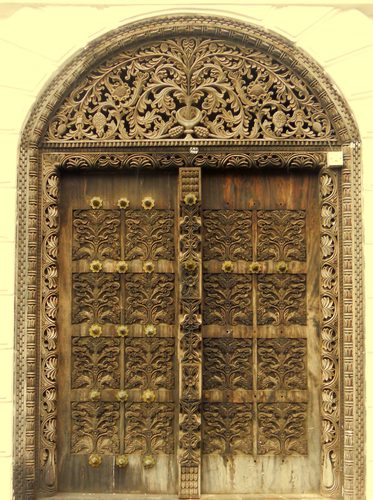
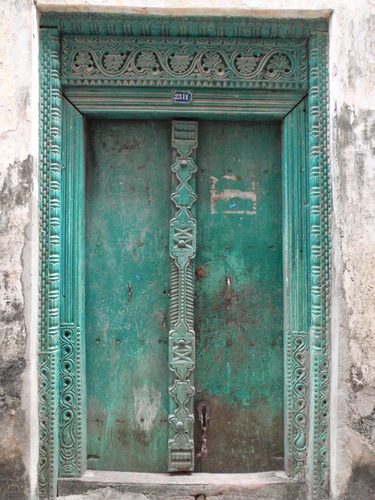
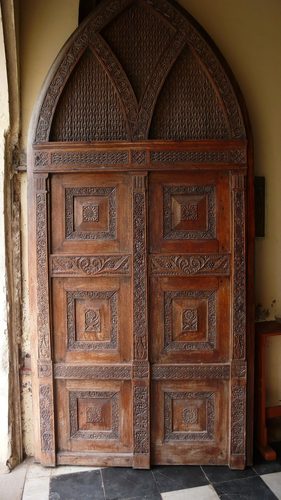
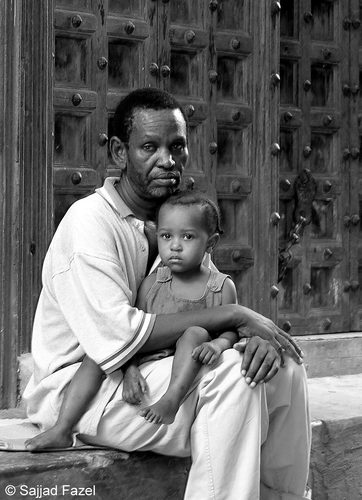
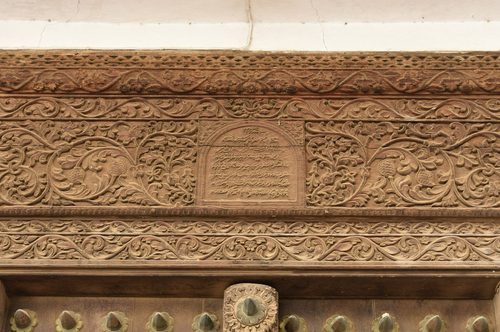
Zanzibar's Stone Town is a Swahili coast port built largely in the 1800s from coral rag stone bound with lime mortar, its narrow streets shaped by trade winds and monsoon shipping routes linking East Africa to Oman, India, and the wider Indian Ocean world. When the Omani Sultanate moved its capital from Muscat to Zanzibar in 1840, the island became the hub of a clove-plantation and trading economy, and that wealth built merchant houses, a sultan's palace, and the Beit al-Ajaib, the House of Wonders, with its cast-iron columns and tiered verandas. The city's clearest artistic signature is its carved wooden doors: heavy teak or mahogany panels framed with geometric and floral relief, some studded with brass in a pattern borrowed from Indian tradition, others carved with Quranic calligraphy in the plainer Arab style. Coral stone construction, mangrove-pole roof beams, and raised stone verandas complete a building vocabulary distinct from both the African mainland and the Arabian Gulf, a hybrid Swahili coast idiom shaped by centuries of Indian Ocean trade.
What marks the region
Coral rag masonry
Buildings use coral limestone quarried locally, cut into irregular blocks and bound with lime mortar, then finished with a smooth lime plaster render.
Mangrove pole roofing
Boriti, imported mangrove poles from the mainland and Persian Gulf, span rooms as ceiling beams, a practical solution given Zanzibar's lack of large local timber.
Carved door typology
Doors follow two recognizable types, plain rectangular Arab doors with geometric or floral relief, and taller arched Indian doors with denser ornament and brass studs.
Raised stone verandas
Merchant houses front onto the street with a raised, shaded stone platform, a semi-public space for receiving visitors and conducting trade.
Calligraphic door lintels
Quranic inscriptions or blessings carved into door lintels and frames mark a household's faith and status without figural imagery.
Courtyard house plan
Interior rooms open onto a central courtyard for light and ventilation, a layout shared with Arabian and Indian coastal building traditions.
Local signatures
How to spot Zanzibar art
- Brass door studs
- → Borrowed from Indian tradition, originally to deter elephants from pushing doors, later kept purely as decorative status marking.
- Fish and chain-link carving
- → Common relief motifs on door frames, read locally as symbols of prosperity and protection for the household within.
- Rosette medallion
- → A carved circular floral pattern often centered above doorways, associated with fertility and good fortune.
- Arched Indian door frame
- → Signals a household built or influenced by Zanzibar's Gujarati and other Indian trading communities.
- Quranic lintel inscription
- → A carved verse or blessing above a doorway, marking an Arab or Swahili Muslim household.
- Coral stone latticework
- → Perforated stone or plaster screens allowing airflow while preserving privacy, a Swahili coast adaptation to tropical heat.
The story
Swahili coast settlement on Zanzibar dates to at least the 10th century, when Persian and Arab traders established coastal towns alongside Bantu-speaking communities, forming the mixed Swahili culture. Portuguese forces held parts of the coast from the 1500s until Omani Arab power displaced them by the late 1600s. In 1840, Sultan Said bin Sultan moved the Omani capital from Muscat to Zanzibar, building a plantation economy on cloves and a trading economy that included ivory and enslaved people; the slave trade through Zanzibar was formally abolished under British pressure in 1873, with the legal status of slavery ended in 1897. Stone Town's surviving merchant houses, palace buildings, and the Beit al-Ajaib (House of Wonders, 1883) date mainly from this Omani period. Britain established a protectorate over Zanzibar in 1890, ending in 1963. UNESCO designated Stone Town a World Heritage Site in 2000 for its distinctive fusion of Swahili, Arab, Persian, Indian, and European building traditions.
Masterpieces of the place
| Work | Artist | Date | Why it matters |
|---|---|---|---|
| Beit al-Ajaib (House of Wonders) | Unknown, built under Sultan Barghash | 1883 | A large palace with iron columns and wide verandas, once the tallest building on the East African coast. |
| Old Fort (Ngome Kongwe) | Unknown, Omani builders | 1699–1701 | A coral-stone fortification built after Omani forces took the island from Portuguese control. |
| Stone Town carved doors | Unknown local and Indian craftsmen | 19th century | Hundreds of surviving carved teak doors form the most studied body of Swahili coast decorative woodwork. |
| Beit al-Sahel (Sultan's Palace) | Unknown, built under Omani sultans | 19th century | Former residence of Zanzibar's Omani sultans, now a museum of the sultanate period. |
| Anglican Cathedral of Christ Church | Unknown, British missionary commission | 1873–1879 | Built on the site of the former slave market, marking the end of the legal slave trade on the island. |
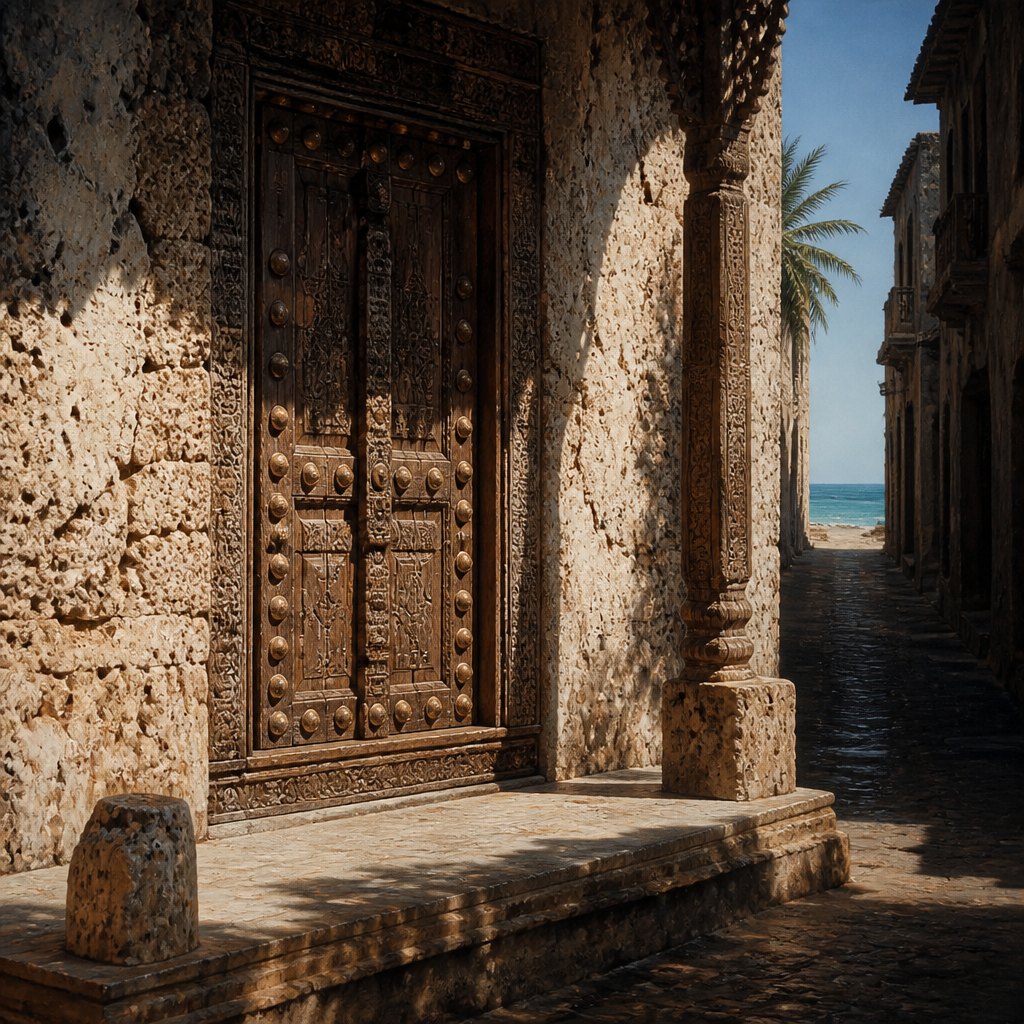 AI-generated
Work en plein air
Paint in the light of Zanzibar
This example was generated from a prompt like: “A heavy carved teak door with dense geometric relief and rows of brass studs, set into a sun-bleached coral stone wall, a shaded raised stone veranda in front, strong equatorial light and deep narrow shadow along a coastal alley.”
Open the Zanzibar Art Style generator →The place today
Stone Town remains a living UNESCO World Heritage site, its coral-stone houses now hotels, shops, and museums including the former Sultan's Palace and the restored House of Wonders. Door carving continues as an active craft producing new work for local buildings and export, and the Stone Town Conservation and Development Authority oversees ongoing restoration of coral masonry and timber structures against tropical decay.
Compose your own
Build the scene from coral stone and shadow. Render walls as pale, slightly irregular limestone plaster, warmed by strong equatorial light and cut by deep, narrow shadowed alleys. Center the composition on a single carved wooden door, dark teak or mahogany, framed with dense geometric or floral relief and studded rows of brass, set into a plain stone facade. Add a raised veranda platform in front for scale and human use. Keep ornament confined to door frames, lintels, and lattice screens rather than spread across whole walls. Palette should stay warm and mineral, sun-bleached stone, dark polished wood, brass accents, against a hint of indigo sea beyond a rooftop.
Frequently asked questions
Why are Zanzibar's doors so heavily decorated?
Carved doors signaled a household's wealth and trading connections. Arab-style doors carried Quranic inscriptions and geometric relief, while Indian-influenced arched doors added denser floral carving and brass studs, both marking status along the street.
What is Stone Town built from?
Primarily coral rag, coral limestone quarried locally, bound with lime mortar and finished with lime plaster. Roofs typically rest on imported mangrove poles called boriti, since large local timber was scarce on the island.
Is Zanzibar's architecture Arab or African?
Neither exclusively. Stone Town's buildings blend Swahili coast, Arab, Persian, and Indian traditions, reflecting centuries of Indian Ocean trade rather than any single regional style, which is why it is described as a distinctly Swahili coast idiom.
Does door carving still happen in Zanzibar today?
Yes, carved wooden doors continue to be produced by local craftsmen for new buildings and for sale, keeping a 19th-century decorative tradition active as a working craft rather than only a historical relic.