 Art
Art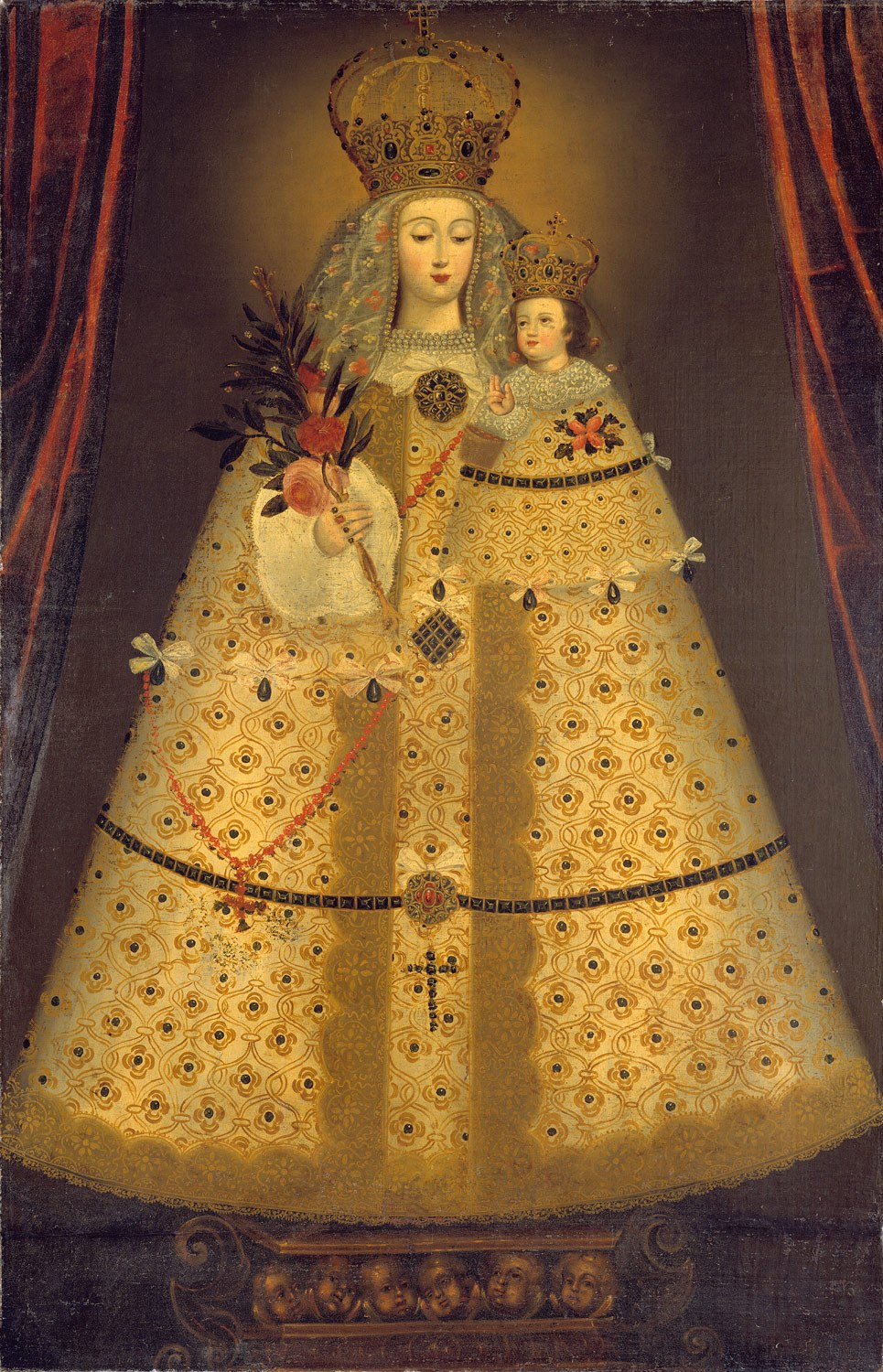
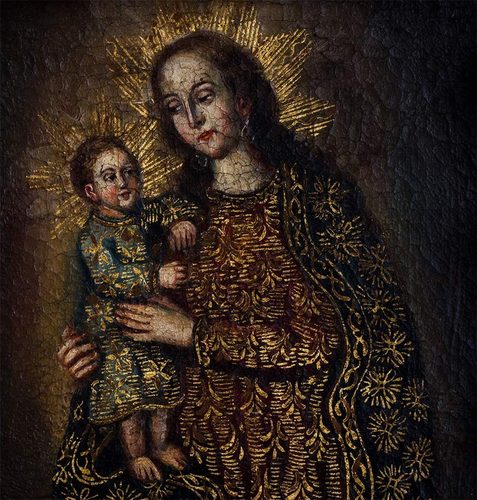
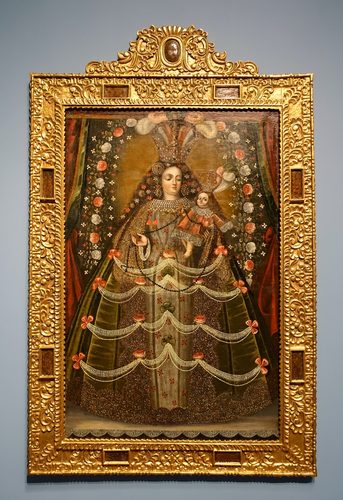
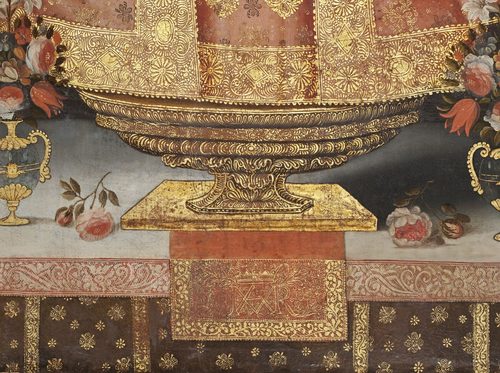
The Cusco School, or Escuela Cuzqueña, formed in the former Inca capital of Cusco, Peru, after Spanish conquest in 1533 converted the city into a center of colonial religious art. The Italian Jesuit painter Bernardo Bitti arrived in 1583 bringing a late Mannerist style, and indigenous and mestizo painters trained in mission workshops adapted it into something local: flattened, decorative pictorial space, lavish gold-leaf appliqué on painted garments known as brocateado, and a taste for filling canvases with Andean flora, fauna, and dress. Painters formed their own guild in 1688, separate from the Spanish painters' guild, and produced work largely for churches across the Andes without ever naming most of its makers. Patronage came from the Catholic Church and colonial elites rather than a royal court, and canvases traveled far beyond Cusco, into Bolivia, Argentina, and Chile, making this workshop tradition one of colonial South America's most widely distributed painting styles between roughly 1650 and 1750.
What marks the region
Brocateado gold leaf
Gold leaf applied directly onto painted fabric to mimic embroidered brocade, a technique distinguishing Cusco School canvases from other colonial Andean painting.
Flattened decorative space
Figures and backgrounds read as patterned surface rather than deep perspective, closer to tapestry design than Italian illusionism.
Indigenous painters' guild
Formed in 1688 separately from the Spanish guild, it let indigenous and mestizo artists organize workshop production largely outside colonial craft restrictions.
Andean flora and fauna insertion
Local plants, birds, and animals appear inside otherwise standard European religious compositions, often filling backgrounds or borders.
Anonymous workshop production
Most canvases carry no signature; paintings were produced serially in workshops for parish and monastery commissions across the Andes region.
Cochineal-based color
Locally sourced cochineal insect dye produced the deep reds characteristic of many Cusco School garments and drapery.
Local signatures
How to spot Cusco art
- Virgin as mountain (Virgen del Cerro)
- → The Virgin Mary's robe merges with a mountain silhouette, echoing pre-Hispanic reverence for sacred peaks within a Christian image.
- Gold-leaf brocade pattern
- → Applied gold ornament on painted robes signaling divine status and marking a work as Cusco School rather than other regional schools.
- Angels in indigenous dress bearing arquebuses
- → Local iconographic type showing angels armed with firearms and dressed in Andean-influenced clothing, unique to Cusco region imagery.
- Guinea pig (cuy) at a banquet table
- → A local food substituted into European religious banquet scenes, most notably in Cusco Cathedral's Last Supper imagery.
- Corpus Christi procession scenes
- → Large narrative canvases documenting the annual Cusco procession, blending Inca nobility, Spanish clergy, and local costume in one image.
- Zodiac and constellation motifs
- → Astrological signs incorporated into devotional cycles, reflecting Cusco School interest in combining cosmology with religious subject matter.
The story
Spanish forces took Cusco, the Inca imperial capital, in 1533, and colonial churches soon rose over Inca foundations. The Italian Jesuit painter Bernardo Bitti arrived in 1583, introducing a Mannerist style that local workshops adapted. Indigenous painters such as Diego Quispe Tito, active from the 1630s, became leading figures, and a 1650 earthquake that destroyed much of colonial Cusco triggered a major rebuilding and repainting campaign in Baroque style. In 1688, indigenous and mestizo painters formed their own guild separate from the Spanish painters' association, consolidating a distinct local workshop tradition. Production peaked between roughly 1680 and 1750, with canvases exported across the Andes to Bolivia, Argentina, and Chile. Marcos Zapata's canvases for Cusco Cathedral, including a Last Supper completed in 1753, represents a late high point. Demand declined after Peruvian independence in 1821, though the visual style persisted informally and later revived as a recognized regional tradition.
Masterpieces of the place
| Work | Artist | Date | Why it matters |
|---|---|---|---|
| Corpus Christi Procession Series | Unknown Cusco School painters | c. 1674–1680 | Sixteen canvases documenting Cusco's annual procession, a key visual record of colonial Andean religious life. |
| Virgen del Cerro (Virgin of the Mountain of Potosí) | Unknown | 18th century | The Virgin's form merges with a mountain, a widely cited example of Andean-Catholic syncretism in Cusco School painting. |
| Signs of the Zodiac series | Diego Quispe Tito | 1681 | A cycle pairing religious imagery with astrological signs, by one of the school's earliest named indigenous masters. |
| The Last Supper | Marcos Zapata | 1753 | A Cusco Cathedral canvas notable for depicting a local guinea pig dish on the banquet table. |
| Angels with Arquebuses series | Unknown Cusco School workshop | 17th century | A regional iconographic invention showing armed angels in Andean-influenced dress, held in Cusco churches and collections. |
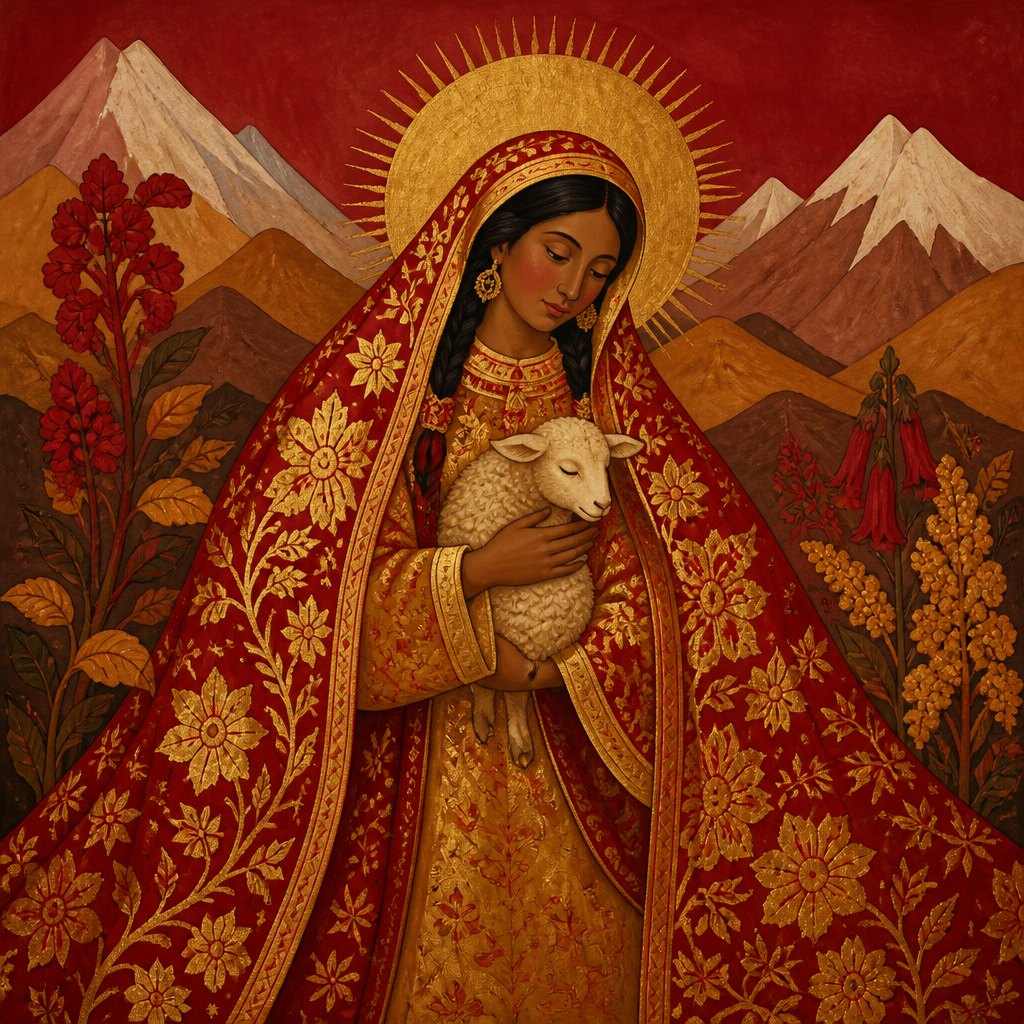 AI-generated
Work en plein air
Paint in the light of Cusco
This example was generated from a prompt like: “A devotional Andean figure in flowing robes decorated with gold-leaf brocade patterns, set against a flattened background of stylized mountains and native flowers, painted in deep cochineal red and warm ochre tones.”
Open the Cusco Art Style generator →The place today
The Museo del Arzobispado de Cusco and Cusco Cathedral hold major surviving canvases including the Corpus Christi series, while many colonial churches across the city still display original Cusco School altarpieces in situ. The San Blas neighborhood remains a working center for painters and restorers continuing gold-leaf and canvas techniques associated with the school, producing both restoration work and new paintings for collectors and churches.
Compose your own
Build the image around a devotional figure set against flattened, patterned space rather than deep perspective. Apply gold leaf directly onto painted drapery in repeating brocade patterns to suggest embroidered fabric catching light. Use deep cochineal reds and warm ochres for garments, and let mountains, native birds, or Andean flowers fill the background rather than an atmospheric landscape. Keep faces and gestures gentle and formal, closer to devotional icon than dramatic Baroque movement. If including a banquet or procession scene, insert one recognizably Andean detail, local food, dress, or a mountain silhouette, into an otherwise standard European religious composition.
Frequently asked questions
What is the Cusco School?
A colonial painting tradition centered in Cusco, Peru, from roughly the late 1500s through the 1700s, in which indigenous and mestizo artists adapted European religious painting into a distinct style using gold-leaf ornament and Andean motifs.
Who founded the Cusco School?
No single founder; the Italian Jesuit Bernardo Bitti introduced Mannerist technique after arriving in 1583, and indigenous painters including Diego Quispe Tito developed it into a distinct regional workshop tradition over subsequent decades.
Why do the paintings have so much gold on the clothing?
The technique, called brocateado, applies gold leaf directly onto painted fabric to simulate embroidered brocade, a signature device that distinguishes Cusco School canvases from other colonial Latin American painting schools.
Are most Cusco School paintings signed?
No, the majority are anonymous workshop production made for church commissions across the Andes. Only a handful of painters, such as Diego Quispe Tito and Marcos Zapata, are individually documented and named in surviving records.