 Art
Art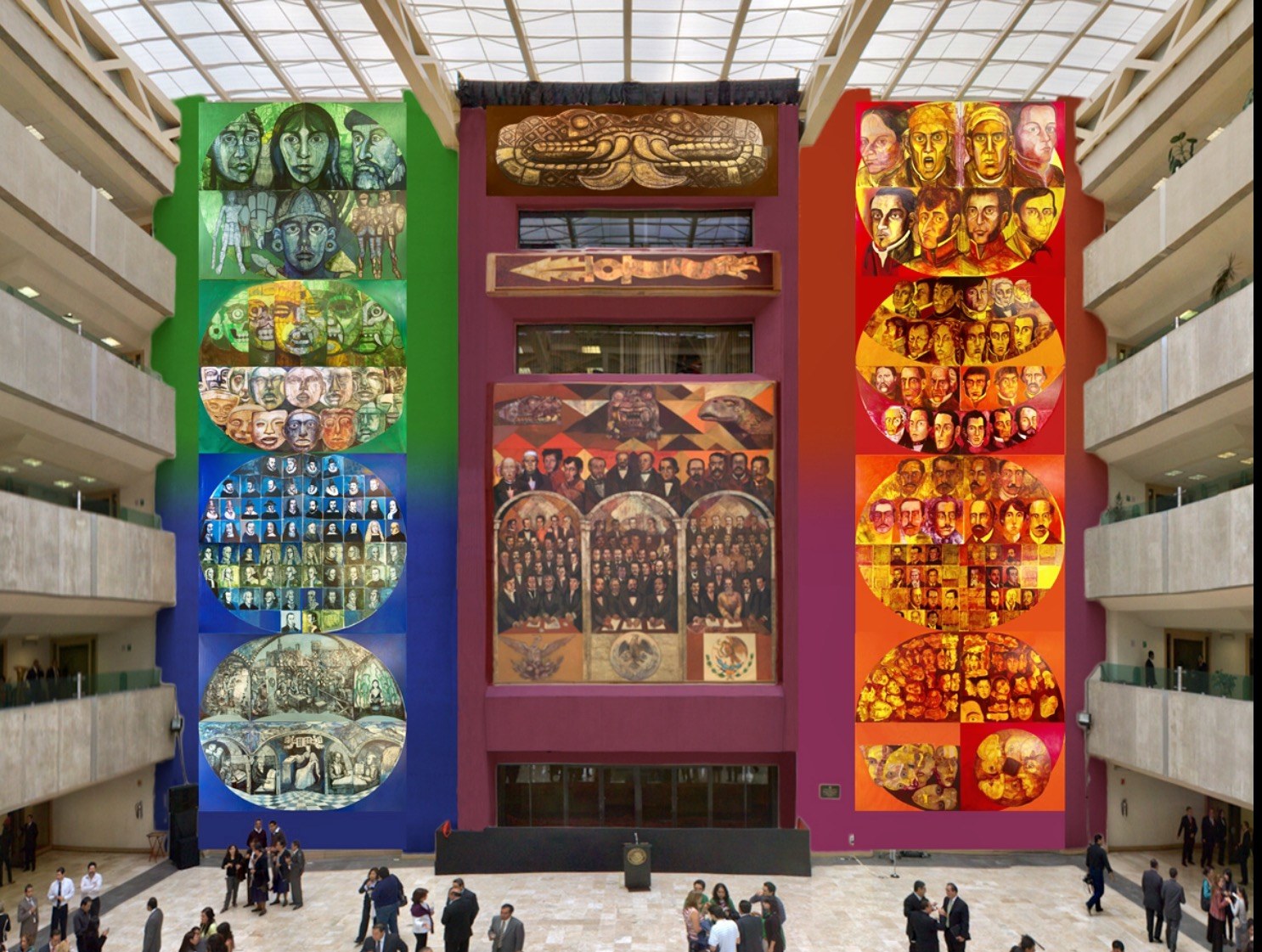
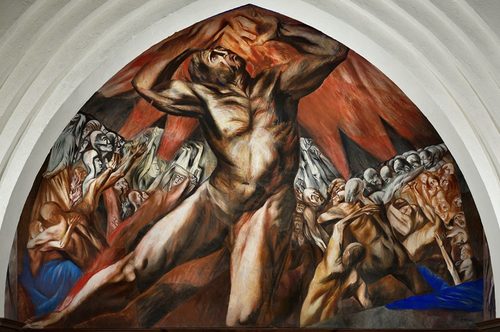
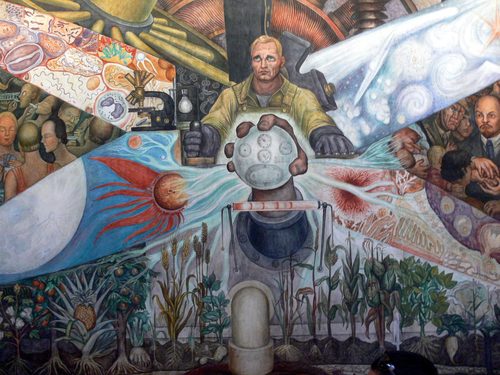
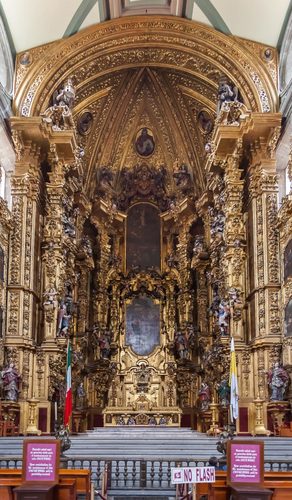
Mexico City's art history sits on top of Tenochtitlan, the Aztec capital founded in 1325 on an island in Lake Texcoco, whose Templo Mayor pyramid complex anchored the pre-Hispanic city. After the 1521 conquest, Spanish authorities rebuilt the city as the capital of the Viceroyalty of New Spain, constructing the Metropolitan Cathedral directly over the former sacred precinct between 1573 and 1813. Guild-trained viceregal painters such as Cristóbal de Villalpando and Miguel Cabrera supplied vast altarpieces and casta paintings for church and elite patrons, while the Royal Academy of San Carlos, founded in 1781, formalized European academic training. The 1910–1920 Revolution broke the old patronage system, and from 1922 the postrevolutionary government commissioned fresco murals on public building walls, turning Mexico City into the origin point of twentieth-century muralism, a movement that used monumental public painting to narrate national and Indigenous history rather than serve private devotion.
What marks the region
Guild altarpiece production
Viceregal painters trained under the Spanish guild system, producing large multi-panel altarpieces collaboratively under a lead master's name and workshop.
Casta painting series
Multi-panel sets depicting family groups labeled by racial mixture, a genre specific to New Spain's colonial art market, produced mainly for elite and export buyers.
Churrigueresque gilded altarpieces
Dense estipite-column altarpieces covered in gold leaf, an 18th-century Baroque style reaching a particular extreme in Mexico City churches.
Fresco on public walls
1920s government-funded murals painted directly onto plaster in schools and government buildings, reviving true fresco technique at monumental civic scale.
History as public subject
Murals narrated national history, labor, and Indigenous heritage on building walls, addressing a general public rather than a private or religious patron.
Construction over Aztec foundations
Colonial and later buildings were repeatedly raised directly on top of Aztec temple foundations, physically layering successive eras of the city.
Local signatures
How to spot Mexico City art
- Eagle on a cactus with serpent
- → The Aztec founding myth of Tenochtitlan, still the national emblem and a recurring motif across the city's art eras.
- Feathered serpent motif
- → A pre-Hispanic deity form revived in 20th-century murals as a symbol of Indigenous heritage and continuity.
- Skeletal calavera figures
- → Death imagery rooted in Aztec ritual and colonial memento mori, later widely used in prints and mural painting.
- Estipite columns
- → Inverted-pyramid Baroque column form specific to 18th-century Mexico City gilded altarpieces.
- Labeled casta family groups
- → Multi-figure scenes ranking racial mixture, a colonial-specific pictorial genre unique to New Spain.
- Workers and tools in mural scenes
- → Imagery glorifying labor, land, and revolution, central to 20th-century public wall painting commissions.
The story
Tenochtitlan was founded in 1325 on a lake island and grew into the Aztec Empire's capital, centered on the Templo Mayor pyramid complex. Spanish forces conquered the city in 1521, and colonial authorities rebuilt it as the seat of the Viceroyalty of New Spain, beginning the Metropolitan Cathedral in 1573 over the former sacred precinct, completed in 1813. Through the 1600s and 1700s, painters including Cristóbal de Villalpando, Juan Correa, and Miguel Cabrera supplied cathedral, convent, and elite commissions, while the Royal Academy of San Carlos opened in 1781 to formalize academic training. The 1910–1920 Revolution disrupted old patronage networks, and starting in 1922 the government under education minister José Vasconcelos commissioned public fresco murals at the Escuela Nacional Preparatoria and later the Secretaría de Educación Pública, launching the muralist movement. In 1978, utility workers uncovered the Coyolxauhqui stone, leading to the excavation of the Templo Mayor site beginning that year.
Masterpieces of the place
| Work | Artist | Date | Why it matters |
|---|---|---|---|
| Coatlicue Statue | Unknown Aztec sculptor | c. 1500 | Monumental basalt goddess figure found near the Zócalo, now in the Museo Nacional de Antropología. |
| Altar de los Reyes | Jerónimo de Balbás | 1718–1737 | Gilded Churrigueresque altarpiece behind the main altar of the Metropolitan Cathedral. |
| Moses and the Brazen Serpent | Cristóbal de Villalpando | 1683 | Monumental Baroque canvas painted for a chapel of Puebla Cathedral. |
| Casta painting series | Miguel Cabrera | 1763 | Sixteen-panel set depicting colonial racial categories, now dispersed among museum collections. |
| La Trinchera (The Trench) | José Clemente Orozco | 1926 | Mural at the Escuela Nacional Preparatoria, part of the government mural program begun there in 1922 with Rivera's Creation. |
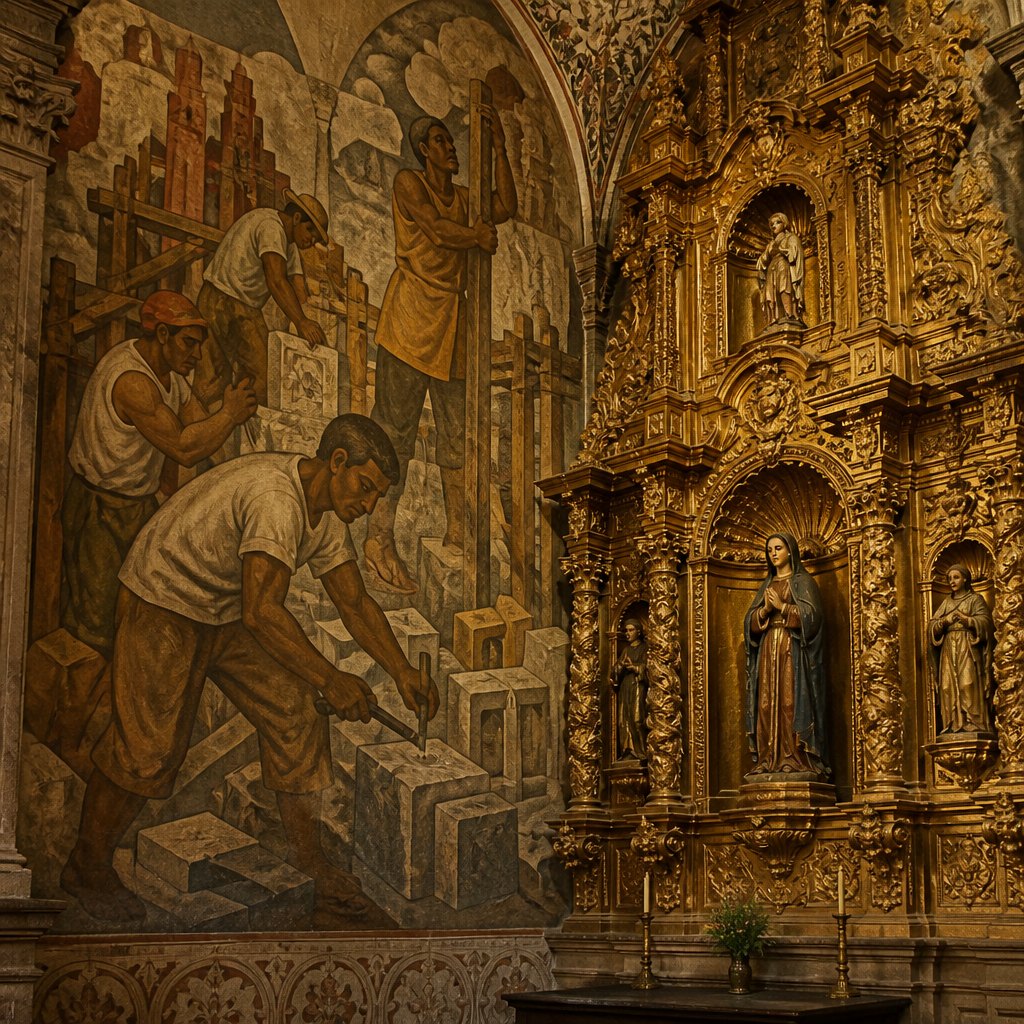 AI-generated
Work en plein air
Paint in the light of Mexico City
This example was generated from a prompt like: “A monumental public wall painting of laborers rendered in flat earth-toned fresco style, beside a gilded Baroque altarpiece with dense carved gold ornament in a colonial cathedral interior.”
Open the Mexico City Art Style generator →The place today
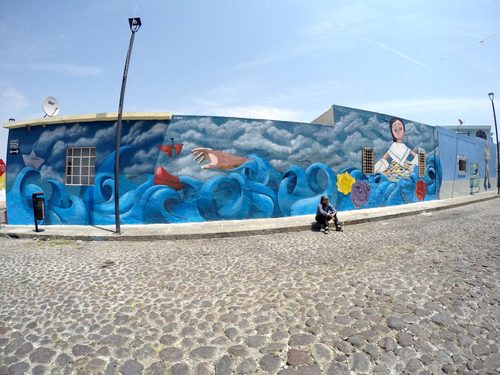
The Templo Mayor Museum and excavated ruins sit beside the Metropolitan Cathedral in the historic center, designated a UNESCO World Heritage Site in 1987. The Palacio Nacional and Bellas Artes preserve major mural cycles open to the public, while the Museo Nacional de Antropología holds Aztec sculpture including the Coatlicue and the Sun Stone. The Museo Franz Mayer and other collections preserve colonial-era painting. Public mural painting continues as an active civic tradition on walls throughout the city.
Compose your own
Decide which era to evoke and commit to its full visual system rather than mixing loosely. For an Aztec effect, use carved stone relief motifs like stepped pyramid forms, eagles, and serpents in low relief. For a colonial effect, use dark dramatic oil glazes, dense gold-leaf altarpiece framing, and Baroque figure grouping. For a muralist effect, use flat, blocky figures in an earth-toned palette, monumental scale, and worker or history themes painted with visible plaster-wall texture. Keep each era's palette and material logic separate and legible rather than blended into a single hybrid style.
Frequently asked questions
What survives of Aztec Tenochtitlan today?
The excavated ruins and museum of the Templo Mayor near the Metropolitan Cathedral, along with sculptures like the Coatlicue and Sun Stone in the Museo Nacional de Antropología.
What is a casta painting?
A colonial New Spain genre depicting family groups ranked by racial mixture, produced mainly in 18th-century Mexico City for elite and export markets.
Why is Mexico City central to muralism?
From 1922, postrevolutionary government commissions turned public building walls into large fresco cycles narrating national and Indigenous history, starting at the Escuela Nacional Preparatoria.
Where can viceregal-era paintings be seen?
Large Baroque canvases and altarpieces remain in the Metropolitan Cathedral and other historic churches, with further examples in the Museo Franz Mayer and Museo Nacional de Arte.