 Art
Art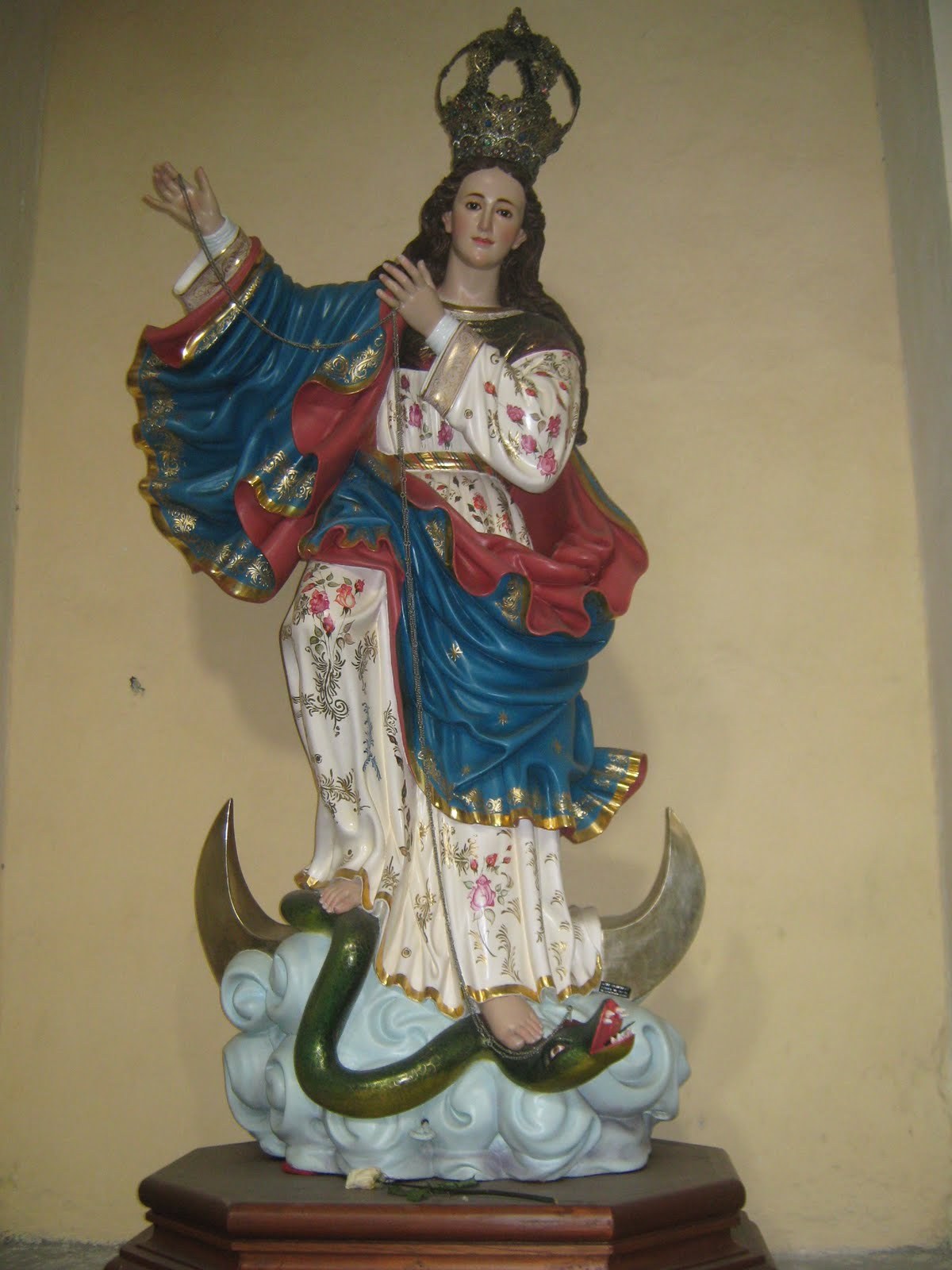
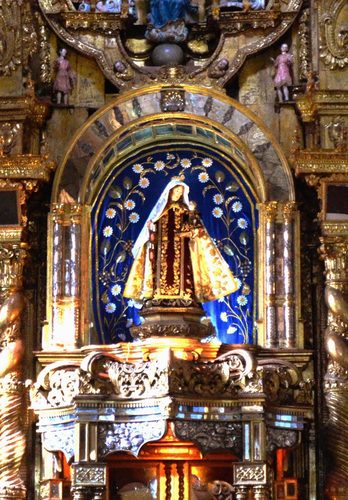
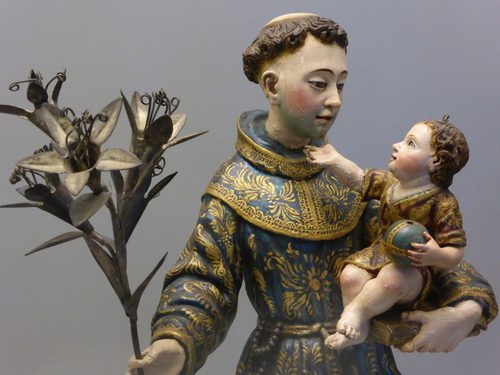
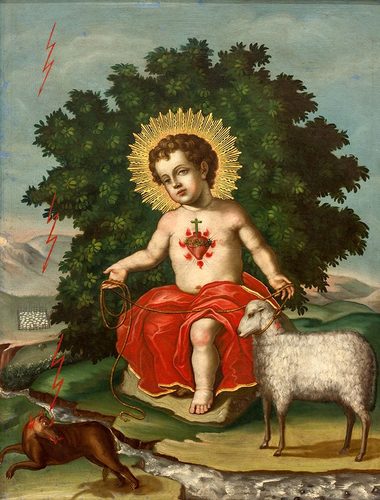
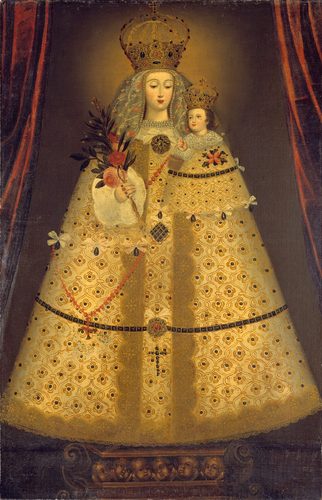
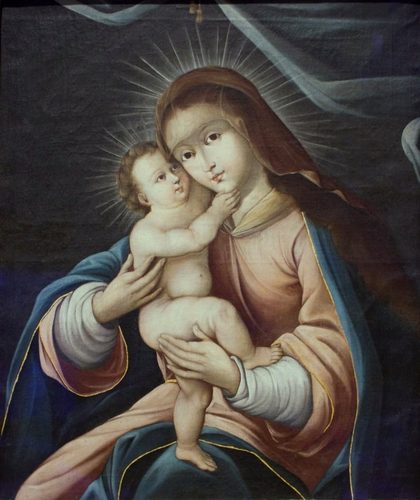
Quito art refers to the polychrome wood sculpture and painting produced in colonial Quito, in the Audiencia of Quito, from the mid-1500s through the late 1700s. Franciscan and Dominican convents founded soon after the city's 1534 refoundation trained Indigenous and mestizo artisans at institutions like the Colegio de San Andrés, blending European Baroque models with local sensibility. Cedar, abundant in the Andean foothills, became the standard carving wood, finished with a translucent flesh-toned glaze called encarnación and gold leaf scratched into brocade patterns called estofado. Franciscan, Jesuit, and Dominican patrons wanted processional figures dramatic enough to move penitents during Holy Week, so sculptors added glass eyes, human hair, and articulated limbs for dressing in real cloth. Because Quito had no major mining wealth of its own but sat on Andean trade routes, finished sculptures became a genuine export commodity, carried to Lima, Bogotá, Potosí, and occasionally Spain, spreading the school's technical signature across the Viceroyalty of Peru.
What marks the region
Encarnación flesh painting
Layered, translucent oil glazes over gessoed wood built up skin tones with a soft glow, distinguishing Quito figures from flatter painted sculpture elsewhere in the Andes.
Estofado gilding
Gold leaf applied over a painted robe, then scratched through with a fine tool to reveal color beneath, imitating the pattern of woven brocade fabric.
Glass eyes and real hair
Processional figures received inset glass eyes, human or animal hair, and ivory teeth, pushing devotional realism toward the theatrical for Holy Week crowds.
Articulated, dressable bodies
Many figures had jointed limbs designed to be undressed and re-clothed in real fabric garments for annual processions rather than carved robes alone.
Guild workshop training
The Colegio de San Andrés trained Indigenous and mestizo artisans collectively, so much surviving work is anonymous or attributed to a workshop rather than one master.
Export packaging
Finished sculptures were crated for mule and ship transport along Andean trade routes, a commercial habit that shaped their compact, sturdy construction.
Local signatures
How to spot Quito art
- Winged, serpent-treading Virgin
- → The Apocalyptic Woman standing on a dragon or serpent, a composition associated with Bernardo de Legarda that became a Quito trademark.
- Glass tears on carved faces
- → Inset glass drops used on penitent or grieving figures to heighten emotional realism during Holy Week processions.
- Andean facial features on saints
- → Sculptors, notably Caspícara, gave devotional figures Indigenous features, embedding local identity into imported iconography.
- Scratched-gold floral brocade
- → Estofado patterns scraped through gold leaf, marking painted robes as luxury textile substitutes rather than plain drapery.
- Jointed, dressable limbs
- → Articulated wooden bodies built to wear real cloth garments, a practical sign of a figure's processional function.
- Hollow cedar core
- → Lightweight hollow-carved cedar construction, allowing large figures to be carried through city streets.
The story
Quito was refounded as a Spanish city in 1534, and the Franciscan convent of San Francisco, begun in 1535, became the earliest major art-training center in South America. The Colegio de San Andrés, established in 1551, taught Indigenous and mestizo artisans European painting and carving techniques. By the mid-1600s the painter Miguel de Santiago was producing dramatic oil cycles for the Convento de San Agustín, while sculptor Bernardo de Legarda, active until his death in 1773, created the winged Virgin design that became a lasting civic emblem. The gilded interior of the Jesuit church of La Compañía de Jesús, worked on from 1722 and largely finished by 1765, marked the school's decorative peak. Manuel Chili, known as Caspícara, an Indigenous sculptor active in the later 1700s, brought Andean facial features into mainstream devotional carving. Ecuadorian independence in 1822 reduced church commissions sharply, and the school's output slowed as patronage shifted toward secular institutions.
Masterpieces of the place
| Work | Artist | Date | Why it matters |
|---|---|---|---|
| Virgin of Quito | Bernardo de Legarda | 1734 | Winged, serpent-treading Virgin on the main altar of San Francisco, later enlarged as the city's hilltop landmark statue. |
| Life of Saint Augustine cycle | Miguel de Santiago | 1656 | Dramatic oil paintings for the Convento de San Agustín in dense Baroque chiaroscuro. |
| Assumption of the Virgin | Manuel Chili (Caspícara) | c. 1775 | Polychrome wood sculpture noted for Andean facial features and lifelike glass eyes. |
| Main altarpiece | Unknown Quito guild artisans | 1722–1765 | Fully gilded Baroque interior of La Compañía de Jesús, the school's most concentrated display of estofado work. |
| Christ of the Column | Manuel Chili (Caspícara) | c. 1780s | Polychrome figure of the scourged Christ bound to a column, used in Holy Week devotion. |
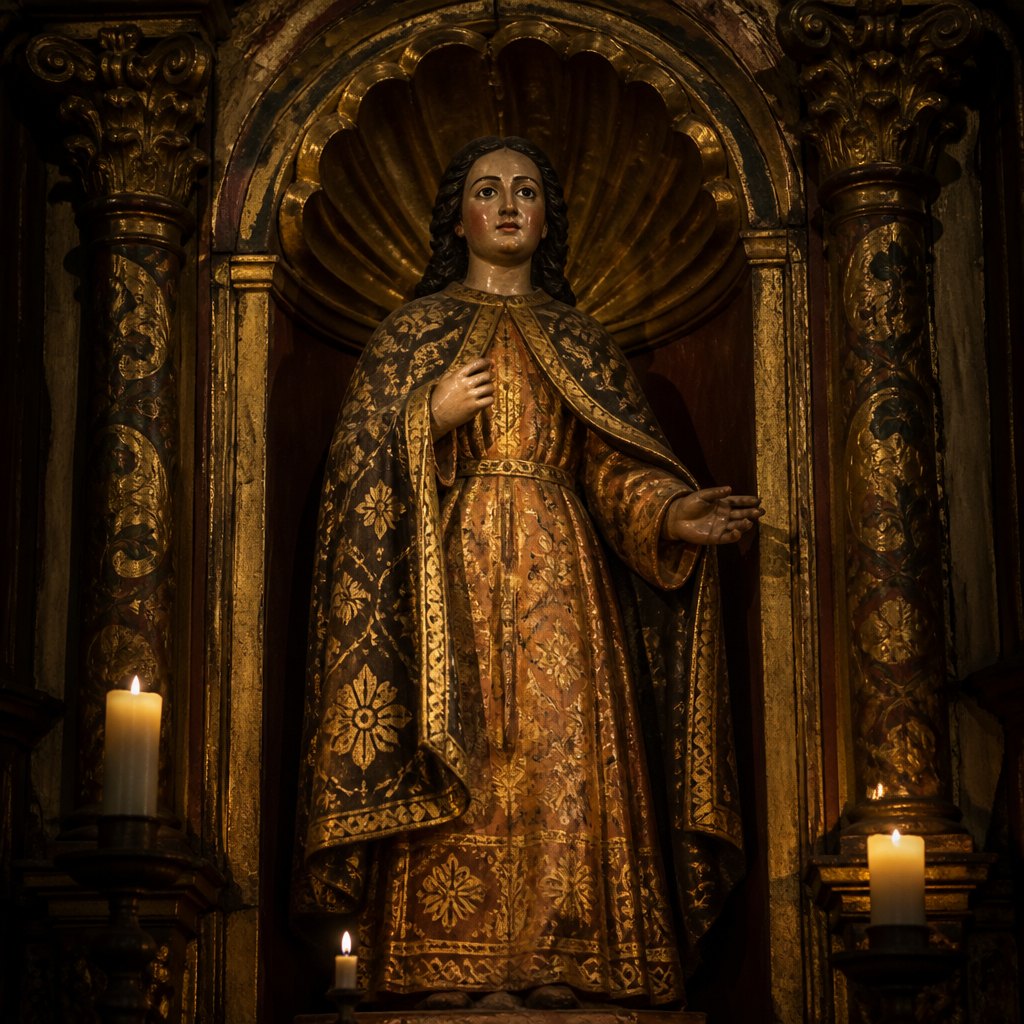 AI-generated
Work en plein air
Paint in the light of Quito
This example was generated from a prompt like: “A gilded wooden altar niche holding a carved robed figure with glass eyes and gold-leaf sgraffito fabric patterns, set in dramatic candlelit shadow typical of Andean colonial workshops.”
Open the Quito Art Style generator →The place today
Quito's colonial center, designated a UNESCO World Heritage Site in 1978, still holds the school's key monuments in situ: the churches of San Francisco and La Compañía de Jesús retain their original altarpieces and gilded interiors. The Museo Nacional del Arte Colonial and the Museo Fray Pedro Gocial display sculpture and painting by Legarda, Santiago, and Caspícara. Woodcarving workshops continue in and around Quito, particularly in San Antonio de Ibarra, keeping cedar-carving skills active as a living regional craft.
Compose your own
Begin with a carved cedar figure rather than flat panel, keeping folds deep enough to catch dramatic light. Paint flesh in several thin translucent glazes rather than one flat tone, aiming for a soft inner glow. Apply gold leaf to robes, then scratch fine repeating patterns through it to expose color beneath, mimicking woven brocade. Add glass eyes or tears for emotional intensity, and consider a jointed pose suited to real fabric dressing. Keep the palette dark and dramatic, dominated by blacks, deep reds, and gold, with candlelit shadow rather than even daylight, and let facial expression carry the emotional weight of the piece.
Frequently asked questions
What is the Quito School?
A colonial artistic tradition centered in Quito from the mid-1500s to the late 1700s, producing polychrome wood sculpture and painting for churches across the Andes, taught largely through convent-run workshops.
What makes Quito sculpture distinct?
The encarnación technique for lifelike flesh tones, scratched gold-leaf estofado robes, inset glass eyes, and articulated limbs built for dressing in real fabric during processions.
Who were the school's most celebrated artists?
Painter Miguel de Santiago, sculptor Bernardo de Legarda, who designed the winged Virgin of Quito, and Manuel Chili, known as Caspícara, an Indigenous sculptor active in the late 1700s.
Where can Quito School art be seen today?
In the churches of San Francisco and La Compañía de Jesús in Quito's historic center, and at the Museo Nacional del Arte Colonial and Museo Fray Pedro Gocial.