 Art
Art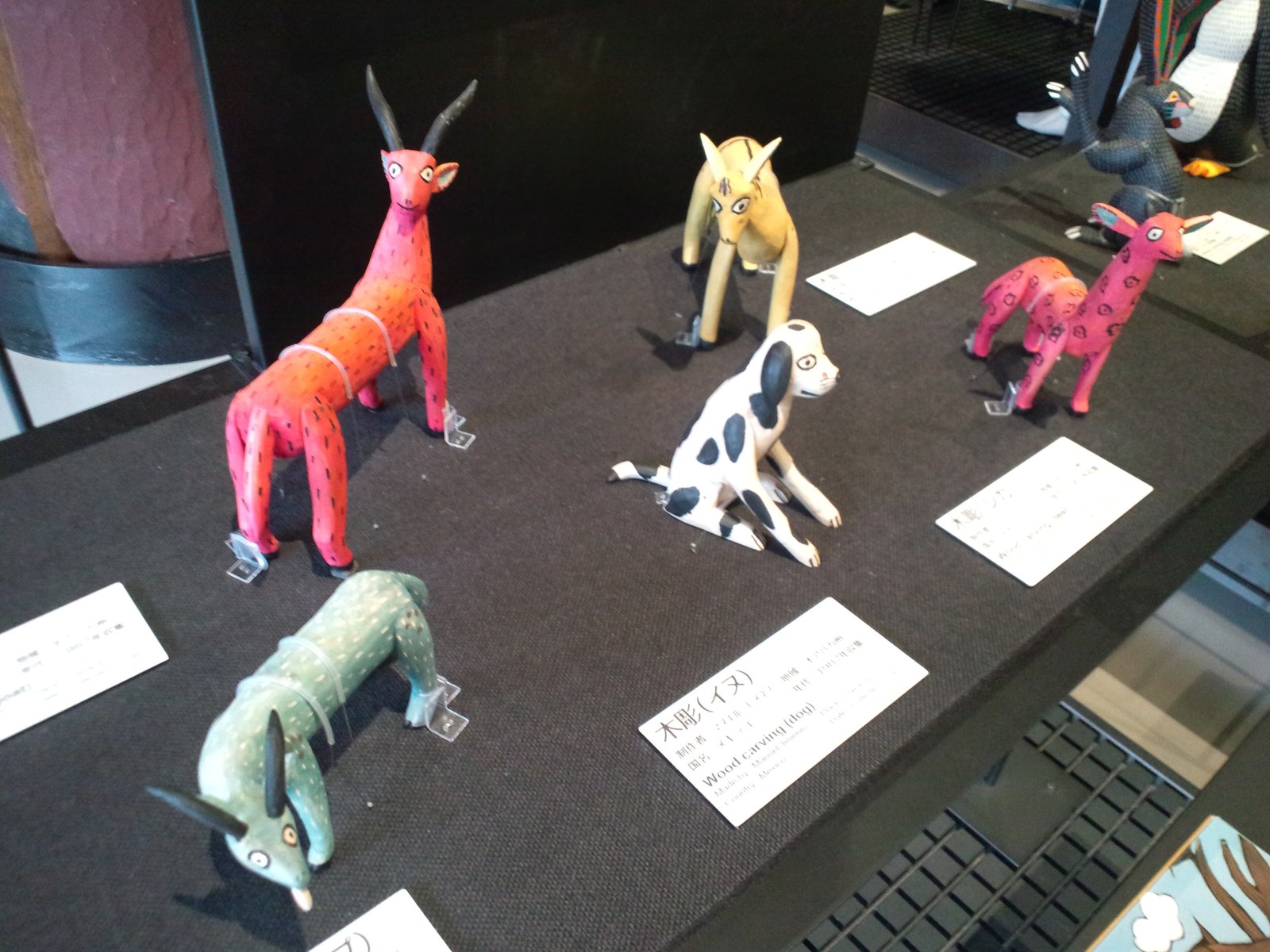
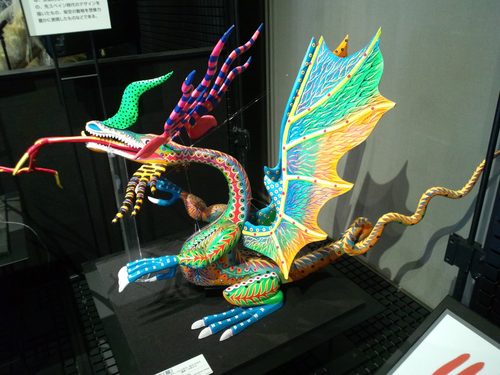
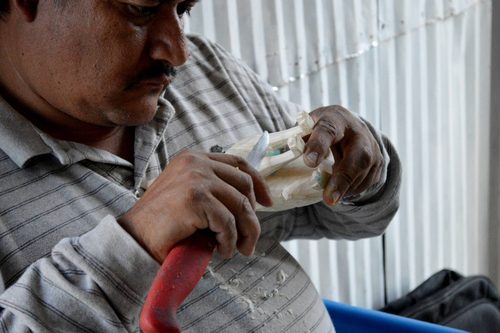
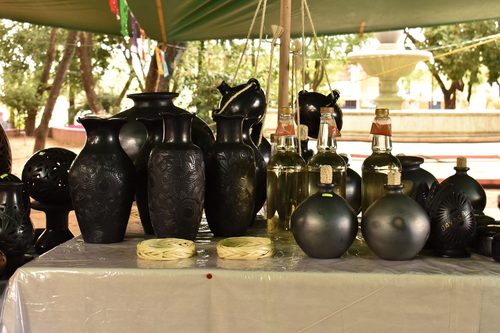
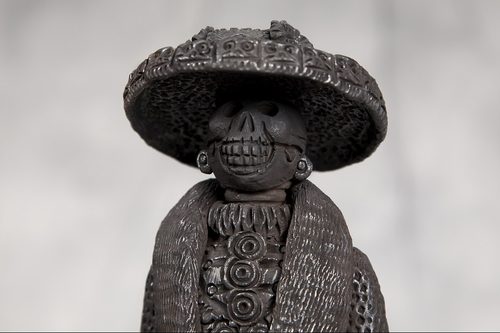
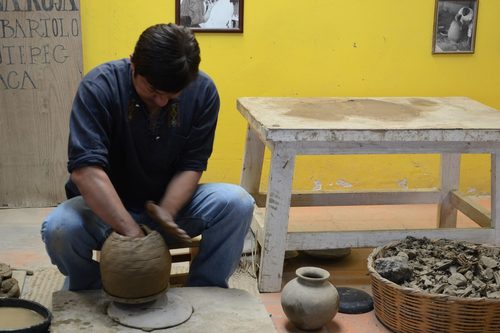
Oaxaca's art history runs from the Zapotec capital of Monte Albán, built from around 500 BCE and occupied for over a thousand years, through Spanish colonization from 1529, into craft traditions still practiced in surrounding villages today. Monte Albán's hilltop plazas produced carved stone reliefs and painted funerary urns, while nearby Mitla developed intricate stone mosaic facades. Mixtec artisans, who later reused Zapotec tombs, produced fine goldwork and painted manuscripts, part of a broader Oaxacan strength in small-scale, highly worked objects rather than monumental painting. Spanish Dominican friars built the church of Santo Domingo de Guzmán from the 1570s, its interior covered in gilded stucco relief by the 1600s, funded by the valley's cochineal dye trade, a red pigment made from a local insect that became one of colonial Mexico's most valuable exports. That same natural-dye knowledge survives in village weaving today, alongside pottery and wood-carving crafts that carry pre-Hispanic motifs into contemporary studios.
What marks the region
Pre-Hispanic motif continuity
Step-fret patterns, deity faces, and animal forms from Zapotec and Mixtec art persisted through colonial ornament into present-day textiles and pottery.
Natural-dye textiles
Hand-spun wool dyed with cochineal insect red, indigo blue, and wild marigold yellow, woven on backstrap or European-introduced pedal looms.
Burnished, unglazed pottery
Clay from San Bartolo Coyotepec rubbed with a quartz stone before firing to achieve a metallic black sheen without any applied glaze.
Copper-glazed green earthenware
Atzompa village pottery fired with a copper-oxide lead glaze producing a distinctive jade-green surface on utilitarian and decorative ware.
Carved copal-wood figures
Soft copal wood carved into fantastical hybrid animal forms, then painted in dense repeating dot and line patterns by a separate painter.
Dense Baroque church relief
Dominican-era interiors covered floor to ceiling in gilded stucco vegetal and figural ornament, leaving almost no plain wall surface.
Local signatures
How to spot Oaxaca art
- Danzante relief figures
- → Contorted carved human figures on Monte Albán stone slabs, generally understood to depict captives or ritual performers.
- Effigy funerary urns
- → Ceramic urns modeled with deity or ancestor faces, placed in tombs as offerings marking status and belief.
- Cochineal red
- → An insect-derived dye central to Zapotec and Mixtec textile identity and a major colonial-era export commodity.
- Greca step-fret pattern
- → Interlocking geometric motif from Mixtec and Zapotec stonework, repeated across weaving, pottery, and architecture.
- Hybrid animal creatures
- → Composite carved animal forms in modern wood-carving craft, extending older regional imagery of transformation and mixed beings.
- Jade-green copper glaze
- → A surface color unique to Atzompa pottery, distinguishing it at a glance from black or unglazed Oaxacan ceramics.
The story
Monte Albán rose as the Zapotec capital around 500 BCE and remained a major center for over a millennium before its decline around 800 CE, leaving carved stelae and monumental plazas. Mixtec groups later reused its tombs; Tomb 7, opened by archaeologist Alfonso Caso in 1932, yielded gold and jade objects now central to Oaxaca's museum collections. Spanish colonization began in 1529, and Dominican friars built the church and convent of Santo Domingo de Guzmán, its stucco interior gilded through the 1600s using wealth from the cochineal dye trade. Weaving villages such as Teotitlán del Valle maintained pre-Hispanic textile knowledge under colonial and later national rule. In the mid-1900s, potters in San Bartolo Coyotepec developed the burnished technique that gave Oaxacan black pottery its now-signature glossy surface, while wood-carving villages including Arrazola and San Martín Tilcajete adapted a Mexico City papier-mâché tradition into carved wooden creatures from the mid-1900s onward.
Masterpieces of the place
| Work | Artist | Date | Why it matters |
|---|---|---|---|
| Danzante stone reliefs | Unknown Zapotec sculptors | c. 500–300 BCE | Carved stone slabs of contorted human figures set into Monte Albán's early platforms. |
| Tomb 7 gold pectoral | Unknown Mixtec goldsmith | c. 1350–1500 | Gold and turquoise ornament from the Monte Albán tomb treasure excavated in 1932. |
| Santo Domingo gilded vault | Unknown craftsmen | 17th century | Dense gold stucco relief ceiling of the former Dominican convent church in Oaxaca city. |
| Zapotec funerary urn | Unknown | c. 200–700 CE | Ceramic effigy urn modeled with a deity face, placed as a tomb offering. |
| Mixtec pictorial manuscript | Unknown | 16th century | Painted genealogical and historical record continuing pre-Hispanic manuscript conventions. |
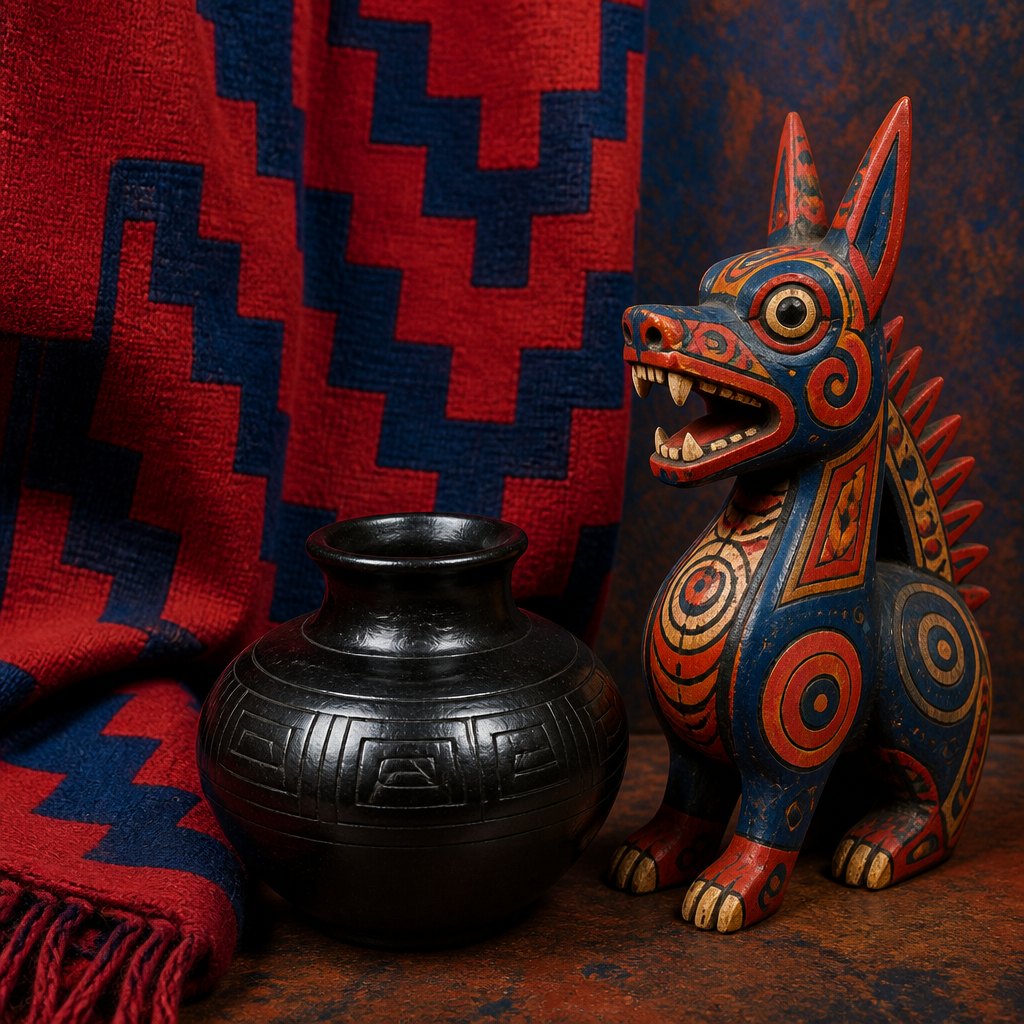 AI-generated
Work en plein air
Paint in the light of Oaxaca
This example was generated from a prompt like: “A hand-woven wool textile in deep cochineal red and indigo with interlocking step-fret patterns, beside a glossy black burnished clay vessel and a brightly painted carved wooden creature.”
Open the Oaxaca Art Style generator →The place today
The former convent of Santo Domingo now houses the Museo de las Culturas de Oaxaca, displaying the Tomb 7 treasure alongside Zapotec and Mixtec objects. Monte Albán and Mitla remain open archaeological sites above the city. Teotitlán del Valle weavers continue natural-dye wool weaving for public sale, San Bartolo Coyotepec sustains burnished black pottery workshops, and Santa María Atzompa keeps green-glazed pottery in active production. Oaxaca city's markets and craft villages function as working centers for these traditions rather than museum pieces alone.
Compose your own
Build compositions around geometric step-fret borders and repeating pattern rather than single-point perspective. Use deep cochineal red and indigo blue on woven wool or paper as the dominant palette, paired with unglazed black or copper-green ceramic forms. For pottery, keep surfaces smooth and matte-to-glossy rather than painted, relying on burnishing or a copper glaze for color. For carved wooden forms, favor fantastical composite animal shapes covered in dense small dot and line patterns painted in saturated color. Set any architectural backdrop as heavily gilded stucco relief with vegetal and figural ornament covering the full surface.
Frequently asked questions
What is barro negro?
Burnished black pottery from San Bartolo Coyotepec, Oaxaca, achieved by rubbing unfired clay with a quartz stone rather than applying glaze, developed into its glossy modern form in the mid-1900s.
What are alebrijes?
Fantastical carved and painted wooden creatures, a craft that spread from a Mexico City papier-mâché tradition into Oaxacan village wood-carving workshops from the mid-1900s onward.
What is Oaxaca's Zapotec heritage?
An ancient civilization centered at Monte Albán from around 500 BCE to 800 CE, whose stone carving, urns, and step-fret patterns still influence regional textiles and pottery.
Where is the Tomb 7 treasure displayed?
Gold, jade, and shell objects excavated from Monte Albán's Tomb 7 in 1932 are held at the Museo de las Culturas de Oaxaca, in the former Santo Domingo convent.