 Art
Art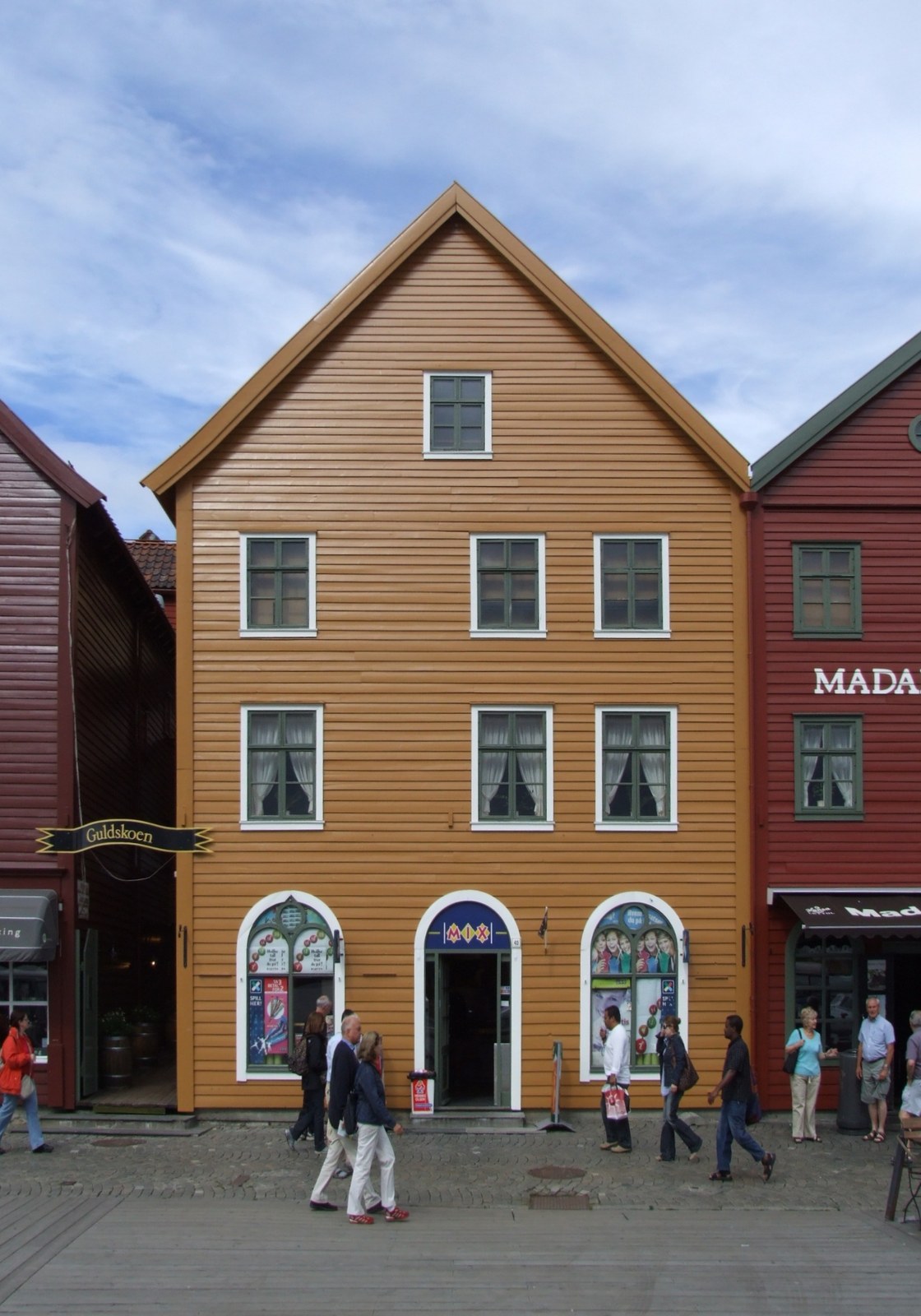
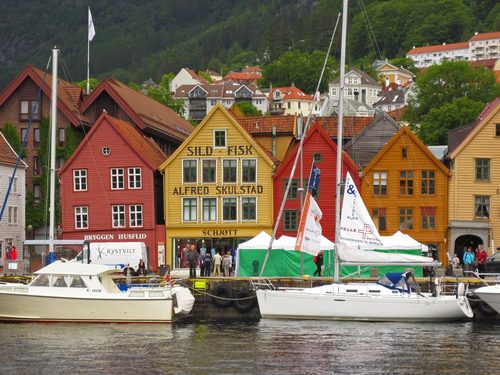
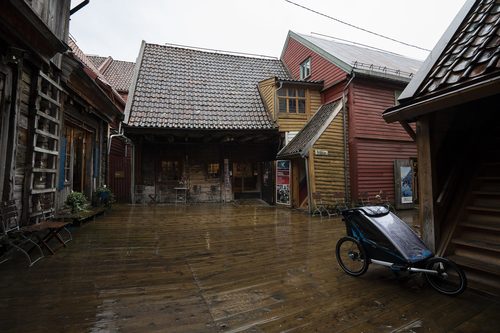
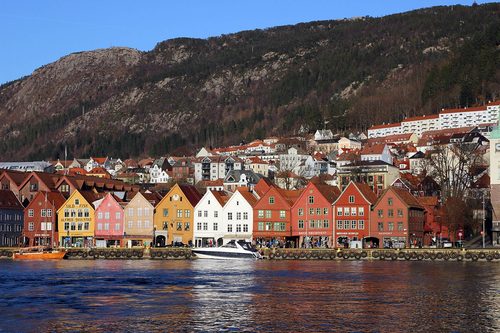
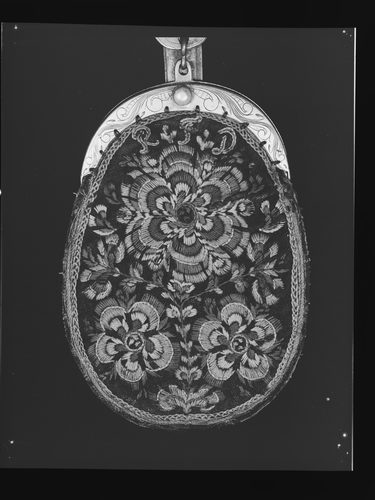
Bergen's identity as an art and craft center comes from its centuries as Norway's main trading port. Founded around 1070, it became the country's medieval capital, and King Håkon Håkonsson built the stone banqueting hall Håkonshallen there between 1247 and 1261. From the 1360s, German merchants of the Hanseatic League operated a trading post, or Kontor, at Bryggen, exporting dried cod, or stockfish, from northern Norway to Europe. Fires repeatedly destroyed the wooden wharf, most severely in 1476 and 1702, and each rebuilding preserved the same narrow, gable-fronted timber layout that survives today as a UNESCO World Heritage Site. The Kontor operated until 1754, leaving behind imported Gothic art such as the carved altarpiece at St Mary's Church, brought from Lübeck. Bergen's museums, including the Hanseatic Museum and Bryggens Museum, also document Norwegian rural folk craft, particularly rosemaling, the painted floral scrollwork found on chests, cupboards, and walls across western Norway's fjord valleys, much of which passed through Bergen as a regional trade and cultural hub.
What marks the region
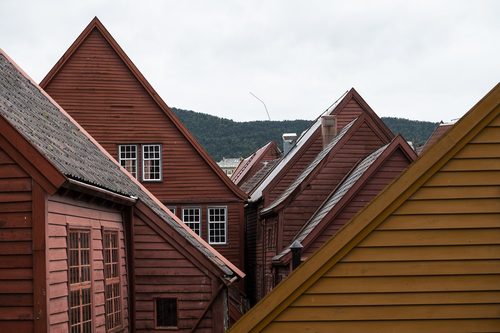
Timber gable warehouses
Narrow wooden buildings with steep gabled fronts facing the harbor for direct loading of goods from boats, rebuilt repeatedly in the same footprint after fires.
Stockfish-driven trade art
Nearly all Bryggen construction and decoration served the dried-cod export trade, making the warehouses themselves the region's primary artifact.
Imported Gothic ecclesiastical work
Altarpieces and religious carving arrived via Hanseatic trade routes from Lübeck and northern Germany rather than being produced locally.
Rosemaling floral scrollwork
Rural West Norwegian decorative painting used curling floral and leaf patterns in bright colors on furniture, chests, and ceiling boards.
Communal assembly rooms
Hanseatic merchants maintained shared meeting halls, the Schøtstuene, decorated plainly but built for collective trading life rather than private display.
Stone royal halls
Medieval royal architecture in Bergen used stone rather than the timber common elsewhere in Norway, marking sites of state ceremony.
Local signatures
How to spot Bergen art
- Rosemaling C and S scrolls
- → Curling acanthus-derived scrollwork in red, blue, and gold, the core decorative vocabulary of Norwegian rural painted furniture.
- Gabled wharf facades
- → Steep, narrow wooden gable ends facing the harbor, Bergen's most recognizable architectural signature.
- Stockfish drying racks
- → Wooden frames for drying cod, appearing in trade imagery as the literal source of Bergen's historic wealth.
- Carved ship weathervanes
- → Small metal or wood ship silhouettes atop gables, marking a building's connection to maritime trade.
- Hanseatic merchant marks
- → Individual merchant symbols carved or painted on warehouse doors, used to identify goods and trading rights at Bryggen.
- Gilded winged altarpiece
- → Imported German Gothic carved and gilded altarpieces, evidence of Hanseatic religious and artistic influence on the city.
The story
Bergen was founded around 1070 and served as Norway's medieval capital; King Håkon Håkonsson built the stone hall Håkonshallen between 1247 and 1261 for royal ceremony. German merchants established a Hanseatic Kontor at Bryggen from the 1360s, controlling the stockfish trade with northern Norway and importing continental goods and art, including the Gothic winged altarpiece still held at St Mary's Church, dated to the late 1400s. Fires destroyed the wharf repeatedly, notably in 1476 and 1702, and each time it was rebuilt in timber on its medieval plan. The Kontor was dissolved in 1754 as Norwegian merchants took over the trade directly. Bryggen was designated a UNESCO World Heritage Site in 1979 for its intact medieval-plan wooden architecture. Separately, rosemaling developed as a rural decorative painting tradition across West Norway's valleys from the 1700s, flourishing through the 1800s before declining with industrialization and later being revived as documented folk craft in regional museums.
Masterpieces of the place
| Work | Artist | Date | Why it matters |
|---|---|---|---|
| Håkonshallen | Unknown | 1247-1261 | Stone royal banqueting hall built for King Håkon Håkonsson, Bergen's principal medieval monument. |
| St Mary's Church altarpiece | Unknown, Lübeck workshop | c. 1475-1500 | A gilded Gothic winged altarpiece imported via Hanseatic trade routes. |
| Bryggen wharf houses | Unknown | rebuilt after 1702 | Rows of timber merchant warehouses standing on their original medieval footprint. |
| Schøtstuene assembly rooms | Unknown | 18th century | Communal Hanseatic merchant meeting halls, now part of the Hanseatic Museum. |
| Rosemaled bridal chest | Unknown | 18th-19th century | A painted wooden chest exemplifying West Norwegian floral decorative craft. |
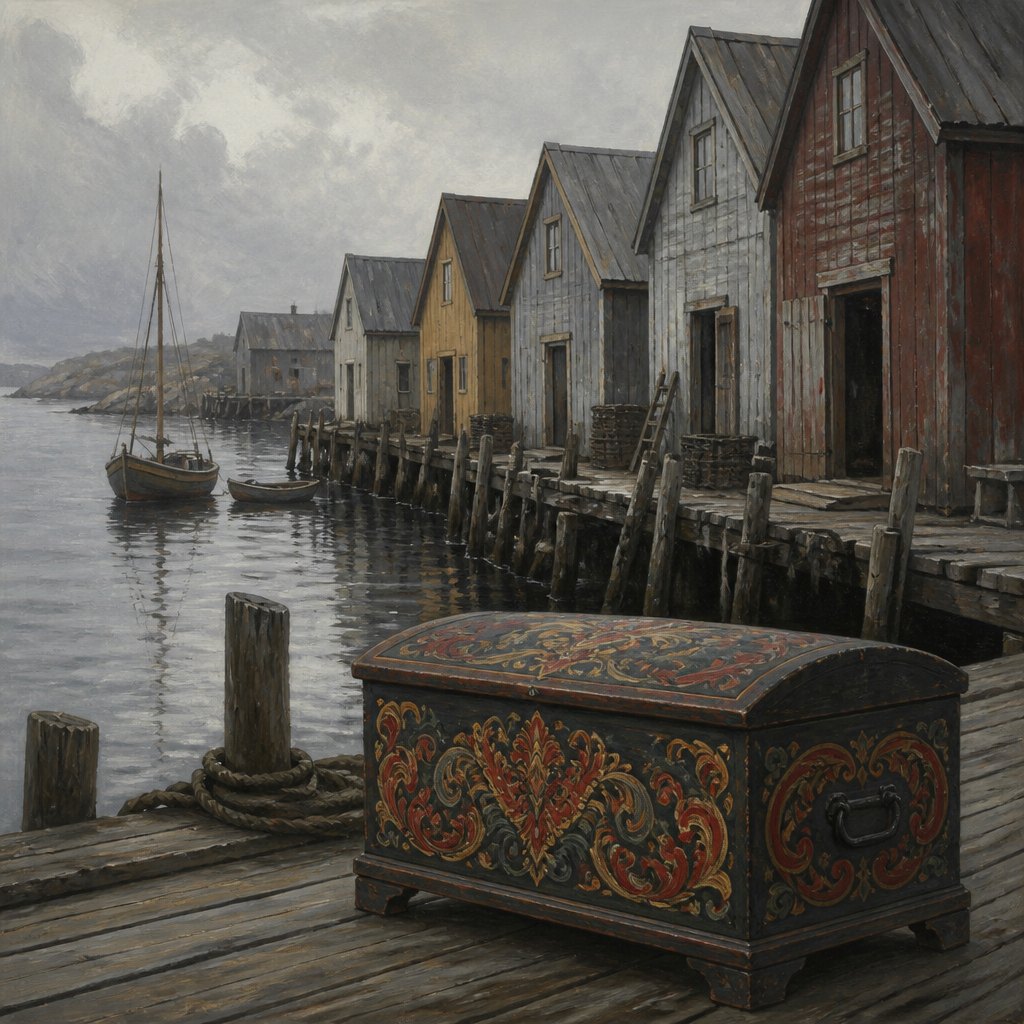 AI-generated
Work en plein air
Paint in the light of Bergen
This example was generated from a prompt like: “A row of weathered wooden wharf buildings with narrow gabled fronts along a grey harbor, a painted wooden chest in the foreground decorated with bright red and gold floral scrollwork, overcast coastal light.”
Open the Bergen Art Style generator →The place today
Bryggen's wharf houses now hold shops, workshops, and the Hanseatic Museum, which preserves an original merchant's living and trading quarters. Bryggens Museum displays archaeological finds from the medieval settlement, and Håkonshallen remains open for tours and events. KODE's museums hold wider Norwegian and Nordic collections. Rosemaling survives as a taught and juried folk craft, practiced and demonstrated at regional courses and craft fairs across western Norway rather than concentrated in Bergen alone.
Compose your own
Render weathered timber in narrow vertical gables, slightly uneven and tilted from centuries of settling, with visible wood grain and old paint. Keep the palette muted and coastal: grey skies, dark red and ochre wood stain, occasional white trim. For folk-craft elements, add rosemaling scrollwork in bright red, blue, and gold curling around a chest lid or door panel, keeping the pattern symmetrical and dense. Contrast the rough stone mass of a medieval hall against the lighter, repetitive rhythm of the wharf's wooden gables to capture Bergen's mix of royal stone and merchant timber.
Frequently asked questions
What is Bryggen in Bergen?
A row of wooden wharf warehouses built on a medieval Hanseatic trading site, rebuilt after fires and preserved on its original footprint. It has been a UNESCO World Heritage Site since 1979.
Did rosemaling originate in Bergen itself?
No. Rosemaling developed in rural valleys across western Norway from the 1700s. Bergen functioned as a regional trade and cultural hub where such folk craft was collected and documented rather than its point of origin.
What was the Hanseatic Kontor?
A trading post German merchants operated at Bryggen from the 1360s until 1754, controlling Norway's stockfish export trade and importing continental goods, including Gothic religious art.
Is Håkonshallen older than Bryggen's current buildings?
Yes. Håkonshallen was built in stone between 1247 and 1261, while today's Bryggen wharf houses date mainly from rebuilding after a 1702 fire, though on the same medieval layout.