 Art
Art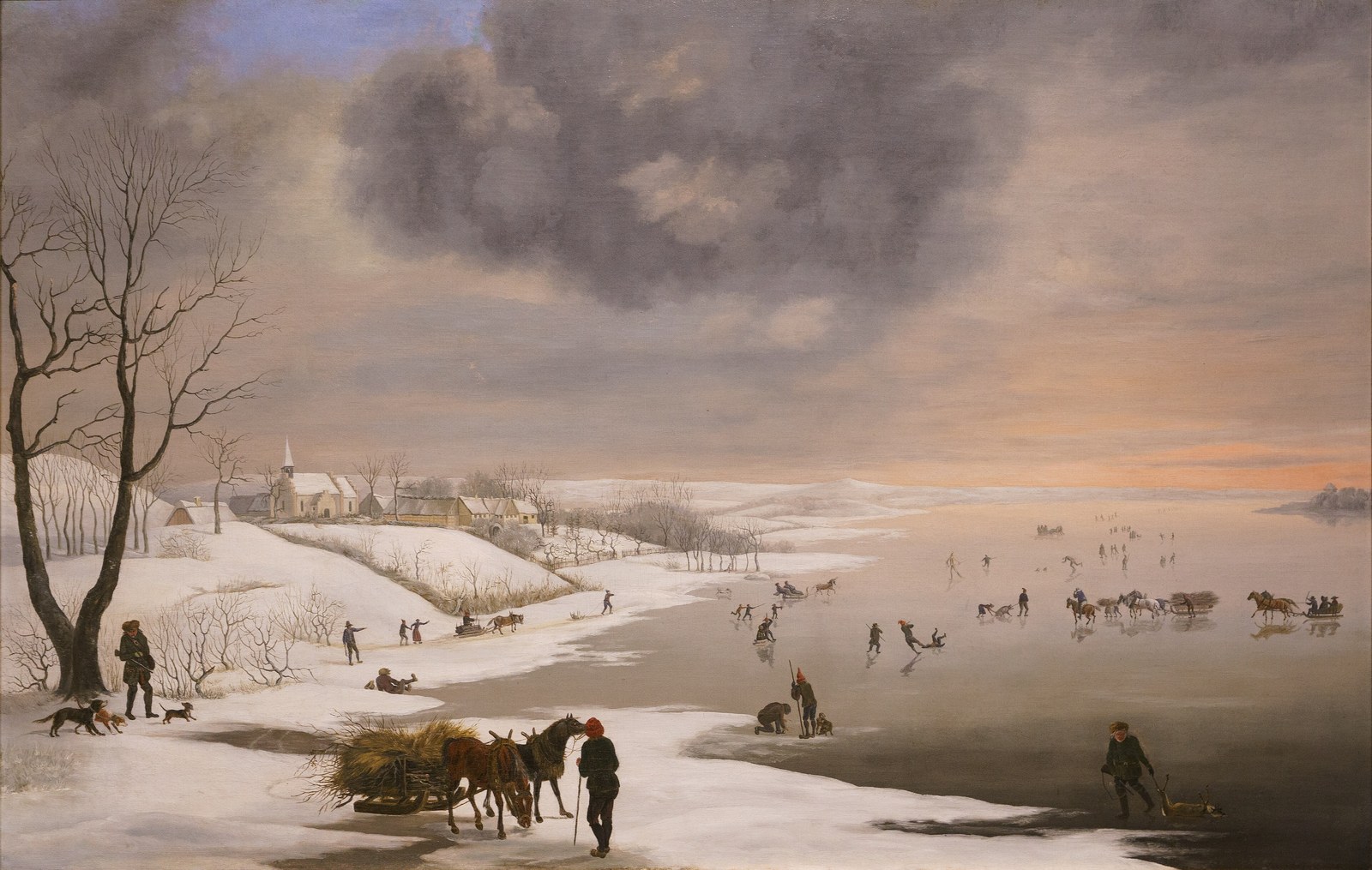
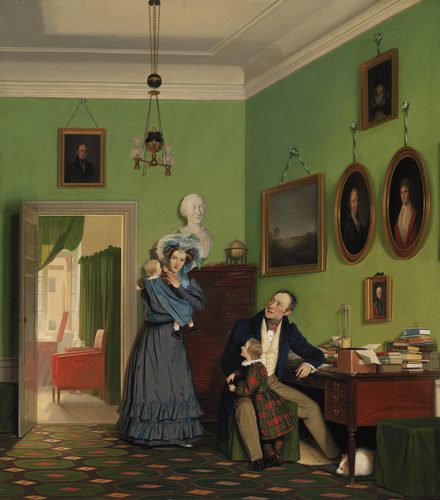
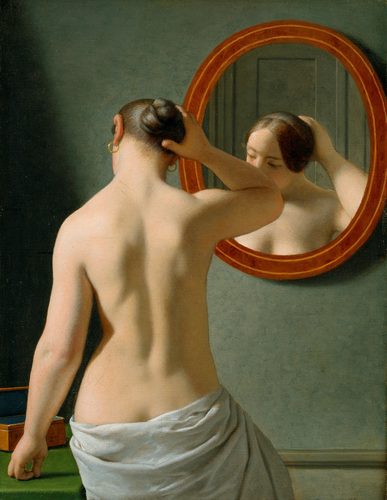
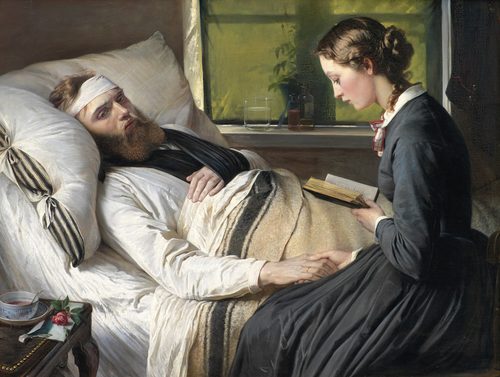
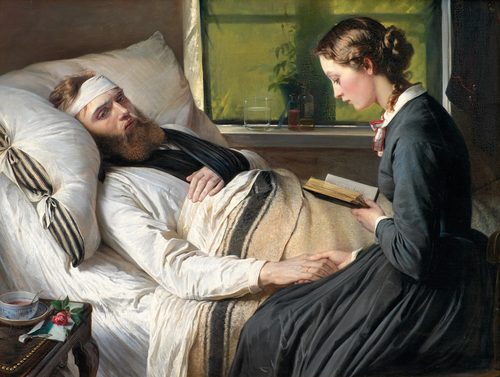
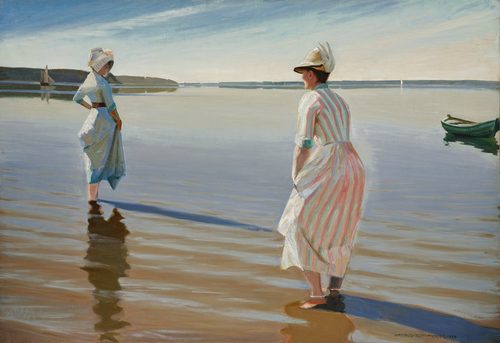
Copenhagen's Golden Age grew from national crisis rather than prosperity. After the British bombardment of the city in 1807 and Denmark's state bankruptcy in 1813, artists turned toward domestic subjects, coastal light, and the ordinary textures of Danish life instead of grand history painting. The Royal Danish Academy of Fine Arts, founded in 1754, became the engine of this shift once painter Christen Wilhelm Eckersberg returned from study in Paris and Rome and took up a professorship in 1818, teaching students to observe perspective and natural light with near-scientific precision. His students, including Christen Købke and Constantin Hansen, applied that method to modest views of courtyards, harbors, and family interiors bathed in cool Nordic daylight. Alongside painting, sculptor Bertel Thorvaldsen built an international neoclassical career in Rome before returning his collection to Copenhagen in 1838, and the Royal Copenhagen porcelain manufactory, founded in 1775, supplied the court with hand-painted botanical services.
What marks the region
Academy-trained realism
Eckersberg's teaching at the Royal Academy from 1818 stressed precise perspective and direct observation of light, producing a generation of painters who worked from life rather than convention.
Everyday domestic subjects
Golden Age painters favored courtyards, harbors, and family interiors over history or myth, treating ordinary Danish middle-class life as a worthy subject in its own right.
Cool coastal light
Scenes are lit by the pale, even daylight of the Øresund coast, giving Golden Age painting a clarity distinct from the warmer tonal range of southern European schools.
Neoclassical sculpture in marble
Thorvaldsen modeled figures on Greco-Roman prototypes, working out designs in Rome before having them carved in marble, keeping Danish sculpture tied to classical antiquity.
Hand-painted royal porcelain
Royal Copenhagen's painters worked from botanical illustration to decorate services like Flora Danica, treating each plate as an individually observed specimen rather than a repeated pattern.
Small, intimate scale
Even major Golden Age paintings stayed modest in size, meant for private homes and academy exhibitions rather than public halls or church walls.
Local signatures
How to spot Copenhagen art
- Øresund coastal view
- → The strait and harbor light of Copenhagen recur across Golden Age painting as a marker of specifically Danish, rather than generic European, place.
- Window light interior
- → A single window admitting pale daylight into a modest room, a recurring device for showing domestic life without narrative drama.
- Flora Danica botanical plate
- → Individually painted native plant specimens on Royal Copenhagen porcelain, each identified and rendered with scientific accuracy.
- Classical drapery figure
- → Thorvaldsen's marble figures wear idealized Greco-Roman drapery, signaling neoclassical training even in Danish commissions.
- Ship and harbor motif
- → Naval vessels and Copenhagen's harbor appear often, reflecting Denmark's maritime economy and its navy's central place in national identity.
- Crown and royal cipher
- → Royal monograms mark palace commissions and porcelain services, identifying objects made directly for the Danish court.
The story
The Royal Danish Academy of Fine Arts was founded in 1754 under royal charter, establishing formal art training in Copenhagen decades before the city's most celebrated period. That period followed hardship: the British navy bombarded Copenhagen in 1807, Denmark declared state bankruptcy in 1813, and it ceded Norway in 1814, losses that turned public culture toward homeland subjects and quiet observation. Painter Christen Wilhelm Eckersberg, trained partly under Jacques-Louis David in Paris, became an Academy professor in 1818 and taught students including Christen Købke, Constantin Hansen, and Wilhelm Bendz to render perspective and light with near-documentary precision, defining the Danish Golden Age of roughly 1800 to 1850. Sculptor Bertel Thorvaldsen built a parallel neoclassical career in Rome from 1797, and on his return in 1838 the city built the Thorvaldsens Museum, completed in 1848, to house his donated collection. The Royal Copenhagen porcelain manufactory, founded in 1775, had already produced the Flora Danica dinner service between 1790 and 1802 for the royal court, and Rosenborg Castle, built in the early 1600s under Christian IV, remained the setting for the crown's decorative art collections.
Masterpieces of the place
| Work | Artist | Date | Why it matters |
|---|---|---|---|
| Flora Danica Dinner Service | Royal Copenhagen Manufactory | 1790-1802 | A hand-painted porcelain service depicting native Danish plants, commissioned by the royal court. |
| Jason with the Golden Fleece | Bertel Thorvaldsen | 1803 | The marble sculpture that launched Thorvaldsen's international neoclassical reputation in Rome. |
| A View Through Three of the Arches of the Third Storey of the Colosseum | C. W. Eckersberg | 1815 | A precise architectural study painted in Rome that shows the observational method Eckersberg later taught in Copenhagen. |
| View of Østerbro from Dosseringen | Christen Købke | 1838 | A modest suburban canal view typical of Golden Age painting's focus on everyday Copenhagen light. |
| The Throne Chair of Denmark | Unknown | 1662-1671 | An ivory and gilt-silver coronation chair made for Rosenborg Castle's royal collection. |
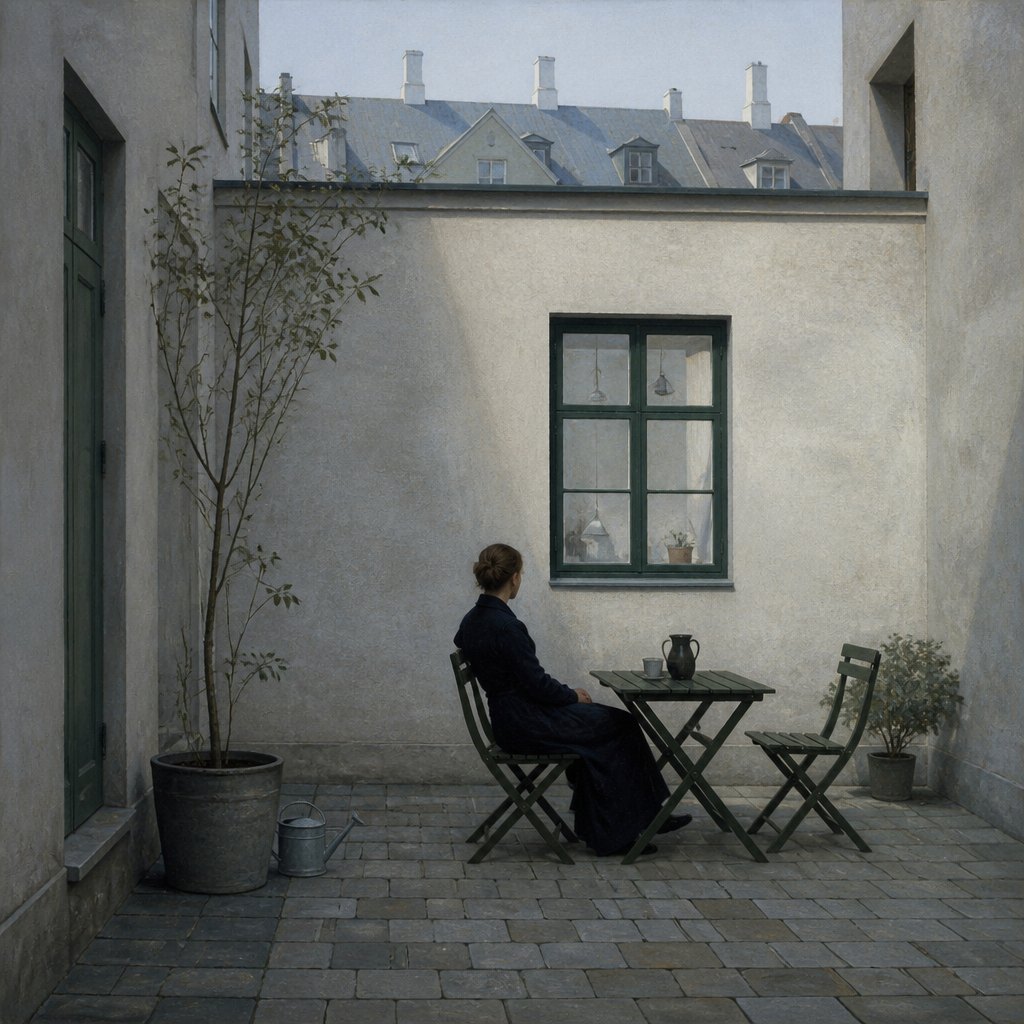 AI-generated
Work en plein air
Paint in the light of Copenhagen
This example was generated from a prompt like: “A modest Copenhagen courtyard lit by pale northern daylight, a single window, plain plastered walls, and a quiet seated figure at a table, painted with careful linear perspective and restrained, cool color.”
Open the Copenhagen Art Style generator →The place today
Statens Museum for Kunst and the Hirschsprung Collection together hold the largest concentration of Golden Age painting, while Thorvaldsens Museum preserves the sculptor's studio output beside his own tomb. Rosenborg Castle still displays the crown jewels and royal decorative art, and Royal Copenhagen continues to hand-paint porcelain, including Flora Danica pieces, using methods close to the original 18th-century process.
Compose your own
Work with pale, even northern daylight rather than dramatic contrast, letting a single window define the light source in an otherwise modest interior. Choose an ordinary subject, a courtyard, a harbor view, a figure reading, and render it with careful linear perspective and restrained color rather than heroic gesture. For sculpture, model the figure on classical Greco-Roman proportion and drapery, keeping the surface smooth and idealized. For decorative work, paint a single botanical specimen with scientific precision rather than a repeating pattern, leaving generous white porcelain ground around it.
Frequently asked questions
What caused the Danish Golden Age?
National hardship, including the 1807 British bombardment of Copenhagen, an 1813 state bankruptcy, and the 1814 loss of Norway, turned artists toward modest domestic and coastal subjects rather than grand historical themes.
Who taught the Danish Golden Age painters?
C. W. Eckersberg, a professor at the Royal Danish Academy from 1818, trained the generation including Christen Købke and Constantin Hansen in precise perspective and direct observation of light.
Is Thorvaldsen a Danish or Italian sculptor?
Danish by birth and training, though he built his career in Rome from 1797 to 1838 working in the international neoclassical style before returning his collection to Copenhagen.
Is Flora Danica porcelain still made?
Royal Copenhagen continues to hand-paint Flora Danica pieces using botanical illustrations related to the original 1790-1802 service, though production remains small and largely made to order.