 Art
Art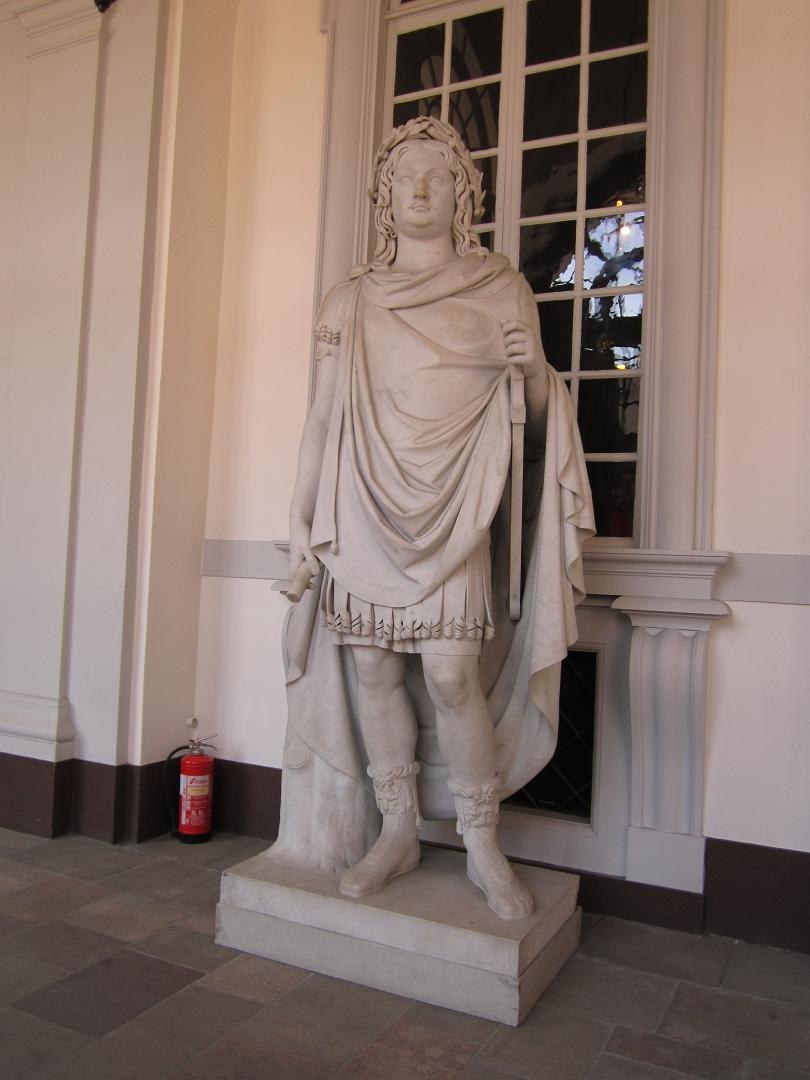
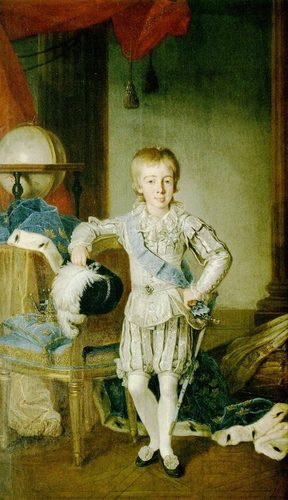
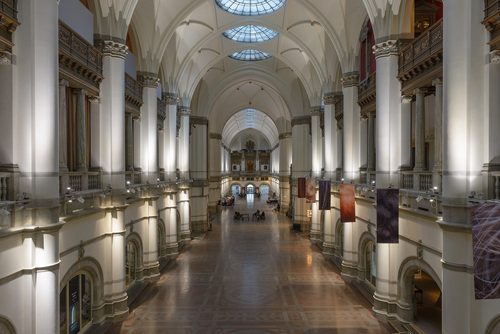
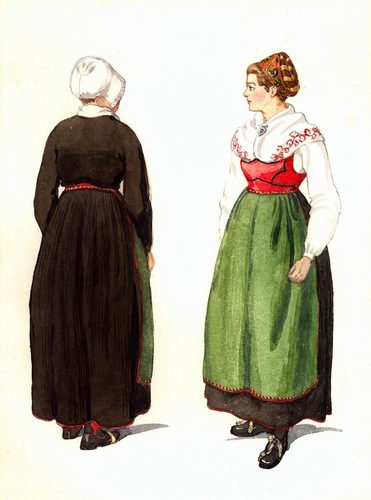
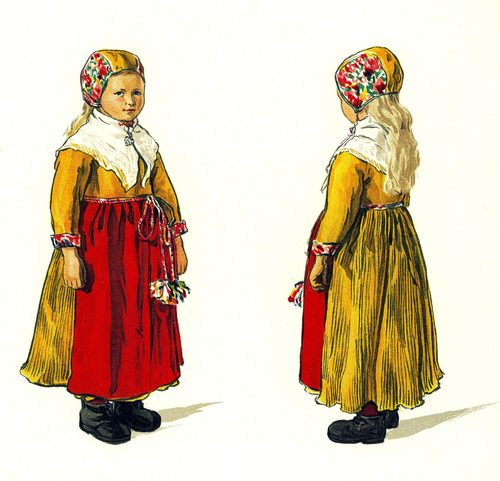
Stockholm's art history runs through two patronage systems: the royal Baroque court of the Tessin architects from the 1690s, and the National Romantic movement of roughly 1880-1910 that sought a Swedish identity apart from continental academic styles. The Royal Palace, rebuilt after an 1697 fire to designs by Nicodemus Tessin the Younger, established Stockholm as a Baroque capital drawing on French and Italian models. Two centuries later, painters including Carl Larsson and Anders Zorn turned toward home instead of the continent, depicting Swedish domestic interiors, rural folklore, and midsummer light in warm, decorative compositions. This search for Swedishness reached its civic peak in Stockholm City Hall, completed in 1923, where architect Ragnar Östberg combined local brick and granite with Byzantine-inspired gold mosaic by Einar Forseth in the Golden Hall. Museums such as the Nationalmuseum, founded in 1792, and the open-air Skansen and Nordic Museum, built by folklorist Artur Hazelius from the 1870s, formalized this shift toward a specifically national visual culture.
What marks the region
Baroque royal patronage
Early Stockholm art followed continental Baroque models imported by court architects, built for a royal audience rather than a merchant or church one.
National Romantic folklore
From the 1880s, painters turned to Swedish rural life, midsummer light, and folklore as deliberate alternatives to French academic subject matter.
Domestic interior scenes
Warm, decoratively patterned depictions of home life, dining rooms and gardens, became a favored genre distinct from history painting or portraiture.
Gold mosaic civic decoration
Twentieth-century Stockholm revived Byzantine-style gold glass mosaic for major civic interiors, most visibly in the City Hall's Golden Hall.
Local material honesty
Civic architecture favored exposed Swedish brick, granite, and timber over imported marble, tying grand public buildings to regional material identity.
Craft-based collecting
Museums built collections around folk costume, carved furniture, and vernacular craft alongside fine art, treating decorative tradition as national heritage.
Local signatures
How to spot Stockholm art
- Three crowns
- → Sweden's royal heraldic emblem, appearing across palace, coinage, and civic decoration as a marker of state authority.
- Midsummer sun motifs
- → Solar disks and flower wreaths referencing midsummer festivities, a recurring National Romantic symbol of seasonal identity.
- Gold mosaic tesserae
- → Small glass-and-gold tiles used in Byzantine-revival civic mosaics, signaling monumental twentieth-century Stockholm decoration.
- Carved ship figures
- → Baroque wooden sculpture from royal warships, showing continental ornamental carving applied to naval rather than church commissions.
- Domestic lamplight interiors
- → Warmly lit dining rooms and nurseries, a National Romantic signature contrasting cooler academic history painting.
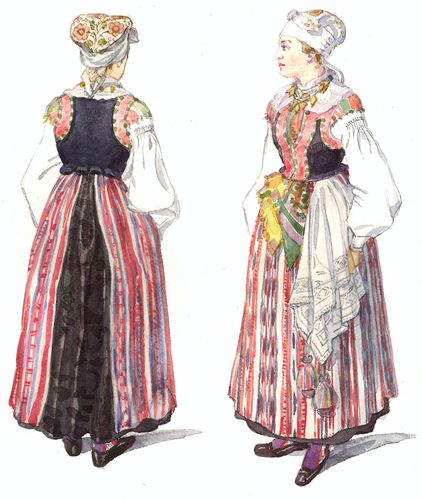
- Folk costume patterns
- → Regional embroidered dress documented in museum collections and paintings, used to assert a pre-industrial Swedish identity.
The story
Stockholm became Sweden's political center in the 13th century, but its art history is usually dated from the Baroque rebuilding of the Royal Palace after fire destroyed the earlier castle in 1697; Nicodemus Tessin the Younger's design, completed through the 1750s, set a continental standard. The Swedish Royal Academy of Fine Arts, founded in 1735, formalized academic training. In the 1620s the warship Vasa was built and elaborately carved with Baroque ornament before sinking on its maiden voyage in 1628; raised in 1961, it shows royal naval decoration intact. From the 1880s, painters including Carl Larsson and Anders Zorn broke from academic Paris-oriented training to depict specifically Swedish domestic and rural subjects, later called National Romanticism. Folklorist Artur Hazelius founded the Nordic Museum and open-air Skansen from 1873 to preserve vernacular craft. Stockholm City Hall, built 1911-1923 by Ragnar Östberg with Einar Forseth's gold mosaics in the Golden Hall, became the movement's civic culmination.
Masterpieces of the place
| Work | Artist | Date | Why it matters |
|---|---|---|---|
| Stockholm Royal Palace state rooms | Nicodemus Tessin the Younger | completed 1750s | Baroque state rooms that defined Sweden's royal architectural taste for two centuries. |
| Vasa warship carvings | Unknown | 1620s | Elaborate carved ornament on a royal warship, recovered largely intact after sinking in 1628. |
| Midvinterblot | Carl Larsson | 1915 | A large mural depicting a legendary midwinter sacrifice, initially rejected then later installed in the Nationalmuseum. |
| Golden Hall mosaics | Einar Forseth | 1920s | Gold glass mosaics covering the walls of Stockholm City Hall's ceremonial hall. |
| Breakfast Under the Big Birch | Carl Larsson | 1896 | A domestic watercolor exemplifying National Romantic home imagery. |
 AI-generated
Work en plein air
Paint in the light of Stockholm
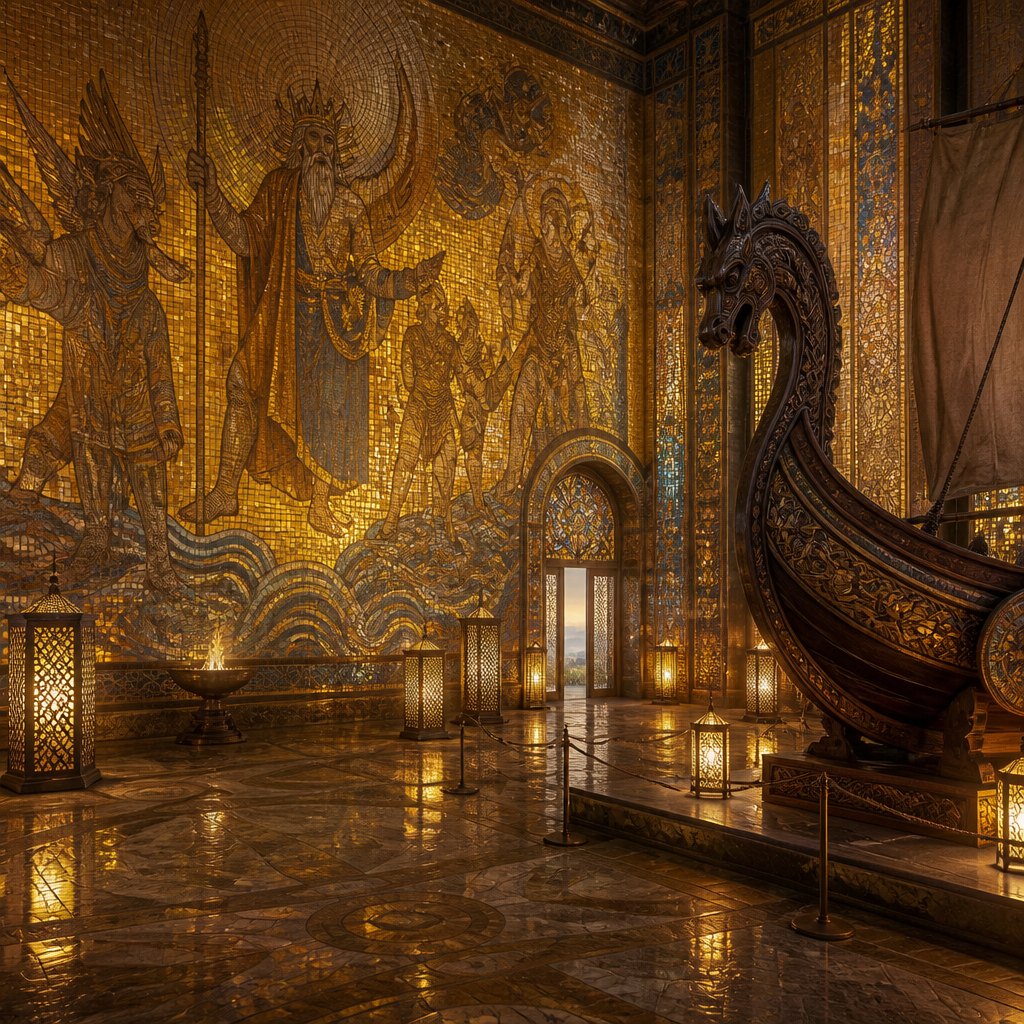
This example was generated from a prompt like: “A grand ceremonial hall with walls covered in gold glass mosaic depicting stylized mythic figures, warm lantern light reflecting off polished stone floors, and a carved wooden ship's ornament displayed nearby.”
Open the Stockholm Art Style generator →The place today
The Nationalmuseum holds Sweden's royal and National Romantic collections, including Larsson's stairwell murals. The Vasa Museum displays the recovered 17th-century warship with its carvings intact. Stockholm City Hall remains a working civic building, its Golden Hall open on guided tours. The Nordic Museum and open-air Skansen preserve folk costume, furniture, and vernacular building craft, while the Royal Palace continues to host state functions, keeping Stockholm's layered royal and folk traditions visible side by side.
Compose your own
For the Baroque royal register, use symmetrical composition, gilded stucco, and rich continental color against dark wood paneling. For the National Romantic register, shift instead to warm lamplight interiors, patterned textiles, and figures in traditional dress engaged in ordinary domestic tasks. For civic-mosaic effect, break surfaces into small irregular gold and colored glass tesserae rather than smooth paint, and favor stylized, flattened figures over naturalistic modeling. Across both registers, material honesty matters: exposed brick, natural granite, and local timber should read as deliberate rather than plain.
Frequently asked questions
What is Swedish National Romanticism in art?
A movement from roughly 1880-1920 in which painters and architects turned away from French academic models toward specifically Swedish folklore, domestic life, and rural light to build a national visual identity.
Why is the Vasa ship considered an art object?
Its hull carries extensive Baroque wood carving commissioned to display royal power. Recovered largely intact after sinking in 1628, it preserves 17th-century Swedish naval decorative sculpture in unusually complete form.
What is the Golden Hall in Stockholm City Hall?
A ceremonial room covered in gold glass mosaic designed by Einar Forseth in the 1920s, combining Byzantine mosaic technique with Swedish historical and mythological imagery.
Is Carl Larsson's work religious or secular?
Mostly secular. He is best known for warm domestic interior scenes of his own family home, though his large public mural Midvinterblot depicts a legendary pre-Christian midwinter sacrifice.