 Art
Art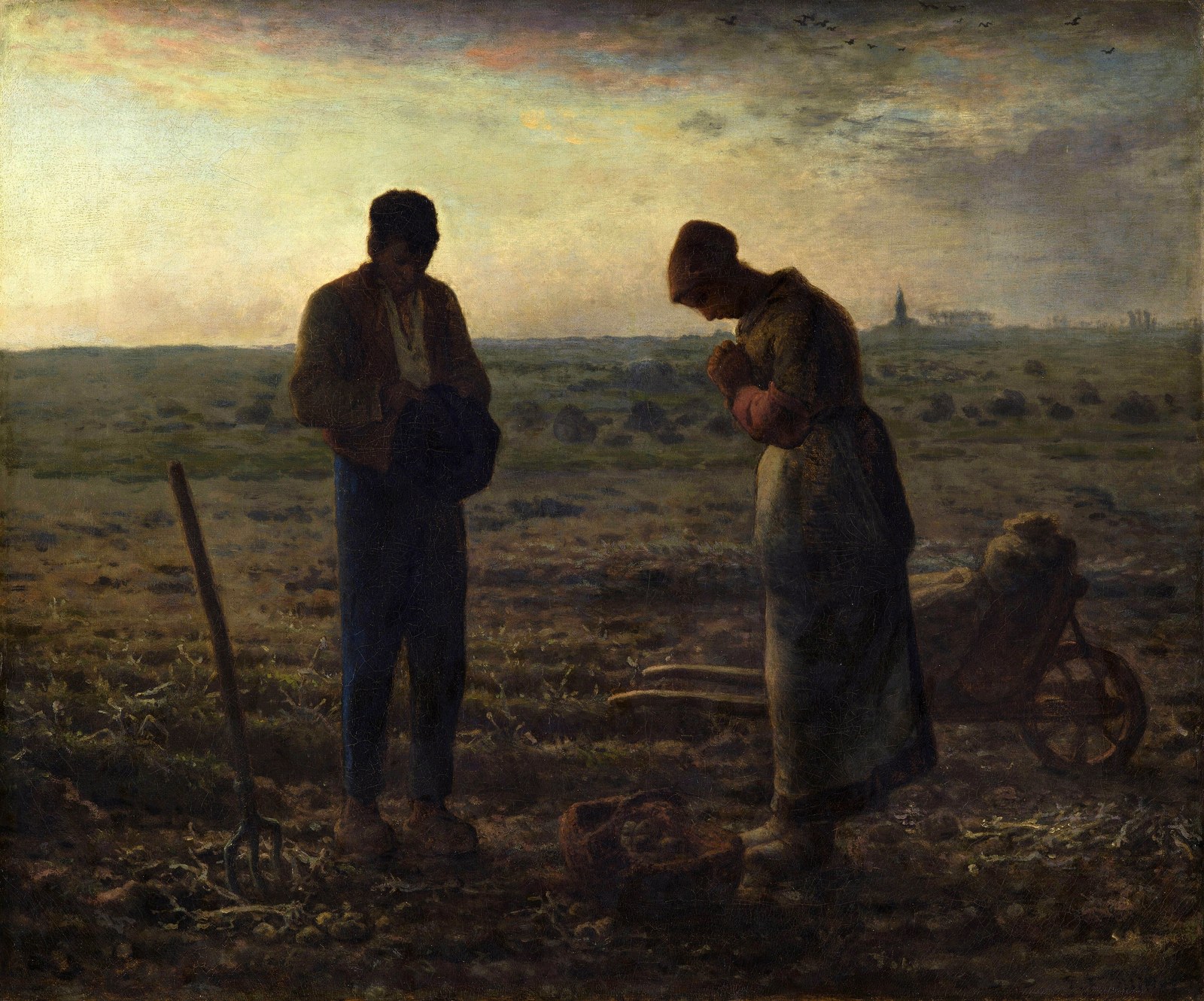
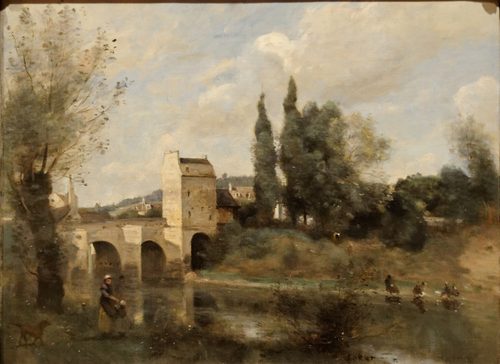
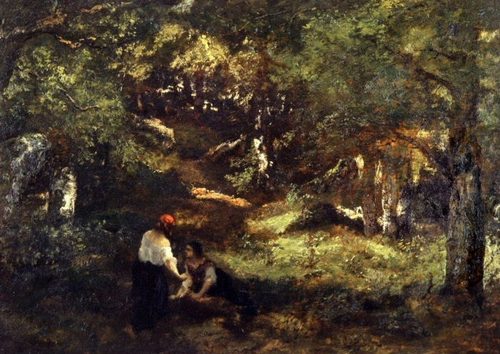
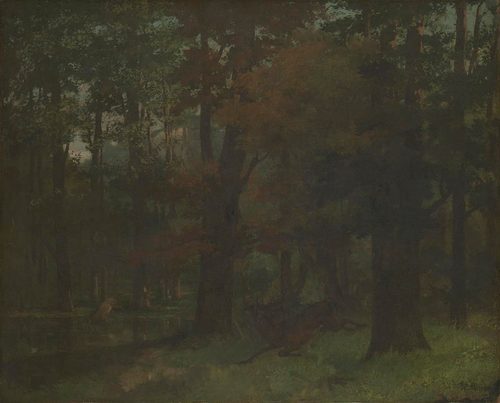
Barbizon is a small village on the western edge of the Forest of Fontainebleau, about 50 kilometers south of Paris, and gave its name to the loose group of landscape painters who worked there from the 1830s to the 1870s. Reacting against the academic tradition of idealized, mythological landscape taught at the École des Beaux-Arts, painters including Théodore Rousseau, Jean-François Millet, Narcisse Diaz de la Peña, and Charles-François Daubigny carried portable oil paints and easels directly into the forest to record actual weather, light, and terrain. Camille Corot, based mainly in Paris, was closely associated with the same circle and its methods. Cheap lodging at the village inn run by the Ganne family made extended stays affordable for painters without official patronage, and the surrounding forest, with its ancient oaks and sand quarries, supplied endless unposed subject matter. Millet extended the same direct observation to peasant labor in the neighboring fields, and the group's insistence on working from nature directly prepared the ground for Impressionism a generation later.
What marks the region
Plein air oil sketching
Painters carried portable paint boxes and canvases into the Forest of Fontainebleau to record actual light and weather on site, rather than composing scenery from memory in a Paris studio.
Everyday rural labor as subject
Peasants sowing, gleaning, and resting replaced the mythological or historical figures expected by the Salon, treating ordinary agricultural work as a subject worthy of serious painting.
Loose, visible brushwork
Paint was applied in broken, visible strokes to capture shifting atmosphere and light, sacrificing the smooth academic finish still expected for major Salon exhibition pieces.
Low horizon, wide sky
Compositions frequently pushed the horizon low, giving weather and cloud cover as much visual weight as the land, trees, or figures beneath it.
Muted earth palette
Browns, ochres, greens, and greys matched to the actual forest floor and overcast northern light replaced the brighter, warmer color favored by academic landscape painting.
Studio-finished sketches
Many outdoor oil studies were carried back to Paris and reworked at larger scale for Salon submission, blending direct observation with traditional studio finishing.
Local signatures
How to spot Barbizon art
- Ancient named oak
- → Specific old trees in the forest, some individually mapped, recur across many painters' canvases as fixed points of reference.
- Gleaning peasant figure
- → A bent figure gathering leftover grain after harvest, standing for rural poverty and the dignity of manual labor.
- Flock of sheep at dusk
- → Shepherd and flock scenes mark the transition from day to evening and the daily rhythm of agricultural life.
- Felled timber
- → Cut trees and woodcutters reference the forest's working economy alongside its role as untamed wilderness.
- Distant church steeple
- → A small steeple on the horizon situates rural labor within village time, marked by its bell rather than a clock.
- Sandstone outcrop
- → The forest's exposed boulders and quarry pits appear as raw geological subject matter distinct from farmland.
The story
The Forest of Fontainebleau had long served as a royal hunting ground when painters began settling in the adjoining village of Barbizon in the 1830s. Théodore Rousseau, repeatedly rejected by the official Salon jury for his unconventional landscapes, moved there permanently by 1848. Jean-François Millet arrived in 1849, partly to escape a cholera outbreak in Paris, and stayed until his death in 1875, painting peasant subjects including The Gleaners in 1857 and The Angelus around 1857-1859. Camille Corot visited regularly through the 1840s-60s while keeping a Paris studio. The village inn run by François and Edmée Ganne housed painters who could not afford formal patronage; it survives today as a museum. In 1861, Napoleon III signed a decree protecting roughly 1,097 hectares of the forest from logging as an artistic reserve, among the earliest nature reserves established anywhere.
Masterpieces of the place
| Work | Artist | Date | Why it matters |
|---|---|---|---|
| The Gleaners | Jean-François Millet | 1857 | An image of peasant women gathering leftover grain that unsettled Salon critics with its plain, unheroic subject. |
| The Angelus | Jean-François Millet | 1857-1859 | Two peasants pausing at dusk for prayer in a field, later reproduced widely as a symbol of rural piety and labor. |
| Forest of Fontainebleau | Théodore Rousseau | c. 1850s | Dense oak studies rendered with near-scientific attention to light filtering through the forest canopy. |
| Souvenir de Mortefontaine | Camille Corot | 1864 | A silvery, late-style landscape blending direct observation with memory, associated with the Barbizon circle. |
| The Pond | Charles-François Daubigny | c. 1860s | A studio-boat river study capturing reflected light on water using loose, direct brushwork. |
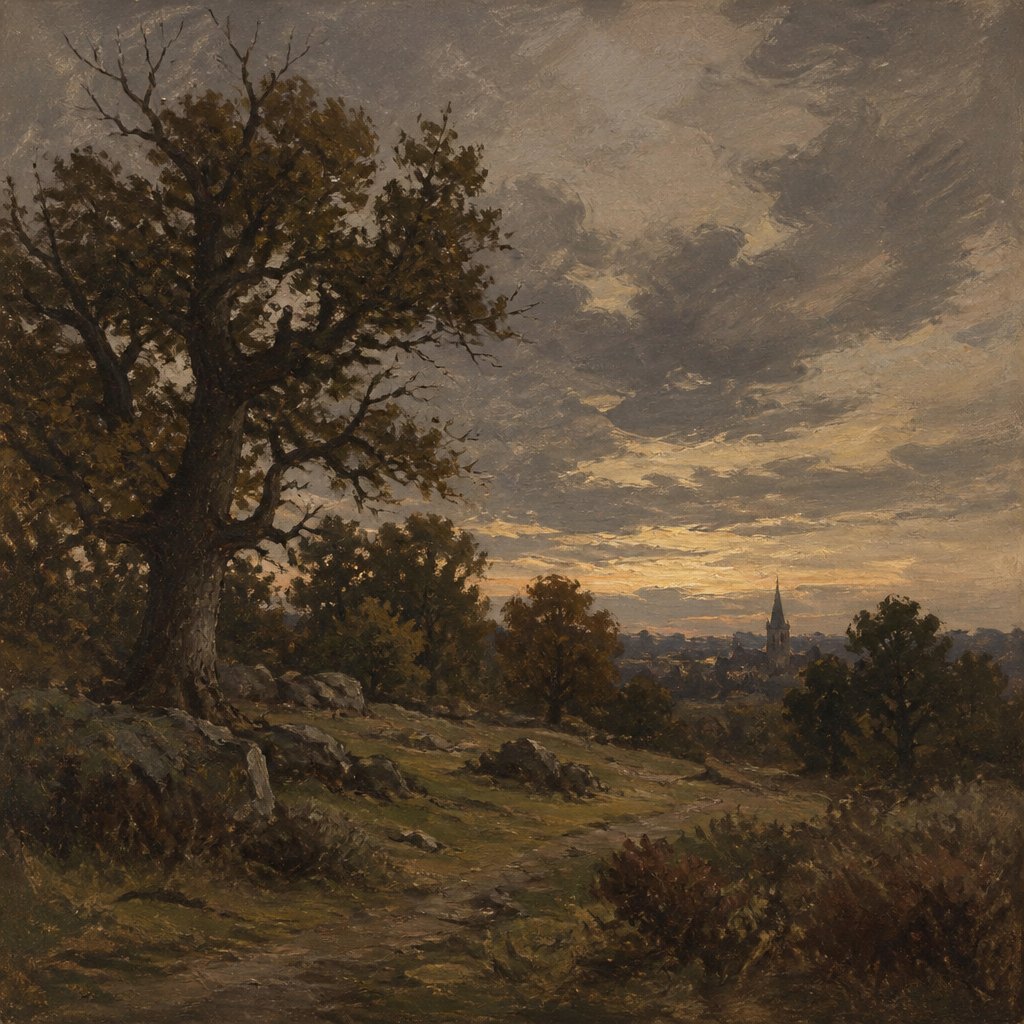 AI-generated
Work en plein air
Paint in the light of Barbizon
This example was generated from a prompt like: “A quiet forest clearing at dusk near an ancient oak, muted browns and greens, a distant church steeple on the horizon, loose visible brushwork and a wide overcast sky in the style of an outdoor oil sketch.”
Open the Barbizon Art Style generator →The place today
Barbizon village preserves the Auberge Ganne as the Musée départemental de l'École de Barbizon, alongside the former studio-houses of Millet and Rousseau, both open to visitors. The Forest of Fontainebleau remains protected parkland and a popular hiking destination, with marked trails tracing sites the painters worked. Major holdings of Barbizon paintings are in the Musée d'Orsay in Paris and the Louvre, alongside collections formed by 19th-century collectors who prized the school's direct naturalism.
Compose your own
Work from a limited, earthy palette of umber, ochre, sap green, and grey rather than bright studio color. Push the horizon low and let sky and cloud occupy much of the canvas, since weather carries as much of the composition's mood as any figure. Apply paint in visible, broken strokes rather than smooth blending, and let a single tree, boulder, or grazing animal anchor an otherwise loosely handled scene. If including a figure, keep it small, plainly dressed, and absorbed in ordinary labor, gleaning, tending sheep, cutting wood, rather than posed. Aim for the feeling of an actual overcast afternoon rather than a composed, sunlit ideal.
Frequently asked questions
What is the Barbizon School?
A loose group of landscape and rural-genre painters, including Théodore Rousseau, Jean-François Millet, and Charles-François Daubigny, who worked in and around the village of Barbizon near Fontainebleau from the 1830s to 1870s.
How did Barbizon influence Impressionism?
Its painters established plein air oil sketching and direct observation of light and weather as legitimate finished practice rather than mere preparation, a method the Impressionists adopted and extended in the 1870s.
Why did painters choose this particular forest?
The Forest of Fontainebleau, a former royal hunting ground near Paris, offered ancient oaks, sandstone outcrops, and grazing peasants within a short trip from the capital, and cheap lodging made long stays affordable.
Is Barbizon painting the same as French Impressionism?
No. Barbizon painters worked mostly in muted, naturalistic color and often finished canvases in the studio, while Impressionists used brighter broken color and treated the outdoor sketch itself as the finished work.