 Art
Art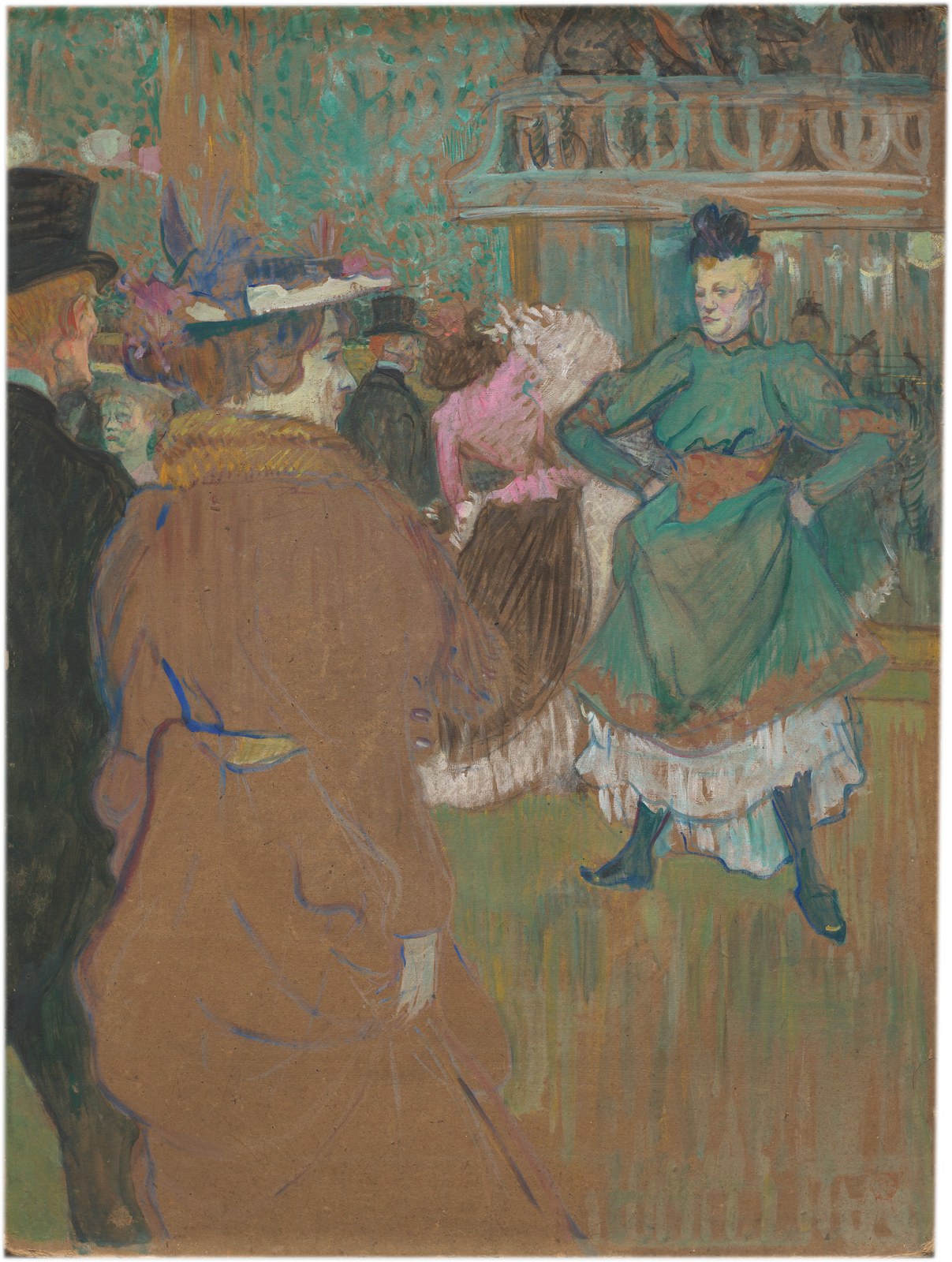
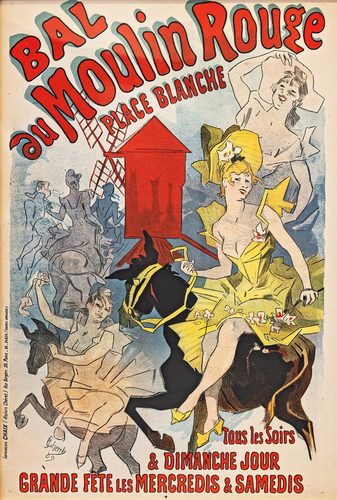
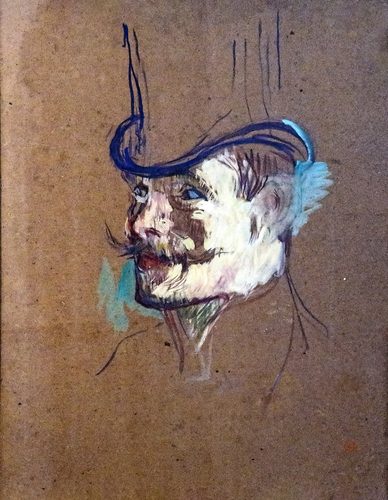
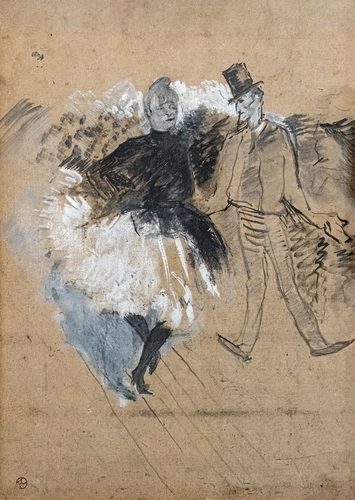
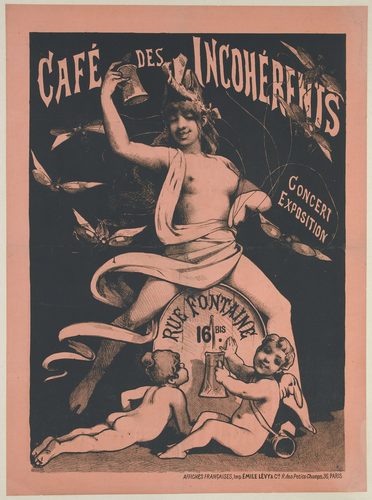
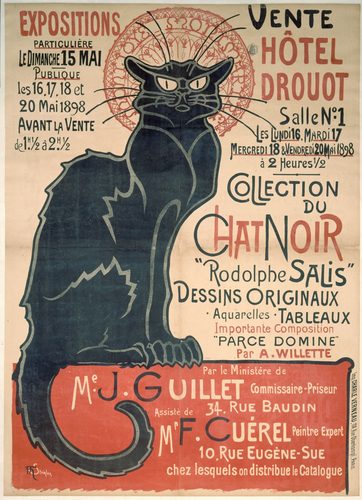
Montmartre is the Paris hill that retained a semi-rural, bohemian character even after its 1860 annexation into the city, with cheap rents, windmills, and a nightlife district built around cabarets like the Chat Noir, opened 1881, and the Moulin Rouge, opened 1889. From the 1880s through the early 1900s it drew painters, illustrators, and performers who blurred fine art and commercial graphics: color lithography, refined industrially in this period, let artists design posters advertising the cabarets they frequented, turning street advertising into a recognized art form almost overnight. Henri de Toulouse-Lautrec, resident in the district, made the definitive images of its dancers and singers, using flattened silhouette, cropped composition, and the bold color blocks the new printing technology demanded. Théophile Steinlen and Jules Chéret supplied a related stream of poster work for cabarets, cafés, and products. Montmartre had no academy or wealthy patron class; its art economy ran on cheap studios, café credit, and print runs sold cheaply enough to paper the streets.
What marks the region
Color lithography
Artists drew directly on stone in multiple color layers, exploiting the medium's flat color and bold outline for street posters.
Flattened silhouette
Figures rendered as dark, simplified outline shapes against bright ground, borrowing partly from Japanese woodblock prints.
Cropped, off-center composition
A stage, dancer, or crowd cut abruptly by the frame edge, giving a snapshot immediacy over classical balance.
Cabaret and street subjects
Dancers, singers, waiters, and café crowds treated as the main subject of the work, not incidental background detail.
Commercial-art parity
Posters designed for street advertising treated with the same graphic ambition and technical care as gallery paintings.
Rapid, gestural drawing
Quick, economical line work capturing performers caught mid-motion under gaslight, favoring energy over careful finish.
Local signatures
How to spot Montmartre art
- Windmill silhouette
- → Montmartre's rural past and, specifically, the Moulin Rouge cabaret's namesake red mill.
- High-kicking cancan dancer
- → The district's signature entertainment, its skirts and raised leg a recurring compositional device.
- Black cat emblem
- → The Chat Noir cabaret's logo, widely reproduced on its posters, programs, and signage.
- Gaslit café terrace
- → Montmartre's street-level nightlife, rendered in warm artificial light against deep night blue.
- Flat integrated poster lettering
- → Large typography treated as part of the composition's design rather than an added caption.
- Absinthe glass
- → The district's associated drink, used as visual shorthand for its bohemian nightlife culture.
The story
Montmartre was annexed into Paris in 1860, but its steep streets and windmills kept rents low enough to draw artists and performers through the later nineteenth century. The cabaret Le Chat Noir opened in 1881, pioneering the shadow-theater and artist-poster culture that defined the district's visual identity. Jules Chéret had already been refining color lithographic posters in Paris from the 1860s-70s, and the technique matured just as Montmartre's cabaret economy needed cheap, eye-catching street advertising. The Moulin Rouge opened in 1889, and Henri de Toulouse-Lautrec, who had moved to the area in the 1880s, began producing its posters from 1891, fixing the flattened, cropped style now associated with the district. Théophile Steinlen worked alongside him through the 1890s, producing posters for cabarets and commercial clients. The district's bohemian identity persisted past 1900, though many artists drifted toward Montparnasse in following decades as Montmartre grew increasingly touristic.
Masterpieces of the place
| Work | Artist | Date | Why it matters |
|---|---|---|---|
| Moulin Rouge: La Goulue | Henri de Toulouse-Lautrec | 1891 | A poster fixing the flattened, cropped style now associated with Montmartre cabaret imagery. |
| Le Chat Noir | Théophile Steinlen | 1896 | A poster built around the cabaret's black-cat emblem, one of the district's most reproduced images. |
| Divan Japonais | Henri de Toulouse-Lautrec | 1893 | A cropped, silhouette-based poster advertising a Montmartre cabaret revue. |
| At the Moulin Rouge | Henri de Toulouse-Lautrec | 1892-95 | A painted cabaret interior packed with cropped figures under artificial light. |
| Bal du Moulin Rouge | Jules Chéret | 1889 | An early color lithographic poster establishing the cabaret's public visual brand. |
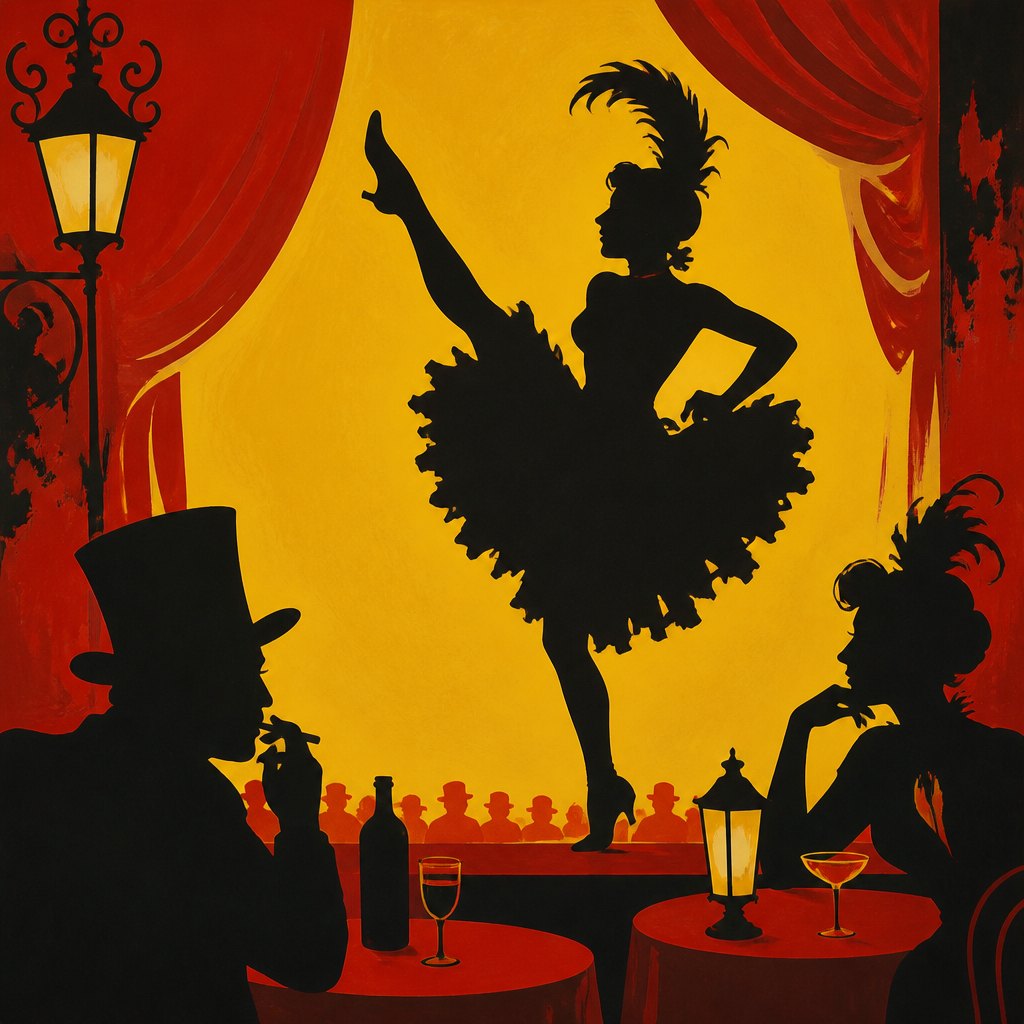 AI-generated
Work en plein air
Paint in the light of Montmartre
This example was generated from a prompt like: “A gaslit cabaret stage with a high-kicking dancer's flattened black silhouette against bold red and yellow poster-flat color, bordered by cropped café tables and integrated graphic lettering.”
Open the Montmartre Art Style generator →The place today
The Moulin Rouge remains an operating cabaret on its original site, though the current building dates from a 1915 rebuild after fire. The Musée de Montmartre, housed in the district's oldest surviving building, covers the area's artistic history including the circle around Toulouse-Lautrec. Le Chat Noir closed in 1897, but its poster imagery remains widely reproduced. The Place du Tertre continues as a working street-art market for portraitists and quick studies, sustaining a visible, if touristic, continuity of the district's open-air painting culture.
Compose your own
Flatten figures into dark, simplified silhouette against a bright, limited color ground, working the way a lithographic stone forces color into separate flat layers. Crop the composition abruptly, letting a dancer's leg or a musician's back cut off at the frame edge for snapshot immediacy. Integrate bold lettering into the design if evoking a poster, treating type as a graphic shape rather than a caption. Set the scene under artificial gaslight color, warm ochre interiors against cool night blue exteriors. Draw the pose with quick, economical line rather than careful modeling, catching a figure mid-gesture.
Frequently asked questions
What made Montmartre different from earlier Paris art districts?
It treated commercial poster design with the same ambition as gallery painting, built around cabaret nightlife subjects, cheap rents, and the newly matured technique of color lithography.
Is the Moulin Rouge still the original 1889 building?
No. The original structure burned and was rebuilt in 1915; the venue continues operating on the same site under the same name.
What is the significance of color lithography here?
It allowed multi-color images to be printed cheaply and quickly for street display, letting artists design large, eye-catching posters that functioned as both advertising and fine graphic art.
Did Montmartre remain the center of Paris avant-garde art after 1900?
Not entirely. Many artists drifted toward Montparnasse in the following decades as Montmartre became increasingly touristic and its cheap-rent bohemian character faded.