 Art
Art
Flemish art is the painting tradition that flourished in the cloth-trading cities of the Southern Netherlands, chiefly Bruges and Ghent, starting in the early 1400s. Wool imported from England and finished into luxury cloth made these cities among the richest in Europe, and that wealth funded a technical revolution: painters began building images in layered oil glazes instead of tempera, achieving a depth and precision no other region could match. Flanders had no royal court to dictate taste, so patronage came from guilds, confraternities, and merchant families who wanted altarpieces and portraits that mirrored their own world back at them: fur collars, leaded windows, brass chandeliers, all rendered with near-obsessive accuracy. This closeness to observed detail became the region's signature, alongside a habit of hiding religious meaning inside domestic objects rather than stating it outright. When political and economic power shifted from Bruges to Antwerp in the late 1400s, the tradition traveled with it, carrying the same devotion to material truth into a new century.
What marks the region
Oil glazing
Thin, translucent layers of oil paint built up over an underpainting, letting light bounce back through the surface for a glow no fresco or tempera panel could achieve.
Panel over fresco
Portable oak panels, not wall fresco, were the default support, practical for a trading region without the fresco tradition of a warm, dry Mediterranean climate.
Disguised symbolism
Everyday objects carry hidden religious meaning: a single candle, a basin, a dog at the foot of a bed, each doing theological work without a single obvious halo.
Portrait realism
Merchant patrons wanted to be recognized, not idealized, so faces show pores, stubble, and asymmetry alongside jewelry and fabric rendered thread by thread.
Northern light
Cool, raking daylight through leaded windows defines Flemish interiors, a world away from the golden Mediterranean glow of Italian painting.
Miniature scale
Even major commissions stayed intimate in size, meant for private chapels and townhouses rather than the vast public walls of Italian churches.
Local signatures
How to spot Flanders art
- Single burning candle
- → Divine presence in an otherwise ordinary domestic room.
- Small dog underfoot
- → Marital fidelity and loyalty within a portrait's implied contract.
- Convex mirror
- → The unseen witnesses and the painter's own presence folded into the scene.
- Discarded shoes
- → Holy ground, an echo of removing footwear before sacred space.
- Oranges on a windowsill
- → Imported luxury and worldly wealth, since citrus had to travel far north.
- Brass chandelier
- → Household prosperity and, in religious scenes, divine illumination made material.
The story
Bruges built its fortune on the wool staple and the money-changing trade, drawing Italian bankers and English merchants who wanted art as much as cloth. Jan van Eyck, working for the Burgundian court in the 1420s-30s, refined oil paint into a medium that could render silk, fur, and stone with uncanny fidelity, and his workshop's methods spread fast. Rogier van der Weyden pushed the same technique toward emotional intensity, while Hans Memling, arriving from the Rhineland, softened it into serene devotional images for Bruges's merchant chapels. Prosperity brought its own decline: silting harbors and Habsburg politics choked Bruges's access to the sea through the late 1400s, and trade drifted toward Antwerp. Painters followed the money. By 1500 Bruges was a beautifully preserved relic, its golden age already a memory, while the technical inheritance, oil glazing, panel construction, obsessive observation, became the shared vocabulary every Netherlandish painter after it had to answer to, including the generation that would soon make Antwerp famous.
Masterpieces of the place
| Work | Artist | Date | Why it matters |
|---|---|---|---|
| The Arnolfini Portrait | Jan van Eyck | 1434 | A merchant couple rendered in such material detail the room reads as documentary evidence. |
| The Ghent Altarpiece | Jan and Hubert van Eyck | 1432 | A multi-panel masterwork that made oil painting the medium every rival city had to match. |
| Descent from the Cross | Rogier van der Weyden | c. 1435 | Compressed, stage-like grief that turned Flemish painting toward raw emotion. |
| Portrait of a Young Man | Hans Memling | c. 1470s | A quietly humane likeness typical of Bruges's late-century devotional portraiture. |
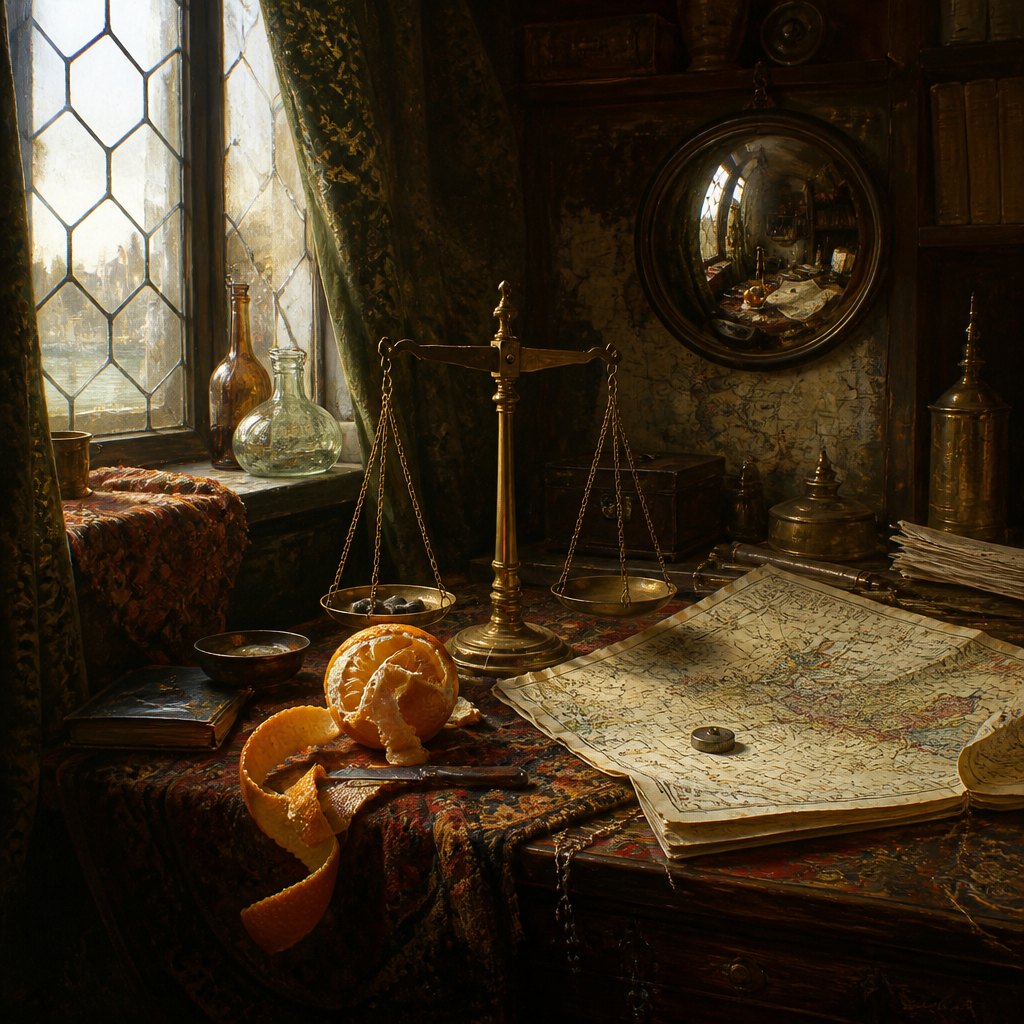 AI-generated
Work en plein air
Paint in the light of Flanders
This example was generated from a prompt like: “A cluttered merchant's study lit by a single leaded window: a brass scale, a folded map, a half-peeled orange, and a convex mirror on the wall, every surface rendered in glowing, translucent oil layers with obsessive material detail.”
Open the Flemish Primitives Art Style generator →The place today
Bruges preserves its medieval core so completely that the Groeningemuseum can show van Eyck and Memling steps from the streets they painted. Ghent's restored chapel keeps the altarpiece a pilgrimage site for conservators and tourists alike. Neither city drives contemporary art the way Antwerp or Brussels does; their institutions function more as guardians of a finished golden age than incubators of a new one, drawing visitors who come specifically for that sense of arrested time.
Compose your own
Start with the material, not the subject. Work in thin, built-up layers rather than opaque strokes, letting an earlier layer show through the next so light seems to come from inside the paint rather than sit on top of it. Choose one small luxury object, a piece of glass, a fold of velvet, a single coin, and render it with more patience than the rest of the composition combined; that imbalance is the point. Keep the setting domestic and specific: a shuttered window, a tiled floor, a basin on a shelf. Resist grand gesture. A folded hand or a lowered gaze should carry as much weight as an entire allegorical scene would elsewhere, and every object in the room should earn its place as a quiet piece of meaning.
Frequently asked questions
What makes Flemish painting different from Italian Renaissance art?
Flemish painters worked in oil rather than fresco or tempera, favored small domestic scale over grand murals, and hid religious meaning inside ordinary objects rather than staging it as heroic drama. The result reads as documentary rather than theatrical.
Why did Bruges decline as an art center?
Its harbor silted up through the late 1400s, cutting direct sea access and choking the trade that funded its wealth. Merchants and artists gradually relocated to Antwerp, which had the deep-water port Bruges no longer did.
Is Flemish art the same as Dutch Golden Age painting?
No. Flemish art centers on the Catholic Southern Netherlands, Bruges, Ghent, later Antwerp, a century or more earlier. The Dutch Golden Age belongs to the independent, Protestant Northern Netherlands, with different patrons and markets.
What is Flanders' most influential technical contribution?
Layered oil glazing over an underpainting, which let painters achieve translucent depth, precise texture, and controlled light that tempera alone could never match, and that later spread across European painting.