 Art
Art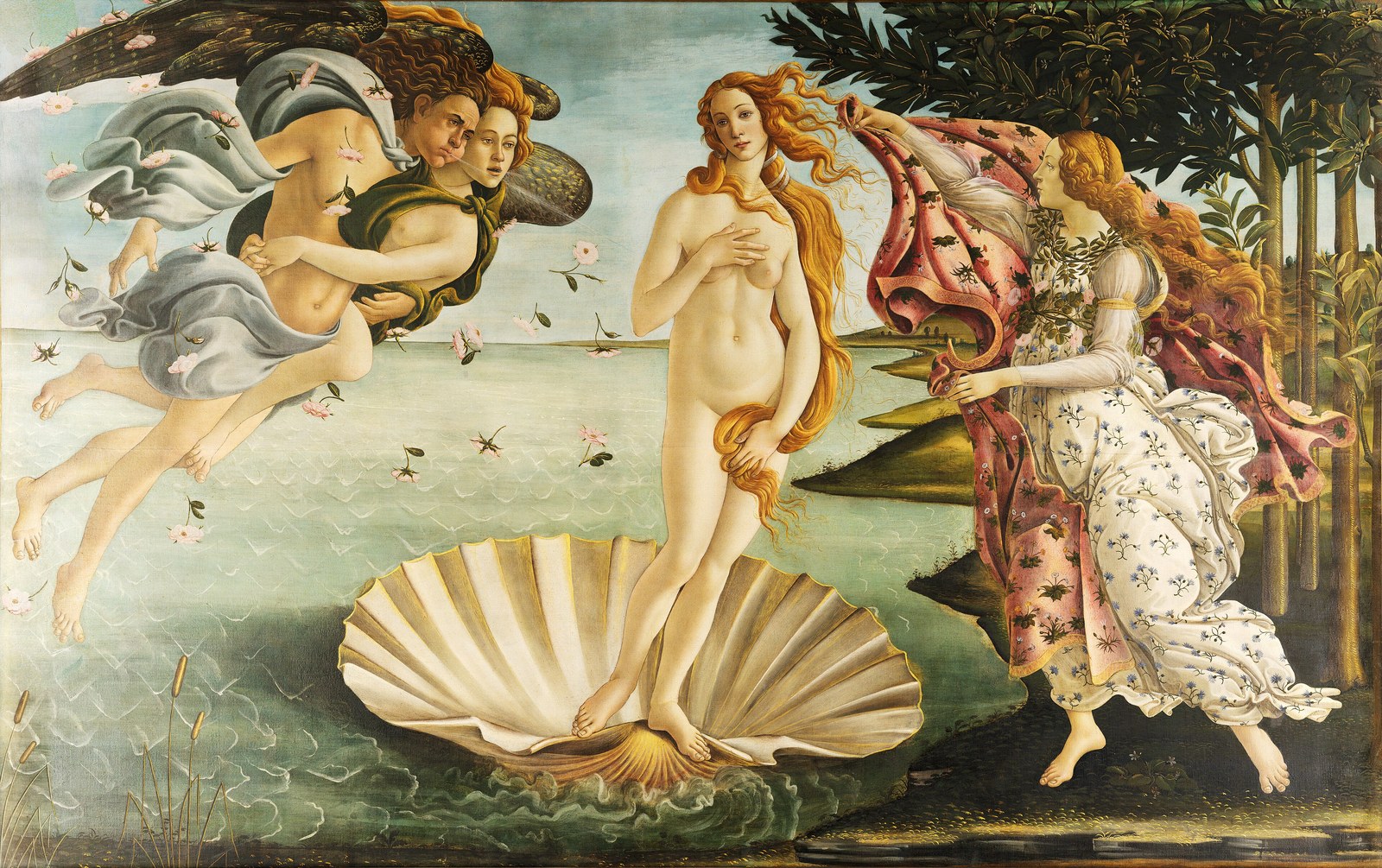
Florentine art is the visual output of a single Tuscan city-state that treated painting and sculpture as applied mathematics, underwritten by wool guilds and Medici banking fortunes between roughly 1300 and 1550. Florence had no king and no single patron to please — it had guilds, confraternities, and rival banking families competing for prestige, so artists were hired to solve problems: how to build a dome without scaffolding, how to render a body in correct proportion, how to fake depth on a flat wall. That competitive, contractual atmosphere produced linear perspective, anatomical study, and a workshop system that trained Ghiberti's and Verrocchio's apprentices into the next generation of masters. The Arno gave the city trade routes and little else scenically — Florentine light is workshop light, north-facing and even, better for drawing contours than for drama. What Florence produced was not devotional glow but civic argument: art as proof of a family's, or a city's, intellectual superiority.
What marks the region
Disegno over color
Florentine workshops ranked drawing and design above paint handling, so contour and structure carry a picture even before pigment is applied.
Linear perspective
A single vanishing point, laid out with ruler and compass, turns flat panels and walls into measured stage sets for figures.
Fresco on civic walls
Town halls, guild chapels, and monastery refectories were painted directly onto wet plaster, meant to be read by an entire parish.
Marble and bronze sculpture
Quarry access and bronze-casting foundries let Florence sculpt in the round at a scale most rival cities could not fund.
Anatomical study
Dissection and life drawing pushed the human body toward correct musculature and weight-bearing stance, not generalized grace.
Myth beside scripture
Humanist patrons commissioned classical gods and heroes to hang next to altarpieces, treating antiquity as a second scripture.
Local signatures
How to spot Florence art
- Red lily on white ground
- → Florence's civic emblem, stamped on public commissions to mark the city's own sponsorship.
- The ribbed dome silhouette
- → Brunelleschi's engineering became shorthand for the city itself, appearing in backgrounds as a civic signature.
- Medici palle (six balls)
- → The banking family's coat of arms, worked into borders and architecture to flag a Medici commission.
- Laurel branches and diamond rings
- → Personal devices of Lorenzo de' Medici, hidden in decorative borders as a patron's signature.
- Egg-tempera's cool, linear color
- → Sharp-edged, unblended color favored by the disegno tradition over softer oil blending.
- Wool-guild cloth patterns
- → Textile motifs nod to the Arte della Lana, the wool guild whose money built the cathedral.
The story
Florence grew rich on wool and international banking, and by the 1400s its guilds and the Medici family were competing to prove that money could buy genius. The Baptistery doors competition of 1401, won by Ghiberti over Brunelleschi, set the tone: art became a public contest judged by committee. Brunelleschi answered by engineering the cathedral's dome without scaffolding, an act of pure problem-solving that Florentines understood as art. Masaccio then applied the same rigor to painting, giving figures real weight and a single vanishing point. Cosimo and later Lorenzo de' Medici turned patronage into statecraft, funding Botticelli's mythologies and a young Michelangelo. Savonarola's puritan backlash in the 1490s briefly turned Florentines against their own luxury, burning vanities in the piazza before the Medici returned. By 1520 the city's best talent — Michelangelo, Raphael's training — had migrated to Rome's bigger commissions, and Florence's Renaissance engine slowed, its innovations already exported everywhere.
Masterpieces of the place
| Work | Artist | Date | Why it matters |
|---|---|---|---|
| Gates of Paradise | Lorenzo Ghiberti | 1425-1452 | Bronze baptistery doors that turned relief sculpture into perspective painting in metal. |
| The Birth of Venus | Sandro Botticelli | c. 1485 | A Medici villa commission that gave classical myth the scale of an altarpiece. |
| David | Michelangelo | 1501-1504 | Carved from a block other sculptors had abandoned, installed as a civic warning to rival cities. |
| Santa Maria del Fiore's dome | Filippo Brunelleschi | 1420-1436 | Built without external scaffolding using a self-supporting herringbone brick pattern. |
| Primavera | Sandro Botticelli | c. 1480 | A garden allegory painted for a Medici household, dense with humanist reading. |
 AI-generated
Work en plein air
Paint in the light of Florence
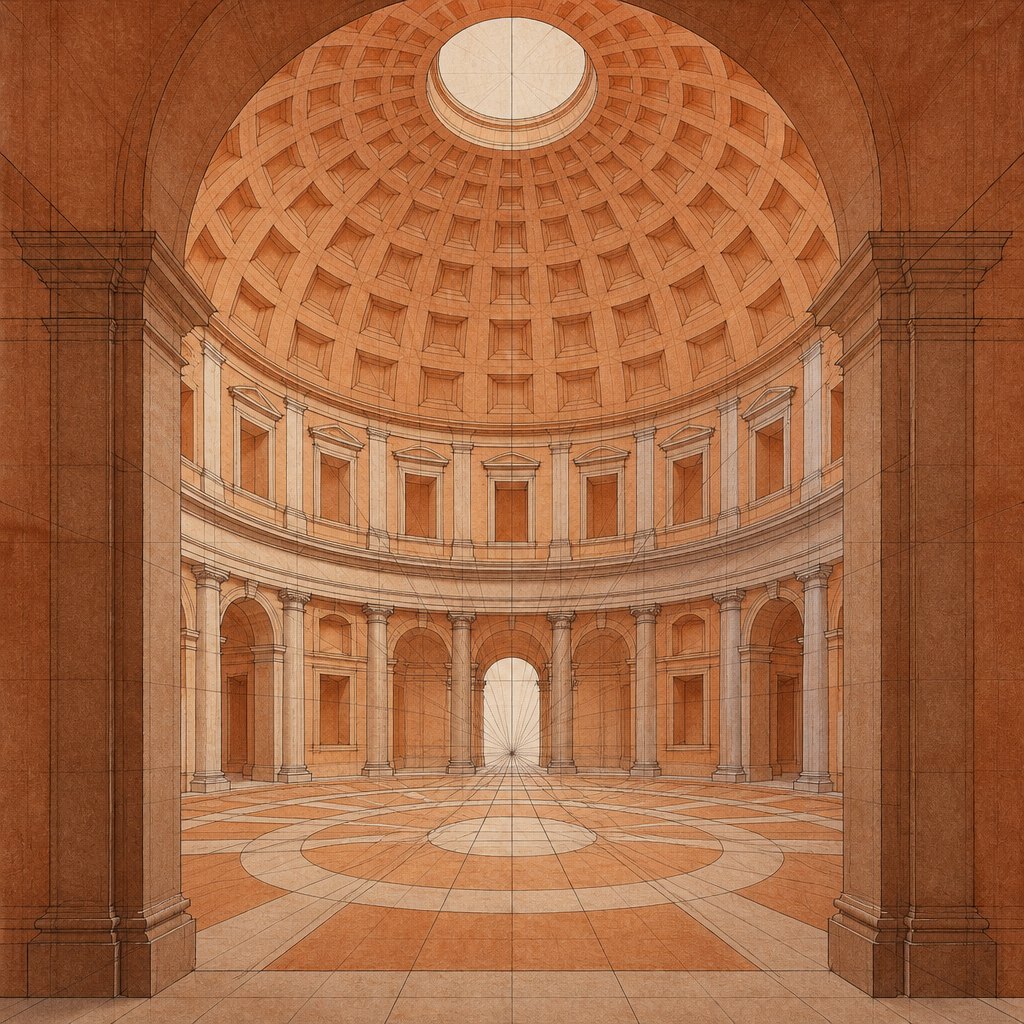
This example was generated from a prompt like: “A geometric study of a domed rotunda in strict linear perspective, single vanishing point ruled onto warm terracotta and stone tones, sharp architectural line work, workshop-clean light, no figures, evoking disciplined Renaissance draftsmanship without depicting any specific real building.”
Open the Florentine Renaissance Art Style generator →The place today
Florence's historic center is now largely a preservation zone: the Uffizi and Accademia draw crowds to the same paintings and Michelangelo's David that made the city famous, while working artists have shifted to restoration, leather ateliers, and small print studios in the Oltrarno district. Art schools still teach drawing from the same academic tradition, and conservators trained here work on Renaissance panels worldwide. The city's living art economy is smaller than its historical output, but its craft workshops — bookbinding, mosaic, goldsmithing — keep disegno's hand-trained discipline alive outside museum walls.
Compose your own
Start with the underdrawing, not the color. Sketch a figure's skeleton and musculature lightly before adding contour, since Florentine practice treats structure as the whole argument of a picture. Set a single, consistent light source and a single vanishing point, then measure every object's size against a fixed unit — a head-height, a column width — so the composition reads as one coherent space. Work in thin, built-up layers: an underpainting in earth tones, then glazes of color once the drawing beneath is resolved. Keep the palette restrained and let line, not saturation, carry the emotion. Finish by checking the whole panel from across the room.
Frequently asked questions
Why does Florence get credit for starting the Renaissance?
Its guilds and banking families ran a public contest culture — the 1401 Baptistery doors competition, the domed cathedral, Medici patronage — that rewarded technical breakthroughs like linear perspective and anatomical accuracy faster than any rival city could match.
What made Florentine light different from Venice's?
Florence sits inland with even, north-facing workshop light, good for drawing sharp contours. Venice's canal-reflected light is softer and colored, which is why Florentine art favors line and Venetian art favors color and glow.
Did the Medici control all of Florentine art?
No. Guilds, confraternities, and rival banking families commissioned most public art; the Medici were the largest private patrons, especially for humanist and mythological subjects, but churches and civic bodies drove the bulk of output.
Why did Florence's art dominance fade after 1520?
Its best talent, including Michelangelo, was drawn to Rome's papal commissions and bigger budgets, while political instability and the fallout of the 1527 Sack of Rome, which triggered the Medici's expulsion from Florence, weakened its own patronage.