 Art
Art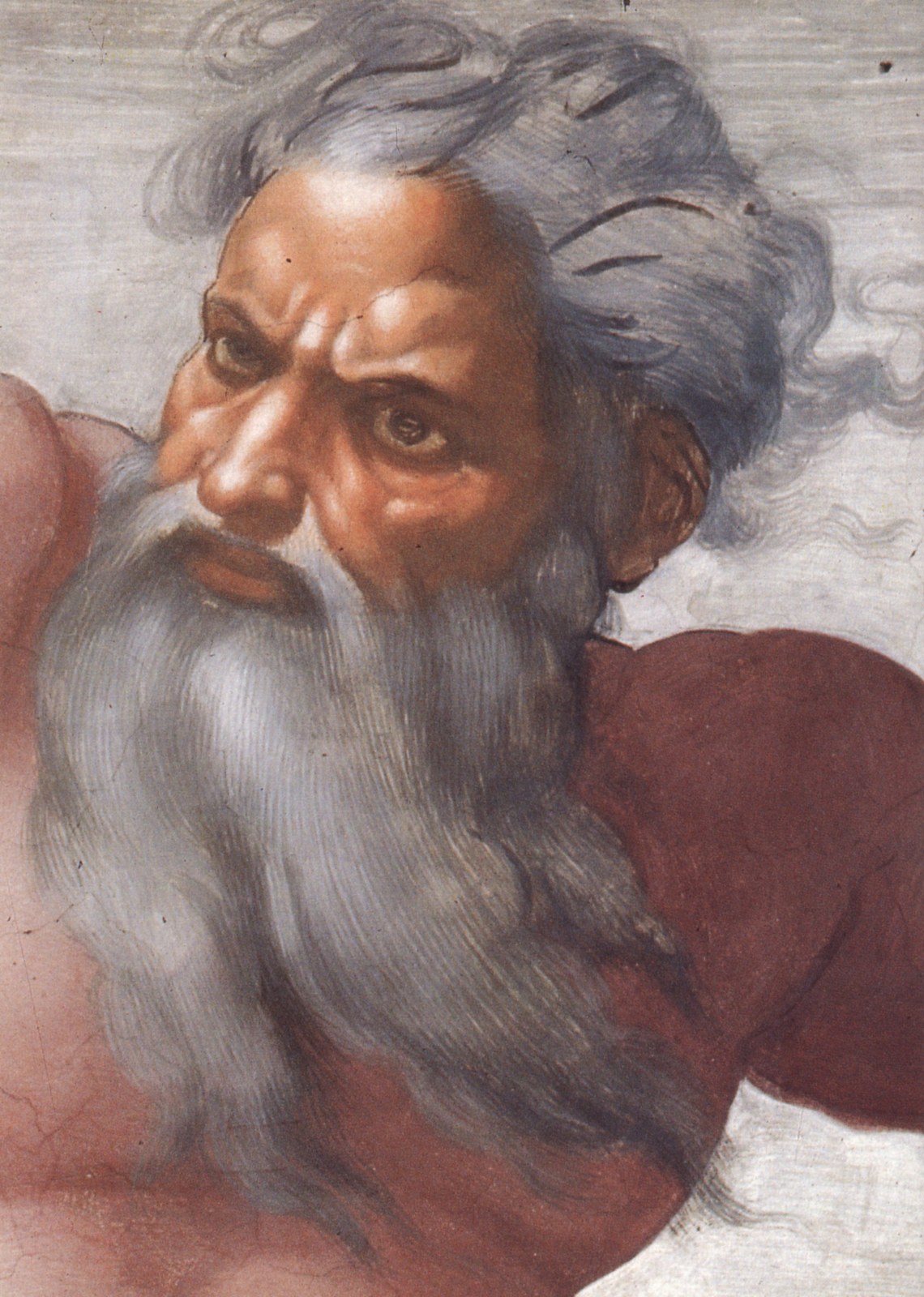
Roman art is the art produced for the papacy and its cardinals in a city that treated ancient ruins not as history but as a competitor to surpass, spanning the High Renaissance through the Baroque from roughly 1500 to 1700. Unlike Florence's guilds or Siena's merchant republic, Rome's patron was the Church itself, funded by tithes and pilgrimage from across Catholic Europe, with each new pope racing to outshine his predecessor's building projects before his own reign ended. Artists imported from Florence and elsewhere found a city littered with excavated antique sculpture, real engineering ruins, and unlimited wall space in basilicas built to overwhelm. That combination — deep pockets, a short patronage clock, and antiquity as a visible rival — produced an art of scale and persuasion: ceilings meant to be seen from far below, sculpture designed to move like flesh, and later, after the Council of Trent, an explicitly theatrical Counter-Reformation style meant to win believers back through sheer sensory force rather than argument.
What marks the region
Illusionistic ceiling painting
Vaults and domes are painted to dissolve upward into false sky, meant to be read from the floor far below.
Sculpture caught mid-motion
Marble figures are carved at the peak of physical action, drapery whipping, rather than in calm, static poses.
Antique quotation
Excavated Roman statues and ruins are directly studied and reworked, treating antiquity as a living rival rather than dead history.
Theatrical, directed light
Chiaroscuro and staged lighting from a hidden source dramatize a single moment, especially in Baroque chapels.
Grand fresco cycles for the Church
Basilica walls and papal apartments carry entire theological programs, painted to persuade as much as decorate.
Architecture as stagecraft
Facades, colonnades, and piazzas are choreographed to control a visitor's approach and produce a single dramatic reveal.
Local signatures
How to spot Rome art
- Crossed keys of Saint Peter
- → The papal emblem, marking a commission as coming directly from the pope's own office.
- Papal tiara and coat of arms
- → Individual popes stamped buildings and art with personal heraldry to claim credit within their own reign.
- Bees (Barberini family)
- → The Barberini pope's family crest, scattered across Bernini's Roman commissions as a sponsorship signature.
- Broken antique column fragments
- → Ruins incorporated into new compositions, showing off Rome's unmatched supply of excavated antiquity.
- Radiating divine light beams
- → A Baroque device staging heaven breaking into the physical world at a single dramatic point.
- SPQR banner lettering
- → The ancient Roman Senate abbreviation, still used on civic architecture to claim continuity with the empire.
The story
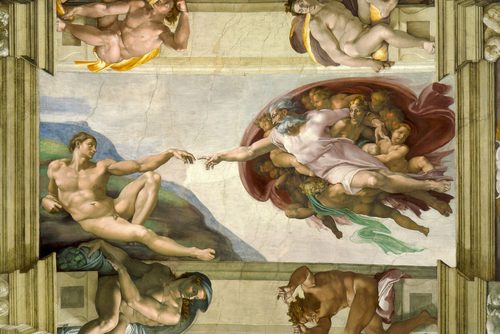
Rome's art boom began when the papacy, having returned from Avignon and consolidated its wealth, decided to rebuild the city as proof of the Church's authority. Julius II hired Michelangelo for the Sistine ceiling and Raphael for the papal apartments, competing projects meant to overshadow each other within a single decade. The 1527 Sack of Rome briefly scattered artists back to Florence and beyond, but papal rebuilding resumed within a generation. After the Council of Trent condemned Protestant plainness, the Church commissioned an explicitly persuasive art: Caravaggio's raw, spotlit realism gave sacred scenes street-level immediacy, while Bernini fused sculpture, architecture, and theater into single overwhelming experiences like the Cornaro Chapel. Rival Baroque architects Bernini and Borromini competed openly for papal commissions across successive reigns, each pope favoring a different faction. By 1700 Rome had absorbed talent from across Italy and Europe for two centuries straight, its churches functioning as a permanent, rotating exhibition of the era's most ambitious religious art.
Masterpieces of the place
| Work | Artist | Date | Why it matters |
|---|---|---|---|
| Sistine Chapel ceiling | Michelangelo | 1508-1512 | Nine scenes of Genesis painted for Pope Julius II, engineered to read correctly from the floor sixty feet below. |
| The School of Athens | Raphael | 1509-1511 | A papal apartment fresco imagining ancient philosophers together, painted in direct dialogue with Michelangelo's ceiling nearby. |
| Ecstasy of Saint Teresa | Gian Lorenzo Bernini | 1647-1652 | A sculpted chapel that fuses marble, hidden light, and architecture into one staged, theatrical vision. |
| The Calling of Saint Matthew | Caravaggio | 1599-1600 | A tavern scene lit by a single hard beam, bringing sacred narrative down to street level. |
| St. Peter's Basilica colonnade | Gian Lorenzo Bernini | 1656-1667 | A vast curved piazza engineered to embrace pilgrims like open arms as they approach the church. |
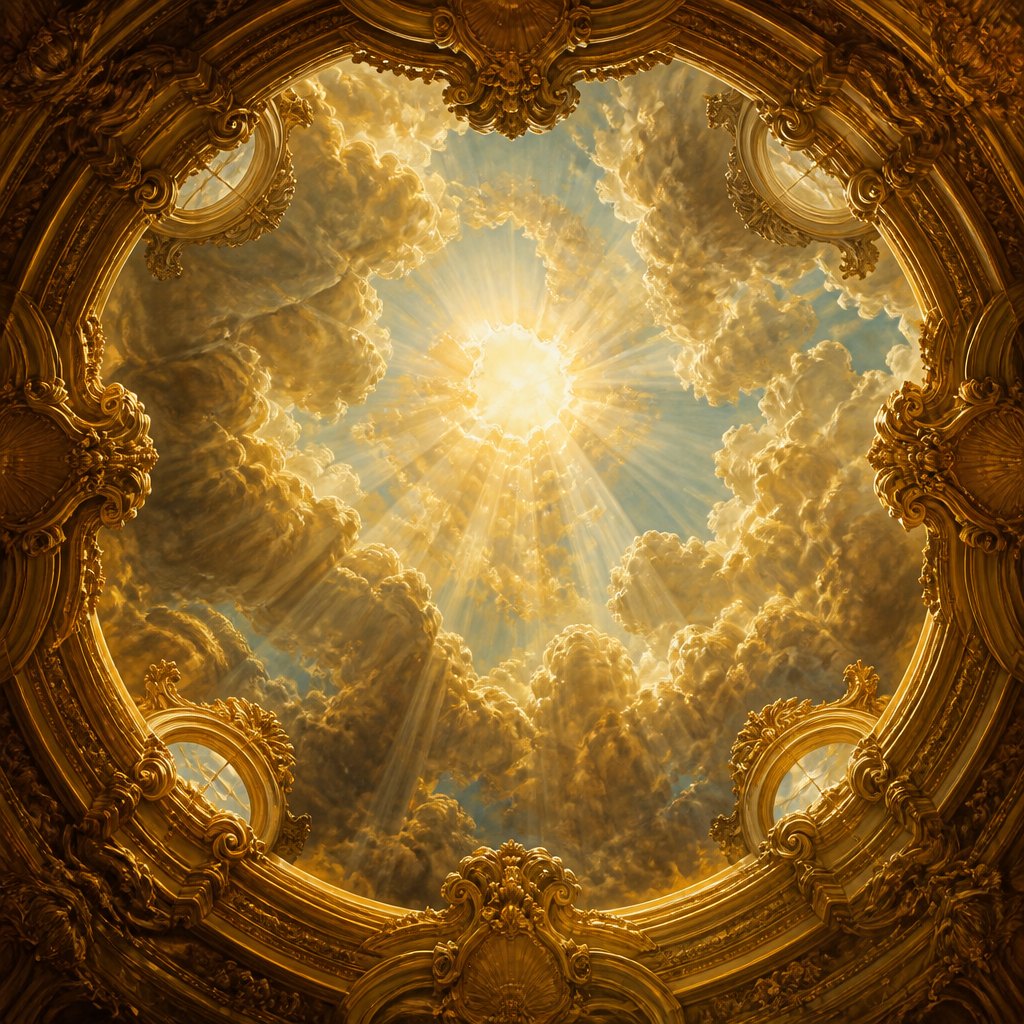 AI-generated
Work en plein air
Paint in the light of Rome
This example was generated from a prompt like: “A grand domed ceiling opening into painted false sky, dramatic radiating light beams, gilded stucco framing, Baroque theatrical illusion, rich ochre and gold tones, no figures, evoking an overwhelming papal-era interior without depicting any real building.”
Open the Fresco Narrative Renaissance Art Style generator →The place today
Rome's living art scene sits uneasily beside its density of masterpieces: contemporary galleries and institutions like MAXXI push new work, but any young Roman painter or sculptor works in the shadow of ceilings and chapels that set the bar three to five centuries ago. Restoration remains a major industry, with conservators trained specifically to maintain fresco and marble at the scale the Baroque left behind. Church commissions continue on a far smaller scale than the papal building boom, and most of Rome's art economy now runs on tourism, licensing, and museum administration rather than active patronage.
Compose your own
Think in terms of the whole room, not a single panel: plan a ceiling or wall as one continuous illusion meant to be read from a fixed viewing point far below. Push a single figure to the peak moment of its action — mid-turn, mid-fall — rather than a resting pose, and let drapery whip as if caught in real wind. Light one area hard and let the rest fall into shadow, using that contrast to direct the eye exactly where the drama happens. Study ancient sculpture directly for anatomy and gesture, then exaggerate the motion past what a static antique pose would allow. Finish by considering how architecture around the piece frames and directs a viewer's approach before they even see the main image.
Frequently asked questions
Why is Rome considered the birthplace of Baroque art?
After the Council of Trent, the Church wanted art that moved viewers emotionally, not just instructed them. Rome's papal wealth and antique sculpture supply let artists like Bernini and Caravaggio build a theatrical, high-drama style there first.
How did competition between popes shape Roman art?
Each pope had a limited reign to leave a mark, so successive popes raced to outbuild predecessors, commissioning bigger chapels, ceilings, and piazzas. That turnover pressure sped up stylistic change and rewarded dramatic, memorable statements.
What role did ancient ruins play in Roman art?
Excavated antique statues and structures gave Roman artists direct access to classical models most other cities only knew from descriptions, letting them study and directly compete with antiquity rather than imagine it.
Is Roman Baroque the same as Roman Renaissance art?
No. High Renaissance Rome (Michelangelo, Raphael, roughly 1500-1520) prized balance and calm; Baroque Rome, after 1600, prized motion, drama, and theatrical light, largely as a Counter-Reformation response.