 Art
Art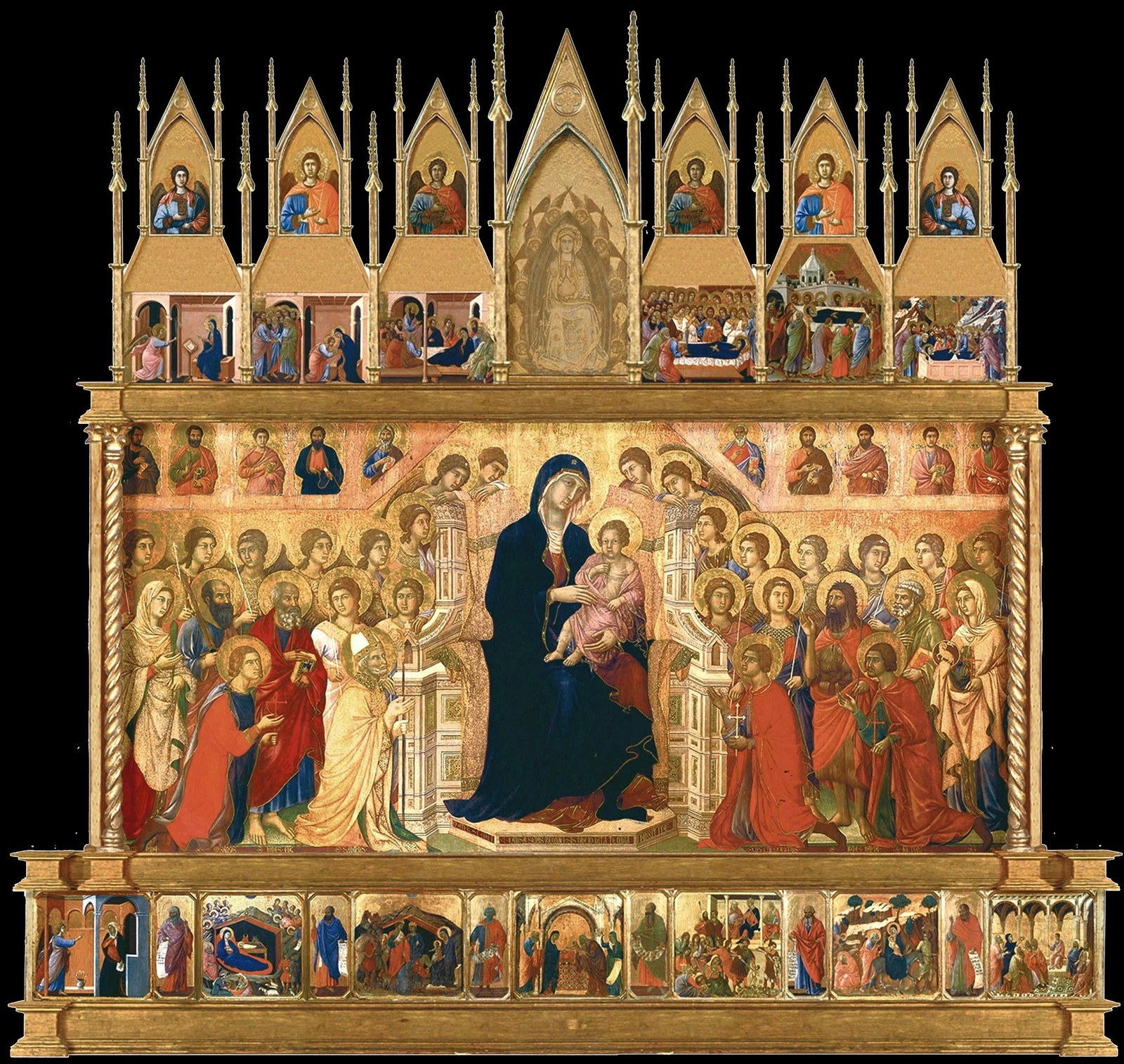
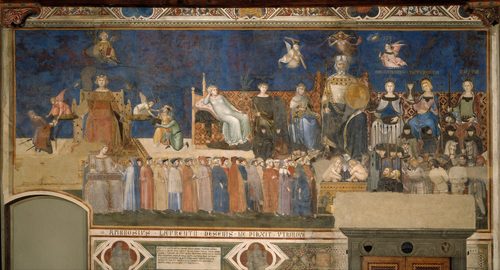
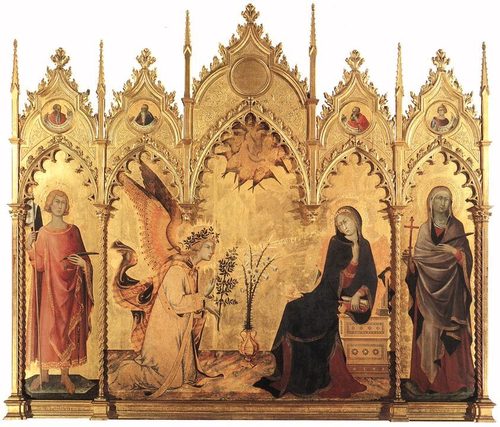

Sienese art is the painting tradition of a rival Tuscan republic that chose Byzantine gold and Gothic line over Florence's mathematical realism, flourishing from roughly 1260 to 1348. Siena was a banking and pilgrimage-route city on the Via Francigena, wealthy enough to commission its own cathedral and civic palace, and proud enough to make its art visibly different from its larger neighbor down the Arno valley. Where Florence pursued volume and perspective, Sienese painters kept flattened space, gold-leaf backgrounds, and elongated, elegant figures descended from Byzantine icons and French Gothic ivories. The city's government, one of Europe's first sophisticated civic republics, commissioned public art as political philosophy — frescoes explaining good and bad governance hung in the town hall itself. The Black Death of 1348 killed a huge share of Siena's population and its leading painters in a single year, and the tradition never fully recovered its momentum, leaving a body of work frozen at its Gothic peak rather than evolving into the Renaissance.
What marks the region
Gold-ground backgrounds
Beaten gold leaf replaces landscape or architecture behind figures, signaling sacred, timeless space rather than a real place.
Byzantine-Gothic figures
Elongated bodies, curving drapery, and tilted heads descend from Byzantine icon painting filtered through French Gothic ivory carving.
Flattened, decorative space
Sienese panels favor pattern and line over Florentine depth, keeping the picture plane legible as a beautiful surface first.
Civic allegory
Town hall frescoes translated political theory into image, personifying good and bad government as a public teaching tool.
Small-scale narrative predellas
Altarpiece bases carry tiny storytelling panels, some of the most inventive and least formal painting of the period.
Egg tempera on gilded panel
The dominant medium stayed tempera and gold long after Florence and Flanders had moved toward oil.
Local signatures
How to spot Siena art
- Gold-leaf ground
- → Marks a scene as sacred and outside ordinary time, the city's signature departure from Florentine realism.
- She-wolf with twins
- → Siena's founding myth emblem, tied to Romulus and Remus, appears on civic buildings as a claim to Roman origin.
- Black and white striped marble (balzana)
- → Siena's heraldic colors, echoed in the cathedral's banding and the city's own coat of arms.
- Elongated, S-curved figures
- → A Gothic ideal of grace over anatomical accuracy, borrowed from French ivory carvers.
- Personified Virtues and Vices
- → Civic frescoes used labeled allegorical figures to argue political philosophy in paint.
- Radiating haloes with punched tooling
- → Hand-tooled gold patterns around sacred figures, a craft signature specific to Sienese goldsmith-trained painters.
The story
Siena grew wealthy on banking and its position on the Via Francigena pilgrim road to Rome, and by the late 1200s it had the confidence to build a cathedral and government palace to rival Florence's. Its painters developed independently: Duccio di Buoninsegna fused Byzantine icon tradition with Gothic elegance in his Maestà of 1311, paraded through the streets on completion as a civic event. Simone Martini carried that grace into portable, exportable altarpieces that spread Sienese taste across Europe. The Lorenzetti brothers pushed further, painting the town hall's Allegory of Good and Bad Government as visual political theory. Then the Black Death arrived in 1348, killing an estimated two-thirds of the city and both Lorenzetti brothers within the same outbreak. Siena's population, wealth, and artistic leadership never recovered at the same pace as Florence's, and by 1555 the republic itself fell to Florentine conquest, leaving Sienese painting a beautiful, arrested tradition rather than a continuing one.
Masterpieces of the place
| Work | Artist | Date | Why it matters |
|---|---|---|---|
| Maestà | Duccio di Buoninsegna | 1308-1311 | A double-sided altarpiece carried through Siena in procession, fusing Byzantine gold with Gothic tenderness. |
| Allegory of Good and Bad Government | Ambrogio Lorenzetti | 1338-1339 | Frescoes in the town hall's council chamber arguing civic theory through personified virtue and vice. |
| Annunciation | Simone Martini | 1333 | A courtly altarpiece whose sweeping gold line and Gothic elegance became the exportable Sienese style. |
| Birth of the Virgin | Pietro Lorenzetti | 1342 | An early experiment in constructed architectural space rare for the flatter Sienese tradition. |
| Siena Cathedral facade sculpture | Giovanni Pisano | 1284-1297 | Gothic figure carving that shaped the elongated grace later painters adopted. |
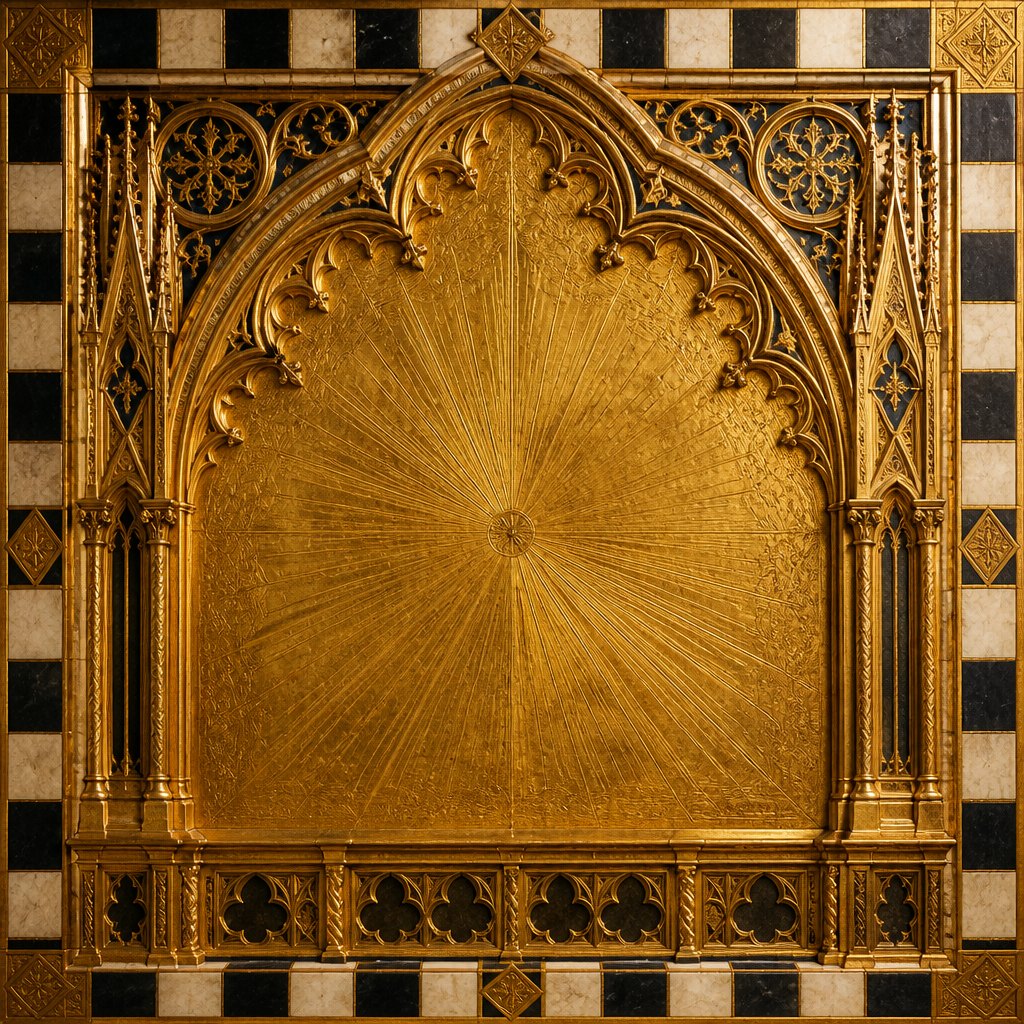 AI-generated
Work en plein air
Paint in the light of Siena
This example was generated from a prompt like: “A gold-leaf panel background with tooled radiating patterns and Gothic architectural framing, black-and-white banded marble border, warm burnished gold light, ornamental Gothic tracery, no figures, evoking a medieval Sienese altarpiece frame.”
Open the Sienese Gothic Art Style generator →The place today
Siena's old city, largely unchanged since the Black Death froze its expansion, is a UNESCO-listed museum of its own Gothic period, with the Palio horse race still run twice a year in the same shell-shaped square the frescoes depict. Contemporary art activity is modest — mostly restoration workshops maintaining the panel paintings and cathedral marble, plus a university art history program — rather than a living painting scene. The city trades on preserved atmosphere more than new production, drawing visitors who come specifically for the gold-ground period rather than for any current movement.
Compose your own
Begin with a drawing on gessoed panel, then apply bole (red clay) under any area meant to hold gold leaf, since the warm ground makes burnished gold glow rather than sit flat. Lay the gold first, burnish it to a mirror shine, and tool a pattern into it with a fine punch before painting a single figure, since the background is finished before the narrative begins. Keep figures tall and curving, weight resting on one hip, drapery falling in rhythmic folds rather than following gravity exactly. Mix tempera from egg yolk and dry pigment, building form in thin hatched strokes of light over a darker underlayer. Let elegance of line matter more than believable depth or shadow.
Frequently asked questions
Why does Sienese art look so different from Florentine art?
Siena was a political and commercial rival to Florence and deliberately kept a Byzantine-Gothic style — gold grounds, flattened space, elegant line — instead of adopting Florence's perspective and anatomical realism, treating the difference as civic identity.
What happened to Sienese painting after the Black Death?
The 1348 plague killed roughly two-thirds of Siena's population, including its leading painters, in months. The tradition survived but never regained its earlier momentum or population base, and Florence eventually absorbed the republic in 1555.
Was the Palio connected to Siena's art tradition?
Yes — the same civic pride and neighborhood rivalry that fund the Palio horse race funded Gothic altarpieces and the town hall frescoes; both are expressions of Siena's intense communal and district loyalty.
Did Siena ever produce Renaissance-style art?
Only partially. A few painters absorbed Florentine ideas after 1400, but the city's wealth and population never recovered enough to sustain a full Renaissance workshop culture like Florence's.