 Art
Art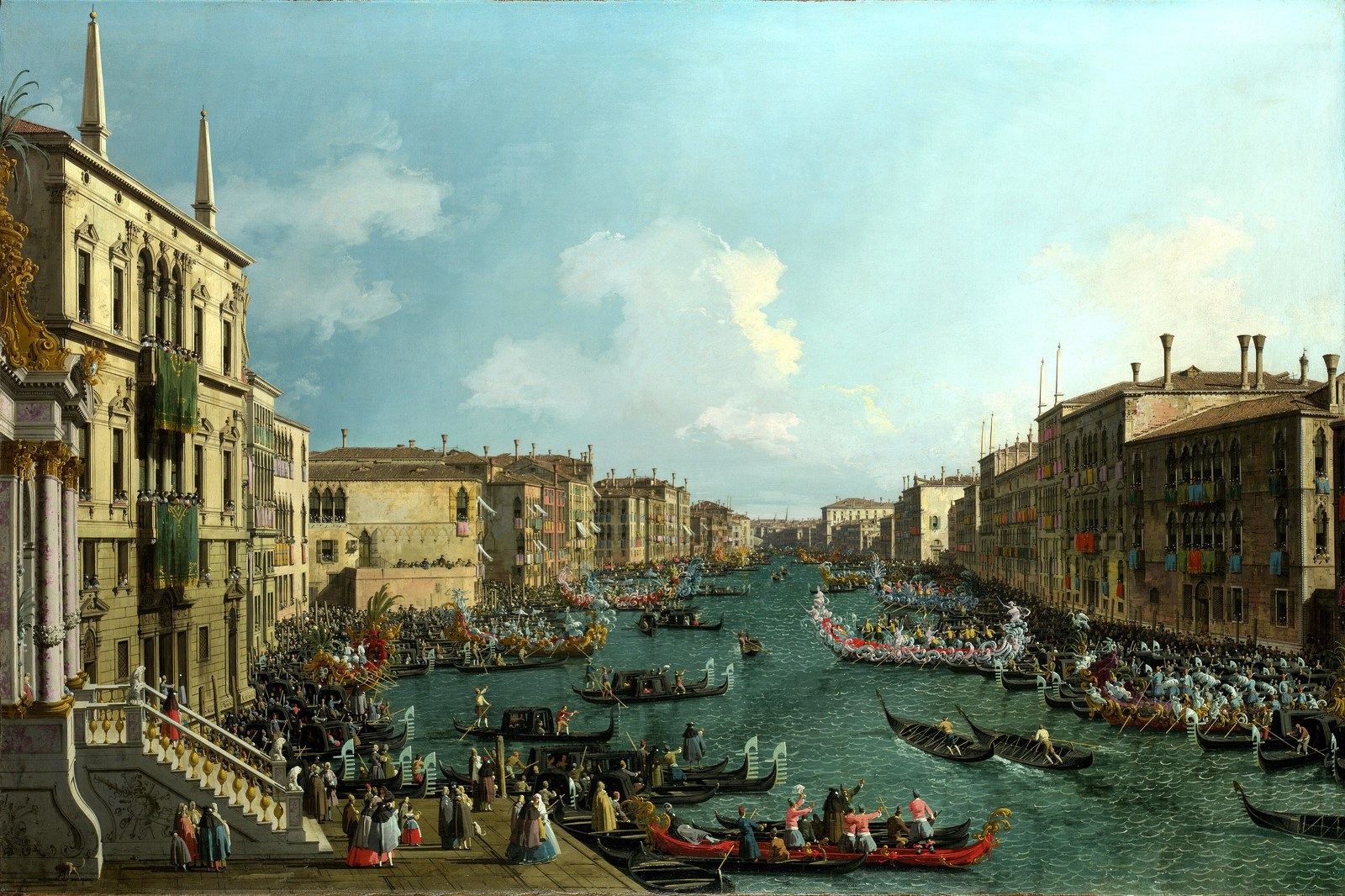
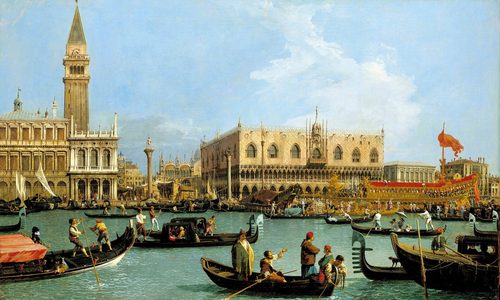
Venetian art is the painting tradition of the Republic of Venice, a maritime trading power that developed a distinct visual language built on color, atmosphere, and light rather than the precise line and drawing Florence and Rome prized. Venice's wealth came from Eastern Mediterranean and Byzantine trade, giving the city access to expensive pigments and a merchant class eager to display it, while the humid lagoon climate made fresco impractical and pushed painters toward oil on canvas far earlier than the rest of Italy. Titian dominated the 16th century with warm, glowing color and loose, expressive brushwork that influenced European painting for the next three centuries, followed by Veronese's theatrical, sumptuous banquet scenes and Tintoretto's dramatic, fast-moving compositions built on extreme perspective and shadow. By the 1700s, Venice's political power had faded, but its art adapted: Canaletto and his contemporaries turned the city's canals, festivals, and light itself into a booming export trade in view paintings, sold to wealthy travelers on the Grand Tour who wanted a souvenir of the city's famous atmosphere.
What marks the region
Color over line (colorito)
Venetian painters built form through layered color relationships rather than precise contour drawing, the opposite of the Florentine approach.
Oil on canvas
Venice adopted canvas and oil far earlier than the rest of Italy, since humid lagoon air made wall fresco impractical.
Warm, atmospheric light
A golden, hazy glow, informed by the lagoon's reflected water light, replaced the sharp clarity common in central Italian painting.
Theatrical scale and pageantry
Large banquet and ceremonial scenes crowded with figures, architecture, and animals celebrated Venetian wealth and spectacle.
Extreme perspective and shadow
Steep diagonals and dramatic dark-light contrast, especially in later Venetian painting, pulled the eye deep into the canvas.
Precise topographical view painting
18th-century painters rendered Venice's canals and squares with near-architectural accuracy, feeding a booming souvenir export market.
Local signatures
How to spot Venice art
- Winged lion of Saint Mark
- → Venetian civic and religious identity, the republic's official emblem appearing across public art.
- Gondola and canal reflection
- → Venice's unique watery geography, later central to the city's view-painting export trade.
- Rich brocade and velvet drapery
- → Trade wealth and Eastern luxury goods flowing through Venice's Mediterranean commerce.
- Golden, hazy light
- → The lagoon's reflected atmosphere, a visual signature distinguishing Venetian color from Florentine clarity.
- Crowded banquet table
- → Civic abundance and hospitality, a favorite subject for Venice's largest ceremonial canvases.
- Masked festival figures
- → Carnival and Venice's reputation for spectacle, later a staple of 18th-century view painting.
The story
Venice built its wealth on control of Eastern Mediterranean trade routes, importing spices, silk, and pigment from Byzantium and the Islamic world centuries before the rest of Italy had comparable access. That access, plus a lagoon climate too humid for durable fresco, pushed Venetian painters toward oil on canvas earlier than Florence or Rome, and toward color as the primary tool of composition. Giovanni Bellini established the workshop tradition in the late 1400s; Titian, his student, expanded it into the dominant European style of the 16th century, painting for popes, emperors, and the Venetian state alike. Veronese and Tintoretto, rivals working slightly later, pulled the tradition in opposite directions, Veronese toward sumptuous pageantry, Tintoretto toward dramatic speed and shadow. Venice's political and commercial power declined sharply after the 1500s as Atlantic trade routes bypassed the Mediterranean, but the city reinvented its art around tourism in the 1700s, when Canaletto and Francesco Guardi turned its canals and festivals into precise, exportable view paintings bought by Grand Tour travelers.
Masterpieces of the place
| Work | Artist | Date | Why it matters |
|---|---|---|---|
| Assumption of the Virgin | Titian | 1516-18 | A monumental altarpiece whose warm color and upward motion redefined Venetian religious painting. |
| The Wedding at Cana | Paolo Veronese | 1563 | A vast, crowded banquet scene showcasing Venetian appetite for pageantry and spectacle. |
| The Miracle of the Slave | Tintoretto | 1548 | A dramatic, steeply angled composition that pushed Venetian painting toward theatrical speed. |
| The Grand Canal from Palazzo Flangini | Canaletto | c. 1738 | A precise, sunlit canal view typical of the export paintings sold to Grand Tour travelers. |
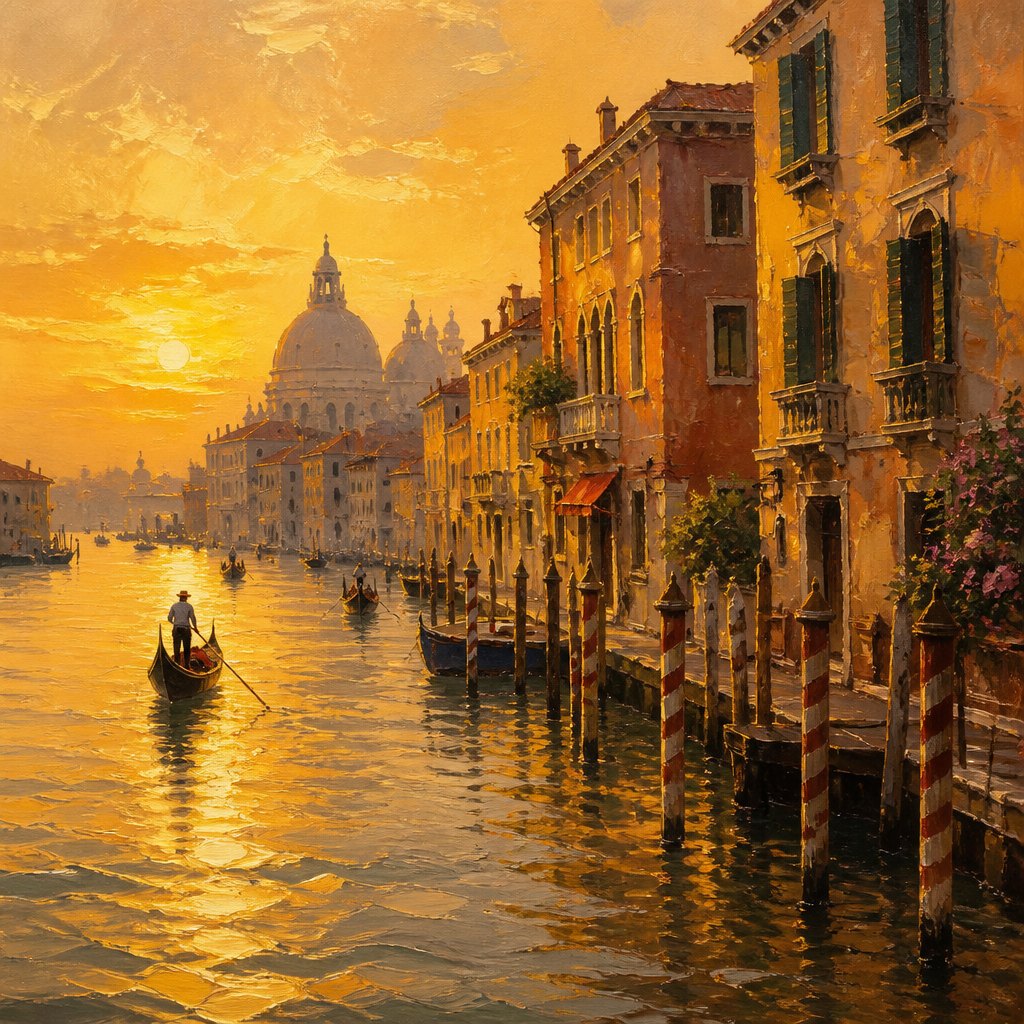 AI-generated
Work en plein air
Paint in the light of Venice
This example was generated from a prompt like: “A wide canal at golden hour: reflections rippling across the water, striped mooring poles, a row of shuttered facades, and distant church domes hazy in humid light, painted with warm, atmospheric color and loose, confident brushwork.”
Open the Venetian Colorism Renaissance Art Style generator →The place today
The Gallerie dell'Accademia holds Venice's core historical collection, while the Doge's Palace and countless churches still display major works in their original settings. The Venice Biennale, founded in 1895, made the city a contemporary art capital again, running alongside its Renaissance and Baroque legacy rather than replacing it. Venice today balances mass tourism built partly on its painted image with a serious, ongoing contemporary art scene centered on the Biennale and its national pavilions.
Compose your own
Build the image through color relationships first, not outline. Block in warm and cool color masses roughly, letting form emerge from where those masses meet rather than from a drawn contour underneath. Favor a golden, slightly hazy light over sharp clarity, and keep brushwork loose and visible in the final layers rather than smoothed flat. For a crowded, ceremonial scene, stage figures theatrically across a wide horizontal canvas with rich fabric and architecture filling the space. For a calmer, later approach, shift toward precise architectural line and a fixed, almost mechanical viewpoint looking down a canal or across an open square.
Frequently asked questions
What does colorito mean in Venetian painting?
It describes building a composition through layered color relationships rather than precise drawn outlines, the defining technical difference between the Venetian school and the line-focused Florentine and Roman traditions.
Why did Venice adopt oil on canvas so early?
The lagoon's humid climate made durable wall fresco impractical, so painters turned to oil on canvas, a shift that also suited Venice's wealthy trade in imported pigments and expensive fabric.
How is Canaletto's work different from Titian's?
Canaletto worked two centuries later, painting precise, almost architectural views of Venice's canals and squares for tourists, while Titian painted warmer, looser religious and mythological scenes for popes and rulers.
Is the Venice Biennale connected to the historic Venetian school?
Only by location. Founded in 1895, the Biennale showcases international contemporary art and shares no direct lineage with Titian, Veronese, or Tintoretto, though it trades on the city's painted reputation.