 Art
Art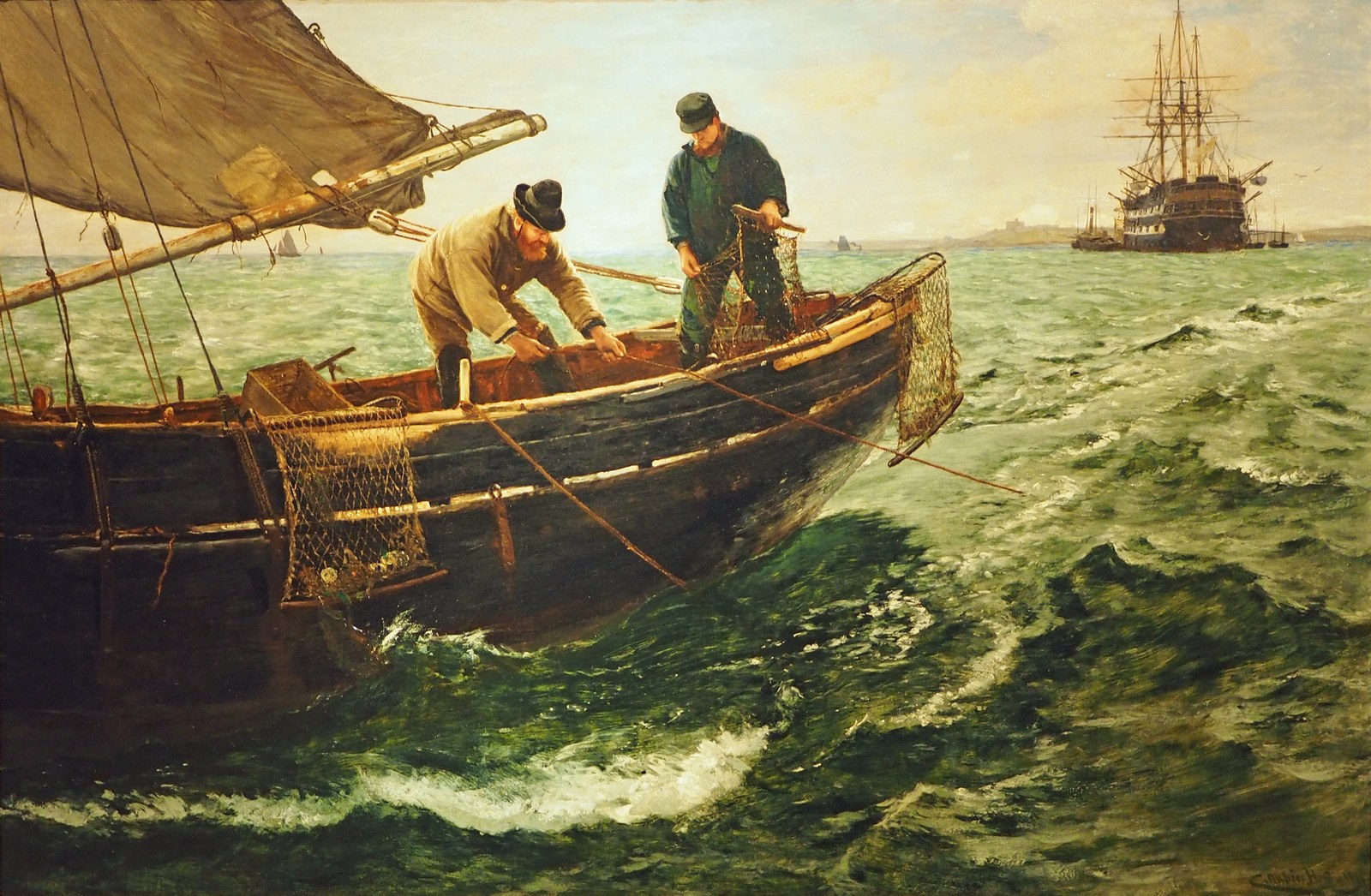
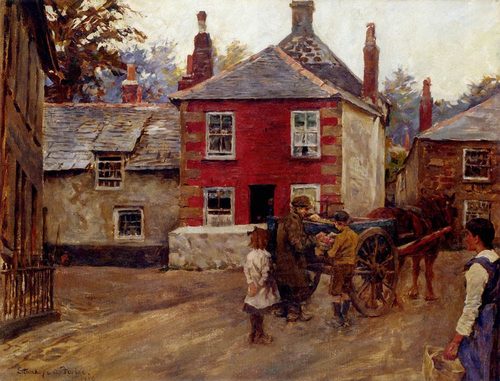
Newlyn is a working fishing harbour beside Penzance on Cornwall's far southwestern coast that became, from the 1880s, one of Victorian Britain's leading centres of naturalist plein-air painting. Artists trained in the outdoor, square-brush technique taught at continental academies, especially Antwerp and the artists' colonies of Brittany, settled in Newlyn for its cheap lodgings, mild winter light, and above all its working subject: a real fishing fleet and a community willing to sit as models. Stanhope Forbes, who arrived in 1884, became the group's central figure, painting large-scale genre scenes of fish sales, mending nets, and women waiting on shore, exhibited to acclaim at the Royal Academy in London. Unlike earlier picturesque harbour views, Newlyn School painting treated fishing labour as a serious, almost heroic subject, rendered with the same scale and gravity as history painting. Forbes and his wife Elizabeth founded the Newlyn School of Painting in 1899, formalising the colony's methods before its influence gradually gave way to the modernist colony at nearby St Ives.
What marks the region
Square brush naturalism
Painters used a flat, loaded brush technique learned from continental academies, especially Antwerp, to build form directly outdoors rather than finishing work later in the studio.
Real fisherfolk as models
Local fishermen, wives, and children sat for paintings in their own working clothes, giving Newlyn scenes a documentary authenticity distinct from posed studio genre painting.
Grey Atlantic light
Newlyn's soft, overcast coastal light, prized by painters over the harsher light further east, produced the school's characteristic muted grey-green tonal range.
Large exhibition scale
Even modest fishing subjects were painted at a scale associated with history painting, intended for submission to the Royal Academy's annual summer exhibition in London.
Purpose-built studios
Painters converted net lofts and fish cellars into large studios with big windows or skylights, positioned to let outdoor-matched daylight fall on the canvas.
Narrative of labour and loss
Compositions favour quiet narrative moments, a boat's return, a widow's wait, a shared meal, over dramatic incident, treating everyday fishing life as its own subject.
Local signatures
How to spot Newlyn art
- Oilskins and sou'westers
- → Waterproof fishing dress marks a figure as a working Newlyn subject rather than a generic rural labourer.
- Women waiting on the shore
- → A recurring figure of a wife or mother scanning the sea stands for the daily risk and loss built into a fishing community's life.
- PZ-registered boats
- → Fishing luggers marked with Penzance's PZ registration letters identify a scene as specifically Newlyn rather than a generic coastal port.
- Fish auctions on the beach
- → The open-air sale of the day's catch, a genuine local event, became the school's signature large-scale subject.
- Grey-green tonal harmony
- → A muted, overcast palette rather than bright colour identifies work painted in Newlyn's characteristic soft coastal light.
- Net-mending and darning
- → Figures repairing nets or sails represent the unglamorous, repetitive labour underlying the fishing economy.
The story
Newlyn's rise began in the early 1880s, when British painters returning from academies in Antwerp and colonies in Brittany sought a comparable subject at home: a working fishing village with dramatic light and a population willing to model. Walter Langley settled first, around 1882, followed by Stanhope Forbes in 1884, whose large canvas A Fish Sale on a Cornish Beach, exhibited at the Royal Academy in 1885, established Newlyn's reputation nationally. Frank Bramley, Norman Garstin, and Forbes's future wife Elizabeth Armstrong joined through the mid-1880s, forming a loose but recognisable school. The Passmore Edwards Art Gallery, funded by the philanthropist of that name, opened in Newlyn in 1895 to exhibit the colony's work locally. In 1899 Stanhope and Elizabeth Forbes founded the Newlyn School of Painting to train younger artists in the group's naturalist methods. The school's influence continued into the early twentieth century before newer colonies, particularly St Ives after the First World War, drew attention away from Newlyn's realist tradition.
Masterpieces of the place
| Work | Artist | Date | Why it matters |
|---|---|---|---|
| A Fish Sale on a Cornish Beach | Stanhope Forbes | 1885 | The large-scale Royal Academy exhibit that established Newlyn's reputation as a serious painting colony. |
| A Hopeless Dawn | Frank Bramley | 1888 | A grieving fisherman's household waiting for a boat that will not return, a defining Newlyn narrative subject. |
| The Rain It Raineth Every Day | Norman Garstin | 1889 | A wet Penzance seafront painted in the school's characteristic muted, overcast tonal range. |
| School Is Out | Elizabeth Forbes | 1889 | Village children on a Newlyn street, painted with the same documentary attention given to adult labour. |
| Never Morning Wore to Evening but Some Heart Did Break | Walter Langley | 1894 | A watercolour of a grieving fishing family, among the school's most direct treatments of loss at sea. |
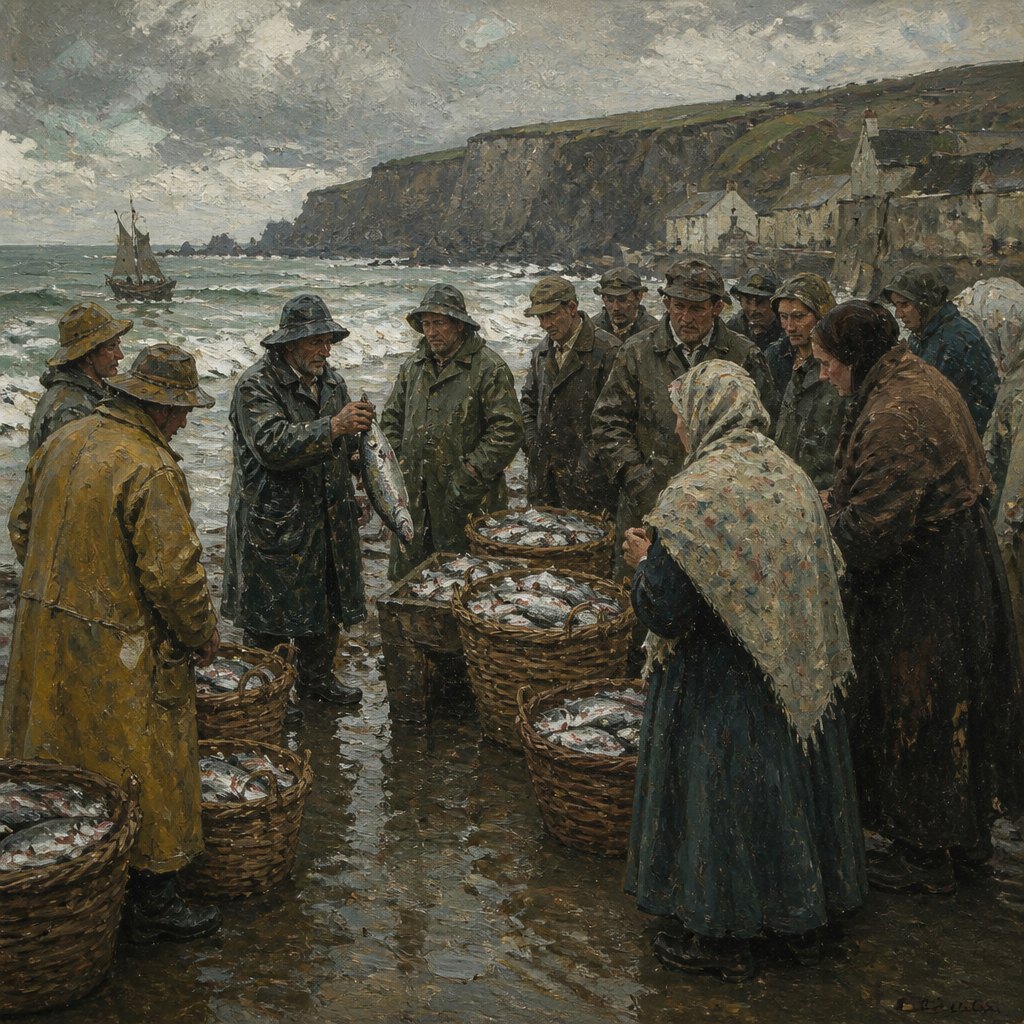 AI-generated
Work en plein air
Paint in the light of Newlyn
This example was generated from a prompt like: “A Cornish beach fish auction painted outdoors in muted grey-green tones: fishermen in oilskins, baskets of the day's catch, and women in shawls watching, rendered with loaded, square brushstrokes at large scale.”
Open the Newlyn Art Style generator →The place today
Penlee House Gallery and Museum in nearby Penzance holds the principal public collection of Newlyn School paintings and mounts regular exhibitions on the colony. Newlyn Art Gallery, in the former Passmore Edwards building, continues to show changing exhibitions on the harbourfront. Newlyn itself remains a working fishing port, still among England's busiest by catch value, and plein-air painting continues informally among artists drawn to the same coastal light that attracted the original school.
Compose your own
Choose a genuine working subject, a fish sale, mending nets, a boat's return, rather than an invented scene, and paint it at a scale usually reserved for history painting. Work outdoors or from direct observation, using a loaded, square-tipped brush to build form in confident strokes rather than smooth blending. Keep the palette muted: greys, greens, and browns suited to overcast coastal light, avoiding bright decorative colour. Dress figures in real oilskins, shawls, and working boots, and give faces the specific, unidealised features of actual sitters rather than generic types. Let quiet narrative detail carry the emotional weight.
Frequently asked questions
What is the Newlyn School?
A group of British painters who settled in the Cornish fishing village of Newlyn from the 1880s, painting real fishing life outdoors in a naturalist style learned from continental academies.
Who founded the Newlyn School?
Stanhope Forbes, who arrived in 1884, is usually credited as the central figure. He and his wife Elizabeth Forbes formally founded the Newlyn School of Painting to train other artists in 1899.
How does Newlyn differ from St Ives?
Newlyn's painters worked in an earlier, realist, plein-air tradition centred on fishing labour, while nearby St Ives became known later for naive painting and postwar abstraction.
Where can Newlyn School paintings be seen today?
Penlee House Gallery and Museum in Penzance holds the largest public collection, alongside works in national collections such as Tate and the Royal Academy in London.