 Art
Art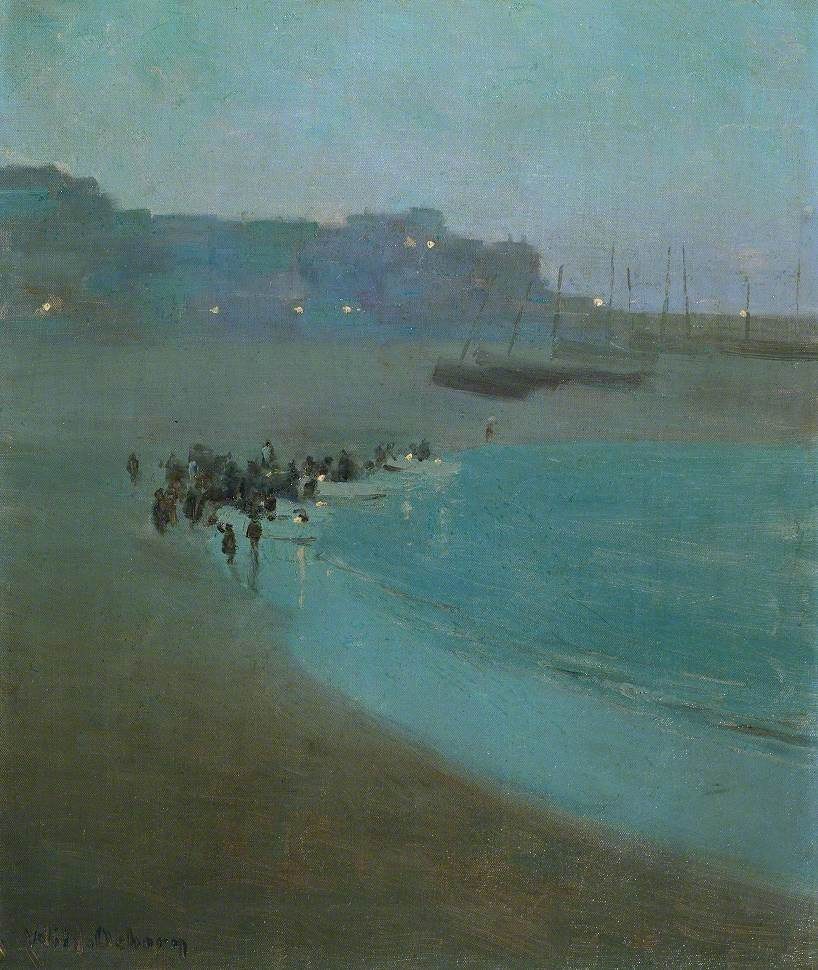
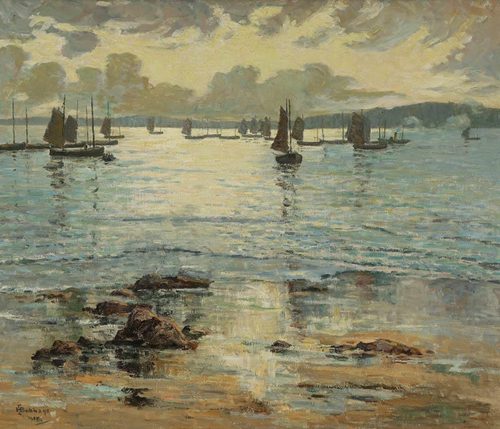
St Ives is a granite fishing town on the north Cornish coast that became one of Britain's most important art colonies, first through plein-air marine painters in the 1880s and then, more famously, through modernist abstraction from the late 1930s onward. Its clear, reflective Atlantic light, cheap studios in old net lofts, and a working harbour full of boats drew painters once the railway reached the town in 1877. The self-taught marine dealer Alfred Wallis, who began painting in his seventies using leftover ship's paint on scraps of cardboard, was discovered locally in 1928 and became a touchstone for artists searching for an unschooled, direct way of seeing. When Barbara Hepworth, Ben Nicholson, and the Russian constructivist Naum Gabo relocated to St Ives at the outbreak of the Second World War, the town's naive fishing-village tradition collided with international abstraction, producing a distinctly Cornish school that translated cliffs, tides, and granite into pared-down abstract form.
What marks the region
Ship's paint on scavenged board
Working boat paint from the harbour store, applied straight from the tin onto cardboard or plywood, gave early St Ives naive painting its chalky, flat surface and limited palette.
North-light studios in net lofts
Old fishermen's net lofts and pilchard cellars, chosen for their steady north-facing daylight, were converted into studios, shaping the colony's plein-air and later abstract work alike.
Landscape into abstraction
Postwar painters and sculptors translated the specific geology of the Penwith peninsula, cliffs, tin-mine engine houses, standing stones, into pared-down abstract shapes rather than invented forms.
Direct carving and piercing
Sculptors worked stone and wood directly rather than modelling in clay first, often piercing the material through with a hole to let landscape and light pass straight through the form.
Rival societies
The traditionalist St Ives Society of Artists and the breakaway modernist Penwith Society of Arts, founded in 1949, split the colony formally into competing camps for decades.
Untrained eye as ideal
Formally trained modernists prized Alfred Wallis's untutored perspective and flattened space as a model of authentic vision, deliberately working against academic drawing conventions.
Local signatures
How to spot St Ives art
- Godrevy Lighthouse
- → The white lighthouse visible across St Ives Bay recurs across generations of the colony's work as a fixed marker of place and horizon.
- Flat, reverse perspective
- → Boats and buildings shown from shifting or impossible angles at once, a naive-painting habit later modernists treated as a virtue rather than a flaw.
- Pierced abstract form
- → A hole carved through solid stone or wood, standing for the meeting of land, sea, and open sky characteristic of postwar St Ives sculpture.
- Granite and slate tones
- → A grey-blue-green palette drawn directly from local stone and Atlantic water, distinguishing St Ives work from warmer inland English painting.
- Working harbour boats
- → Moored fishing luggers with their registration letters mark a scene as St Ives rather than a generic coastal subject.
- Ship's-paint black and white
- → The limited palette of commercial marine paint, black, white, grey, ochre, identifies naive harbour paintings made in the Wallis manner.
The story
St Ives had painted marine subjects since the 1880s, after the railway reached the town in 1877 and artists such as Julius Olsson, who founded the St Ives Art Club in 1888, and Borlase Smart began working there alongside the fishing fleet. The colony's character changed in 1928, when painters Ben Nicholson and Christopher Wood met the retired marine dealer Alfred Wallis, then in his seventies and painting from memory on cardboard in ship's paint; his self-taught directness impressed both men deeply. At the outbreak of the Second World War in 1939, Nicholson, sculptor Barbara Hepworth, and the Russian-born constructivist Naum Gabo moved to St Ives, turning it into a hub of international abstraction. Postwar arrivals including Peter Lanyon, Terry Frost, and Patrick Heron extended the school through the 1950s. Tensions between traditional and modernist painters led to the founding of the breakaway Penwith Society of Arts in 1949. Tate St Ives opened in 1993, and the Barbara Hepworth Museum and Sculpture Garden, her former studio, opened to the public in 1976.
Masterpieces of the place
| Work | Artist | Date | Why it matters |
|---|---|---|---|
| The Hold House, Port Mear Square Island, Port Mear Beach | Alfred Wallis | c. 1932 | A ship's-paint harbour view painted from memory on scavenged cardboard, in flattened naive perspective. |
| Voyage to Labrador | Alfred Wallis | c. 1935-36 | A remembered voyage rendered in a limited palette that became the model for the colony's naive tradition. |
| PZ 134 | Christopher Wood | 1930 | A Cornish fishing-boat scene from Wood's brief but influential period painting alongside Alfred Wallis. |
| A Cornish Harbour by Moonlight | Julius Olsson | c. 1902 | A moonlit marine scene by the founder of the St Ives Art Club, representing the colony's earlier realist phase. |
| St Ives Harbour | Borlase Smart | c. 1930s | A harbour view by the organiser of the St Ives Society of Artists, bridging the town's realist and modernist eras. |
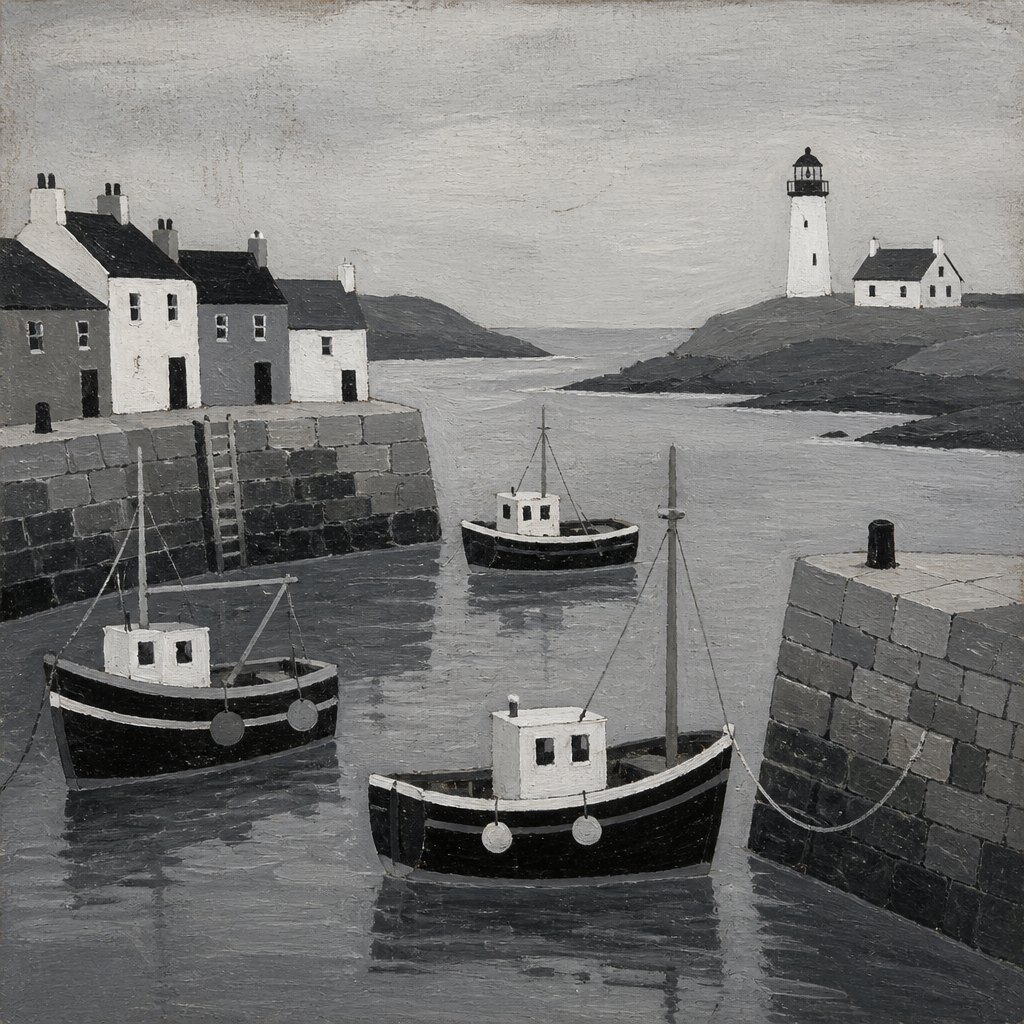 AI-generated
Work en plein air
Paint in the light of St Ives
This example was generated from a prompt like: “A small Cornish harbour scene in flat black, white, and grey ship's paint on rough board: moored fishing boats, a white lighthouse across the bay, granite piers in simplified, naive perspective.”
Open the St Ives Art Style generator →The place today
Tate St Ives, opened in 1993 on Porthmeor Beach, surveys the colony's modern art alongside changing exhibitions. The Barbara Hepworth Museum and Sculpture Garden preserves her working studio and garden. The Leach Pottery, founded by studio potter Bernard Leach in 1920, still produces and teaches stoneware in the same building. Penwith Gallery continues to show work descended from the 1949 breakaway society, and independent studios still operate around the old net lofts and harbourfront.
Compose your own
Work from the coastline itself rather than invention: cliffs, granite harbour walls, a single lighthouse across open water. For a naive look, use flat commercial-style paint in a narrow palette of black, white, grey, and ochre, applied without blending on rough board, and flatten perspective so near and far sit at similar scale. For the abstract strand, reduce a headland or standing stone to a simplified curved or pierced shape, and keep the palette to the greys, blues, and sandy ochres of granite and Atlantic light. Either way, let the material, board grain, raw stone, unglazed pot, show through the surface.
Frequently asked questions
What is the St Ives School?
It refers to the art colony centred on the Cornish fishing town of St Ives, spanning naive painters like Alfred Wallis in the 1920s-30s and the international abstraction of Barbara Hepworth, Ben Nicholson, and Naum Gabo from 1939 onward.
Who was Alfred Wallis?
A self-taught former marine dealer who began painting in his seventies using leftover ship's paint on cardboard and wood. Discovered by Ben Nicholson and Christopher Wood in 1928, his untrained style influenced the modernists around him.
How is St Ives different from the Newlyn School?
Newlyn, a few miles away, is an earlier, largely realist tradition of plein-air fishing-life painting from the 1880s. St Ives became internationally known later, for both naive painting and postwar abstraction.
Why did modernist artists move to St Ives in 1939?
Barbara Hepworth, Ben Nicholson, and Naum Gabo relocated there at the outbreak of the Second World War, partly for safety and partly drawn by the existing colony, the coastal light, and cheap studio space.