 Art
Art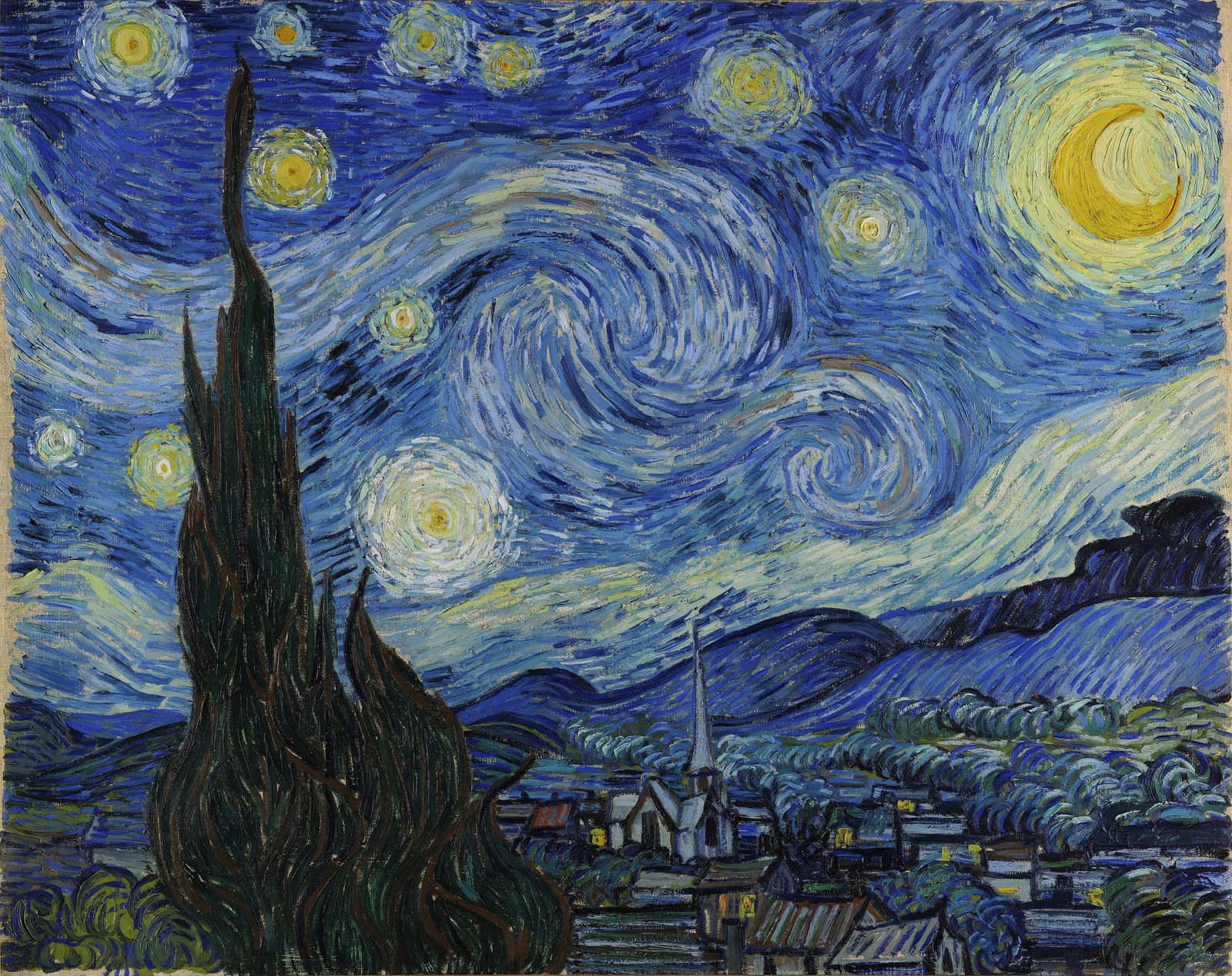
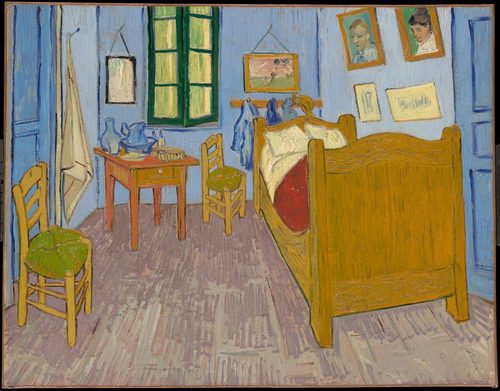
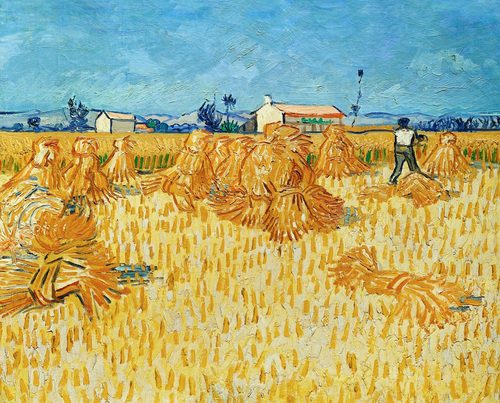
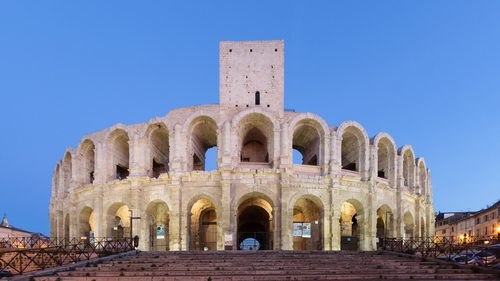
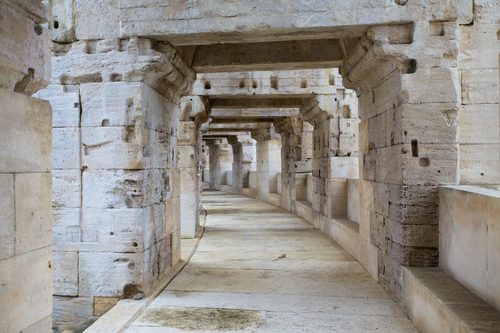
Arles became an art center in three distinct waves built on the same site. Founded as a Roman colony in 46 BCE, it grew into a major provincial capital with an amphitheatre seating around 20,000 and a theatre still used for performance, monuments that made the town a working showcase of imperial architecture and sculpture. Centuries later, as a stop on the pilgrimage road to Santiago de Compostela, Arles built the church of Saint-Trophime, completed through the twelfth century, whose sculpted west portal reused classical proportion for a dense Romanesque program of apostles and judgment scenes. The third wave arrived in February 1888, when the sharp southern light and flat, colorful landscape around Arles drew Vincent van Gogh, who rented the Yellow House and produced roughly 300 paintings and drawings in about fifteen months, working fast in high-key color to capture wheat fields, cafés, and the night sky over the Rhône. What repeats across these eras is the town's role as a site artists returned to record, each layer left visibly over the last.
What marks the region
Reused Roman spolia
Romanesque builders and sculptors at Saint-Trophime drew directly on the town's ancient Roman remains, echoing classical column and cornice forms in a medieval church portal.
Amphitheatre as continuous monument
The Roman arena was never abandoned; medieval Arles built housing inside its arches, and it has hosted public spectacle continuously from antiquity into the present.
Dense tympanum programs
Saint-Trophime's portal packs a Last Judgment and rows of apostles into tightly carved relief, a hallmark of the Romanesque pilgrimage-road sculpture Arles shares with other Camino stops.
High-key color under southern light
Van Gogh's Arles paintings use saturated, near-unmixed color straight from the tube, a direct response to the harsher, brighter light of Provence compared to northern Europe.
Rapid, thick brushwork
Working at speed in 1888-89, van Gogh applied paint in visible, directional strokes and heavy impasto rather than the smoother finish of his earlier Dutch work.
Local landscape motifs
Cypress trees, wheat fields, drawbridges, and café terraces recur as subject matter drawn straight from the town and countryside immediately around Arles.
Local signatures
How to spot Arles art
- Amphitheatre arcades
- → Tiered stone arches marking Arles's Roman civic identity, still standing and still used for public events.
- Sarcophagus rows at Alyscamps
- → The Roman-to-medieval necropolis avenue of stone tombs, a recurring subject for painters visiting the town.
- Tympanum in majesty
- → A central enthroned figure flanked by symbols of the four evangelists, the standard composition of the Saint-Trophime portal.
- Cypress spire
- → The dark, flame-shaped cypress tree, a recurring vertical motif in paintings of the Arles countryside.
- Yellow house facade
- → The small rented house van Gogh painted and lived in, a marker of his Arles period whenever it appears in his work.
- Swirling night sky
- → Star-filled, turbulent sky over the Rhône or town, associated with van Gogh's Arles night paintings.
The story
Julius Caesar's veterans founded Arelate as a Roman colony in 46 BCE, and by the late first century CE the town had an amphitheatre seating around 20,000 and an earlier theatre, both built from local limestone. The Alyscamps necropolis outside the walls was used for burials from Roman through medieval times and became famous across Europe as a site of ancient sarcophagi. From the eleventh century Arles lay on a branch of the pilgrimage route to Santiago de Compostela, and the church of Saint-Trophime, largely built through the twelfth century, gained its elaborately sculpted portal around the 1180s; the site was later listed among the Routes of Santiago de Compostela in France on the UNESCO World Heritage list in 1998. The town's modern artistic fame dates to February 1888, when Vincent van Gogh arrived seeking stronger light and color; he stayed until May 1889, painting sunflowers, café scenes, and the surrounding wheat fields before leaving after a period of illness.
Masterpieces of the place
| Work | Artist | Date | Why it matters |
|---|---|---|---|
| Amphitheatre of Arles | Unknown | c. 90 CE | A Roman arena for around 20,000 spectators, still used for public events today. |
| West portal of Saint-Trophime | Unknown | c. 1180s | A densely carved Romanesque tympanum ranked among the finest sculpture on the pilgrimage road. |
| Sarcophagi of the Alyscamps | Unknown | 3rd-4th century | Carved Roman stone tombs lining the necropolis avenue outside the old town walls. |
| Café Terrace at Night | Vincent van Gogh | 1888 | A high-key nocturnal street scene painted directly from a café in central Arles. |
| Starry Night Over the Rhône | Vincent van Gogh | 1888 | Gas-lit reflections and stars over the river, painted near the Yellow House. |
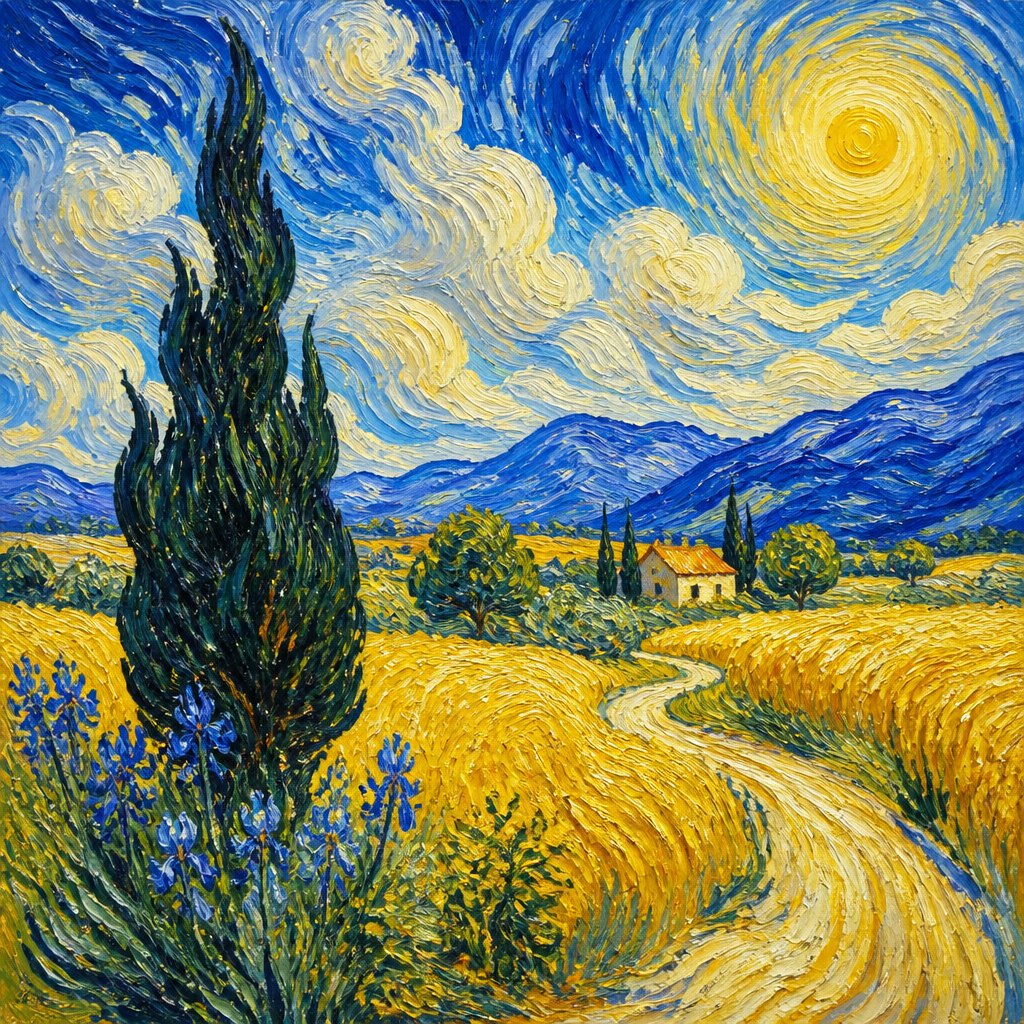 AI-generated
Work en plein air
Paint in the light of Arles
This example was generated from a prompt like: “A sunlit Provençal wheat field with a dark, flame-shaped cypress tree, painted in thick, swirling brushstrokes of high-key sunflower yellow and cobalt blue under a bright southern sky.”
Open the Arles Art Style generator →The place today
Arles's Roman amphitheatre and theatre still host public events and remain open as monuments, managed alongside the Musée départemental Arles antique, which holds the town's Roman collections. Saint-Trophime's cloister and portal are preserved as part of the UNESCO-listed pilgrimage route. The Fondation Vincent van Gogh Arles shows work responding to his stay, while the annual Rencontres d'Arles photography festival has made the town a major contemporary photography venue, adding a living exhibition tradition to its layered monuments.
Compose your own
For the Roman layer, draw tiered stone arcades and heavy round arches in warm ochre limestone. For the Romanesque layer, carve a dense figural tympanum with an enthroned central figure and rows of narrow, elongated saints beneath a plain rounded arch. For the van Gogh layer, work fast with thick, directional brushstrokes in high-key, near-unmixed color, pairing sunflower yellow against cobalt blue, and anchor the composition with a dark cypress spire, a wheat field, or a lamplit café terrace under a swirling night sky.
Frequently asked questions
Why does Arles have both Roman and Romanesque monuments?
It was founded as a Roman colony in 46 BCE and remained an important town through the Middle Ages, when it sat on a pilgrimage route to Santiago de Compostela, so both eras left major buildings still standing.
Why did van Gogh choose Arles?
He moved south in February 1888 seeking sharper light and stronger color than Paris offered, finding both in the Provençal landscape and townscape around Arles.
Is the Roman amphitheatre still used?
Yes. It continues to host public events, a continuous use dating back through medieval and modern adaptations of the original Roman arena.
What makes the Saint-Trophime portal significant?
Its densely carved tympanum and figures, completed around the 1180s, are considered among the finest Romanesque sculpture on the French pilgrimage roads to Santiago de Compostela.