 Art
Art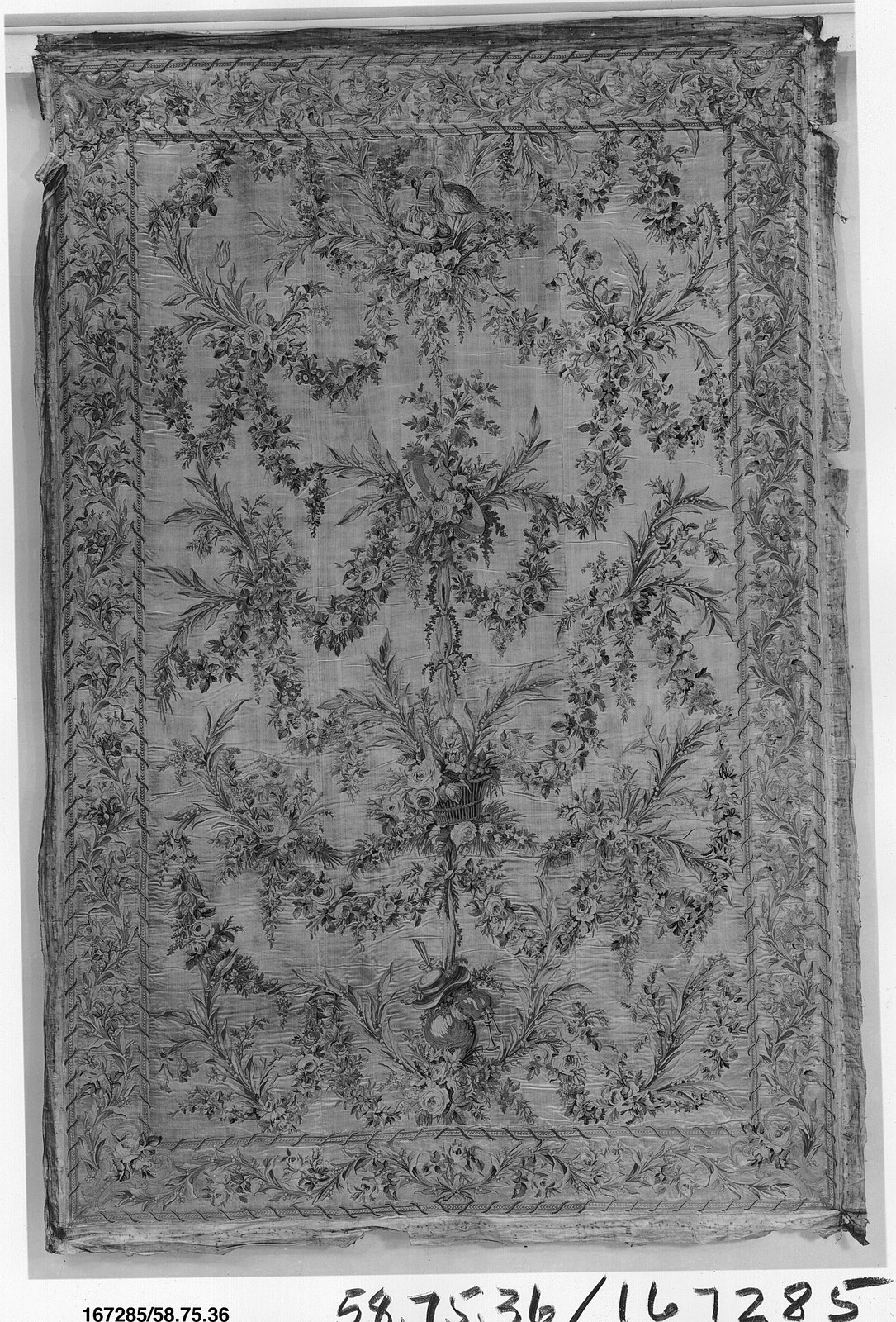
Lyon became a French art center through commerce rather than a royal court: Italian-style trade fairs from 1463 and an early printing industry from the 1470s made it one of France's most cosmopolitan cities, and a royal silk-weaving license granted in 1536 turned it into Europe's leading producer of luxury textiles. That industry needed skilled, precise drawing, since every woven pattern began as a hand-painted design, and Lyon built its art institutions around that need. The portraitist Corneille de Lyon worked there from the 1530s, painting small, sharply observed likenesses against plain colored grounds. In 1756 the city founded a free drawing school explicitly to train silk designers, and its graduates fed a nineteenth-century golden age of botanical flower painting, prized for the same exacting accuracy the looms required. Civic pride later brought large public commissions, including mural cycles for the fine arts museum, so Lyon's art history runs continuously from portrait miniature to textile pattern to public wall, anchored in disciplined observation rather than courtly display.
What marks the region
Botanical precision
Flowers are rendered with near-scientific accuracy, since nineteenth-century Lyon painters trained specifically to supply patterns the silk looms could reproduce thread for thread.
Plain-ground portraiture
Sixteenth-century Lyon portraits set the sitter against a flat green or blue background with no setting at all, keeping every detail of face and dress isolated and legible.
Drawing-school training
Artists trained through the city's dedicated design school rather than a painters' guild, a system built to serve the silk trade's constant need for skilled draftsmen.
Dark-ground still life
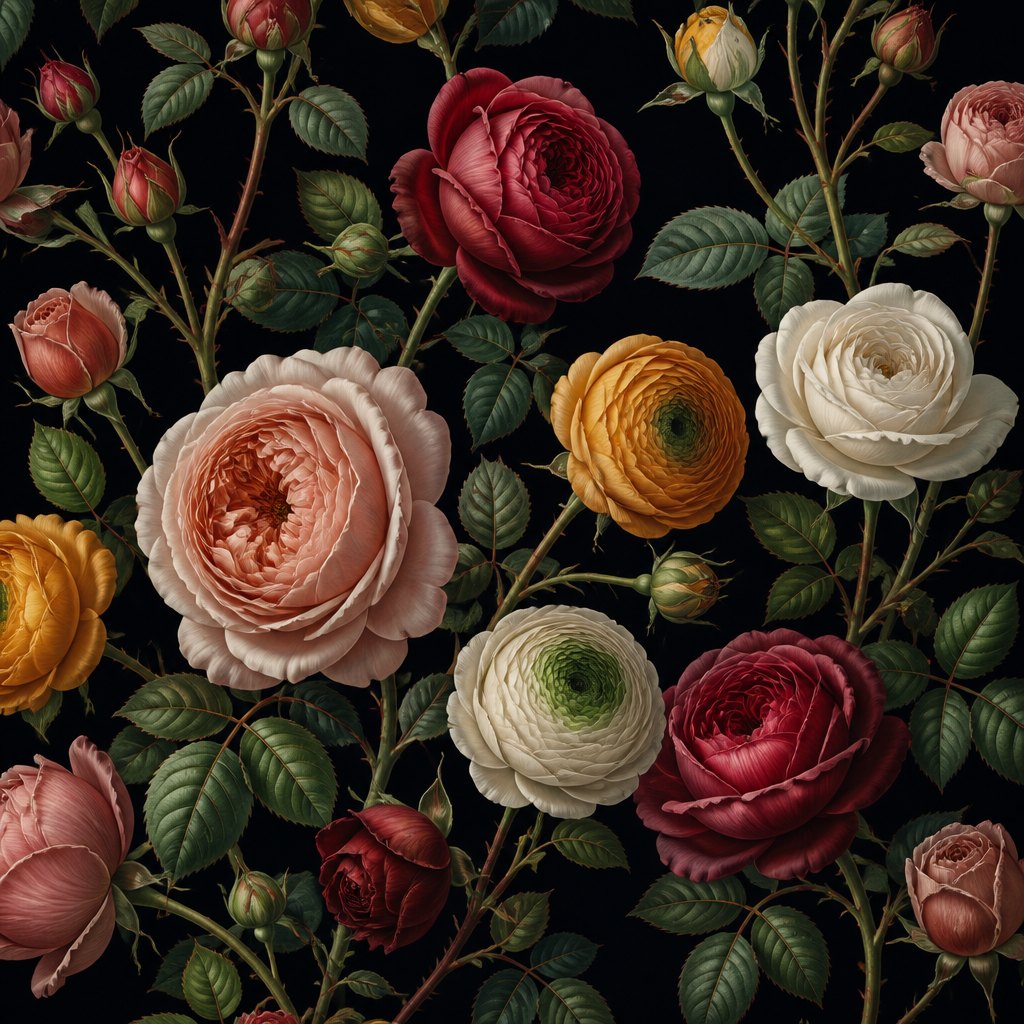
Flower and fruit studies sit against near-black backgrounds, a device borrowed from Dutch still life that makes color and texture read clearly for textile translation.
Civic mural commissions
Large-scale allegorical wall paintings for public buildings became a Lyon specialty in the later nineteenth century, framed as gifts of the arts and muses to the city itself.
Small, exportable format
Even ambitious works stayed modest in scale compared to Parisian history painting, suited to the commercial rhythms of a trading and manufacturing city rather than royal walls.
Local signatures
How to spot Lyon art
- Single rose or ranunculus
- → A favored motif of Lyon's flower painters, chosen for the clean, repeatable silhouette a silk weaver's loom could translate.
- Flat green or blue backdrop
- → The plain colored ground behind sixteenth-century Lyon portrait sitters, a regional alternative to Flemish or Italian interiors.
- Heraldic lion
- → A recurring civic emblem tied to the city's name and used in municipal and allegorical commissions.
- Dark, near-black ground
- → The near-opaque backdrop behind flower and fruit still lifes, isolating color and outline for textile pattern accuracy.
- River personification
- → Allegorical figures of the Rhône and Saône, the city's two rivers, appear in civic murals and public sculpture.
- Woven pattern border
- → Ornamental borders echoing silk-brocade repeats, marking a work's connection to the textile trade even in painted form.
The story
Lyon's position on the Rhône made it a trade crossroads, and Italian-style fairs chartered from 1463 drew merchants and, with them, Italian printing and design know-how; by the 1470s the city had one of France's earliest printing industries. Francis I granted Lyon silk manufacturers a royal monopoly in 1536, and the industry that followed made precise drawing a civic necessity. Corneille de Lyon settled in the city by the 1530s and became its leading portraitist, working in a plain-ground style distinct from Fontainebleau's contemporary Italianate manner. In 1756 the city founded the École royale gratuite de dessin to train pattern designers for the looms, and its curriculum shaped painters such as Antoine Berjon (1754-1843) and Simon Saint-Jean (1808-1860), whose flower still lifes won Salon medals through the mid-1800s. Between 1884 and 1886 Pierre Puvis de Chavannes painted a monumental mural cycle for the Palais Saint-Pierre, now the Musée des Beaux-Arts, adding a public civic dimension to a tradition rooted in private craft.
Masterpieces of the place
| Work | Artist | Date | Why it matters |
|---|---|---|---|
| Portrait of a Woman | Corneille de Lyon | c. 1540s | Small, sharply lit likeness against a plain ground, typical of Lyon's court portrait practice. |
| Flower studies for silk manufacturers | Antoine Berjon | early 1800s | Botanically precise studies made to be translated directly into woven silk patterns. |
| Vase of Flowers | Simon Saint-Jean | c. 1840s | A dark-ground still life exemplifying Lyon's Salon-medal flower painting tradition. |
| Le Bois sacré cher aux Arts et aux Muses | Pierre Puvis de Chavannes | 1884-1886 | Monumental civic mural for the Palais Saint-Pierre, now the Musée des Beaux-Arts Lyon. |
| Silk pattern book plates | Unknown | 18th-19th century | Hand-painted textile designs produced by Lyon's drawing school for the city's looms. |
 AI-generated
Work en plein air
Paint in the light of Lyon
This example was generated from a prompt like: “A dense study of roses and ranunculus rendered with exact botanical precision against a near-black background, composed as if intended for translation into a woven silk pattern.”
Open the Lyon Art Style generator →The place today
The Musée des Beaux-Arts de Lyon, housed in the Palais Saint-Pierre, holds the Puvis de Chavannes murals alongside Lyon School portraits and flower paintings. The Musée des Tissus preserves centuries of silk pattern design, the industry that shaped the city's visual training. Silk weaving survives on a small artisan scale in the Croix-Rousse district, where a handful of workshops still operate traditional Jacquard looms, keeping the link between drawing and textile alive as a living, if diminished, craft.
Compose your own
To evoke Lyon's flower painting, render a single bloom or small bouquet with near-botanical precision against a dark, almost black ground, keeping every petal edge and vein legible enough to imagine as a woven repeat. For a portrait in the earlier Lyon manner, isolate the sitter against a flat, unmodulated green or blue field with no setting, letting fine detail in collar or headwear carry the composition. For a civic mural mood, use pale, flowing draperies and calm allegorical figures spread across a wide, quiet horizontal field rather than dramatic action.
Frequently asked questions
What is the Lyon School of painting?
A loose term covering Lyon's Renaissance court portraiture and, more commonly, its nineteenth-century flower painters, both shaped by the city's silk industry's demand for precise drawing.
Why did Lyon produce so many flower painters?
Its silk industry needed botanically accurate designs that weavers could translate into woven patterns, so the city's drawing school trained generations of artists in exact floral observation.
How does Corneille de Lyon differ from Fontainebleau painters?
Corneille de Lyon worked in a plain-ground, closely observed portrait style for merchant and court clients, distinct from Fontainebleau's Italianate mythological wall decoration made for the crown.
Can Lyon's silk-design tradition still be seen today?
Yes. The Musée des Tissus displays historic patterns, and a small number of artisan workshops in the Croix-Rousse district still weave on traditional Jacquard looms.