 Art
Art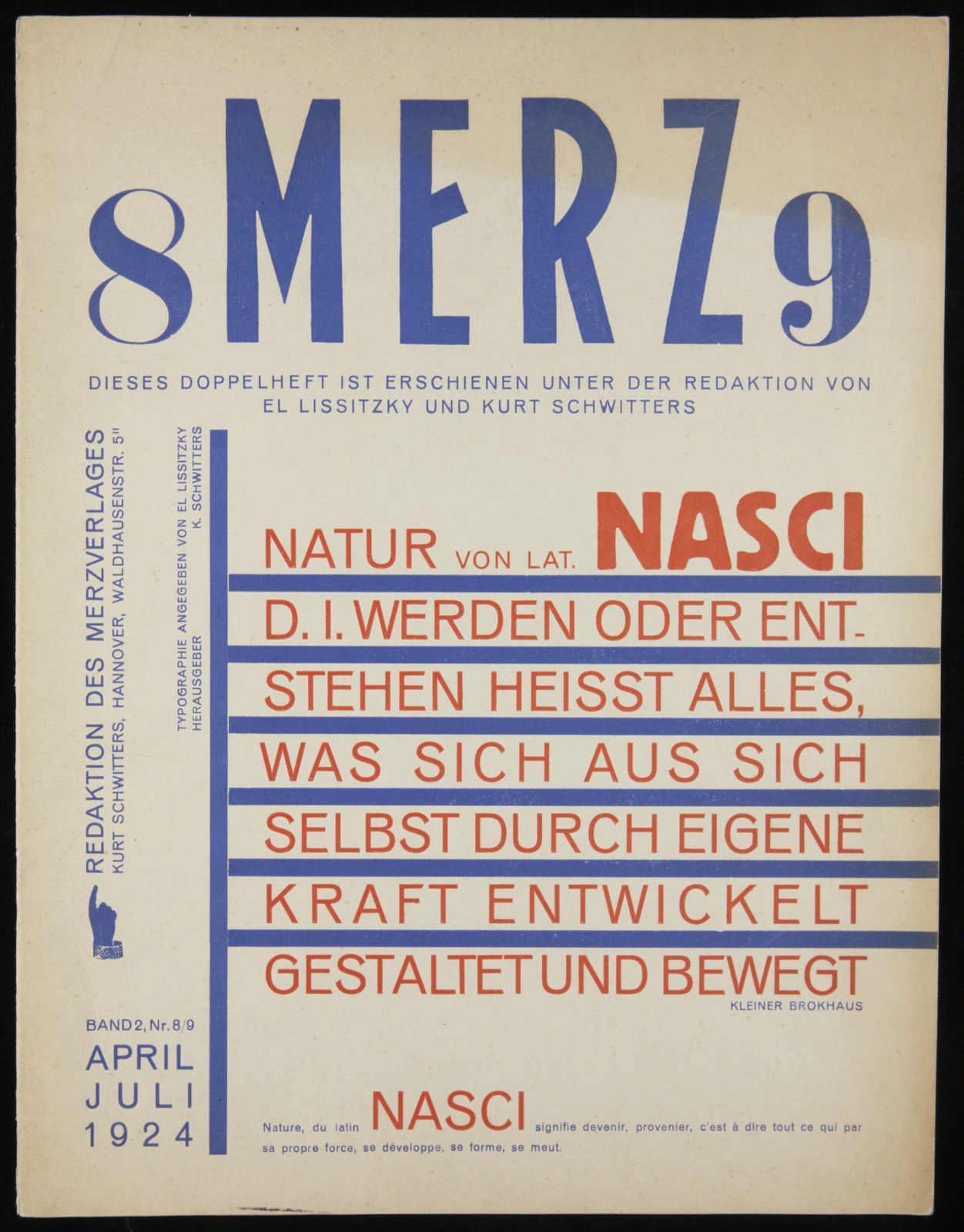
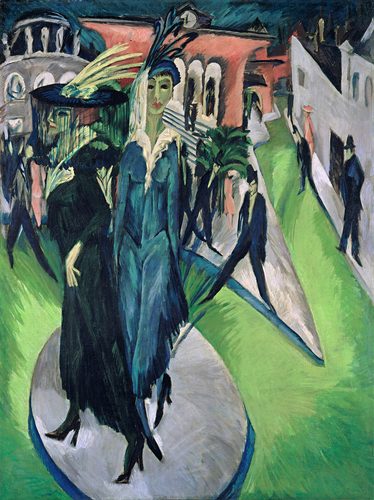
Berlin is the German capital where successive avant-garde movements used the city's speed and social upheaval as raw material, moving from Expressionist unease through Dada provocation to biting postwar satire within about two decades. Die Brücke relocated from Dresden to Berlin in 1911, and Ernst Ludwig Kirchner's street scenes turned the city's crowds and streetwalkers into jagged, acid-colored figures conveying urban anxiety. Germany's 1918 defeat and revolution triggered Berlin Dada, where Hannah Höch, Raoul Hausmann, and John Heartfield pioneered photomontage, cutting and reassembling newsprint and photographs into anti-war, anti-bourgeois compositions. Through the 1920s, as hyperinflation gave way to a brief Weimar boom and its cabaret culture, Otto Dix and George Grosz turned a harder, more realist style called New Objectivity on war-wounded veterans, profiteers, and social hypocrisy. Käthe Kollwitz's prints, grieving her own war losses, ran alongside this satire as a quieter register. The 1933 Nazi takeover branded this entire legacy "degenerate" within a few years.
What marks the region
Jagged, agitated line
Sharp, unstable contours and acid, non-naturalistic color rendered the city's crowds and nightlife as a source of nervous energy rather than description.
Street life as subject
Crowds, cafes, and streetwalkers replaced the isolated portrait sitter, making the public street itself the era's central subject.
Photomontage
Cutting and reassembling photographs, newsprint, and typography produced sharp political satire that painting alone couldn't move as quickly.
Biting social caricature
Postwar painters exaggerated social types, the profiteer, the veteran, the cabaret host, into pointed, unflattering realism.
Printmaking for protest
Woodcut and lithograph editions let socially engaged artists circulate grief and protest images beyond gallery walls.
Anti-bourgeois provocation
Manifestos and confrontational exhibitions treated shocking the establishment as part of the work itself, not a side effect.
Local signatures
How to spot Berlin art
- Sharp-angled streetwalker figures
- → Kirchner's Expressionist Berlin type, spike-heeled and elongated against jagged city crowds
- Photomontage of newsprint and photographs
- → Dada's assembled political critique, built from mass media itself
- War-scarred prosthetic or masked figures
- → New Objectivity's unflinching depiction of the war-wounded body
- Cabaret top hat and monocle
- → Weimar nightlife and decadence rendered as social shorthand
- Grieving mother or widow figure
- → Kollwitz's social realist register of wartime and postwar loss
- Fractured, tilted city grid
- → urban speed and alienation built directly into the composition's structure
The story
Die Brücke's founders relocated from Dresden to Berlin in 1911, and Ernst Ludwig Kirchner's style sharpened into jagged, anxious street scenes reflecting the capital's faster pace. Wartime loss shaped Käthe Kollwitz's grief-laden prints through the war years. Germany's 1918 defeat and revolution triggered Berlin Dada: Hannah Höch, Raoul Hausmann, and John Heartfield pioneered photomontage, cutting up photographs and newsprint into anti-war, anti-bourgeois compositions between roughly 1918 and 1920. The Novembergruppe organized radical artists across disciplines in the same years. Through the mid-1920s, as hyperinflation gave way to a brief Weimar boom, Otto Dix and George Grosz turned a harder, satirical realism called New Objectivity on war-wounded veterans, profiteers, and cabaret excess. The Nazi seizure of power in 1933 branded this entire legacy "degenerate," culminating in the 1937 Munich exhibition and mass confiscations that scattered or destroyed thousands of works and drove many of these artists into exile.
Masterpieces of the place
| Work | Artist | Date | Why it matters |
|---|---|---|---|
| Berlin Street Scene | Ernst Ludwig Kirchner | 1913 | Jagged, acid-colored streetwalkers standing for the capital's nervous urban energy. |
| Cut with the Kitchen Knife | Hannah Höch | 1919 | A landmark photomontage assembled from newsprint and photographs, foundational to Berlin Dada. |
| The Skat Players | Otto Dix | 1920 | Grotesque war-cripple figures rendered in unflinching New Objectivity detail. |
| Pillars of Society | George Grosz | 1926 | A satirical indictment of Weimar's military, press, and clergy elite. |
| The Grieving Parents | Käthe Kollwitz | 1932 | A war memorial sculpture mourning the artist's own son, killed in 1914. |
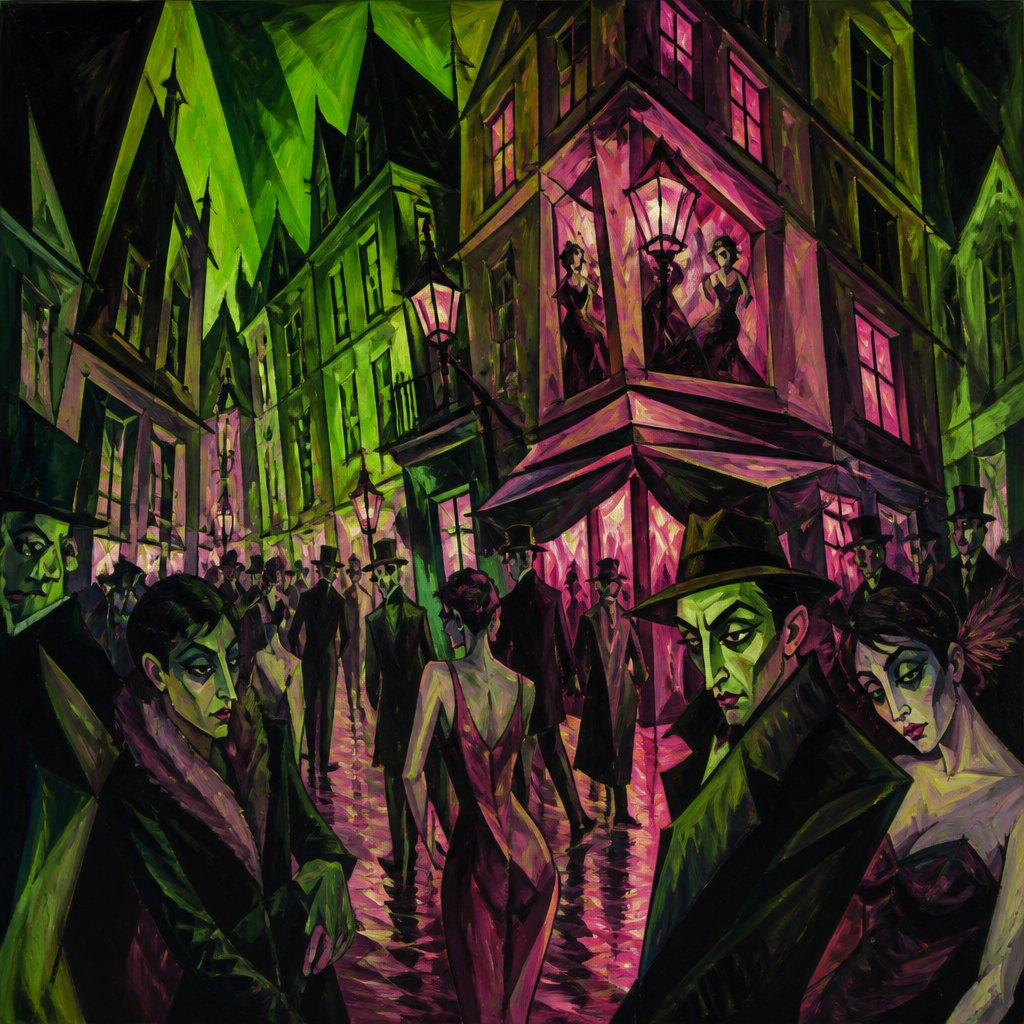 AI-generated
Work en plein air
Paint in the light of Berlin
This example was generated from a prompt like: “A crowded nighttime city street corner rendered in jagged angular lines and acid greens and pinks, tall narrow buildings, glowing cabaret signage reflected on wet pavement, nervous energetic brushwork, flattened and unsettling perspective throughout the composition.”
Open the Berlin Expressionism Art Style generator →The place today
The Brücke Museum and the Berlinische Galerie preserve the city's Expressionist and Dada holdings, while the Neue Nationalgalerie and Hamburger Bahnhof show related modern work at larger scale. Berlin's gallery-dense Mitte district continues the city's older habit of fast-moving, confrontational art scenes, and Kollwitz's memorial to grief still stands, enlarged, in the Neue Wache on Unter den Linden. Small independent galleries and project spaces across the city still favor sharp political statement over polish, echoing the era's original nerve.
Compose your own
Exaggerate urban figures into sharp angles and jarring, non-naturalistic color rather than smoothing them into realism. Make the crowd or the street itself the subject instead of any single posed sitter. Cut up printed photographs and text and reassemble them into a new, pointed image rather than painting a scene from scratch. Caricature social types, the profiteer, the veteran, the host, without softening the satire into gentle humor. Use printmaking for anything meant to circulate as protest rather than hang in a private collection. Let visible speed and unease stay in the drawing instead of resolving it into calm.
Frequently asked questions
Why did Die Brücke move to Berlin?
The group relocated from Dresden in 1911 seeking a bigger, more modern audience; the capital's speed and street life sharpened Kirchner's style into more anxious, jagged Expressionism than the group's earlier Dresden work.
What did Berlin Dada pioneer?
Photomontage as a political art form. Hannah Höch, Raoul Hausmann, and John Heartfield cut and reassembled photographs and print media into satirical anti-war, anti-bourgeois compositions around 1918 to 1920.
What is New Objectivity?
A harder-edged, realist reaction to Expressionism that emerged in 1920s Weimar Berlin. Otto Dix and George Grosz used precise, satirical realism to depict war-wounded veterans, profiteers, and cabaret decadence.
What happened to this art under the Nazis?
It was branded 'degenerate' starting in the early 1930s, culminating in the 1937 Munich exhibition. Thousands of works were confiscated, sold abroad, or destroyed, and many artists fled Germany or were banned from working.