 Art
Art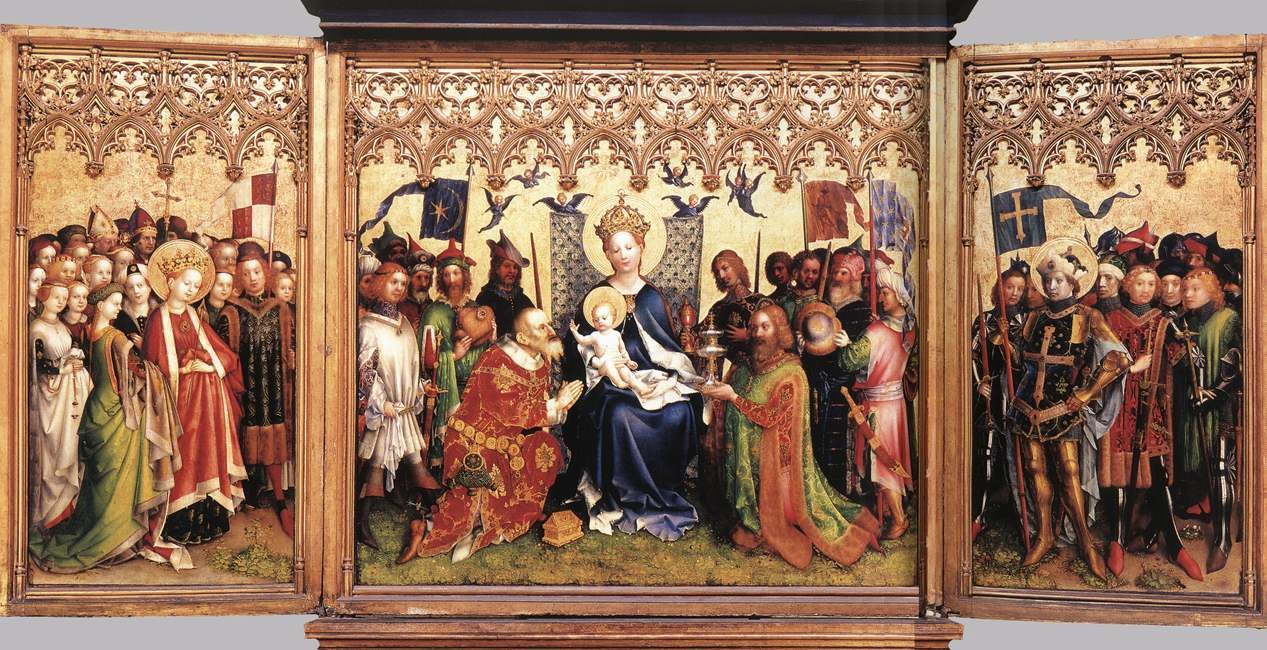
Cologne art centers on the Kölner Malerschule, a painting tradition that flourished roughly from the 1300s to the 1500s in a city that was both a major Rhine trading center and the seat of a powerful archbishop. Its pilgrimage economy depended heavily on relics believed to be those of the Three Kings, brought to the cathedral in 1164, which shaped demand for devotional panels across the city's numerous parish churches and side chapels. Unlike the sharp naturalism developing in Flanders, Cologne painters favored a softer style: rounded, gentle faces, luminous burnished gold backgrounds instead of landscape settings, and small scale suited to private and side-altar devotion. Stefan Lochner, arriving around 1442 from the Lake Constance region, became the school's leading figure, painting the cathedral's council chapel altarpiece known as the Dombild. Patronage came from church chapters, confraternities, and merchant families rather than a royal court. By the early 1500s, Antwerp's rising trade and painting market drew commissions away, and Cologne's school settled into a more conservative, provincial role.
What marks the region
Gold-ground panels
Burnished gold backgrounds replace landscape or interior settings, prioritizing devotional glow and flatness over the spatial realism developing in Flanders.
Sweet style faces
Rounded, gentle features with small mouths and calm expressions define the recurring Cologne facial type, distinct from sharper Flemish portraiture.
Small devotional scale
Panels were sized for side altars, private chapels, and confraternity use rather than the monumental public walls found in some other regions.
Anonymous named masters
Many painters remain unsigned and are known only by names historians assigned after a signature surviving work, since personal signatures were rare.
Guild-controlled production
Cologne's painters' guild regulated training and output within the city walls, keeping the school's visual habits fairly consistent across generations.
Relic-driven commissions
Proximity to the Magi shrine and other cathedral relics shaped subject matter toward themes connected to pilgrimage and reliquary devotion.
Local signatures
How to spot Cologne art
- Enclosed rose garden
- → A walled garden setting for the Madonna, symbolizing purity and paradise in works like Lochner's Madonna of the Rose Bower.
- Three crowns
- → A reference to the Magi relics housed in the cathedral's gold shrine, tying panel painting to the city's pilgrimage identity.
- Tooled gold brocade
- → Punched and patterned gold surfaces imitating luxury textile behind seated holy figures.
- Angel musicians
- → Small angels playing instruments arranged around a throne, a recurring device in Cologne Madonna panels.
- Cathedral spire silhouette
- → The (then unfinished) Gothic cathedral towers appearing as backdrop in later panels, marking local civic identity.
- Oval face, small mouth
- → The recurring soft, rounded 'Cologne type' face that distinguishes the school at a glance from Flemish sharpness.
The story
Cologne grew from a Roman settlement into a powerful archbishopric on the Rhine. In 1164, Archbishop Rainald von Dassel brought relics believed to be those of the Three Kings to the city, and the cathedral's cornerstone was laid in 1248, with the choir consecrated in 1322, though construction stalled in 1473 and only finished in 1880. A formal painters' guild organized the city's workshops through the 14th century. Stefan Lochner worked in Cologne from about 1442 until his death in 1451, painting the council chapel's Dombild altarpiece. Later masters, including the Master of the Life of the Virgin and the Master of St. Veronica, remained active through the mid-to-late 1400s. Cologne's Rhine toll rights and Hanseatic trade sustained its wealth, but by the early 1500s Antwerp's expanding port had drawn painting patronage away, leaving Cologne's school increasingly conservative and provincial through the 1500s.
Masterpieces of the place
| Work | Artist | Date | Why it matters |
|---|---|---|---|
| Dombild (Adoration of the Magi altarpiece) | Stefan Lochner | c. 1440–1442 | Painted for the cathedral's council chapel, the school's defining masterwork of gold-ground devotion. |
| Shrine of the Three Kings | Nicholas of Verdun (workshop) | 1181–1225 | A gold reliquary in Cologne Cathedral holding the relics that drove the city's pilgrimage economy. |
| Madonna of the Rose Bower | Stefan Lochner | c. 1440s | A gold-ground Madonna set in an enclosed garden, epitomizing the Cologne 'sweet style.' |
| Life of the Virgin altarpiece | Master of the Life of the Virgin | c. 1463 | A named-by-convention panel set showing the school's continuation after Lochner's death. |
| Presentation in the Temple | Master of St. Veronica | c. 1410–1420 | An early gold-ground panel with the rounded facial type that would define the school. |
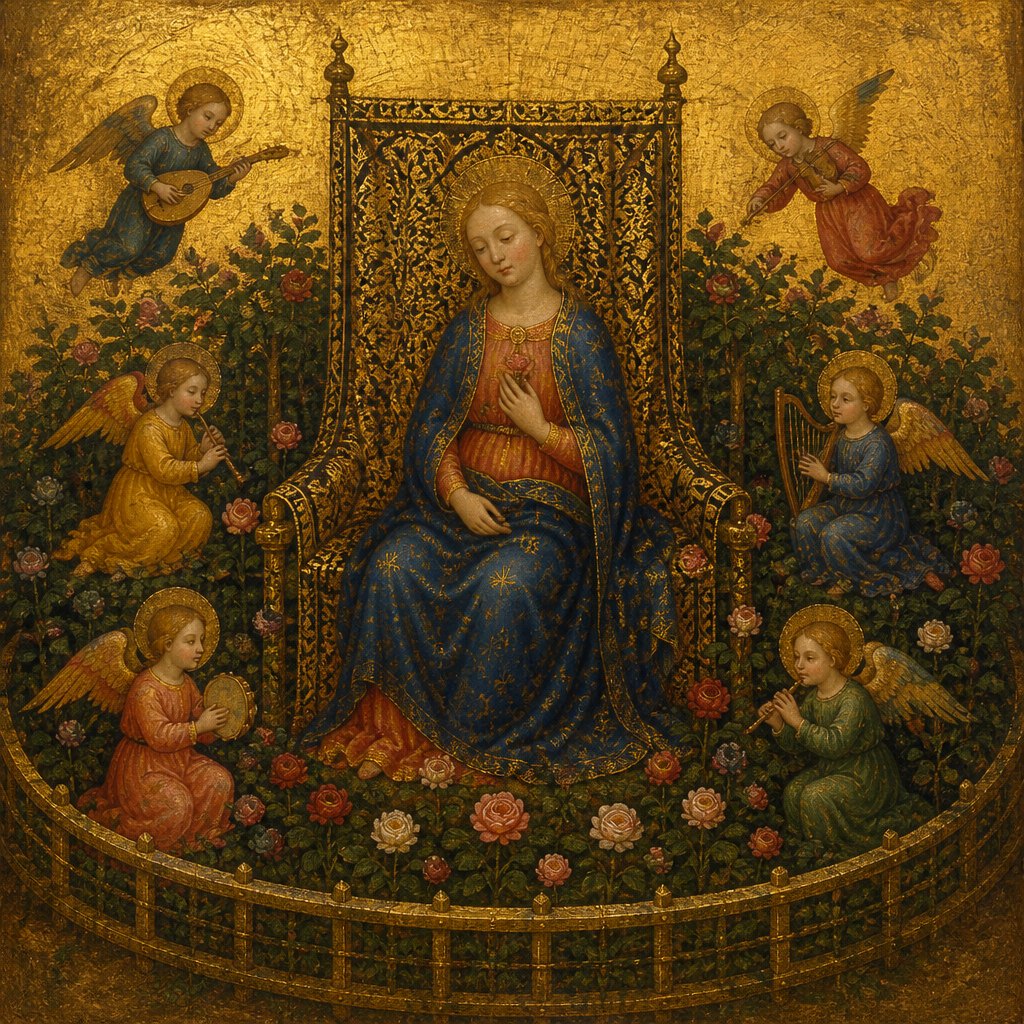 AI-generated
Work en plein air
Paint in the light of Cologne
This example was generated from a prompt like: “A small devotional panel with a burnished gold background showing a robed figure seated within an enclosed rose garden, surrounded by tiny musician angels, painted with soft rounded faces and richly patterned gold brocade cloth behind the throne.”
Open the Cologne Art Style generator →The place today
The Wallraf-Richartz Museum, founded 1824, holds the core surviving Cologne School collection, including Lochner's panels. Cologne Cathedral's treasury still displays the Shrine of the Three Kings, and the cathedral itself, completed to its medieval design only in 1880, remains a major pilgrimage and tourist site. The Museum Schnütgen specializes in medieval sacred art and sculpture from the region. No living painting tradition continues the Gothic gold-ground style directly; the city's role today is largely as custodian of this medieval devotional art rather than a generator of new work in it.
Compose your own
Build the composition around a flat, burnished gold background rather than a landscape or interior. Give figures rounded, gentle faces with small mouths and calm, downward or inward gazes rather than sharp individualized portraiture. Set a Madonna or holy figure within an enclosed garden, or drape a patterned gold-brocade cloth of honor behind the throne. Add small musician angels along the base of the throne for rhythm. Keep the panel modest in scale, sized as if for a private chapel niche rather than a public wall, and let ornament carry devotional weight rather than dramatic gesture or deep spatial recession.
Frequently asked questions
What defines the Cologne School of painting?
Gold-ground backgrounds, gentle rounded faces, and small devotional scale, distinct from the sharper realism developing in contemporary Flemish painting, though later Cologne work absorbed some Flemish influence.
Why does Cologne have relics of the Magi?
Archbishop Rainald von Dassel brought them to the city in 1164, and they remain housed in a large gold shrine in the cathedral, which drove pilgrimage-era demand for devotional panel painting.
Who was Stefan Lochner?
The leading Cologne School painter, active in the city from about 1442 until his death in 1451, best known for the cathedral's Dombild altarpiece and gold-ground Madonna panels.
Why are many Cologne School painters unnamed?
Personal signatures were rare in the period, so historians identify masters by conventional names tied to a signature surviving work, since documentary records rarely link names to specific paintings.