 Art
Art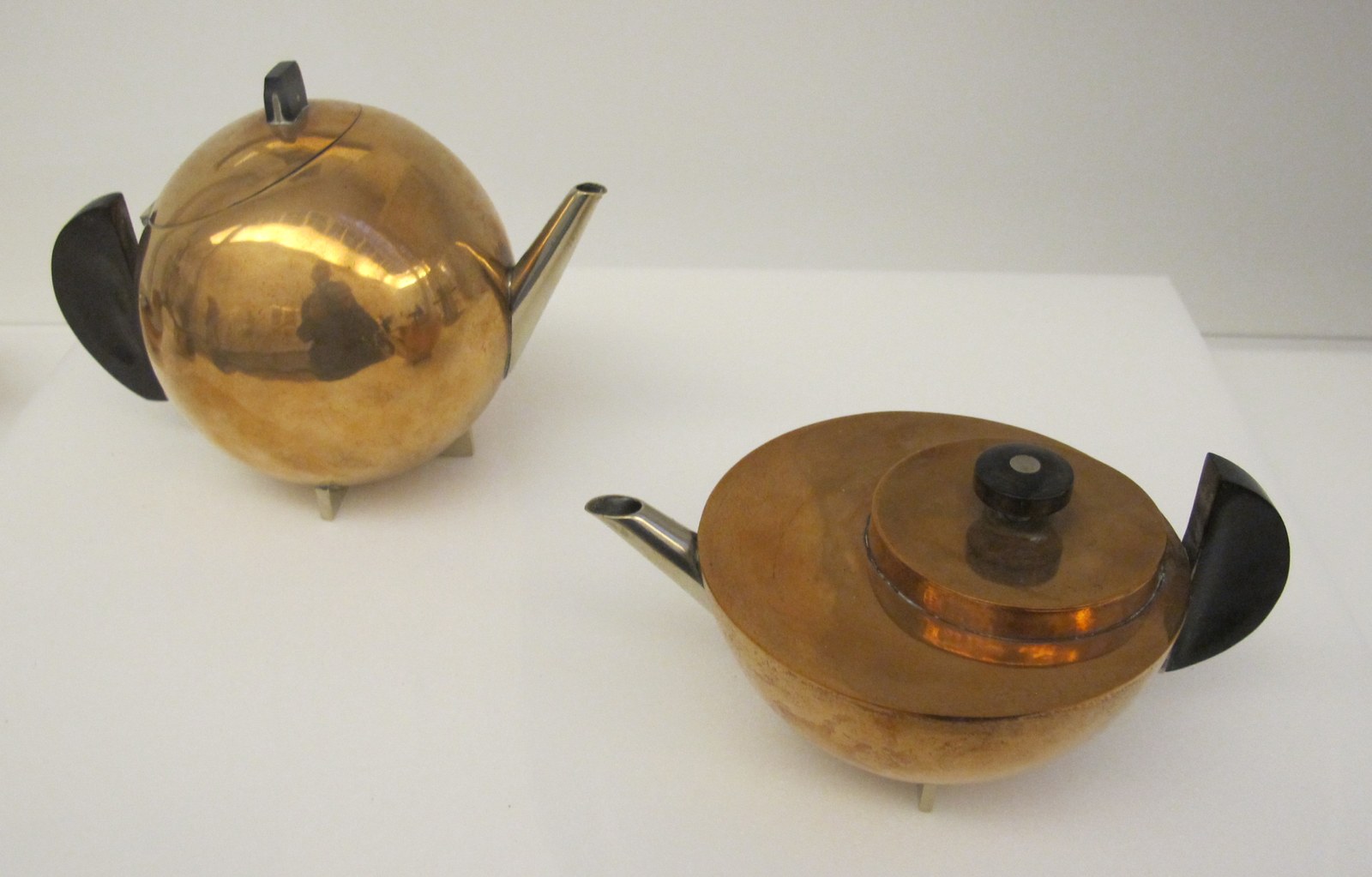
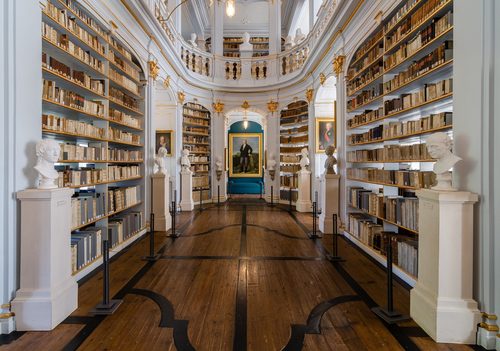
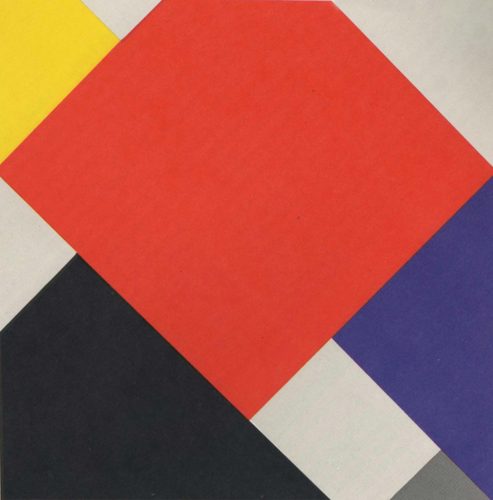
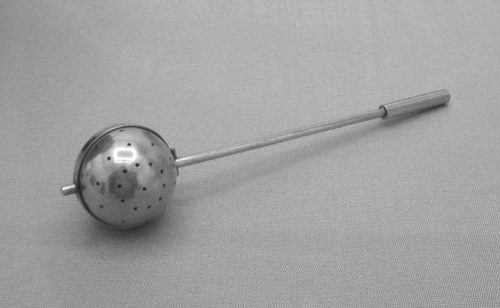
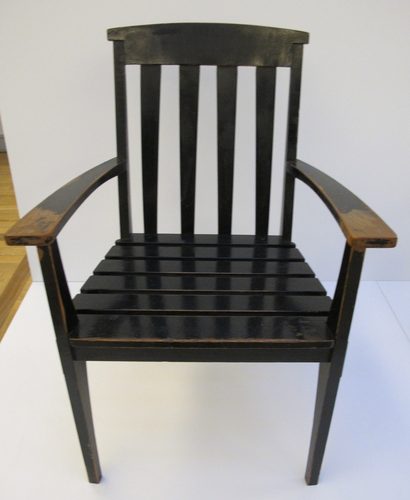
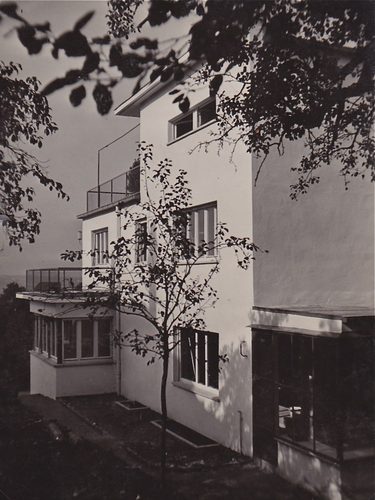
Weimar's art history spans two distinct chapters centuries apart. Lucas Cranach the Elder settled in Weimar in 1552, near the end of his life, bringing Wittenberg court-painting habits south; his final altarpiece was completed by his son after his death in 1553. Two centuries later, under Duke Carl August and Duchess Anna Amalia, whose reign began in 1775, Weimar became a small but influential literary court around Goethe and Schiller, favoring antique-inspired restraint, though its visual legacy lay more in the ducal library and art collections than in a distinct local painting school. In 1919, architect Walter Gropius merged Weimar's existing art and applied-arts schools into the Bauhaus, combining fine-art teaching with craft workshops in weaving, ceramics, and cabinetmaking under masters including Wassily Kandinsky, Paul Klee, and Oskar Schlemmer, who taught abstraction built from primary color and basic geometric form. Conservative regional politics cut the school's funding, and it relocated to Dessau in 1925, closing Weimar's brief but influential modernist chapter after only six years.
What marks the region
Cranach court painting
Lucas Cranach the Elder's Saxon court style, with its distinctive workshop mark, arrived in Weimar in his final year and shaped the city's one surviving major Reformation-era altarpiece.
Classicism restraint
Goethe-era taste favored antique-inspired proportion and calm, visible more in ducal collections and library decoration than in a distinct local school of painters.
Workshop-based Bauhaus teaching
The Bauhaus paired fine-art 'form masters' with craft workshop training in weaving, ceramics, and woodwork, breaking the usual academic hierarchy between art and craft.
Primary color and basic form
Foundational Bauhaus courses in Weimar taught color and form through red, yellow, blue and the circle, square, triangle, a theory that shaped student work across media.
Design for reproducibility
Furniture, textiles, and typography from the Weimar Bauhaus workshops were designed with mass production in mind rather than treated as unique art objects.
Small ducal-scale patronage
Both the Cranach and classicism eras depended on a modest court budget rather than a wealthy merchant class, keeping output smaller in volume than larger trading cities.
Local signatures
How to spot Weimar art
- Winged serpent mark
- → The Cranach workshop's signature device, appearing on the Weimar altarpiece as a mark of authenticated court production.
- Ginkgo leaf motif
- → An emblem tied to Goethe's own writing and drawing, associated with Weimar's classicism-era intellectual circle.
- Circle-square-triangle diagram
- → The Bauhaus color-and-form teaching diagram, an emblem of the school's foundational design theory.
- Masked geometric figure
- → Costumed dancers reduced to abstract solid shapes, from Oskar Schlemmer's Bauhaus stage experiments.
- Flat primary-color plane
- → Blocks of unmixed red, yellow, or blue used in Bauhaus textile, stage, and painting work made in Weimar.
- Antique profile medallion
- → Classical-style portrait busts and medallions commissioned for court figures during Weimar's classicism era.
The story
Lucas Cranach the Elder moved to Weimar in 1552 and died there in 1553, leaving an unfinished altarpiece completed by his son, Lucas Cranach the Younger, and installed in the Stadtkirche in 1555. Duchess Anna Amalia expanded the ducal library from 1766, and Duke Carl August invited Goethe to Weimar in 1775; Schiller followed in 1799, and their circle's classicism shaped the court's culture into the early 1800s. In 1919, Walter Gropius merged the Grand-Ducal Saxon Art School and its applied-arts counterpart into the Bauhaus, with Kandinsky joining in 1922, Klee in 1921, and Schlemmer teaching stage and form theory through the early 1920s. Rising political pressure from the conservative Thuringian state government cut the school's funding, forcing its 1925 relocation to Dessau. The ducal library suffered a major fire in 2004, with restoration continuing afterward.
Masterpieces of the place
| Work | Artist | Date | Why it matters |
|---|---|---|---|
| Weimar Altarpiece | Lucas Cranach the Elder (completed by Lucas Cranach the Younger) | 1555 | Begun in Cranach's final year in Weimar and finished by his son, installed in the Stadtkirche. |
| Composition VIII | Wassily Kandinsky | 1923 | A geometric abstraction painted while Kandinsky taught at the Weimar Bauhaus. |
| Twittering Machine | Paul Klee | 1922 | A spare linear work made during Klee's years teaching form theory at the Weimar Bauhaus. |
| Triadic Ballet costume and set designs | Oskar Schlemmer | 1922 | Costumes reducing the human body to abstract geometric solids, developed at the Weimar Bauhaus stage workshop. |
| Odyssey Landscapes frescoes | Friedrich Preller the Elder | 1868 | Classicizing landscape frescoes made for Weimar's Grand Ducal Museum, extending Weimar's antique-inspired taste. |
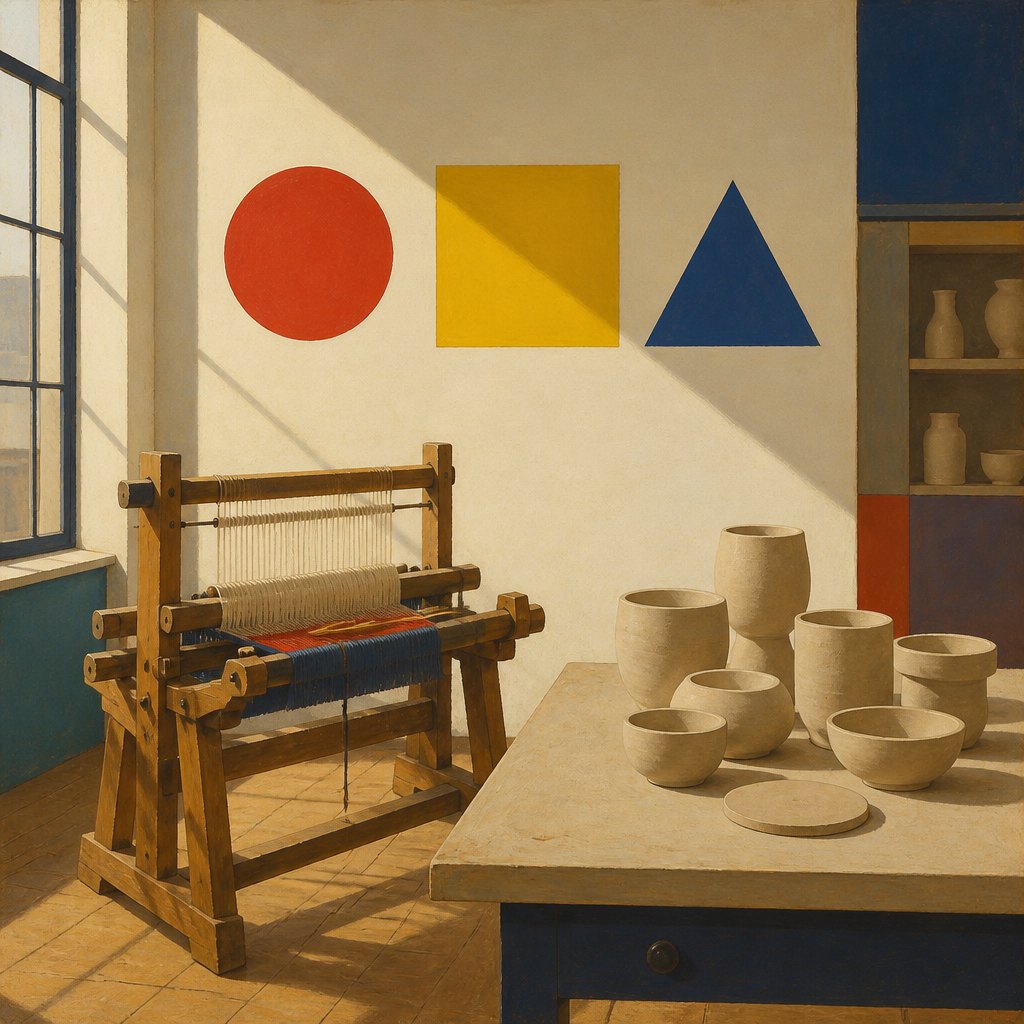 AI-generated
Work en plein air
Paint in the light of Weimar
This example was generated from a prompt like: “A bright early twentieth-century design workshop: flat planes of red, yellow, and blue arranged as a circle, square, and triangle on a wall, beside a wooden loom and a stack of unglazed pottery on a plain worktable.”
Open the Weimar Art Style generator →The place today
The Klassik Stiftung Weimar manages Goethe's House, Schiller's House, and the Duchess Anna Amalia Library, whose rococo hall holds UNESCO World Heritage status, alongside the Bauhaus-Museum Weimar, opened in 2019, which covers the school's founding years before its move to Dessau. Weimar's historic center carries UNESCO recognition as 'Classical Weimar.' Bauhaus-Universität Weimar continues architecture and design education on part of the original site, keeping the city tied to design pedagogy even without an active painting scene of its own.
Compose your own
For the classicism strand, use restrained antique-style profile portraits, calm symmetrical composition, and a muted, refined palette rather than dramatic color or gesture. For the Bauhaus strand, work instead in flat unmixed planes of red, yellow, and blue, reduce forms to circle, square, and triangle, and favor plain sans-serif lettering over ornament. Combine function with abstraction rather than decoration, as in a woven textile pattern, a tubular furniture sketch, or a stage costume built from stacked geometric solids rather than a naturalistic figure.
Frequently asked questions
Is Weimar art the same as Bauhaus design?
No. The Bauhaus, founded in Weimar in 1919, is one chapter; the city also has an earlier Cranach court-painting period and a later Goethe-era classicism, both centuries apart from the Bauhaus and from each other.
Why did the Bauhaus leave Weimar?
The conservative Thuringian state government cut the school's public funding by the mid-1920s, prompting its 1925 relocation to Dessau, where it operated under different political conditions.
What is 'Weimar Classicism'?
A late-1700s to early-1800s court culture centered on Goethe and Schiller favoring antique-inspired restraint, mainly literary in output, with the ducal library and art collections as its visual counterpart.
What survives of Cranach's work in Weimar?
The Weimar Altarpiece, begun by Lucas Cranach the Elder shortly before his 1553 death and finished by his son, remains installed in the city's Stadtkirche.