 Art
Art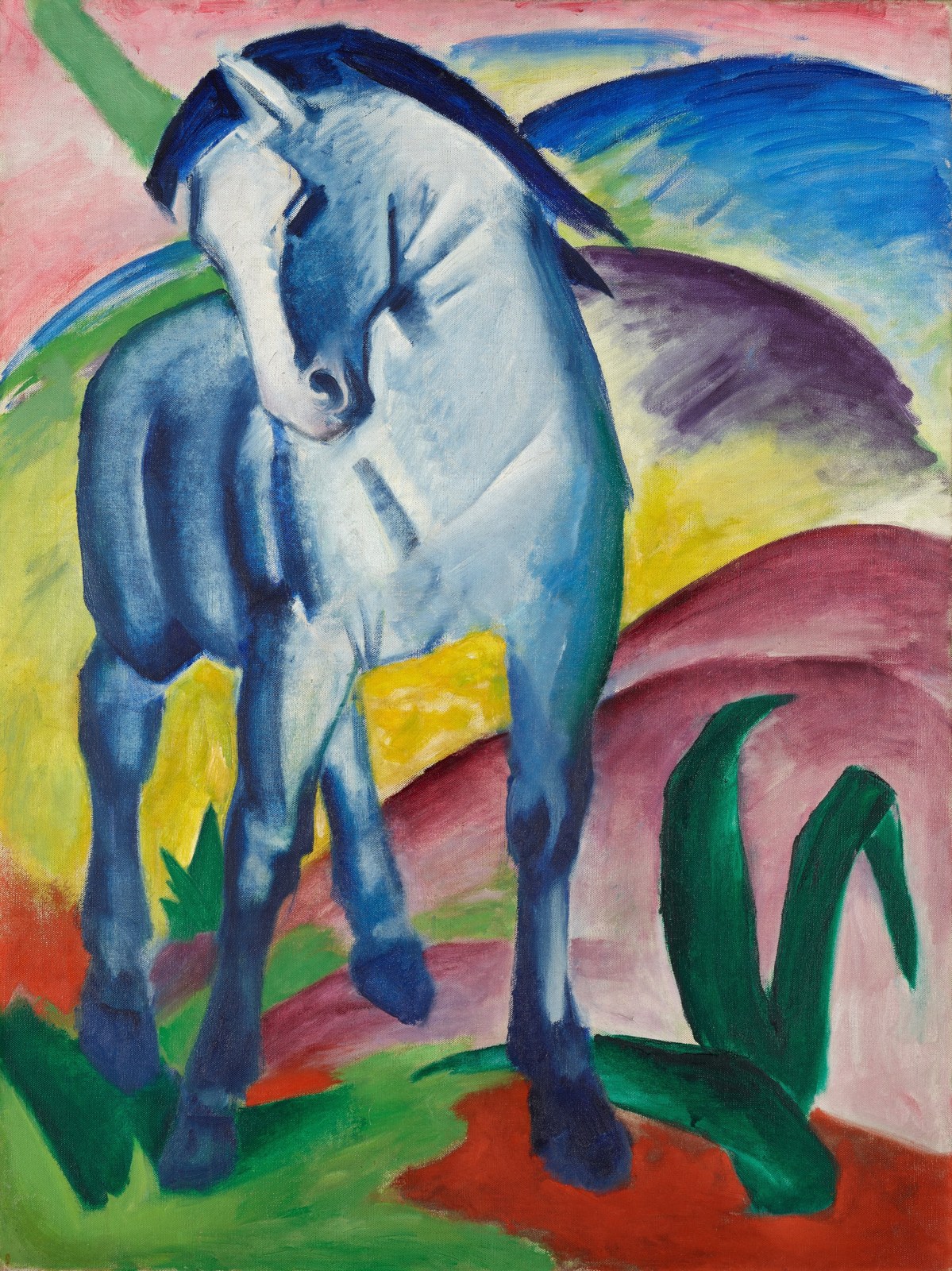
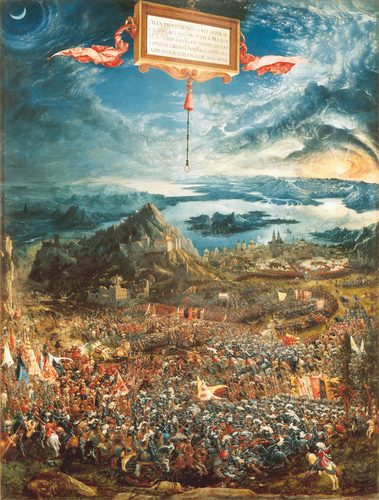
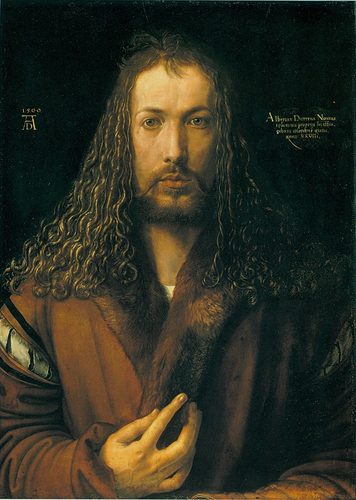
Munich is the Bavarian capital where a royal art academy and a radical breakaway group of painters shaped two very different chapters of German art within the same city. King Ludwig I built Munich into a museum city in the 1820s and 1830s, and its Royal Academy trained generations of history and genre painters through the nineteenth century under figures like Karl von Piloty. In 1892 a group of academy-trained artists broke away to form the Munich Secession, opening the city to more independent exhibition. Wassily Kandinsky arrived to study in 1896, and by 1911, after a jury dispute within an earlier artists' association, he and Franz Marc founded Der Blaue Reiter, or the Blue Rider, with Gabriele Münter, August Macke, and Paul Klee. The group pushed color toward pure abstraction and spiritual symbolism, publishing an almanac in 1912, before the First World War scattered its members and killed Marc in 1916.
What marks the region
Academic technique
Rigorous drawing and anatomy instruction at the Royal Academy gave Munich painters a technical foundation even the most radical among them never abandoned.
Grand history painting
Large narrative canvases depicting historical and mythological scenes were produced for court patrons and public halls through the nineteenth century.
Color pushed toward abstraction
The Blue Rider circle treated color as expressive and symbolic rather than descriptive, gradually loosening it from any literal subject.
Animals as spiritual subjects
Horses, deer, and other animals stood in for innocence and spiritual purity, most famously in Franz Marc's saturated, non-naturalistic color.
Secession-style independence
Breakaway exhibition societies, first the 1892 Munich Secession and later the Blue Rider circle, let artists show outside the official academy system.
Bohemian studio culture
The Schwabing quarter's cafes and shared studios gave Munich's more radical artists a social base separate from the court-facing academy.
Local signatures
How to spot Munich art
- Blue horse or rider
- → Franz Marc's animals rendered in pure, non-naturalistic color as symbols of innocence set against human corruption
- Concentric color arcs
- → Kandinsky's move from landscape toward fully abstract composition built from color and form alone
- Gold and royal blue trappings
- → the Wittelsbach court patronage behind Munich's academic history painting
- Onion-domed church silhouettes
- → the Bavarian Catholic backdrop against which the city's art scene developed
- Beer-hall genre vignette
- → the everyday realism of the Munich School's genre painters
- Woodcut folk imagery
- → the Blue Rider's interest in folk and so-called primitive art as a source of spiritual authenticity
The story
King Ludwig I's building campaign in the 1820s and 1830s gave Munich the Glyptothek and the Alte Pinakothek, and a reorganized Royal Academy drew students from across Europe to study under history painters like Karl von Piloty. In 1892 a group of academy artists broke away to form the Munich Secession, protesting the conservative official exhibitions. Wassily Kandinsky arrived from Russia in 1896 to study, later founding his own teaching group and then the Neue Künstlervereinigung München in 1909. When a jury rejected one of Kandinsky's paintings in 1911, he and Franz Marc resigned and founded Der Blaue Reiter with Gabriele Münter, August Macke, and Paul Klee, pursuing color-driven, spiritually charged abstraction. Their almanac appeared in 1912. The First World War ended the group quickly: Marc and Macke were killed in action, and Kandinsky, a Russian citizen, was expelled as an enemy alien in 1914.
Masterpieces of the place
| Work | Artist | Date | Why it matters |
|---|---|---|---|
| The Yellow Cow | Franz Marc | 1911 | An animal rendered in pure saturated color, standing for innocence rather than description. |
| Improvisation 19 | Wassily Kandinsky | 1911 | Painted in Munich as Kandinsky pushed landscape and figure toward full abstraction. |
| Seni before the Body of Wallenstein | Karl von Piloty | 1855 | A history painting representative of the academy style the Blue Rider later rejected. |
| Tower of Blue Horses | Franz Marc | 1913 | Blue horses stacked in a totemic composition shortly before Marc's death in the war. |
| Blue Rider almanac cover | Wassily Kandinsky | 1912 | The published manifesto-anthology that gave the group its lasting name and program. |
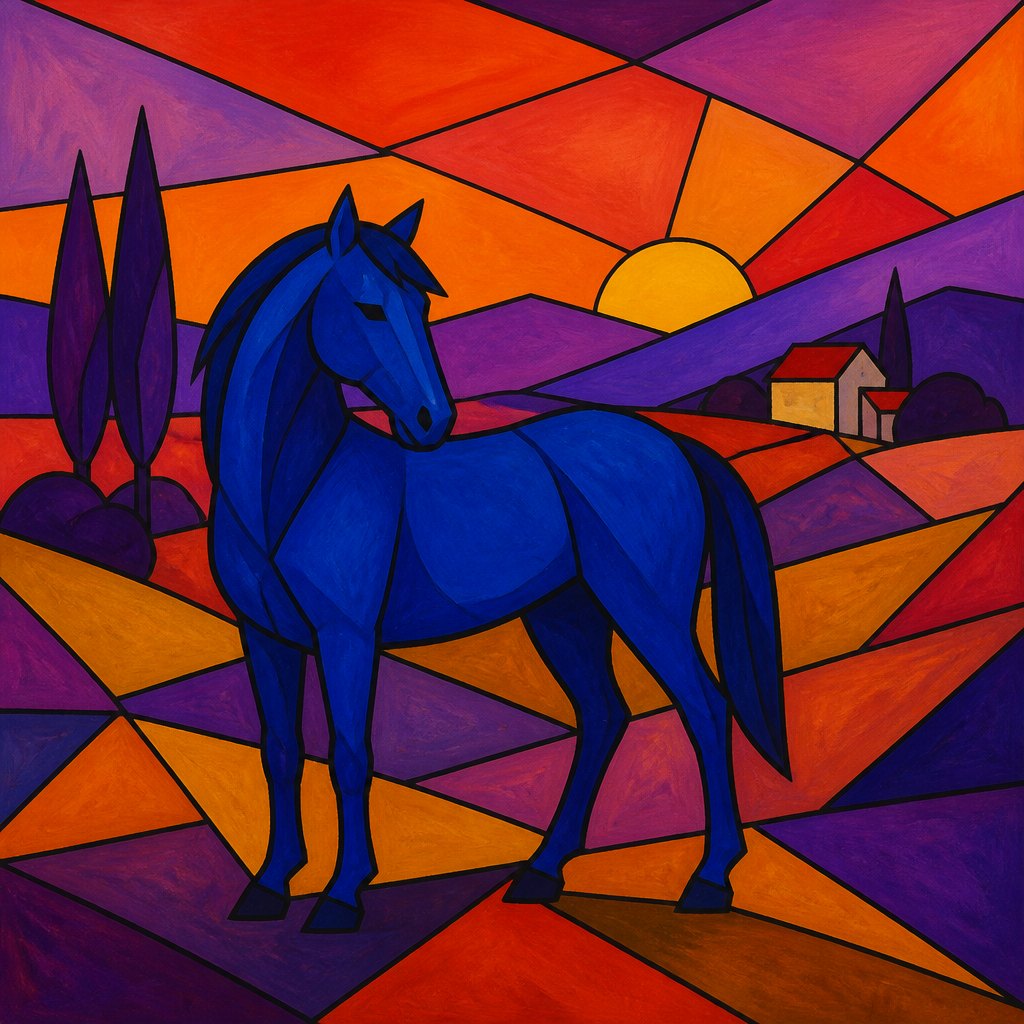 AI-generated
Work en plein air
Paint in the light of Munich
This example was generated from a prompt like: “A simplified horse rendered in deep saturated blue, standing in rolling countryside broken into faceted color planes, sunset oranges and violets fractured into geometric shapes, bold black contour outlines, flattened perspective, emotionally intense non-naturalistic color throughout.”
Open the Munich School Art Style generator →The place today
The Lenbachhaus holds the world's largest Blue Rider collection, built largely around works Gabriele Münter donated after decades of safekeeping them through the Nazi era. The Alte Pinakothek anchors Munich's older museum landscape, with the Neue Pinakothek's nineteenth-century holdings shown elsewhere while that building undergoes a long renovation, while the Pinakothek der Moderne covers later modern and contemporary work. Schwabing, once the group's bohemian quarter, retains a student and cafe culture that traces back to the years before the First World War.
Compose your own
Start with disciplined academic drawing before loosening the color. Push local color beyond what the eye actually sees, toward whatever feels emotionally or symbolically true to the subject. Use an animal, a mountain, or another simple natural form as a vehicle for spiritual content rather than description. Simplify contours into clean, deliberate lines and let color, not shading, carry the composition's weight. Show work in a small, self-organized group rather than waiting on an official exhibition jury. Treat black outline as a structural tool that separates color fields, not merely a boundary around an object.
Frequently asked questions
What made Munich an art capital before the Blue Rider?
King Ludwig I's nineteenth-century building campaign produced the Glyptothek and both Pinakothek museums, and a royal academy trained history and genre painters, drawing students from across Europe throughout the 1800s.
What is Der Blaue Reiter?
A loose Munich-based group led by Kandinsky and Marc, formed in 1911 after a jury dispute; they pursued color-driven, spiritually charged art and published an almanac in 1912 before the war scattered them.
Why is the group called the Blue Rider?
Both founders loved the color blue and horse-and-rider imagery, and accounts differ on the exact origin of the name; it captured their shared symbolism rather than describing any formal program or manifesto.
Where can this work be seen today?
The Lenbachhaus in Munich holds the world's largest Blue Rider collection, much of it donated by Gabriele Münter, while the Pinakothek der Moderne covers later modern and contemporary Munich-connected art.